
Economy
What Petrobras’ Potential Return Means For Nigeria’s Deepwater Operations: EXPLAINER

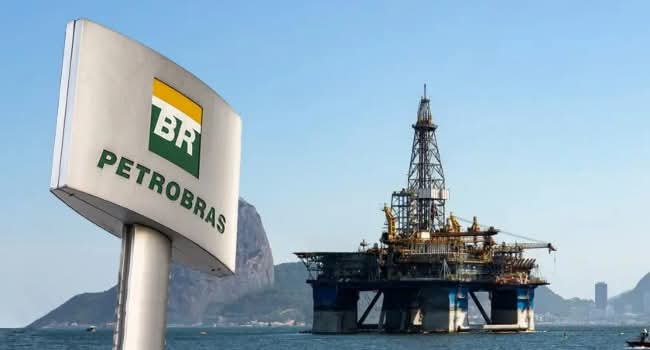
What Petrobras’ Potential Return Means For Nigeria’s Deepwater Operations: EXPLAINER
What Petrobras’ potential return means for Nigeria’s deepwater operations: EXPLAINER. In the last one year, four international oil companies (IOCs) have signed deepwater deals with Nigeria, and the number will soon increase as Petrobras, a Brazilian state-owned oil company, plans to return to Africa’s largest crude producer.
On August 26, President Bola Tinubu said Petrobras will soon return to Nigeria — five years after it exited — adding that the renewed engagement would reignite economic cooperation in the energy sector between both countries.
The announcement by Tinubu came three months after Vice-President Kashim Shettima said Petrobras was seeking re-entry into Nigeria’s oil sector, with a specific interest in frontier deepwater acreage.
Deepwater operations involve drilling and extracting oil and natural gas from beneath the ocean floor at significant depths, which is usually around 656 feet.
The deepwater oil blocks are located in areas of water depth beyond 200 metres and extending up to 200 nautical miles seaward from the coasts of Nigeria, according to the Nigerian Upstream Petroleum Regulatory Commission (NUPRC).
INVESTMENTS IN NIGERIA’S DEEPWATER OPERATIONS
Since Tinubu took office, there have been several new investments or expressions of interest in Nigeria’s deepwater acreage.
ExxonMobil, on September 26, 2024, announced plans to invest $10 billion in Nigeria’s deepwater oil operations.
On December 16, 2024, Shell Nigeria Exploration and Production Company Limited (SNEPCo) announced a final investment decision (FID) on Bonga north, a deepwater project off the coast of Nigeria.
On Monday, the NUPRC signed a deepwater production sharing contract (PSC) with TotalEnergies and South Atlantic Petroleum (Sapetro) for petroleum prospecting licences (PPL) 2000 and 2001.
Also, on August 1, Gbenga Komolafe, the chief executive officer (CEO) of NUPRC, said the country has cumulatively produced over 4.4 billion barrels from deepwater operations, with contributory efforts from Shell, ExxonMobil, TotalEnergies, Agip, and Chevron.
FG PUSHING FOR MORE DEEPWATER INVESTMENTS WITH INCENTIVES
Komolafe cited government incentives or ongoing interventions, including zero hydrocarbon tax on deepwater fields under the Petroleum Industry Act (PIA), as well as presidential directives 40, 41, and 42.
He said the federal government intend to increase oil output from Nigeria’s deepwater oil fields by 810,000 barrels per day (bpd) through a new cluster and nodal development initiative.
“We have identified over 20 key deep water assets such as Owowo, Nsiko, Bolia, Aparo, Bonga South West, Doro, Sheki, Akpo West, and others. While some may lack scale individually, they can become viable if developed together,” he said.
Already, Nigeria has attracted more than $8 billion in investments in deepwater projects and gas final investment decisions (FIDs) within one year, according to Olu Verheijen, special adviser on energy to Tinubu, on May 14.
PETROBRAS’ HISTORY IN NIGERIA
In November 2017, Petrobras led an effort to sell Petrobras Oil and Gas BV (Petrobras Africa), involved in two deepwater oil exploration blocks off the coast of Nigeria.
The blocks, Akpo and Agbami producing fields, were operated by Total SA and Chevron Corporation, respectively.
The Brazilian state-controlled firm had 50 percent of the company, in a joint venture with BTG Pactual E&P B.V.
In 2020, the firm sold its shares to Canada’s Africa Oil Corporation for $1.45 billion, exiting Nigeria and, by extension, the African continent.
However, in 2023, Petrobras’s interest in Africa was rekindled after the company announced the acquisition of stakes in three exploration blocks in São Tomé and Príncipe, an African island nation.
‘MORE JOBS, FOREIGN INVESTMENTS, AND EXPERTISE’
Speaking on the imminent return of the company to Nigeria, Ayodele Oni, partner at Bloomfield Law Practice, said Petrobras’s imminent return to Nigeria could have a big impact.
As one of the world’s leading oil producers, he noted, the company possesses the expertise and technology required to enhance Nigeria’s oil output.
“This could mean more jobs, not just within the company but also in areas like logistics, maintenance, and services connected to oil production,” Oni said.
“Moreover, Petrobras’s comeback could attract significant foreign investment, sparking infrastructure and technological development while giving Nigeria’s economy a nice boost.”
He said their know-how in offshore and deepwater drilling could help diversify Nigeria’s energy sector, making it more resilient to global market changes.
“In addition, their presence might lead to valuable knowledge and technology sharing. This could help local workers gain new skills and sharpen Nigeria’s technical abilities in the oil industry,” Oni said.
HOW NIGERIA CAN REMAIN ATTRACTIVE IN A COMPETITIVE MARKET
Oyeyemi Oke, partner at AO2law, described the prospect of Petrobras’ potential return to Nigeria as exciting.
However, Oke said it is necessary for Nigeria to be an attractive market in Africa to attract such deals, considering other jurisdictions are competing for investments into their oil and gas sector.
“For example, Petrobras in 2023 re-entered Africa through acquisitions of assets in São Tomé, which means there are other viable options in Africa and Nigeria should ensure investments are guaranteed from a security, returns and policy consistency perspective,” he said.
“Considering the proximity of Nigeria to São Tomé, it becomes commercially sensible for a firm like Petrobras to look at investing in Nigeria, but then again, this is highly subject to the economics of doing business in Nigeria, hence the need for Nigeria to up its game.
“While the nature of entry of Petrobras into the Nigerian market remains unclear at the moment, it is necessary to emphasise that any award of oil assets needs to comply with the provisions of the Petroleum Industry Act with respect to an open and transparent bidding process.”
He stressed that the government must ensure the bidding process complies with Nigerian law.
Additionally, Oke said there are other structures that may facilitate a quick entry into the Nigerian market, such as financial, management, and technical services agreements with government-owned petroleum oil companies.
What Petrobras’ Potential Return
The impending return of Petrobras, which recorded an oil and gas production average of 2.91 million barrels of oil equivalent per day (boed) in the second quarter of 2025, comes at a period when Nigeria is looking to meet a crude oil production target of 2.5 million barrels per day (bpd) by 2026, and 10 billion standard cubic feet (bscf) of gas per day by 2030.
In the last two years, Nigeria’s oil production has increased from 1 million barrels per day (bpd) in 2023 to 1.8 million bpd in 2025, according to Heineken Lokpobiri, minister of state for petroleum resources (oil), in July.
Also, NUPRC said gas production is up from 6.91 billion standard cubic feet per day (bscfd) in 2023 to 7.59 bscfd as of July 2025.








Eid-el-Fitr: NRC Sets To Run Three Lagos–Ibadan Train Trips Monday
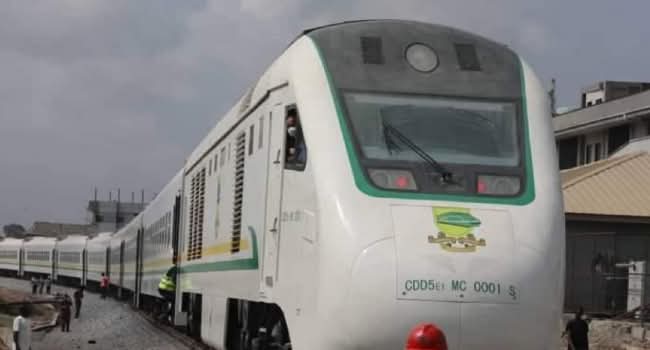
Eid-el-Fitr: NRC sets to run three Lagos–Ibadan train trips Monday. He assured passengers of NRC’s continued commitment to safe, reliable, and efficient rail services.
This was contained in a statement issued on Friday in Lagos by NRC chief public relations officer, Callistus Unyimadu.
He said the additional trip was in response to high passenger turnout during the Eid-el-Fitr travel period.
“The extra trip is aimed at easing passenger movement and providing more travel options for commuters returning after the Eid-el-Fitr celebrations.
“Under the schedule, departures from Lagos (Mobolaji Johnson Station, Ebute Metta) will be at 7.45 a.m., 1.40 p.m., and 4.00 p.m.
“From Ibadan (Obafemi Awolowo Station, Moniya), trains will depart at 8.00 a.m., 10.50 a.m., and 4.30 p.m.,” he said.
Mr Unyimadu assured passengers of NRC’s continued commitment to safe, reliable, and efficient rail services.

NRC Sets To Run Three Lagos–Ibadan Train Trips Monday
He advised travellers to arrive early, comply with ticketing and security procedures, and plan their journeys.
“The corporation appreciates the continued patronage of its services and wishes all passengers a safe and pleasant journey,” he added.
UBA, BII Sign Letter Of Intent To Explore Trade Finance Collaboration Across Africa
United Bank for Africa (UK) Limited (“UBA UK”) and British International Investment plc (“BII”), the UK’s development finance institution and impact investor, announced that they have signed a letter of intent to develop trade finance collaboration opportunities.
The proposed initiative aims to expand access to trade and working capital facilities for businesses operating across Africa.
Access to trade finance remains one of the most significant structural constraints on African trade. Businesses, particularly small and medium-sized enterprises, are frequently unable to secure letters of credit, guarantees, and supply chain finance on commercially viable terms, limiting their capacity to export and import competitively. This trade finance gap is estimated by the African Development Bank to be over USD 80 billion annually.
To help close this gap, UBA UK, the London subsidiary of UBA Group, Africa’s Global Bank, will leverage its deep relationships across the Group’s 20-country African network to originate and structure trade finance transactions. While BII, with a mandate to support productive, sustainable, and inclusive growth across Africa, can support transactions that might otherwise fall outside conventional commercial appetite.
“The signing of this letter with BII represents a landmark moment for UBA UK and for the UBA Group’s global ambitions. As the Group’s hub for Trade Operations, UBA UK is uniquely positioned to connect African businesses with the international financial system. Working alongside BII, we can extend that capability further — mobilising capital where it matters most and helping to close the trade finance gap that holds back so much African potential,” said Lok Mishra, Chief Executive Officer, UBA UK
“British International Investment is committed to catalysing private sector growth across Africa, and trade finance is a critical enabler of that growth. We welcome the opportunity to collaborate with UBA Group, whose pan-African network and deep institutional relationships can help advance our ambition to expand access to trade and working capital finance, particularly in frontier markets,” Chris Chijiuitomi, Managing Director and Head of Africa
The announcement builds on growing momentum around intra-African trade facilitated by the African Continental Free Trade Area (AfCFTA), which entered into force in 2021 and represents one of the world’s most significant trade integration initiatives. Both institutions have identified the operationalisation of AfCFTA as a priority catalyst for a trade finance facility, with UBA UK’s network across major AfCFTA economies offering a basis for supporting businesses navigating the emerging continental market.
This also complements the UK Government’s broader engagement with African economic development, including commitments made at the UK-Africa Investment Summit, and reinforces the City of London’s role as a leading international finance centre for Africa-focused capital mobilisation.
Future cooperation remains subject to further assessment, due diligence and the completion of internal approvals by both parties.
ABOUT UNITED BANK FOR AFRICA (UK) LIMITED
UBA UK is the London-based subsidiary of United Bank for Africa Plc, one of Africa’s leading financial institutions with operations across 20 African countries, the United Kingdom, the United States of America, France, and the United Arab Emirates. UBA UK serves as the Group’s hub for Trade Operations, providing a comprehensive suite of trade finance, treasury, and correspondent banking services to institutional and corporate clients worldwide.
UBA
ABOUT UNITED BANK FOR AFRICA GROUP
United Bank for Africa is one of the largest employers in the financial sector on the African continent, with 25,000 employees group-wide and serving over 45 million customers globally. Operating in twenty African countries, the United Kingdom, the United States of America, France and the United Arab Emirates, UBA provides retail, commercial and institutional banking services, leading financial inclusion and implementing cutting-edge technology.
ABOUT BRITISH INTERNATIONAL INVESTMENT
British International Investment is the UK’s development finance institution and impact investor. The organisation invests in businesses in developing countries to improve people’s lives and help protect the planet. BII’s work targets the underlying causes of poverty and the climate crisis, helping countries break free from aid dependency for good.
Between 2022-2026, at least 30 per cent of BII’s total new commitments by value will be in climate finance. BII is also a founding member of the 2X Challenge which has raised over $33.6 billion to empower women’s economic development.
The company has investments in over 1,600 businesses across 66 countries and total net assets of £9.87 billion. For more information, visit: www.bii.co.uk | watch here. Follow British International Investment on LinkedIn, Bluesky and X.
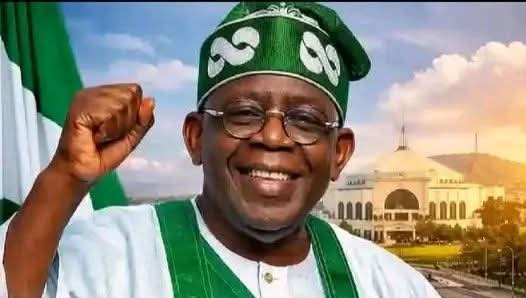
Eid-el-Fitr: President Tinubu Felicitates Muslims, Urges Renewed Unity, Patriotism
Eid-el-Fitr: President Tinubu felicitates Muslims, urges renewed unity, patriotism. Mr Tinubu called on Muslims to reflect on the spiritual lessons of Ramadan.
The president urged them to renew commitment to national unity, peaceful coexistence, and service to humanity as they celebrate the festival across the country on Friday.
This is contained in a statement issued by presidential spokesperson, Bayo Onanuga, on Thursday in Abuja.
Mr Tinubu called on Muslims to reflect on the spiritual lessons of Ramadan, noting that the holy month teaches discipline, sacrifice, compassion, and devotion to God and humanity.
He said: “We have a lot to draw from the noble lessons of Ramadan, especially at a time like this.
“We must continue to abide by the virtues of piety, selflessness, perseverance, kindness and compassion beyond this period.”
The president emphasised the need for Nigerians to remain united across religious and ethnic lines, stressing that national cohesion remains vital for sustainable peace and development.
He urged Muslims to extend acts of kindness and charity to the less privileged, irrespective of religious or ethnic background, in line with the enduring values of Islam.
Mr Tinubu noted that such gestures would strengthen social bonds, promote inclusiveness, and reinforce the spirit of brotherhood that defines the Nigerian society.
The president also called on religious leaders to use the occasion to offer prayers for peace, stability, and economic prosperity across the country.
Tinubu
He expressed optimism that with collective efforts, Nigeria would overcome its challenges and achieve lasting progress for the benefit of all citizens.
Mr Tinubu wished Muslims a joyous celebration, praying that the blessings of Ramadan would bring renewed hope, strength, and guidance to individuals, families, and the nation.
-
 Crime11 months ago
Kogi Assembly Considers Law To Regulate Rent, Establish Control Board: Tenancy Law
-

 News12 months ago
Atiku Reveals Why He Failed To Pick Wike As Running Mate In 2023
-

 Akwa Ibom1 year ago
The Apostolic Church Gets New Territorial Chairman, Exco
-

 Crime1 year ago
Federal High Court Jails 2 For Vandalizing Transformer, Telecom Mast In Kogi
-
 News1 year ago
The Apostolic Church Gets New National President, Executive
-
 Akwa Ibom1 year ago
Umo Eno Commences Payment Of 80,000 Naira Minimum Wage With Arrears
-

 News1 year ago
Senator Natasha Returns To Senate With Husband Amid Seat Dispute
-
 Economy10 months ago
Kiyosaki: Is Tinubu’s Government Afraid Of Ibrahim Traore?