
Economy
What Is The Endgame For ADC Coalition If Key Figures Stay In Their Parties?: MATTERS ARISING


What Is The Endgame For ADC Coalition If Key Figures Stay In Their Parties?: MATTERS ARISING
What is the endgame for ADC coalition if key figures stay in their parties?: MATTERS ARISING. A few months after the African Democratic Congress (ADC) emerged as the chosen platform for opposition heavyweights seeking to challenge President Bola Tinubu and the All Progressives Congress (APC) in the 2027 elections, issues of structural integrity and long-term viability still hang over the coalition.
On June 19, a high‑profile launch in Abuja saw David Mark, former senate president, named interim national chairman of ADC; Rauf Aregbesola, former governor of Osun, appointed interim national secretary; and Bolaji Abdullahi elevated as interim spokesperson.
The event generated enthusiasm but also raised concerns about whether this unity is more symbolic than sustainable.
Atiku Abubakar and Rotimi Amaechi have formally exited the Peoples Democratic Party (PDP) and APC to join ADC, lending weight to the coalition.
Others — including Peter Obi, Nasir el‑Rufai, and many more — have not yet resigned their party memberships, creating dual loyalties that complicate coalition coherence.
‘OBI, PDP’S MESSIAH‘
Obi was a PDP vice-presidential candidate in the 2019 presidential election
Recently, some leaders of PDP resolved to zone its 2027 presidential ticket to the south.
The main opposition party, including Jerry Gana, one of its founding chieftains, has maintained that the party is in talks with Obi and is wooing him to return to the PDP.
Ali Modu Sheriff, former governor of Borno and ex-PDP national chairman, has also said Obi would pursue his presidential ambition through the PDP in 2027.
The former PDP national chairman also assured that Obi would only buy time before returning to his former party. Obi, a major kingpin, is yet to abandon the Labour Party (LP) and fully declare for ADC.
The former Anambra governor has repeatedly said publicly that he remains in the LP, emphasising that the ADC coalition exists strictly for the 2027 election.
He has also pledged on multiple occasions to serve only one term if elected president, while also insisting that a southerner should be allowed to rule from 2027-2031.
The former Anambra governor appears undecided about which platform to use for his 2027 presidential ambition.
Although, the ADC spokesperson in a recent interview said that coalition leaders agreed to a temporary arrangement allowing figures like Obi and el‑Rufai to complete pending internal party processes before formally joining ADC. This flexibility has sparked criticism.
NO SITTING GOVERNOR
Governors’ forum meeting; all governors are from APC, PDP, APGA, and LP respectively | File photo
One of the most glaring deficiencies in the ADC-led coalition is the absence of sitting governors, senators, or even influential federal lawmakers among its ranks, according to political analysts.
In Nigeria’s political landscape — where authority is often maintained through incumbency, access to state funds, and well-established patronage structures — this absence is more than a symbolic gap; it poses a real challenge to the coalition’s viability.
Some senators like Aminu Tambuwal, Abdul Ningi, Enyinnaya Abaribe, Ireti Kingibe, and Austin Akobundu of Abia Central are romancing with the ADC but have not officially announced their defections as required in the senate.
UNLIKE THE 2013 APC MERGER
Supporters of the APC waving the party flag at a rally
By comparison, when the All Progressives Congress (APC) was established in 2013, it emerged from a merger involving the Action Congress of Nigeria (ACN), the Congress for Progressive Change (CPC), the All Nigeria Peoples Party (ANPP), and a breakaway faction of the All Progressives Grand Alliance (APGA).
That coalition immediately carried political weight. At the time, it included sitting governors from politically strategic states such as Lagos, Kano, Rivers, and Nasarawa.
These governors not only commanded electoral support but also held sway over powerful patronage systems, campaign financing networks, and the ability to galvanise public sentiment.
Unlike the 2013 merger that birthed the APC, the current ADC-led coalition does not enjoy the backing of any sitting governor.
So far, no incumbent state leader has defected to the alliance, nor are there visible signs suggesting that such a move is forthcoming.
The absence of high-ranking political figures with executive authority significantly limits the coalition’s ability to gain political momentum.
This isn’t just a matter of public perception — it poses a fundamental challenge to its electoral strategy.
In Nigeria’s fragmented electoral system, where governors often wield significant control over state politics and voter mobilisation, their support can make or break a national campaign.
Many have described the dual positioning as political opportunism and dismissed the coalition as lacking the structure and coherence to serve as a credible opposition force.
Critics suggest the lack of full commitment by prominent members may reduce credibility and stall electoral traction.
ADC’s coalition so far has relied on personalities rather than formal structural alignment and remains entirely detached from ward-level roots.
There has been speculation that Atiku, now a member of the ADC, could be seeking to form a strategic alliance with Obi’s LP faction ahead of the 2027 general election.
But Festus Keyamo, minister of aviation and aerospace development, dismissed the potential alliance as political sleight of hand.
He said that any arrangement that would make Obi a running mate of Atiku would be an attempt to tap into his popularity.
INTERNAL CRISIS
Internal fractures in ADC intensified when Dumebi Kachikwu, ADC’s 2023 presidential candidate, publicly denounced the coalition takeover.
He labelled the move a “hostile takeover engineered” for Atiku and pledged to challenge it in court.
The ex-presidential candidate also accused the coalition of ignoring the southern zoning balance, saying the new arrangement was conceived as a vehicle to deliver leadership for a specific interest, not the party’s foundational principles.
Kachikwu’s strategy includes legal petitions to INEC, court proceedings, and grassroots mobilisation.
He argued that coalition leaders entered “through the back door” and promised to convene a legitimate convention if INEC confirms leadership vacuums.
He insisted that ADC must follow its constitution to ensure fairness to original members.
Another fresh leadership crisis erupted when Nafiu Bala Gombe, former ADC national deputy chairman and Gombe state governorship candidate, declared himself interim national chairman.
He described the Mark‑led leadership as a violation of ADC’s constitution and internal democracy.
Bala demanded INEC recognition as the legitimate chairman and vowed legal action if the coalition faction failed to restore “constitutional order”.
Leke Abejide, a legislator and long‑standing ADC member, echoed the outrage, branding coalition entrants political “marauders” and promising to reclaim party control on behalf of original members.
He warned that the coalition’s appointment of over 50 NEC positions had excluded longstanding party members, which he said amounts to a hijack.
Musa Isa Matara, former ADC national publicity secretary, detailed the exclusion of original party stakeholders from new appointments.
He announced the emergence of the Bala‑led faction as the representative of authentic ADC leadership, vowing continued resistance against what he called imposed opportunists.
The ADC coalition responded and insisted no hijack occurred, stating that some members — including Kachikwu — had long been expelled from the party.
The David Mark leadership asserted that the transition followed legal due diligence with INEC oversight and that the coalition aligned with democratic norms.
ADC
WAY FORWARD
Despite internal conflict, ADC has been active; it has constantly been vocal in its criticism against the ruling party and Tinubu’s administration.
Coalition leaders, including Mark and Abdullahi, have undertaken stakeholder engagement tours, meeting civil society, labour and community groups in multiple states to build grassroots visibility.
Stronger coalitions have been formed in northern PDP strongholds like Adamawa, Yobe, and Gombe, where some executives reportedly aligned with ADC.
Yet, the party has no significant ward-level presence in key swing states like Kano, Lagos, limiting immediate electoral capacity.
Analysts now argue that ADC must focus on state‑level and legislative wins in specific zones— such as Benue and Plateau — before contesting the presidency.
The informal zoning conversation suggests leaning towards a southern candidate by mid‑2026, though internal disagreements over power rotation remain a sticking point.
Public sentiment remains a major support base. Some Nigerians frustrated by insecurity, corruption, inflation, and perceived democratic decline have rallied behind the ADC coalition.
Yet, converting discontent into votes requires trained polling agents, alliances with labour unions, faith leaders, and civil society — elements yet to be fully embedded.
The future of ADC hinges on whether it can reconcile factions, formalise defections, and build an authentic grassroots structure in time.
If leadership disputes are resolved and local organisers are deployed in battleground states, ADC may transcend symbolism and evolve into a credible opposition force.
But if defections remain piecemeal, and legal and internal contests remain unresolved, the coalition risks becoming just another elite pact lacking substance.








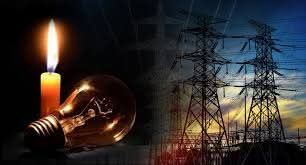
Persistent Grid Collapse, Weak Power Supply Worsening Economic Hardship: Oyintiloye
Speaking with journalists on Sunday in Osogbo, Oyintiloye said the situation had continued to deteriorate despite assurances and reforms introduced by authorities.
He described unreliable electricity as a major setback to the federal government’s reforms in the power sector.
He appealed to President Bola Tinubu to urgently intervene, noting that poor power supply is worsening economic hardship across the country.
Oyintiloye said the poor supply has compounded the effects of the current heatwave, making living conditions more difficult for many Nigerians.
The former lawmaker called for the constitution of a panel to investigate recurring national grid collapses and persistent supply challenges despite significant investments.
“It is a terrible situation across Nigeria with persistent poor power supply,” he said.
“Many small-scale businesses and large industrial players are affected, while most homes cannot boast of even three hours of electricity supply daily for domestic use.
“Despite numerous reforms and promises, the national grid continues to collapse. The situation is now compounded by gas supply shortages, weak transmission infrastructure, and chronic underinvestment across the power value chain.
“Nigerians are groaning, and urgent action must be taken by the Minister of Power, Adebayo Adelabu, and his team. The situation cannot continue like this.”
Oyintiloye warned that the situation has already triggered protests in parts of the country and could escalate if not addressed promptly.
“The situation must be quickly addressed before it becomes a national embarrassment. Nigerians need to be informed whether the issue is due to structural failure or sabotage within the power sector,” he said.
Electricity
“This epileptic power supply has led to a series of peaceful protests nationwide. I appeal for the President’s intervention before these protests turn violent.
“Electricity is essential for households and the survival of businesses. Since the end of last year, there has been no stable power supply across the country, despite assurances by those in charge and huge investments in the sector.
“Poor power supply should not be added to the challenges Nigerians are currently facing. The high cost of fuel has also made it difficult for those relying on generators to cope.”
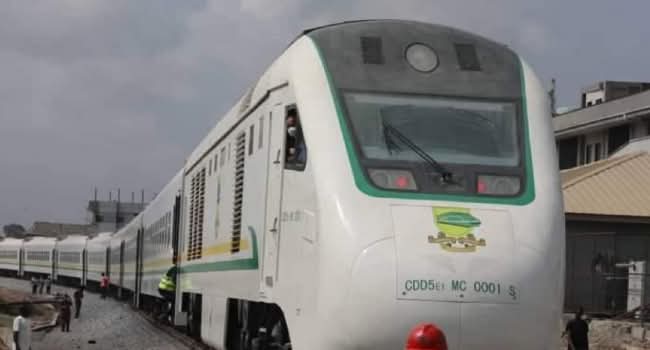
Eid-el-Fitr: NRC Sets To Run Three Lagos–Ibadan Train Trips Monday
Eid-el-Fitr: NRC sets to run three Lagos–Ibadan train trips Monday. He assured passengers of NRC’s continued commitment to safe, reliable, and efficient rail services.
This was contained in a statement issued on Friday in Lagos by NRC chief public relations officer, Callistus Unyimadu.
He said the additional trip was in response to high passenger turnout during the Eid-el-Fitr travel period.
“The extra trip is aimed at easing passenger movement and providing more travel options for commuters returning after the Eid-el-Fitr celebrations.
“Under the schedule, departures from Lagos (Mobolaji Johnson Station, Ebute Metta) will be at 7.45 a.m., 1.40 p.m., and 4.00 p.m.
“From Ibadan (Obafemi Awolowo Station, Moniya), trains will depart at 8.00 a.m., 10.50 a.m., and 4.30 p.m.,” he said.
Mr Unyimadu assured passengers of NRC’s continued commitment to safe, reliable, and efficient rail services.

NRC Sets To Run Three Lagos–Ibadan Train Trips Monday
He advised travellers to arrive early, comply with ticketing and security procedures, and plan their journeys.
“The corporation appreciates the continued patronage of its services and wishes all passengers a safe and pleasant journey,” he added.
UBA, BII Sign Letter Of Intent To Explore Trade Finance Collaboration Across Africa
United Bank for Africa (UK) Limited (“UBA UK”) and British International Investment plc (“BII”), the UK’s development finance institution and impact investor, announced that they have signed a letter of intent to develop trade finance collaboration opportunities.
The proposed initiative aims to expand access to trade and working capital facilities for businesses operating across Africa.
Access to trade finance remains one of the most significant structural constraints on African trade. Businesses, particularly small and medium-sized enterprises, are frequently unable to secure letters of credit, guarantees, and supply chain finance on commercially viable terms, limiting their capacity to export and import competitively. This trade finance gap is estimated by the African Development Bank to be over USD 80 billion annually.
To help close this gap, UBA UK, the London subsidiary of UBA Group, Africa’s Global Bank, will leverage its deep relationships across the Group’s 20-country African network to originate and structure trade finance transactions. While BII, with a mandate to support productive, sustainable, and inclusive growth across Africa, can support transactions that might otherwise fall outside conventional commercial appetite.
“The signing of this letter with BII represents a landmark moment for UBA UK and for the UBA Group’s global ambitions. As the Group’s hub for Trade Operations, UBA UK is uniquely positioned to connect African businesses with the international financial system. Working alongside BII, we can extend that capability further — mobilising capital where it matters most and helping to close the trade finance gap that holds back so much African potential,” said Lok Mishra, Chief Executive Officer, UBA UK
“British International Investment is committed to catalysing private sector growth across Africa, and trade finance is a critical enabler of that growth. We welcome the opportunity to collaborate with UBA Group, whose pan-African network and deep institutional relationships can help advance our ambition to expand access to trade and working capital finance, particularly in frontier markets,” Chris Chijiuitomi, Managing Director and Head of Africa
The announcement builds on growing momentum around intra-African trade facilitated by the African Continental Free Trade Area (AfCFTA), which entered into force in 2021 and represents one of the world’s most significant trade integration initiatives. Both institutions have identified the operationalisation of AfCFTA as a priority catalyst for a trade finance facility, with UBA UK’s network across major AfCFTA economies offering a basis for supporting businesses navigating the emerging continental market.
This also complements the UK Government’s broader engagement with African economic development, including commitments made at the UK-Africa Investment Summit, and reinforces the City of London’s role as a leading international finance centre for Africa-focused capital mobilisation.
Future cooperation remains subject to further assessment, due diligence and the completion of internal approvals by both parties.
ABOUT UNITED BANK FOR AFRICA (UK) LIMITED
UBA UK is the London-based subsidiary of United Bank for Africa Plc, one of Africa’s leading financial institutions with operations across 20 African countries, the United Kingdom, the United States of America, France, and the United Arab Emirates. UBA UK serves as the Group’s hub for Trade Operations, providing a comprehensive suite of trade finance, treasury, and correspondent banking services to institutional and corporate clients worldwide.
UBA
ABOUT UNITED BANK FOR AFRICA GROUP
United Bank for Africa is one of the largest employers in the financial sector on the African continent, with 25,000 employees group-wide and serving over 45 million customers globally. Operating in twenty African countries, the United Kingdom, the United States of America, France and the United Arab Emirates, UBA provides retail, commercial and institutional banking services, leading financial inclusion and implementing cutting-edge technology.
ABOUT BRITISH INTERNATIONAL INVESTMENT
British International Investment is the UK’s development finance institution and impact investor. The organisation invests in businesses in developing countries to improve people’s lives and help protect the planet. BII’s work targets the underlying causes of poverty and the climate crisis, helping countries break free from aid dependency for good.
Between 2022-2026, at least 30 per cent of BII’s total new commitments by value will be in climate finance. BII is also a founding member of the 2X Challenge which has raised over $33.6 billion to empower women’s economic development.
The company has investments in over 1,600 businesses across 66 countries and total net assets of £9.87 billion. For more information, visit: www.bii.co.uk | watch here. Follow British International Investment on LinkedIn, Bluesky and X.
-
 Crime11 months ago
Kogi Assembly Considers Law To Regulate Rent, Establish Control Board: Tenancy Law
-
 News12 months ago
Atiku Reveals Why He Failed To Pick Wike As Running Mate In 2023
-
 Akwa Ibom1 year ago
The Apostolic Church Gets New Territorial Chairman, Exco
-

 Crime1 year ago
Federal High Court Jails 2 For Vandalizing Transformer, Telecom Mast In Kogi
-
 News1 year ago
The Apostolic Church Gets New National President, Executive
-
 Akwa Ibom1 year ago
Umo Eno Commences Payment Of 80,000 Naira Minimum Wage With Arrears
-

 News1 year ago
Senator Natasha Returns To Senate With Husband Amid Seat Dispute
-
 Economy10 months ago
Kiyosaki: Is Tinubu’s Government Afraid Of Ibrahim Traore?