
Politics
Tinubu’s Convention Speech Signals Loyalty Demands Amid Social Strains And Institutional Biases


Tinubu’s Convention Speech Signals Loyalty Demands Amid Social Strains and Institutional Biases By Emman Usman Shehu
At Eagle Square on March 27, 2026, President Bola Tinubu addressed the All Progressives Congress (APC) during its 4th elective national convention. His speech, framed around the theme “Unity in Progress: Consolidating the Renewed Hope Agenda,” sought to project cohesion and optimism three years into a presidency defined by bold, yet controversial, economic reforms.
But beneath the formal tone lay tensions that the address did not acknowledge: a party still grappling with factionalism, public discontent over austerity measures, and rising concerns about authoritarian tendencies.
Tinubu celebrated the APC’s 2013 origins as a pragmatic coalition formed to correct the perceived failures of the PDP and paid tribute to founding figures, including the late President Muhammadu Buhari. He claimed the party’s greatest strength was its unity. Critics, however, note that defections now hailed as “voluntary endorsements” are often facilitated by political incentives, highlighting the fragile nature of this so-called unity.
The president defended his Renewed Hope Agenda, particularly the removal of fuel subsidies and the naira flotation. While these reforms have improved government revenue and moderated headline inflation (down to 15.06% in February 2026), they inflicted significant hardship. Fuel prices surged from N190 to N950 per litre, pushing millions of low-income households deeper into poverty. Social protection measures helped somewhat, but welfare conditions remain worse than before. Analysts warn that framing these sacrifices as long-term prosperity may increasingly feel hollow to citizens struggling with daily costs.
Tinubu also defended the Electoral Act 2026, dismissing opposition concerns as a “disservice” to the legislative process. Critics highlight the controversial manner of the amendment’s passage, rushed provisions for electronic results transmission, and removal of penalties for certificate forgery—all raising questions about fairness ahead of the 2027 elections.
Perhaps most worrying to observers are signs of a creeping authoritarian tilt. Peaceful protests in 2024, such as #EndBadGovernance, resulted in hundreds of arrests, including minors, under charges of treason or terrorism. Digital crackdowns targeted journalists and citizens alike, with reports of over 140 attacks on online expression. Furthermore, selective anti-corruption enforcement fuels perceptions of bias: high-profile cases against defectors often vanish once they join the APC. The recent plea bargain of former Aviation Minister Stella Oduah, resolved after her defection, has sparked controversy and reinforced these perceptions.
While Tinubu reaffirmed the importance of opposition voices, actions on the ground suggest dissent is tolerated only if polite and deferential. Rising insecurity, youth unemployment, and widening inequality underscore that Nigerians need tangible relief, not speeches promising a better tomorrow.
In essence, the APC convention projected unity and forward momentum, but analysts and critics argue that the event also revealed the party’s vulnerabilities: social hardship, institutional favoritism, and the centralization of authority. True progress, they argue, will require not just rhetorical unity but accountability, impartial governance, and protection of dissenting voices.
Dr. Shehu is an Abuja-based writer, activist, and educator.
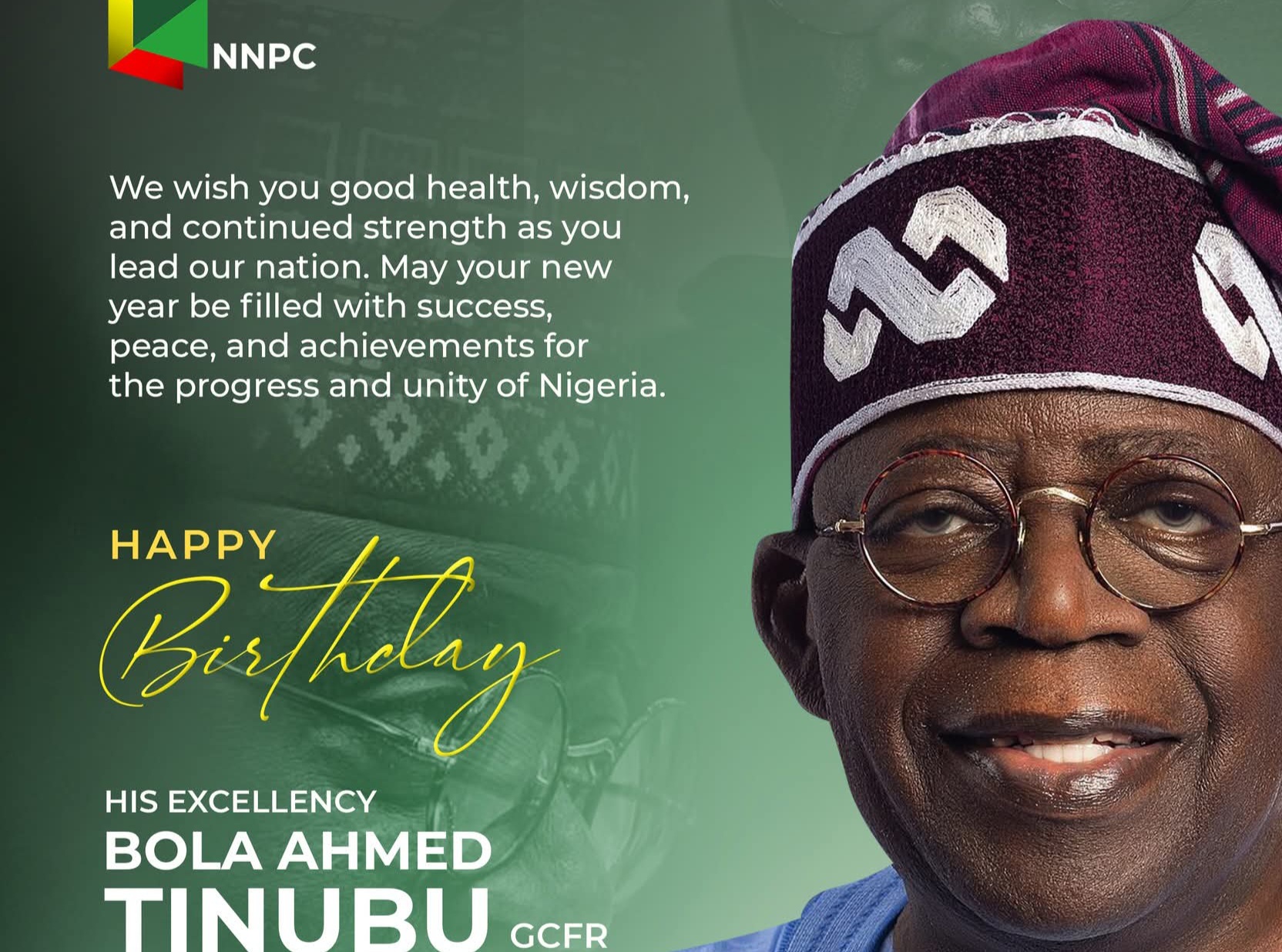
NNPC Board, Senior Management, Staff Wishes President Tinubu Happy Birthday
Happy birthday. On behalf of the Board, Senior Management, and Staff of NNPC Limited, we extend our heartfelt congratulations and best wishes to His Excellency, President Bola Ahmed Tinubu, GCFR, on the occasion of your birthday.
NNPC
We wish you good health, wisdom, and continued strength as you lead our nation. May your new year be filled with success, peace, and achievements for the progress and unity of Nigeria.
Happy Birthday, Your Excellency!
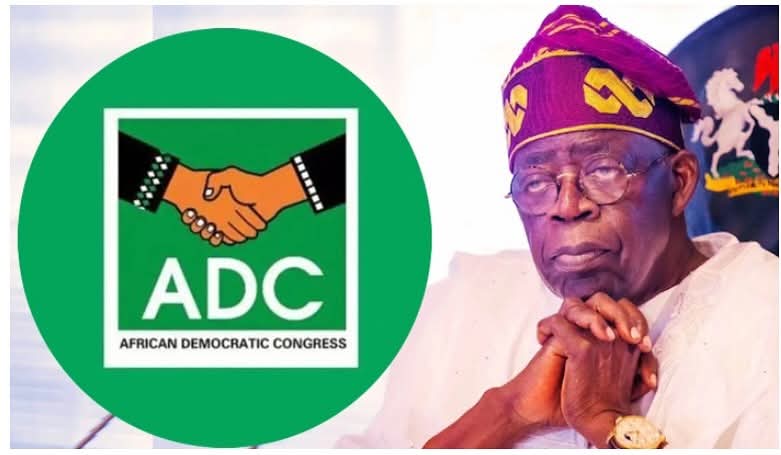
ADC Wishes President Bola Tinubu A Happy Birthday
Happy Birthday, Mr. President. As you mark another year, Nigerians reflect on a presidency whose impact is now impossible to ignore.
Under your watch, fuel prices have risen by nearly 500%, turning basic transportation into a daily calculation of survival.
Under your leadership, Nigeria has climbed to 4th on the Global Terrorism Index, while thousands of lives have been lost to violence, families shattered, and communities displaced. Every hour, a Nigerian is killed by insurgents.
Under your presidency, insecurity has not just persisted, it has adapted, expanded, and, at times, been met with language that blurs accountability, where those who terrorize Nigerians are referred to as “sons” and “brothers,” even as their victims bury loved ones.
Under your leadership, the economic strain on Nigerians has deepened, the cost of living has surged, and the ‘Renewed Hope’ that you promised has turned to hopelessness for millions of Nigerian families.
And under your watch, the political space is narrowing, raising real concerns about the steady drift toward a one-party state, in a democracy that was fought for with blood, sweat and tears.
But birthdays are for reflection.
ADC, Tinubu
So as you celebrate your final year in office, Nigerians can only offer a prayer, that this next year brings a sudden and unfamiliar miracle: that you begin to take governance more seriously; that you finally see the loss of lives under your watch as a failure of your leadership; and that you begin, at the very least, to act with the weight and responsibility of leading the world’s most populous Black nation.
Wishing you good health, improved judgment, and a sense of responsibility to the people you govern.
Happy Birthday, Mr. President!
GOMEP Report: Kano Records Dramatic Rise To Top Governance Tier

In a landmark assessment of subnational governance across Nigeria, Guild of Online Media Editors and Publishers (GOMEP) Nigeria has unveiled its 2025 Governance Accountability and Transparency Index (GATI) Report, with Kano State emerging as one of the ten top-performing states in the federation under the prestigious Category A – Exceptional Performance classification.
The latest ranking places Kano alongside Abia, Borno, Ekiti, Anambra, Kaduna, Osun, Delta, Enugu, and Kogi States as leaders in governance transparency, accountability, and institutional responsiveness.
*Kano’s Remarkable Leap: From Average to Exceptional*
Kano State’s inclusion among the top performers represents one of the most dramatic governance turnarounds recorded in the 2025 GATI Report. In the inaugural 2024 edition, the state was ranked under Category C – Average Performance, with an index score of 58.6 points.
However, in the 2025 assessment, Kano surged to Category A – Exceptional Performance, recording an impressive 89.1 points. This extraordinary leap reflects a 30.5-point increase, translating to a 52.05% improvement in governance performance—one of the most significant upward movements nationwide.
*Leadership Driving Transformation*
This remarkable progress has been largely attributed to the governance style and reform-driven leadership of Governor Abba Kabir Yusuf, whose administration has prioritized transparency, institutional accountability, and people-oriented governance.
Under his leadership, Kano State has witnessed measurable improvements across key governance indicators, including:
1. Fiscal Transparency and Budget Reforms: The state has strengthened public access to budgetary information, enhanced fiscal discipline, and improved disclosure of government expenditures.
2. Public Sector Accountability: Institutional mechanisms have been reinforced to ensure oversight, compliance, and responsible management of public resources.
3. Citizen Engagement: The administration has expanded platforms for public participation, ensuring that citizens play a more active role in governance processes.
4. Digital Governance Initiatives: Deployment of digital systems has improved service delivery, reduced bureaucratic bottlenecks, and enhanced access to government information.
5. Infrastructure and Social Development: Significant investments in education, healthcare, urban renewal, and rural development have contributed to improved public service delivery and citizen satisfaction.
6. Procurement Transparency: Reforms in public procurement processes have ensured openness in contract awards and reduced corruption risks.
7. Media Freedom and Information Access: The state has fostered a more enabling environment for media operations and information dissemination, strengthening democratic accountability.
*GATI Report: A Benchmark for Governance Excellence*
The GATI Report, developed by GOMEP Nigeria, serves as an independent governance performance evaluation framework designed to assess transparency, accountability, and institutional effectiveness across Nigeria’s 36 states.
Established to deepen democratic governance, the index evaluates states using rigorous methodologies, including
Nationwide citizen and stakeholder surveys,
Expert assessments by governance professionals,
Review of official government documents, and Data-driven statistical analysis,
*Multi-layered verification processes*
For the 2025 edition, over 12,600 data entries were generated from approximately 350 governance indicators per state, making the report one of the most comprehensive governance assessment tools in Nigeria. States like Kano achieving Category A – Exceptional Performance scored between 85% and 100%, demonstrating strong adherence to global best practices in governance.
*Recognition and National Significance*
As part of the official unveiling of the report, GOMEP Nigeria announced that the ten top-performing states, including Kano, will be formally honoured with Certificates of Exceptional Performance. In recognition of Kano State’s outstanding achievement, a high-level delegation from GOMEP Nigeria is scheduled to embark on a media project tour and courtesy visit to the Kano State Government later next month. The visit will include Formal presentation of the full GATI Report, Official conferment of the Certificate of Exceptional Performance on Governor Abba Kabir Yusuf, and Strategic media engagement highlighting Kano’s governance reforms and development strides
*A Model for Governance Reform*
Kano State’s transformation from an average-performing state to one of Nigeria’s top governance leaders underscores a critical message from the 2025 GATI Report: intentional reforms, strong political will, and institutional discipline can deliver measurable governance results within a short period.
The state’s performance not only elevates its national standing but also positions it as a model for other states seeking to strengthen transparency, accountability, and citizen-centered governance.
The elevation of Kano State into the elite league of top-performing states in Nigeria’s governance index marks a defining moment in its administrative history. It reflects a deliberate shift towards responsible leadership, institutional integrity, and sustainable development.
As GOMEP Nigeria continues to expand the GATI initiative as a national governance barometer, Kano’s success story stands as compelling evidence that transformative leadership and strategic reforms remain the of exceptional governance.
-

 Crime11 months ago
Kogi Assembly Considers Law To Regulate Rent, Establish Control Board: Tenancy Law
-

 News1 year ago
Atiku Reveals Why He Failed To Pick Wike As Running Mate In 2023
-

 Akwa Ibom1 year ago
The Apostolic Church Gets New Territorial Chairman, Exco
-

 Crime1 year ago
Federal High Court Jails 2 For Vandalizing Transformer, Telecom Mast In Kogi
-
 News1 year ago
The Apostolic Church Gets New National President, Executive
-

 Akwa Ibom1 year ago
Umo Eno Commences Payment Of 80,000 Naira Minimum Wage With Arrears
-

 News1 year ago
Senator Natasha Returns To Senate With Husband Amid Seat Dispute
-

 Economy10 months ago
Kiyosaki: Is Tinubu’s Government Afraid Of Ibrahim Traore?