
Economy
The Roaming Deal That Made 9mobile MTN’s ‘Number One Customer’: EXPLAINER


The Roaming Deal That Made 9mobile MTN’s ‘Number One Customer’: EXPLAINER
The roaming deal that made 9mobile MTN’s ‘number one customer’. On July 2, MTN Nigeria announced a three-year national roaming agreement to allow 9mobile subscribers to access MTN’s extensive network infrastructure across the country.
The deal was signed with the Emerging Markets Telecommunications (EMT) Services Limited — operators of 9mobile — following the approval of the Nigerian Communications Commission (NCC).
In a corporate filing on the Nigerian Exchange Limited (NGX), MTN had said the agreement would enable 9mobile customers to roam seamlessly on its network, promoting industry collaboration and improving operational efficiency.
Both telcos believe the roaming arrangement will contribute to a more effective use of telecommunications resources and accelerate efforts to expand connectivity across the country.
Officially confirming the partnership at a press briefing on July 4, Obafemi Banigbe, the chief executive officer (CEO) of 9mobile, said the service was being tested to ensure seamless connectivity for subscribers.
“We expect that all our tests will be completed over the weekend. So, we expect that within the month of July, we will be able to have a rollout across the country based on the outcome of the tests that we have done,” Banigbe said.
WHAT IS ROAMING?
A popular term, roaming is an aspect of infrastructure sharing in the telecoms industry. According to the NCC, the service enables a mobile subscriber to automatically make and receive voice calls, send and receive data, or access other services when travelling outside a particular network geographical area by utilising the network coverage of other networks.
The service is facilitated through agreements between different network operators, allowing users of one network to use the services of another network – a crucial framework for maintaining seamless connectivity for mobile users who are on the move.
WHY WAS IT NECESSARY?
The recent outburst of 9mobile subscribers over the telco’s poor service is the result of the quiet struggles of the company, which has led to the dumping of the network. 9mobile’s customer base has shrunk from 3.63 million in December 2023 to 2.6 million as at May, according to data from the Nigerian Communications Commission (NCC).
The company’s network reliability has steadily declined, marked by outages, poor coverage, and slow internet speed. According to reports, limited investment under new owners, LightHouse Capital, has worsened the situation. The roaming deal with MTN is seen as a critical lifeline for 9mobile — an operator struggling to serve its 1.55 percent market share.
WHAT ARE THE TYPES OF ROAMING SERVICES IN TELECOMS SECTOR?
The two main types are national and international roaming services.
International roaming occurs when a user travels to a different country and connects to a local network operator in that country, allowing the user to maintain mobile services while abroad. The downside is that it is more expensive as it attracts higher costs.
National roaming, on the other hand, happens when a mobile user connects to a different network operator within the same country. This is adopted in areas where the user’s home network may have limited or no coverage, allowing access to services via another domestic network. The MTN-9mobile deal is a national roaming arrangement.
HOW DOES IT WORK?
According to Javna, a communications technology provider, roaming functions through a coordinated process between the home network (the original service provider of the user) and the visited network (the local network in the area where the user is travelling). The process includes identification and authentication, agreement check, service provision, and data transfer.
Javna said when a mobile user travels to a different area, their device sends a signal which is picked up by the local (or visited) network.
The visited network identifies the user’s home network through their SIM card information and requests authentication, which also involves checking if there is a roaming agreement with the user’s home network. If such an agreement exists, it allows the device to access its services: voice, SMS, and data services.
The usage details are recorded by the visited network and sent to the home network, which then calculates the charges based on predetermined roaming fees and includes them in the user’s bill.
WHAT IS THE STATE OF 9MOBILE’S NETWORK INFRASTRUCTURE UNDER THE ROAMING DEAL?
At the aforementioned press conference, Banigbe informed journalists that the deal with MTN will only apply to areas where 9mobile currently lacks coverage, stressing that the company still has its own network infrastructure.
But industry stakeholders disagree with his position.
TheCable understands that 9mobile “has no network at the moment”, since the roaming deal is active. A source said the company’s base stations are shut down, indicating that their spectrum is not in use. More so, the roaming agreement reportedly grants MTN access to 9mobile’s 900 MHz, 1800 MHz, and 2100 MHz frequency bands.
WHO PAYS FOR IT?
Typically, roaming attracts additional costs when a mobile user accesses services outside their home network’s coverage area, especially during international roaming.
The MTN-9mobile deal is a commercial arrangement based on a framework that is “profitable to MTN and affordable to 9mobile”.
Under the agreement, billing for subscribers and other services will remain unchanged, further suggesting that 9mobile – described as MTN’s number one customer – will bear all costs attached to the deal.
“If your number is active, meaning you have recharged within the last 90 days, you don’t need to re-register. If you haven’t recharged, you simply recharge, and you will be able to latch onto the 9mobile network just like before,” Banigbe had said.
IS THIS THE FIRST ROAMING AGREEMENT BETWEEN BOTH TELCOS?
The latest agreement is not the first. In 2020, the NCC granted approval for the telcos to conduct a three-month trial of the national roaming service. The trial approval covered a few local government areas in Ondo state.
Umar Garba Danbatta, the former executive vice-chairman (EVC) of NCC, said the primary objective of the national roaming service trial was to encourage network resource sharing among operators.

The Roaming Deal That Made 9mobile MTN’s ‘Number One Customer’
Apart from the previous and current MTN-9mobile agreements, TheCable understands that there have been roaming and infrastructure sharing discussions among several operators, but not all have progressed to full commercial implementation.
“Some have taken the form of passive infrastructure sharing, while others have explored active network sharing models,” said Tony Izuagbe Emoekpere, president of the Association of Telecommunications Companies of Nigeria (ATCON).
However, the MTN-9mobile deal remains the most prominent public example of active roaming between two mobile network operators in Nigeria.
Elsewhere, MTN South Africa struck a national roaming deal with Cell C, a telecom firm in the region, in 2018.
WHAT ARE INDUSTRY EXPERTS SAYING ABOUT THE AGREEMENT?
Speaking in the organisation’s half-year financial statement, Karl Toriola, MTN’s CEO, said the agreement aligns with the telco’s 2025 strategy and underscores “our commitment to industry collaboration and sustainability, in support of the NCC’s vision of a fully connected Nigeria and deepening market inclusion”.
Emoekpere described the deal as a positive development for the industry that represents a practical step toward improving service quality, expanding coverage, and optimising existing infrastructure.
He said the development also demonstrates how collaboration — rather than isolated competition — can support universal service goals and address persistent gaps in underserved areas.
Emoekpere said ATCON commends both parties for taking the step, and fully supports infrastructure sharing and collaborative partnerships that enhance service delivery while ensuring fair market dynamics.











Persistent Grid Collapse, Weak Power Supply Worsening Economic Hardship: Oyintiloye
Speaking with journalists on Sunday in Osogbo, Oyintiloye said the situation had continued to deteriorate despite assurances and reforms introduced by authorities.
He described unreliable electricity as a major setback to the federal government’s reforms in the power sector.
He appealed to President Bola Tinubu to urgently intervene, noting that poor power supply is worsening economic hardship across the country.
Oyintiloye said the poor supply has compounded the effects of the current heatwave, making living conditions more difficult for many Nigerians.
The former lawmaker called for the constitution of a panel to investigate recurring national grid collapses and persistent supply challenges despite significant investments.
“It is a terrible situation across Nigeria with persistent poor power supply,” he said.
“Many small-scale businesses and large industrial players are affected, while most homes cannot boast of even three hours of electricity supply daily for domestic use.
“Despite numerous reforms and promises, the national grid continues to collapse. The situation is now compounded by gas supply shortages, weak transmission infrastructure, and chronic underinvestment across the power value chain.
“Nigerians are groaning, and urgent action must be taken by the Minister of Power, Adebayo Adelabu, and his team. The situation cannot continue like this.”
Oyintiloye warned that the situation has already triggered protests in parts of the country and could escalate if not addressed promptly.
“The situation must be quickly addressed before it becomes a national embarrassment. Nigerians need to be informed whether the issue is due to structural failure or sabotage within the power sector,” he said.

Electricity
“This epileptic power supply has led to a series of peaceful protests nationwide. I appeal for the President’s intervention before these protests turn violent.
“Electricity is essential for households and the survival of businesses. Since the end of last year, there has been no stable power supply across the country, despite assurances by those in charge and huge investments in the sector.
“Poor power supply should not be added to the challenges Nigerians are currently facing. The high cost of fuel has also made it difficult for those relying on generators to cope.”
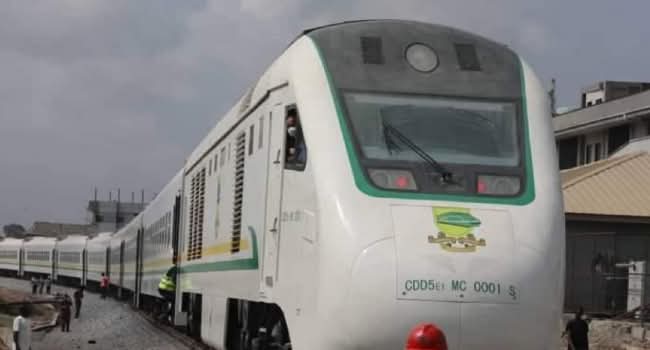
Eid-el-Fitr: NRC Sets To Run Three Lagos–Ibadan Train Trips Monday
Eid-el-Fitr: NRC sets to run three Lagos–Ibadan train trips Monday. He assured passengers of NRC’s continued commitment to safe, reliable, and efficient rail services.
This was contained in a statement issued on Friday in Lagos by NRC chief public relations officer, Callistus Unyimadu.
He said the additional trip was in response to high passenger turnout during the Eid-el-Fitr travel period.
“The extra trip is aimed at easing passenger movement and providing more travel options for commuters returning after the Eid-el-Fitr celebrations.
“Under the schedule, departures from Lagos (Mobolaji Johnson Station, Ebute Metta) will be at 7.45 a.m., 1.40 p.m., and 4.00 p.m.
“From Ibadan (Obafemi Awolowo Station, Moniya), trains will depart at 8.00 a.m., 10.50 a.m., and 4.30 p.m.,” he said.
Mr Unyimadu assured passengers of NRC’s continued commitment to safe, reliable, and efficient rail services.

NRC Sets To Run Three Lagos–Ibadan Train Trips Monday
He advised travellers to arrive early, comply with ticketing and security procedures, and plan their journeys.
“The corporation appreciates the continued patronage of its services and wishes all passengers a safe and pleasant journey,” he added.
UBA, BII Sign Letter Of Intent To Explore Trade Finance Collaboration Across Africa
United Bank for Africa (UK) Limited (“UBA UK”) and British International Investment plc (“BII”), the UK’s development finance institution and impact investor, announced that they have signed a letter of intent to develop trade finance collaboration opportunities.
The proposed initiative aims to expand access to trade and working capital facilities for businesses operating across Africa.
Access to trade finance remains one of the most significant structural constraints on African trade. Businesses, particularly small and medium-sized enterprises, are frequently unable to secure letters of credit, guarantees, and supply chain finance on commercially viable terms, limiting their capacity to export and import competitively. This trade finance gap is estimated by the African Development Bank to be over USD 80 billion annually.
To help close this gap, UBA UK, the London subsidiary of UBA Group, Africa’s Global Bank, will leverage its deep relationships across the Group’s 20-country African network to originate and structure trade finance transactions. While BII, with a mandate to support productive, sustainable, and inclusive growth across Africa, can support transactions that might otherwise fall outside conventional commercial appetite.
“The signing of this letter with BII represents a landmark moment for UBA UK and for the UBA Group’s global ambitions. As the Group’s hub for Trade Operations, UBA UK is uniquely positioned to connect African businesses with the international financial system. Working alongside BII, we can extend that capability further — mobilising capital where it matters most and helping to close the trade finance gap that holds back so much African potential,” said Lok Mishra, Chief Executive Officer, UBA UK
“British International Investment is committed to catalysing private sector growth across Africa, and trade finance is a critical enabler of that growth. We welcome the opportunity to collaborate with UBA Group, whose pan-African network and deep institutional relationships can help advance our ambition to expand access to trade and working capital finance, particularly in frontier markets,” Chris Chijiuitomi, Managing Director and Head of Africa
The announcement builds on growing momentum around intra-African trade facilitated by the African Continental Free Trade Area (AfCFTA), which entered into force in 2021 and represents one of the world’s most significant trade integration initiatives. Both institutions have identified the operationalisation of AfCFTA as a priority catalyst for a trade finance facility, with UBA UK’s network across major AfCFTA economies offering a basis for supporting businesses navigating the emerging continental market.
This also complements the UK Government’s broader engagement with African economic development, including commitments made at the UK-Africa Investment Summit, and reinforces the City of London’s role as a leading international finance centre for Africa-focused capital mobilisation.
Future cooperation remains subject to further assessment, due diligence and the completion of internal approvals by both parties.
ABOUT UNITED BANK FOR AFRICA (UK) LIMITED
UBA UK is the London-based subsidiary of United Bank for Africa Plc, one of Africa’s leading financial institutions with operations across 20 African countries, the United Kingdom, the United States of America, France, and the United Arab Emirates. UBA UK serves as the Group’s hub for Trade Operations, providing a comprehensive suite of trade finance, treasury, and correspondent banking services to institutional and corporate clients worldwide.
UBA
ABOUT UNITED BANK FOR AFRICA GROUP
United Bank for Africa is one of the largest employers in the financial sector on the African continent, with 25,000 employees group-wide and serving over 45 million customers globally. Operating in twenty African countries, the United Kingdom, the United States of America, France and the United Arab Emirates, UBA provides retail, commercial and institutional banking services, leading financial inclusion and implementing cutting-edge technology.
ABOUT BRITISH INTERNATIONAL INVESTMENT
British International Investment is the UK’s development finance institution and impact investor. The organisation invests in businesses in developing countries to improve people’s lives and help protect the planet. BII’s work targets the underlying causes of poverty and the climate crisis, helping countries break free from aid dependency for good.
Between 2022-2026, at least 30 per cent of BII’s total new commitments by value will be in climate finance. BII is also a founding member of the 2X Challenge which has raised over $33.6 billion to empower women’s economic development.
The company has investments in over 1,600 businesses across 66 countries and total net assets of £9.87 billion. For more information, visit: www.bii.co.uk | watch here. Follow British International Investment on LinkedIn, Bluesky and X.
-
 Crime11 months ago
Kogi Assembly Considers Law To Regulate Rent, Establish Control Board: Tenancy Law
-

 News12 months ago
Atiku Reveals Why He Failed To Pick Wike As Running Mate In 2023
-

 Akwa Ibom1 year ago
The Apostolic Church Gets New Territorial Chairman, Exco
-

 Crime1 year ago
Federal High Court Jails 2 For Vandalizing Transformer, Telecom Mast In Kogi
-

 News1 year ago
The Apostolic Church Gets New National President, Executive
-
 Akwa Ibom1 year ago
Umo Eno Commences Payment Of 80,000 Naira Minimum Wage With Arrears
-

 News1 year ago
Senator Natasha Returns To Senate With Husband Amid Seat Dispute
-

 Economy10 months ago
Kiyosaki: Is Tinubu’s Government Afraid Of Ibrahim Traore?