
Economy
President Tinubu Orders NNPC To Remit Oil Taxes, Royalties Directly

President Tinubu Orders NNPC To Remit Oil Taxes, Royalties Directly
President Tinubu orders NNPC to remit oil taxes, royalties directly. President Bola Tinubu has suspended the collection of management and frontier exploration fees by the Nigerian National Petroleum Company Limited as part of a sweeping Executive Order aimed at safeguarding oil and gas revenues due to the Federation.
The directive, announced in a statement on Wednesday by the Assistant Director of Information and Public Relations at the Federal Ministry of Finance, Uloma Amadi, also orders the direct remittance of taxes, royalties, and profit oil under Production Sharing Contracts to the appropriate fiscal authorities, effectively blocking deductions at source.
According to the ministry, the President signed the Executive Order last week to realign oil and gas revenue flows with constitutional provisions and address revenue leakages that have weakened inflows into the Federation Account.
The statement read, “Last week, His Excellency President Bola Tinubu signed an Executive Order aimed at realigning oil and gas revenue flows with constitutional requirements. The Order seeks to strengthen fiscal transparency, clarify regulatory mandates, and enhance revenues accruing to the Federation from the oil and gas sector.”
The new order suspends NNPC’s collection of management and frontier exploration fees, halts payments of gas flare penalties into the Midstream Gas Infrastructure Fund, and clarifies the delineation of responsibilities between the Nigerian Upstream Petroleum Regulatory Commission and the Nigerian Midstream and Downstream Petroleum Regulatory Authority.
It also establishes an inter-agency implementation committee, chaired by the Minister of Finance and Coordinating Minister for the Economy, to ensure seamless execution.
The ministry explained that the action reinforces provisions of the 1999 Constitution of the Federal Republic of Nigeria, which vests ownership of mineral resources in the Federation and mandates that all revenues derived from them be paid into the Federation Account.
“The Executive Order reinforces the provisions of the 1999 Constitution of the Federal Republic of Nigeria, which vest ownership of mineral resources in the Federation and require that all revenues derived from those resources be paid into the Federation Account for appropriation in accordance with established constitutional and statutory rules,” the statement said.
It added that the order specifically addresses fiscal and structural arrangements introduced under the Petroleum Industry Act 2021 that have resulted in off-budget allocations and deductions from Federation revenues.
The government said the measure had become urgent in view of declining oil and gas revenue inflows into the Federation Account despite improvements in production and favourable market conditions.
“The Order has become both necessary and urgent considering the sustained decline in oil and gas revenue inflows into the Federation Account, despite improvements in production levels and favourable market conditions.
“This shortfall has constrained the government’s capacity to meet budgetary obligations and to finance critical public investments in education, healthcare, and infrastructure,” the ministry stated.
The ministry stressed that the oil and gas sector must operate in a way that delivers transparent, constitutionally compliant revenue flows.
“The fundamental purpose of the nation’s oil and gas sector, including the national oil company, is to convert hydrocarbon resources into sustainable revenues, investment, and economic activity that benefit the broader economy. Achieving this objective requires revenue flows that are transparent, constitutionally compliant, and fully accounted for,” it said.
The statement noted that the reforms come at a time of rising domestic fiscal pressures and heightened global competition for energy capital.
“At the same time, global energy markets are becoming more competitive and capital is increasingly selective. In such an environment, Nigeria cannot afford inefficiencies in the management of its most strategic economic asset,” the ministry added.
The Executive Order takes immediate effect and is described as an interim corrective measure pending legislative amendments to entrench the reforms in statute.
“Collectively, these measures represent another significant step toward strengthening fiscal discipline, safeguarding revenue integrity, and ensuring that Nigeria’s natural resources deliver tangible value to citizens, investors, and the economy,” the statement said.
The move signals a tightening of federal oversight of oil revenue administration and could reshape cash flow structures within the sector, particularly regarding NNPC’s cost recovery and funding mechanisms under the Petroleum Industry Act.
The PUNCH earlier in September 2025 reported that the Nigerian National Petroleum Company Limited received N318.05bn between January and August 2025 for frontier oil exploration.
NNPC To Remit Oil Taxes
This was according to documents from the September 2025 Federation Account Allocation Committee meeting obtained by The PUNCH.
The deductions represent 30 per cent of Production Sharing Contract profits, which are automatically set aside each month for exploration in inland basins.
The same 30 per cent rule also applied to NNPC’s management fees, which mirrored the frontier deductions exactly.
The Director-General of the Budget Office of the Federation, Tanimu Yakubu, earlier said Nigeria had lost nearly 60 per cent of its gross oil revenue to deductions under the Petroleum Industry Act 2022, which allocates 30 per cent to the NNPC as management fees and another 30 per cent to the Frontier Exploration Fund.
Yakubu said he had begun moves in the National Assembly to amend the PIA to recover part of the lost revenue.
Tinubu earlier called for a reassessment of NNPC’s 30 per cent management fee and 30 per cent frontier exploration deduction under the Petroleum Industry Act.
He tasked the Economic Management Team, chaired by the Minister of Finance, Wale Edun, to present actionable recommendations to the FEC on the optimal way forward.






EFCC Boss Olukoyede Links Corruption To Non- Compliance With Laws
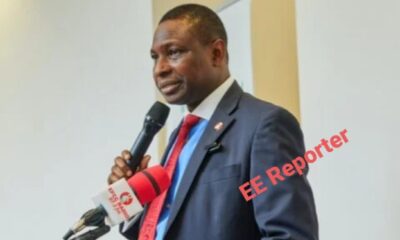
EFCC boss Olukoyede links corruption to non- compliance with laws. The Executive Chairman of the Economic and Financial Crimes Commission, EFCC, Mr. Ola Olukoyede has linked the menace of corruption and poverty in the country to non-compliance with laws.
He disclosed this on Thursday, February 19, 2026 when the executives of Fiscal Responsibility Commission, FRC, led by the Chairman, Victor Chinemerem Muruako signed a Memorandum of Understanding, MoU on collaboration with the EFCC at the anti-graft’s corporate headquarters in Jabi, Abuja.
The EFCC boss noted in his remarks that it was important for him that the country moved forward, regretting, however, that the major obstacle was the general aversion for compliance with rules and regulations. “One of our major challenges is compliance with laws. If our institutions, our agencies and Nigerians are made to comply with our laws, even if at a rate of 70 to 80% compliance with laws, Nigeria will not be where it is today because the resources are there.”
He drew support for this assertion from his experiences on the job. “I can tell you this by the work I do and what I see every day. I know this country is blessed. We don’t have any business with poverty, only because people don’t take laws seriously. We don’t take enforcement seriously. They don’t take compliance seriously. That’s why we are where we are.”
Olukoyede expressed joy at the increased window of collaboration the signing of the MoU will bring about in the working relationship between EFCC and FRC, especially in the area of joint investigation team, which he observed could draw FRC to the forefront of the anti-corruption fight. “We can set up a joint investigation team and both agencies will be at the forefront of the fight which is for me, very key.”
The enhanced cooperation, he observed, would ensure better cleansing of the contract and procurement processes of the MDAs, their budgets as well as their better compliance to laws. “I welcome this collaboration, I welcome this synergy and I believe Nigeria and the general public will benefit from it.
We want to see our budgetary processes tidied up. We want to see our procurement and contract processes tidied up as well and compliance with the laws,” he said.
He further noted that a visible collaboration of the EFCC and FRC will send the signal across to the public that it’s no longer business as usual and pointed to the need to put the MoU into function. According to him, “By signing this MOU we will be having access to your reports. If the two of us work together, we will be able to sanitize this system to a reasonable extent. It’s not just for us to sign an MoU, it’s important for us to operationalize it.”
While urging the FRC to rise to the occasion in seeing through the budget implementation of MDAs as a regulator, he noted that 80% of the country’s public corruption could be avoided if the sanctity of procurement and contract processes is ensured.
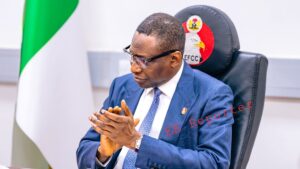
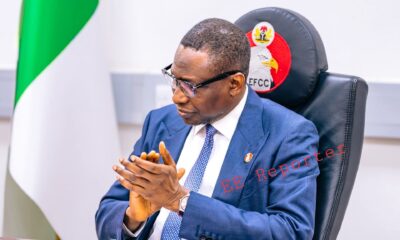
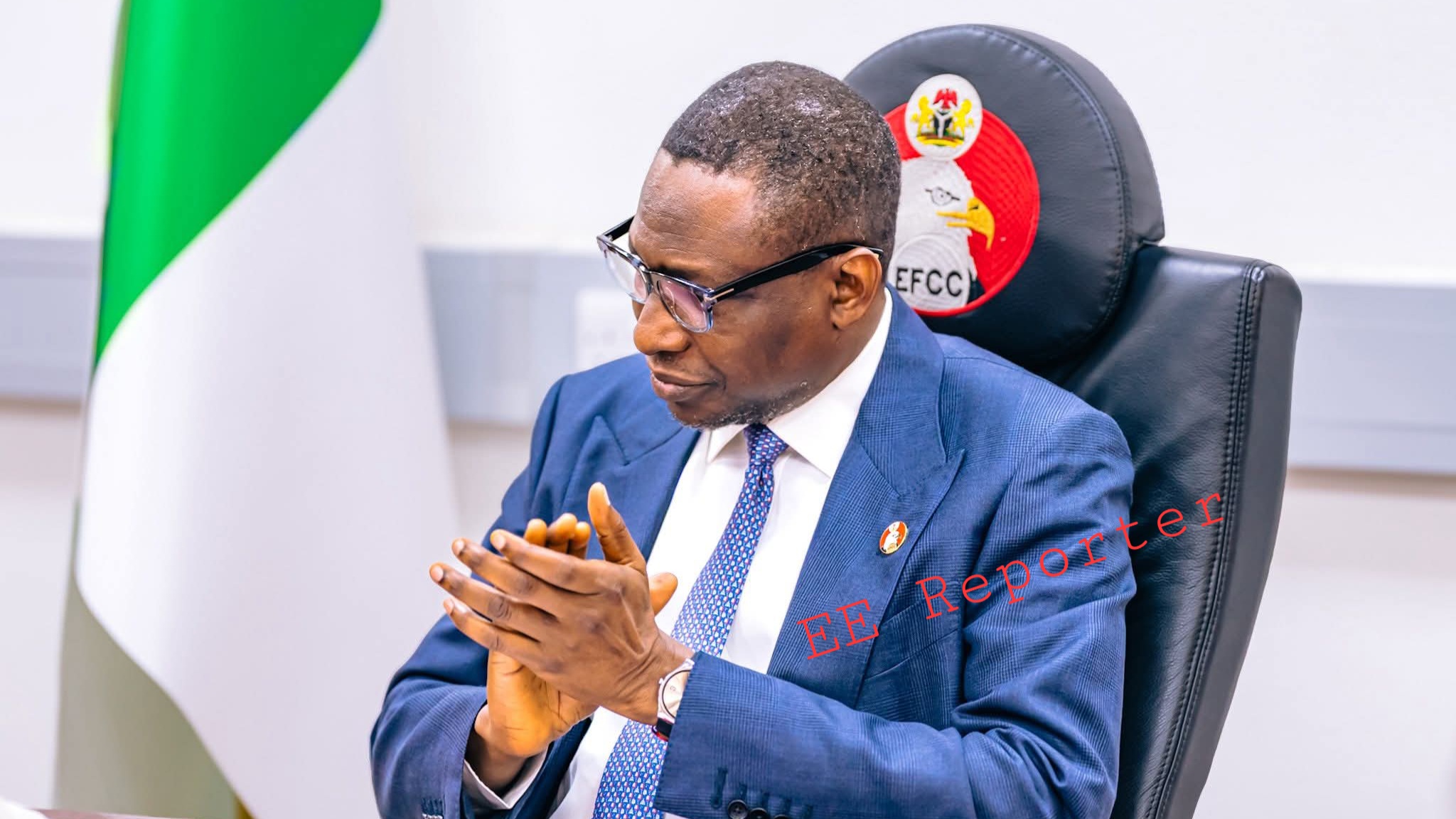
Ola Olukoyede
He noted that the Financial Action Task Force, FATF was able to delist Nigeria from its Grey list as a result of hard work of anti-corruption agencies in the area of enhanced money laundering and terrorist financing monitoring, noting that the agencies are prepared to do much more.
Muruako in his own remarks also expressed delight and optimism with the MoU and praised Olukoyede and the EFCC for superlative performance in the fight against corruption, economic and financial crimes.
“I commend you. I also commend your team for working hard. I’m very proud of your agency. I feel fulfilled that eventually this MoU is being signed today. And I want to assure you on behalf of the Fiscal Responsibility Commission that it will be a lot of encouragement to our commission.
It will help us know that we are really working with you one-on-one. It is not just the FRC that would be enriched, this hydra-headed element called corruption would cut off,” he said.
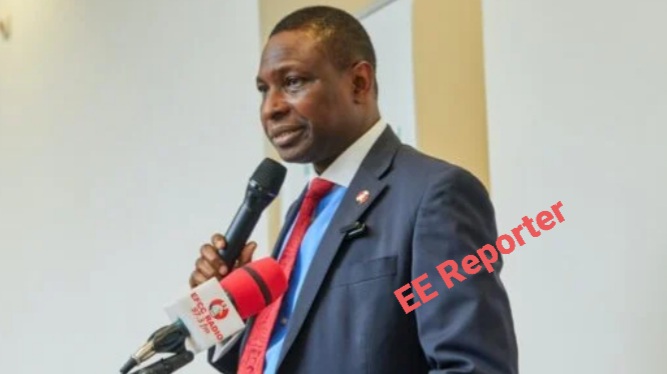
Ola Olukoyede Restates Role Of Preventive Frameworks In Fight Against Corruption
Ola Olukoyede restates role of preventive frameworks in fight against corruption. The Executive Chairman of the Economic and Financial Crimes Commission, EFCC, Mr. Ola Olukoyede, has reiterated the critical need for proactive prevention in the fight against corruption, stressing that anti-corruption efforts must go beyond investigation and prosecution to include early risk detection and institutional safeguards.
He made this known on Thursday, February 19, 2026, at the Commission’s Corporate Headquarters in Jabi, Abuja, during the signing of a Memorandum of Understanding (MoU) between the EFCC and BudgIT Foundation.
Speaking at the event, Olukoyede recalled the commitment he made during his Senate confirmation, noting that prevention has remained a central pillar of his administration.
“Coming to this office, I told the Senate during my confirmation that we can do things better. We do not necessarily have to wait for money to be stolen before we act,” he said.
He explained that he had presented to the lawmakers an analysis of funds lost to procurement fraud in a particular year and what such resources could have delivered for the country if properly utilized.
“I gave them an analysis of the monies that were lost to the country through procurement fraud in a particular year and what that money could deliver. I posed a question to them that we need to do more on prevention,” he said.
According to him, that resolve led to the establishment of a Directorate of Fraud Risk Assessment and Control within the EFCC, headed by a Director, with a mandate to focus on preventive mechanisms.
“From the inception of my office, I set up a Directorate called Fraud Risk Assessment & Control. We have since started our prevention activities. It is not enough to track stolen funds; we must stop them from being stolen in the first place,” he stated.
Olukoyede emphasized the importance of interrogating processes and asking critical questions at the budget implementation stage.
“If money is budgeted for a project, we must ask questions. What is happening to it? We should not wait until the project fails before we move. That is why that department was set up,” he said.
He disclosed that the Directorate had already recorded significant successes.
“They have been working and were able to prevent tens of thousands, if not hundreds of millions of naira that would have been stolen in one of their operations,” he said.
Earlier in his remarks, The Deputy Country Director of BudgIT, Vahyala Kwaga, described the MoU as symbolic and strategic, noting that partnership remains one of the most effective tools in combating corruption.
“For me, the MoU is symbolic in several ways of partnership and one way to fight corruption in Nigeria. Sometimes it is not about pointing fingers but about creating relationships,” he said.
According to him, building relationships fosters exchange of ideas and perspectives that can drive meaningful reforms.
“In creating relationships, we exchange ideas and perspectives, and that makes us look at issues differently. We can then direct change without pressing a button, driving a car or showing a weapon,” he said.
Kwaga stressed that civil society organizations play a critical role in complementing government efforts.
“We believe the work we do as a civil society organization is critical to the success of the government itself, and one of such partnerships is with the EFCC. The EFCC is not just the foremost anti-corruption agency in Nigeria but also a partner in purpose,” he said.
EFCC Chairman Ola Olukoyede
Also speaking at the event, Emmanuel Uche, Project Manager, Anti-Corruption, RoLAC, commended Olukoyede’s leadership, describing it as transformative. “We recognize the leadership of my brother, Olukoyede, who is giving new direction not only to the EFCC but to Nigeria, the impact of which we are all enjoying,” he said.
He noted that recent reforms had begun to restore Nigeria’s credibility in the global financial system.
“Just recently, every one of us has a new lease of life as we can now, incrementally, be accepted back into the global financial community. We are even enjoying the use of our local debit cards for international transactions,” he said.
Uche added that the EFCC had consistently been led by capable hands but that the current leadership was ushering in renewed optimism.
“The EFCC has been lucky with leaders, but it has never been as lucky as in this administration. A lot of things are changing and everybody is happy about it,” he said.

2026: EFCC Trains Officers On Insurance-Related Fraud Handling
2026: EFCC trains officers on insurance-related fraud handling. The Economic and Financial Crimes Commission, EFCC has organised a capacity development programme for its officers on insurance-related fraud prevention, detection, and investigation.
The three-day training which ran from February 16 to 18, 2026 were for the Commission’s officers in its Northwest and Northeast directorates, held at the EFCC Kaduna Zonal Directorate.
The event was motivated by the need to enhance the professional competence of the Commission’s officers in the two zones in identifying, preventing, and investigating fraud within the insurance sector.
The Executive Chairman of the EFCC, Mr. Ola Olukoyede, in his opening remark, delivered on his behalf by Head, Proceeds of Crime Management, Kaduna Zonal Directorate, ACE I Emeka Okonjo, expressed appreciation to the organizers for initiating the training, which he described “as timely and strategic,” noting that it reflected the Commission’s commitment to continuous capacity development and proactive response to emerging financial crime trends.
Olukoyede noted that insurance fraud undermines public confidence, weakens financial institutions, and poses serious threats to economic stability. Part of the requirement for addressing it, he said, was for the Commission’s officers to be well-trained and equipped with specialized knowledge, modern investigative tools, and a clear understanding of evolving fraud typologies.
The Acting Commandant of EFCC Academy, Dr. Joseph Ogwiji, in his remarks, delivered by Assistant Commander of the EFCC 11, ACE II Joy Idoko disclosed that the training was thoughtfully designed to equip participants with practical knowledge, contemporary investigative techniques, and professional insights, required to effectively combat insurance-related fraud. He encouraged participants to actively engage with facilitators, share field experiences, and take full advantage of the learning opportunities throughout the programme.
Day one resource person, Professor Michael Ikupolati, an academic and expert in leadership, corporate governance, and insurance expressed gratitude to the EFCC management for the opportunity to contribute to the programme. He delivered three lectures, namely: “Introduction to Insurance/Practices in Nigeria”; “Insurance Products, Premiums, and Fraud Prevention in Nigeria” and “ML/ FT/ PF Risks in the Industry and their Detection and Prevention.”
EFCC
Assistant Commander of the EFCC 11, ACE II Sophia Agbo lectured on “Legal/Regulatory Frameworks for Insurance Fraud Prevention and Insurance Evidence Analysis and Prosecution”; ACE II Idoko Joy-Ochonu, lectured on “Strengthening Internal Controls and Compliance”, while Chief Superintendent of EFCC, CSE Stephanie Philip Fitswemila, spoke on “Common Insurance Fraud Schemes/Detection Techniques and Insurance Fraud Investigation Process.”
Discussion sessions of the training provided participants with in-depth analysis of the lectures. Certificates of participation were given to all the participants, handed out by the Acting Director, EFCC Kaduna Zonal Directorate, ACE I Ahmed Ghali.
-
 Crime10 months ago
Kogi Assembly Considers Law To Regulate Rent, Establish Control Board: Tenancy Law
-

 News11 months ago
Atiku Reveals Why He Failed To Pick Wike As Running Mate In 2023
-
 Akwa Ibom1 year ago
The Apostolic Church Gets New Territorial Chairman, Exco
-

 Crime1 year ago
Federal High Court Jails 2 For Vandalizing Transformer, Telecom Mast In Kogi
-
 News1 year ago
The Apostolic Church Gets New National President, Executive
-
 Akwa Ibom1 year ago
Umo Eno Commences Payment Of 80,000 Naira Minimum Wage With Arrears
-

 News12 months ago
Senator Natasha Returns To Senate With Husband Amid Seat Dispute
-
 Economy9 months ago
Kiyosaki: Is Tinubu’s Government Afraid Of Ibrahim Traore?