
Education
Peter Obi: There’ll Be Violence If Leaders Continue To Use Forged Certificates For Elections

Peter Obi: There’ll Be Violence If Leaders Continue To Use Forged Certificates For Elections
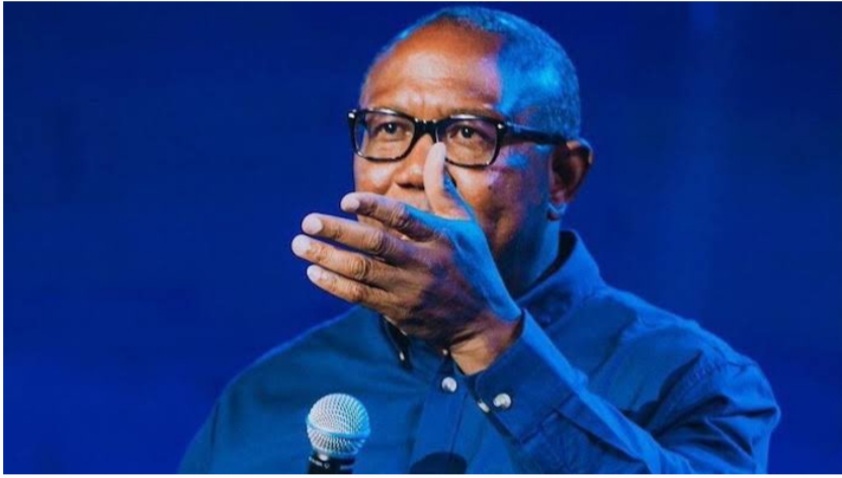
Peter Obi: There’ll be violence if leaders continue to use forged certificates for elections. “If we continue down this path, violence may become the future of our democracy,” said Mr Obi. “We must recognise that fraud and violence cannot create true leadership.”
Ambali Abdulkabeer • March 16, 2026
Bola Tinubu and forged Chicago State University certificate (Credit: Ahmed Oluwasanjo/Peoples Gazette)
Bola Tinubu and forged Chicago State University certificate (Credit: Ahmed Oluwasanjo/Peoples Gazette)
Former Labour Party presidential candidate, Peter Obi, says violence may become the future of Nigeria’s democracy if politicians seeking elective positions are allowed to present forged certificates during elections.
“The ability for individuals to present forged certificates for election sends a troubling message to our society,” the politician stated in a statement on Sunday. “If we continue down this path, violence may become the future of our democracy.”
Mr Obi stated that the non-recognition of qualification, certificate and credibility as necessary requirements for candidates seeking elective offices further highlights the plummeting leadership standards in the country.
He added, “In the current state of Nigeria, what can we expect when leadership standards have plummeted to the extent that qualification, certification, and credibility are no longer deemed necessary for public office?”
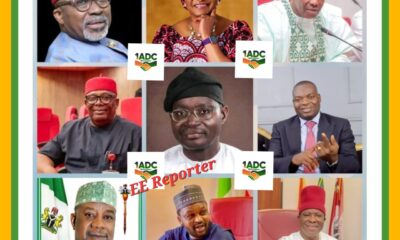
The African Democratic Congress chieftain further condemned attacks on the party office in Bakassi, noting the development reflected how dangerously low the country’s democratic standards had fallen.
“What occurred at the ADC office in Bakassi, Cross River state, is not merely an attack on a political party; it is an attack on democracy itself.
“When thugs can storm a party office and destroy property without facing arrest, it reflects how dangerously low our democratic standards have fallen,” Mr Obi stated.
The politician reiterated that fraud and violence cannot create true leadership, adding that they will only result in chaos, which will ultimately affect our children and us.
President Bola Tinubu presented a forged degree certificate to the Independent National Electoral Commission when he filed his paperwork to lead Nigeria in June 2022, Peoples Gazette can report based on the testimony of the institution he arrogated, introducing a new but potentially fatal front in the ongoing battle to oust the Nigerian leader for his documented misdeeds from years gone by.
The official repudiation of Mr Tinubu’s certificate—the only academic qualification he presented to the electoral office—came at a deposition of school officials on Tuesday in Chicago. An expanded transcript of the session is still being processed, but The Gazette has learnt about what has perhaps been the most crucial expectation of Nigerians: How the school would characterise Mr Tinubu’s certificate under oath and penalty of perjury.
Caleb Westberg, the registrar at Chicago State University, said Mr Tinubu’s certificate, dated June 22, 1979, and tendered to INEC on June 17, 2022, was not issued by the school and its administrators could, therefore, not be able to authenticate its source, The Gazette learnt.
Mr Westberg, CSU’s registrar since November 2020, also said, during the deposition that lasted about 5.5 hours, that Mr Tinubu did not apply for a replacement certificate, nor was he ever issued one.
Peter Obi
The categorical statement capped a successful outcome for the monthslong legal strategy of Atiku Abubakar, Mr Tinubu’s main opponent, who approached the United States District Court for the Northern District of Illinois in Chicago to ascertain the authenticity or otherwise of the document.
Federal district judge Nancy Maldonado granted a final order for CSU administrators to turn over all documents relating to Mr Tinubu to the school and also sit down for deposition by an adversarial team of lawyers deployed by Mr Abubakar.







ASUU President Reveals Why Some Federal Universities Couldn’t Pay Full January Salaries
ASUU president Reveals Why some federal Universities couldn’t pay full January salaries. Christopher Piwuna, president of the Academic Staff Union of Universities (ASUU), has explained why some federal universities were unable to pay their lecturers full salaries for January.
After nearly 16 years of implementation stalemate, the federal government finally signed a renegotiated agreement with ASUU on January 14 to address the incessant strikes in Nigeria’s public tertiary institutions.
The fresh agreement followed intensive renegotiations between a federal government committee and ASUU leadership which was concluded in December 2025.
However, since the beginning of February, there have been reported delays in the payment of lecturers’ salaries across federal universities.
Last week, ASUU members at the University of Lagos (UNILAG) declared an indefinite strike over the non-payment of their full salaries by the university management.
The lecturers later called off the strike after a series of meetings with the management.
As of the time of filing this report, indications suggest that many federal universities have been unable to pay full salaries of lecturers.
A source familiar with developments within the academic community told TheCable that the federal government is yet to release funds to the universities.
According to the source, the ministry of education directed the institutions to pay the full salaries of lecturers from their respective internally generated revenue (IGR).
Piwuna said the situation is largely due to practical difficulties surrounding the implementation of a new salary agreement between the union and the federal government, particularly the delay in passage of the 2026 budget.
According to him, the government has shown a willingness to implement the agreement in full, but the new salary structure cannot be fully effected until the 2026 budget is passed and signed into law.
“Concerning the new agreement, the intention of government is clear; it is to implement it in full. But I want to believe there are practical difficulties at the moment. One is that the 2026 budget has not been passed, let alone becoming law. It is until that is done that the new salary structures will be fully implemented,” the ASUU president told Nigerian Tribune.
He added that payments made in January and February largely stemmed from the efforts of vice chancellors who tried to implement the agreement with available resources.
“In January, some universities were paid in full. When I said ‘in full’ it means that what they paid reflected what we agreed on in the new agreement, while other universities couldn’t meet up with full payment,” he said.
Piwuna added that as of the time of speaking, he was not aware of any university that had paid salaries for February.
“Even for February, I don’t know of any university, as we are speaking, that has paid its workers,” he said.
‘WHY IMPLEMENTATION PROCESS HAS BEEN COMPLICATED’
According to the ASUU president, the implementation process has been complicated by issues relating to special allowances for lecturers in the medical field, with some universities paying the allowance while others are yet to do so.
He said the ministry of education is working with the national salaries, incomes and wages commission to clarify the payment process and ensure lecturers receive what is due to them.
ASUU
Piwuna further said there have been questions from some vice chancellors about whether lecturers on sabbatical should benefit from the new agreement, underscoring that ASUU’s position is that such members are entitled to full payment.
“We do not expect that anybody on sabbatical will be denied any aspect of this agreement,” he said.
He also noted that state universities are yet to begin implementing the agreement with their lecturers, adding that ASUU has written to state governors, who are visitors to their respective universities, urging them to ensure the agreement is implemented to avoid a backlog of arrears.
“We should know that ASUU agreements cover all members across both federal and state-owned universities nationwide. So, we don’t want any university to be left behind in this new agreement,” he said.
Piwuna appealed to lecturers across the public universities to exercise patience over the delay in salary payments, expressing appreciation to vice chancellors who have made efforts to ensure partial implementation of the agreement.
He added that ASUU is hopeful the situation will improve once the 2026 budget is signed into law, which he said is expected later this month.
UNILORIN Partner NNPCL To Establish Research Centre
UNILORIN partner NNPCL to establish research centre. The centre will be dedicated to practical engineering and technology-driven research.
The University of Ilorin and the Nigerian National Petroleum Company Limited (NNPCL) have set up a joint strategic committee to establish a research centre and promote cooperation between the two institutions.
This was contained in a statement by the director of Corporate Affairs of the University, Kunle Akogun, on Saturday in Ilorin.
Mr Akogun disclosed that Wahab Egbewole, SAN, the Vice-Chancellor of the institution, and Bashir Ojulari, the managing director/chief executive officer of the NNPCL, led their teams, respectively.
“Discussions between the two parties centred on the establishment of a Centre of Excellence at the University, the first in West Africa.

NNPC
“It will be dedicated to practical engineering and technology-driven research and the endowment of an NNPC professorial chair at the University, to promote industry-leading expertise.
“The joint committee, which will refine the details of the partnership, is expected to report back within four weeks,” Mr Akogun said.
The director said that members of the UNILORIN delegation included Mukhtar Etudaiye, Deputy Vice-Chancellor (Research, Technology and Innovation).
Others included Mansur Alfanla, the registrar, and the Dean of the Faculty of Engineering and Technology, Joshua Olaoye, among others.
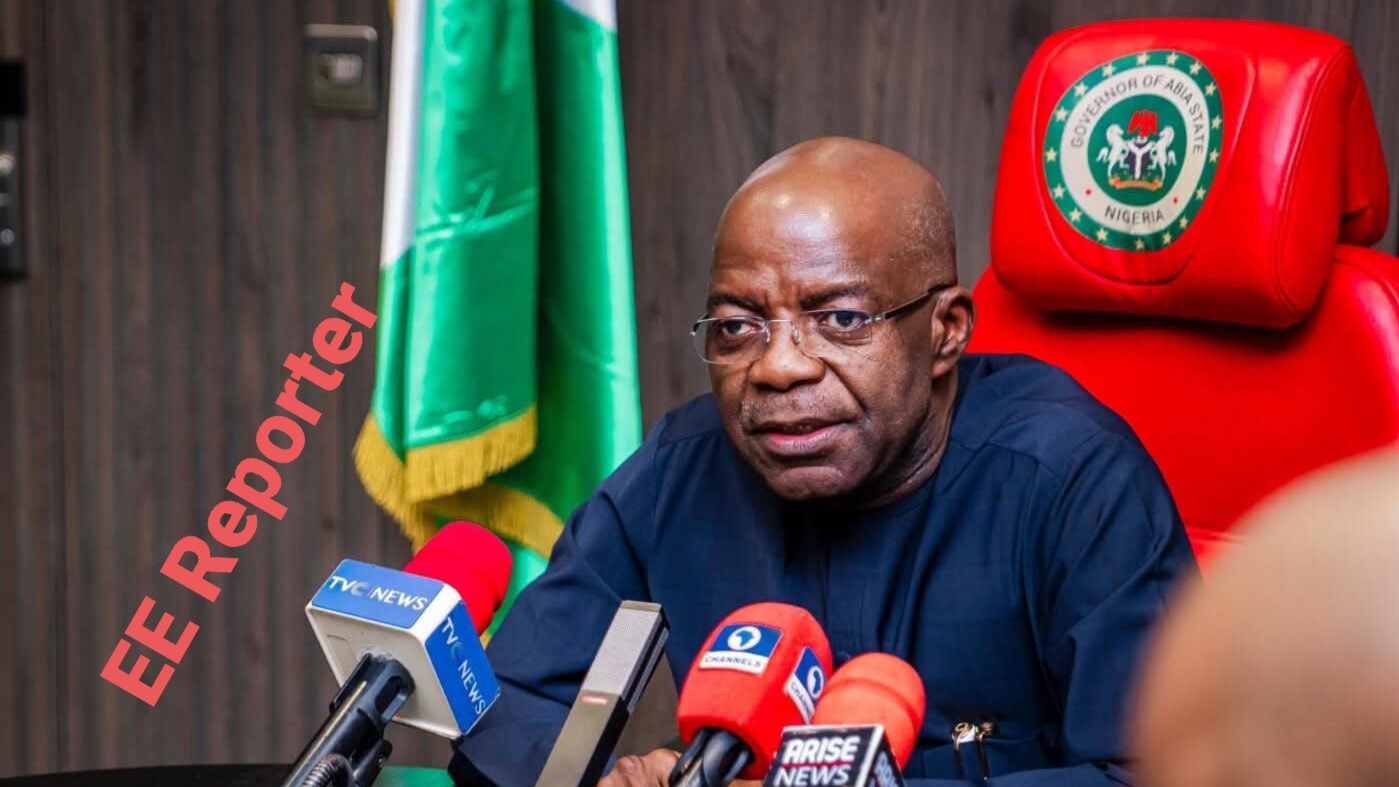
Governor Otti Reaffirms Commitment To Education Reforms For Sustainable Development
Governor Otti reaffirms commitment to education reforms for sustainable development. Governor Alex Otti has reaffirmed his administration’s commitment to reforms in the education sector.
Governor Alex Otti has reaffirmed his administration’s commitment to reforms in the education sector, describing education as “the foundation for sustainable development”.
Mr Otti said this on Wednesday, when the East Regional Working Committee of the Nigeria Union of Teachers, led by its chairman, Nweke Odo, visited him in Nvosi, Isiala Ngwa South LGA.
The governor said that education remained central to his administration’s development strategy, adding that the progress of any society depended largely on the quality of its educational foundation.
He thanked the union for recognising what he described as the “government’s modest efforts at improving education and other sectors” in the state.
Mr Otti explained that the Abia government had consistently devoted one-fifth of its annual budget to education “because of its impact on human development and societal progress”.
Mr Otti assured the delegation that the Abia government would consider their requests for a bus and the completion of the Teachers’ House, amongst others.
Mr Odo commended the Abia governor for his “remarkable interventions” in the education sector in Abia.
Mr Odo said that the committee represented teachers from the nine states of the old Eastern Region, namely Abia, Anambra, Akwa Ibom, Enugu, Imo, Ebonyi, Cross River, Rivers and Bayelsa.
Mr Odo said the committee’s visit was intended to appreciate his administration’s efforts.
Mr Odo said that the governor’s allocation of 20 per cent of the state budget to education, teacher recruitment, and the settlement of salary arrears had significantly improved teachers’ welfare in Abia.
“The recruitment of 5,300 teachers and the ongoing recruitment of an additional 4,000 mean that within a short time you assumed office, 9,300 teachers have been engaged. It is overwhelming,” said Mr Odo.
Governor Otti
He also commended the State Government for the regular payment of salaries and settlement of 17 months’ salary arrears owed to teachers by the previous administration.
Mr Odo further hailed the government for the construction of smart schools and for approving a harmonised retirement age of 65 years or 40 years of service for teachers.
He urged other governors in the region to emulate Otti’s commitment to education and assured the governor of the continued support of teachers in Abia and across the eastern region.
-
 Crime10 months ago
Kogi Assembly Considers Law To Regulate Rent, Establish Control Board: Tenancy Law
-

 News12 months ago
Atiku Reveals Why He Failed To Pick Wike As Running Mate In 2023
-
 Akwa Ibom1 year ago
The Apostolic Church Gets New Territorial Chairman, Exco
-

 Crime1 year ago
Federal High Court Jails 2 For Vandalizing Transformer, Telecom Mast In Kogi
-
 News1 year ago
The Apostolic Church Gets New National President, Executive
-
 Akwa Ibom1 year ago
Umo Eno Commences Payment Of 80,000 Naira Minimum Wage With Arrears
-

 News1 year ago
Senator Natasha Returns To Senate With Husband Amid Seat Dispute
-
 Economy10 months ago
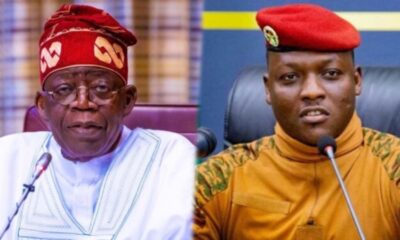
Kiyosaki: Is Tinubu’s Government Afraid Of Ibrahim Traore?