
Abuja
Nigeria’s Endless Constitutional Review; Who Really Benefits From It?

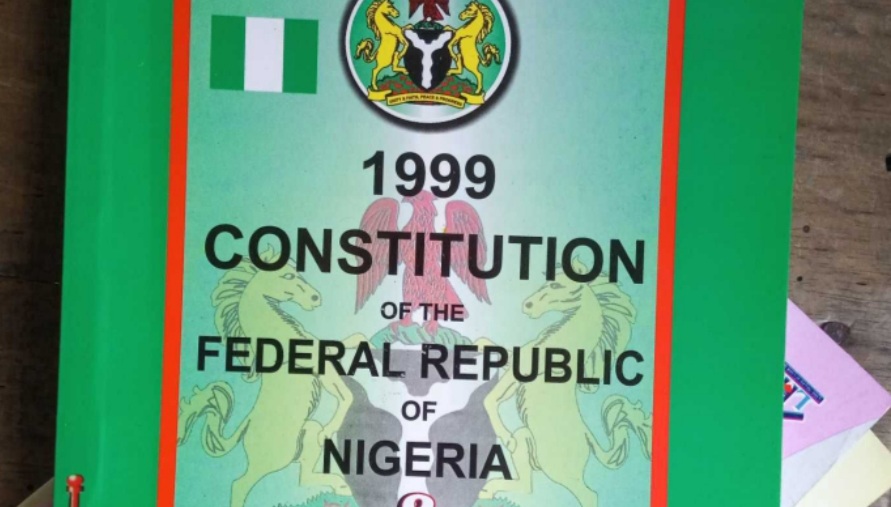
Nigeria’s Endless Constitutional Review; Who Really Benefits From It?
Nigeria’s endless constitutional review; Who really benefits from it?. Since democracy was restored in Nigeria in 1999, every administration has embarked on a quest to get what they describe as a ‘peoples constitution’.
And just like its predecessors, this current 10th national assembly has kicked off yet another round of zonal public hearings as part of its now-familiar constitutional review exercise.
But the question that should confront every Nigerian is simple: who really benefits from what has become a ritual every legislative cycle?
Ever since 1999, the issues being debated for constitutional review have remained constant. Issues such as political restructuring, electoral reforms, resource control, true federalism, devolution of power, and re-jigging of the security architecture in the form of state police.
First, let me be clear: I do not have a quarrel with the idea of reviewing or amending our constitution. After all, nation-building is a work in progress. It is never finished or sacrosanct.
However, what I quarrel with – which should trouble every Nigerian – is the industry that has been built around it.
Just like those who have turned electoral reforms into a business that resurfaces every election cycle, some have turned constitutional review into guaranteed enterprise every legislative cycle.
It is, therefore, my hope that this discourse can stir deeper reflections and allow us to suggest other ways that help resolve this.
Each time a constitutional review is discussed, one constant excuse is that the lawmakers have to aggregate the yearnings of Nigerians from all walks of life through zonal public hearings, collect memoranda from various interest groups throughout the country, as well as embarking on a progressive engagement with state governments and legislatures and the federal government to achieve consensus on all issues.
However, what is rarely discussed is the cost of such projects and what Nigerians get in return. What has been our return on investments?
Every regime of the national assembly has initiated a fresh Constitution amendment project for which some N4 billion is approved, to be appropriated and released on the basis of N1 billion per year.
This is in addition to some extra funds released to the committee for any unforeseen expenditure.
Nobody talks about the fact that close N26.8 billion has been expended by the senate and the house of representatives on this perennial exercise. And what have been the results?
The sad truth is that these reviews have largely failed to address the deeper structural, political, and governance problems Nigerians care most about.
Yes, under the 9th assembly, we got the Not Too Young to Run Act, early funding for INEC, and financial autonomy for state legislatures and judiciaries.
But ask yourself: With all the billions spent, what has been the real impact on governance and the lives of ordinary Nigerians?
The truth can be inconvenient: Key reforms keep failing. Some of the most critical and widely demanded reforms—like state police, local government autonomy, electoral reforms that strengthen INEC, and clearer procedures for creating new states—have repeatedly failed to pass, usually blocked by state assemblies, vested interests, or political elite calculations.
But, of course, we have to return another four years later to hold public hearings on the same old issues.
Beyond constitutional review, electoral reforms have become another well-worn excuse that resurfaces predictably every election season.
Like clockwork, as each election approaches, committees are set up, public hearings are announced, and memoranda are collected — all under the banner of “fixing the electoral process.
Instead of being treated as urgent national priorities, electoral reforms have become talking points politicians recycle to project concern, without any real intention to push them through.
Public hearings for constitutional amendment have quietly evolved into an industry of their own—an elaborate show that consumes huge resources yet often delivering little more than promises and news headlines.
My concern is what happened to the views aggregated during the zonal public hearings in the 8th assembly and 9th assembly? Have the issues changed so dramatically that we must spend billions to “hear” them again?
And why do we need new hearings to discuss issues like state creation when the constitution already lays out the process for state creation clearly?
If the legal requirements are met, no one can stop it. Yet the topic keeps coming back—because keeping the “constitutional reform industry” alive serves some interests. This is my theory.
Is it really coincidence that almost every deputy senate president or deputy speaker who chaired these constitutional review committees ended up running for the office of governor? Emeka Ihedioha. Ike Ekweremadu. Ovie Omo-Agege.
And now, the current Deputy Speaker Benjamin Kalu is reportedly eyeing the same path. Shouldn’t we at least admit what is obvious?
Beyond that, who are the consultants hired to draft the memoranda and facilitate the zonal meetings? Was there ever competitive bidding?
Did the national assembly advertise these contracts? How much funds did donors contribute to these hearings? The details stay hidden, far from the eyes of the people
It is time to ask the uncomfortable questions. We pretend these hearings are about democracy and inclusion, but the reality is that they have become convenient budget lines, annual talking points, and photo opportunities.
Instead of lawmakers doing the real work through their constituency offices—which, in principle, should function as mini public hearing centres—we gather crowds in hotels, announce zonal consultations, and repeat the same debates every four years.
We must face the truth: if Nigeria’s 360 house members and 109 senators truly had active, engaged constituency offices, these repeated national hearings would be redundant.
The endless rounds of public hearings are, in many ways, an indictment of lawmakers’ disconnect from the very people they claim to represent.
Did we have public hearings during the 8th Assembly? Yes. The 9th Assembly? Again, yes.
Nigeria’s Endless Constitutional Review
Have the core issues changed? Hardly. So, when will we admit that something deeper beyond genuine reform is driving this cycle?
It is time to stop turning constitutional review into a permanent campaign, a money-spinner, and a ritual that enriches a few while exhausting everyone else’s patience. Nigerians deserve real reform, not an industry of endless hearings.
Eleven years after some 500 delegates, drawn from all parts of the country and representing diverse interests, concluded a five-month deliberation about the political system and future of Nigeria, where they passed more than 600 resolutions and produced a 10,335-page report, which was submitted to former President Goodluck Jonathan for implementation
What has happened to that report. A decade after that report was submitted, it is still gathering dust in the government’s archives. Every administration had promised to review that report.
The problem of Nigeria isn’t the absence of laws or recommendations. The problem is political will. To alter any section of the constitution, 24 out of 36 houses of assembly must approve the bill with a two-thirds majority.
Yet in the last round, only 11 states complied with some sections recommended for amendment, despite all the billions spent.
With the current hardship facing Nigerians; think for a moment about the difference those billions could make: in schools, hospitals, clean water, and security.
While billions disappear into conferences and consultations, millions of Nigerians struggle to afford food, medicine, or school fees.
So, what must change?
Like I stated before, the essence of this discourse is not to complain but to stir deeper reflections.
For me, it starts with honesty. We must tell ourselves the home truth by admitting that we can not keep pouring billions into hearings that yield nothing but fresh frustration.
Lawmakers must prove their commitment by turning constituency offices into true centres of citizen engagement—where real voices are heard daily, not just every four years.
Nigerians must demand transparency: who got paid, how much, and for what?
Above all, we must remember that no constitution, no matter how perfect on paper, can save a country whose leaders lack the courage to do what is right.
Real reform will never come from annual rituals and hotel gatherings; it will only come when the political class puts the nation above ambition and service above self.
Ezenwa Nwagwu is the executive director, Peering Advocacy and Advancement Center in Africa (PAACA).
BY EZENWA NWAGWU









Wike Tells FCT Residents In Eid-el-Fitr Message, Says “Remain Peaceful Throughout The Year”
Nyesom Wike, minister of the Federal Capital Territory (FCT), has urged residents of Abuja to sustain the values of compassion, forgiveness and unity imbibed during Ramadan as Muslims celebrate Eid-el-Fitr.
In his 2026 Eid message to residents, Wike described the fasting period as one marked by spiritual renewal and reflection, calling on residents not to abandon its lessons.
“As we celebrate Eid Fitr – the culmination of the Ramadan fast, I urge you all to carry forward the values of compassion, forgiveness, and unity that Ramadan embodies,” he said.
He congratulated Muslim faithful in the FCT on the successful completion of the Ramadan fast, noting that the period had fostered stronger bonds among residents.
The minister also commended the spirit of generosity and coexistence demonstrated across religious lines during the holy month.
“Within the FCT, it is reassuring to see Muslims sharing and caring for fellow Muslims and non-Muslims alike in the last 30 days,” he said.
“Individuals and corporate organisations have, by their conduct during this holy month, demonstrated their commitment and cooperation towards maintaining Abuja’s pride of place as the Centre of Unity, Peace and Harmony in Nigeria.”
Wike implored residents to pray for Nigeria’s leaders and the country’s continued peace and development.
“This occasion also offers us a unique opportunity to pray for our leaders, and indeed, our country Nigeria, that we may continue to enjoy peace and progress,” he said.
Looking ahead to political activities in the country, he urged residents to remain peaceful regardless of affiliations.
“I urge all residents regardless of political affiliation, gender or tribe to take a cue from the Muslim Ummah, and maintain peaceful conduct throughout the year while praying for the FCT, and the nation as a whole at this period,” he added.
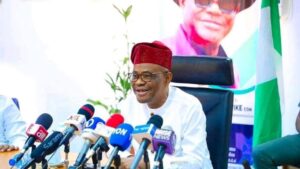
Wike
“The security agencies are working round the clock to ensure that residents celebrate and enjoy the occasion in peace, tranquility and orderliness.”
Wike reaffirmed the FCT administration’s commitment to safeguarding lives and property, while continuing efforts to develop Abuja into a world-class city.
Adwa Victory At 130: Ethiopia Marks Historic Triumph And Women’s Day In Abuja
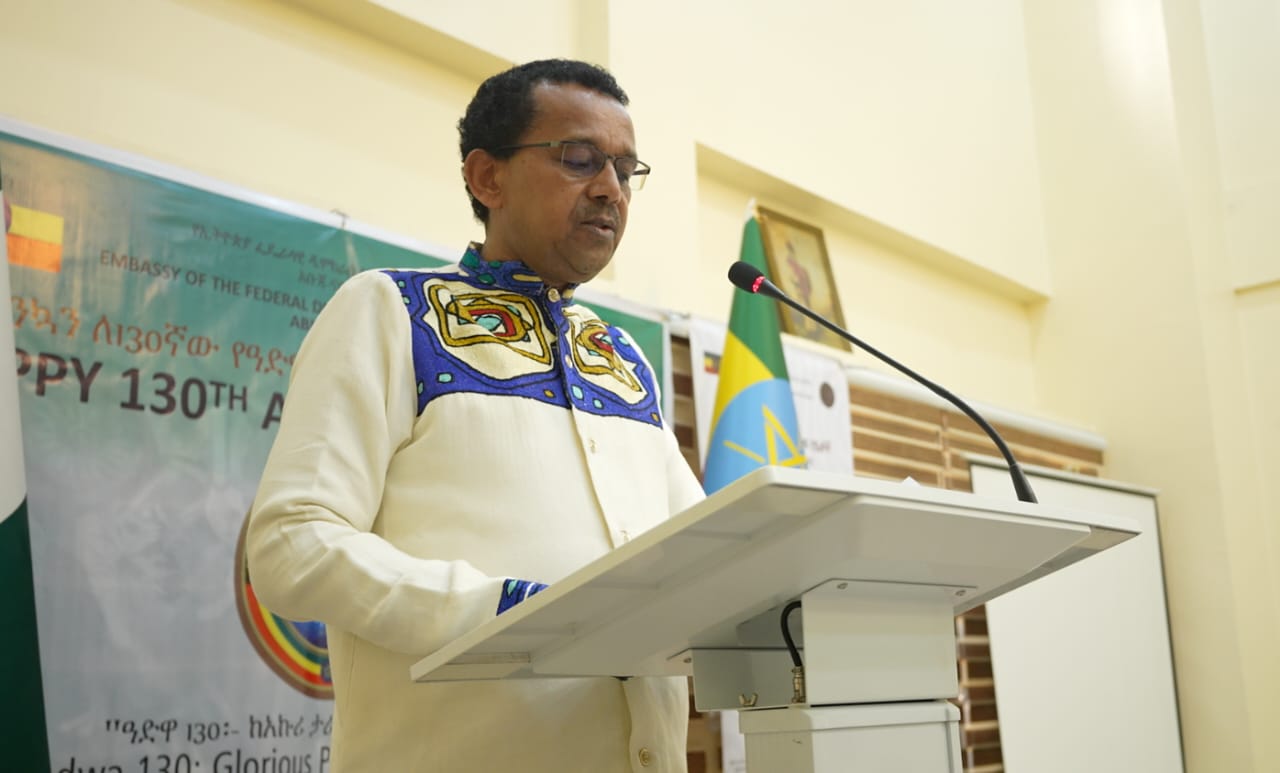
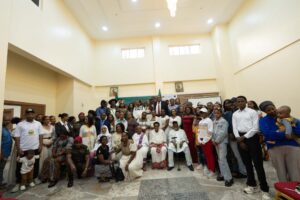
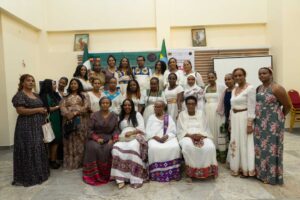
ABUJA, Nigeria – The Embassy of the Federal Democratic Republic of Ethiopia in Abuja hosted a colourful celebration on Saturday, March 7, 2026, to mark the 130th Anniversary of the Victory of Adwa alongside International Women’s Day.
The event, held under the themes “Adwa 130: From a Dark History to a Bright Horizon!” and “50 Years of Women’s Voice for Equality and Prosperity,” brought together Ethiopians living in Nigeria, people of Ethiopian origin, and Nigerian friends of Ethiopia.
Delivering the keynote address, Ambassador Extraordinary and Plenipotentiary of Ethiopia to Nigeria, H.E. Legesse Geremew Haile, described the Victory of Adwa as a historic milestone achieved through the collective sacrifice, unity, and determination of the Ethiopian people.
He emphasized that women played a crucial role in securing the historic victory over Italian forces in 1896, noting that their contributions remain a strong symbol of courage and patriotism.
The Ambassador also highlighted Ethiopia’s progress in promoting gender equality, stating that women are increasingly occupying leadership positions in government, parliament, and the cabinet at both federal and regional levels.
Encouraging the younger generation to uphold the “Spirit of Adwa,” Ambassador Legesse urged Ethiopians at home and in the diaspora to contribute actively to the country’s ongoing development efforts.
He outlined several key national initiatives, including modernizing the agricultural sector, where Ethiopia has recently emerged as Africa’s largest wheat producer, expanding industrial capacity through the “Ethiopia Tamirt” (Produce in Ethiopia) initiative, promoting tourism through the Gebeta projects, and advancing digital transformation through artificial intelligence to improve service delivery.
The Ambassador also addressed Ethiopia’s strategic economic goals, calling for unified support for the country’s pursuit of peaceful access to the sea, describing it as a vital national interest for a nation of over 130 million people with a rapidly growing economy.
According to him, Ethiopia remains committed to achieving this objective through peaceful and mutually beneficial diplomatic engagement.
Reaffirming the country’s long-term development vision, Ambassador Legesse said Ethiopia aims to become one of Africa’s five largest economies by 2035 and among the world’s top 20 economies by 2050. He therefore called on the Ethiopian diaspora to actively participate in the nation’s development initiatives and major projects.
The celebration also featured a presentation titled “The Trust of Adwa: Unity, Sovereignty, and Reconstruction,” which highlighted the historic significance of the Battle of Adwa fought on March 1, 1896. The presentation underscored how Ethiopia’s victory over the Italian army became a powerful symbol of African resistance, inspiring Pan-Africanism and anti-colonial movements across the continent and the diaspora.
Participants at the event described Adwa as a shared African victory, stressing that its legacy should continue to inspire present and future generations to work towards rebuilding their nations and strengthening the continent.
The programme was further enriched with patriotic poetry and educational video presentations performed by young children.
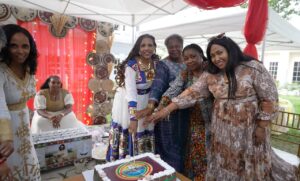
The ceremony began with the Ethiopian National Anthem and concluded with a ceremonial cake-cutting and reception attended by guests and members of the Ethiopian community in Nigeria.
Abuja: Fire Guts Section Of Federal Secretariat
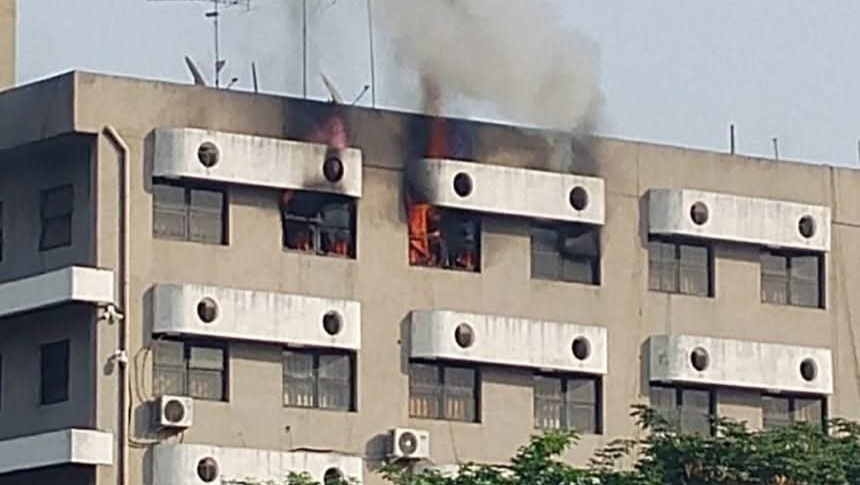
Abuja: Fire guts section of federal secretariat. There was panic at the federal secretariat in Abuja on Monday morning after a section of the office of the head of service of the federation caught fire.
Eyewitnesses said the fire was first noticed at about 8:20am. Social media footage showed plumes of black smoke billowing from the affected section of the building.
The incident occurred at Section C of the building within the federal secretariat complex.
Staff members were seen evacuating the area after emergency responders had been alerted.
The media department of the office of the head of service confirmed the incident.
The office said the outbreak was limited to Section C of the building.

Fire Guts Section Of Federal Secretariat
Officials said emergency responders were already working to contain the fire.
“The fire outbreak is limited to Section C of the building and is currently being attended to by emergency officials,” the office said.
The cause of the fire had yet to be disclosed at the time of filing this report.
Abuja (FCT)
federal secretariat in Abuja
head of service office in Abuja.
-
 Crime11 months ago
Kogi Assembly Considers Law To Regulate Rent, Establish Control Board: Tenancy Law
-

 News12 months ago
Atiku Reveals Why He Failed To Pick Wike As Running Mate In 2023
-
 Akwa Ibom1 year ago
The Apostolic Church Gets New Territorial Chairman, Exco
-

 Crime1 year ago
Federal High Court Jails 2 For Vandalizing Transformer, Telecom Mast In Kogi
-
 News1 year ago
The Apostolic Church Gets New National President, Executive
-
 Akwa Ibom1 year ago
Umo Eno Commences Payment Of 80,000 Naira Minimum Wage With Arrears
-

 News1 year ago
Senator Natasha Returns To Senate With Husband Amid Seat Dispute
-
 Economy10 months ago
Kiyosaki: Is Tinubu’s Government Afraid Of Ibrahim Traore?