
International
Nigeria Strengthen Ties With Niger Customs To Tackle Border Insecurity


Nigeria Strengthen Ties With Niger Customs To Tackle Border Insecurity
Nigeria strengthen ties with Niger customs to tackle border insecurity. He said that operational challenges usually force landlocked nations to rely on neighbouring ports.
The Nigeria Customs Service (NCS) has deepened bilateral ties with the Niger Republic Customs Administration to strengthen cross-border security cooperation against insurgency.
This followed a high-level bilateral meeting between the NCS, led by its Comptroller-General (C-G) Bashir Adeniyi, and the Niger Republic Customs Administration, led by director-general Muhammadu Yaqouba, on Friday at the NCS headquarters in Abuja.
The bilateral engagement aims to strengthen cooperation on the movement of transit goods bound for Niger through Nigeria and to improve information sharing between the two countries.
It also seeks to address security challenges along their shared borders, reduce delays along key transit corridors and ensure that legitimate trade contributes optimally to economic growth in both countries.
Speaking at the meeting, Mr Adeniyi reaffirmed the service’s commitment to strengthening cross-border security cooperation with neighbouring countries, particularly the Republic of Niger, regional trade facilitation and safeguarding transit cargo.
He said that operational challenges usually force landlocked nations to rely on neighbouring ports, increasing costs and affecting competitiveness, and assured Niger of the service’s continued support.
“The NCS has over the years remained committed to facilitating trade for our landlocked neighbours, including the Republic of Niger.
“This commitment will be sustained, irrespective of political differences, because trade, security and regional stability are interconnected.” he said.
According to him, President Bola Tinubu had approved the provision of safe corridors and passages to ease the movement of loaded trucks awaiting clearance, as part of efforts to address concerns around transit bottlenecks.
He said cargoes from Apapa ports and Nigerian airports bound for neighbouring countries would still be processed and moved within 48 hours without compromising security or economic interests.
The C-G, however, warned that strict measures had been put in place to prevent the diversion of transit cargo, warning that economic operators who violate transit regulations would face stiff sanctions. “Non-compliance by a few operators creates non-tariff barriers and undermines trust.
“We are determined to ensure compliance, streamline documentation and remove avoidable bottlenecks along major corridors such as Illela–Sokoto–Kamba–Niger Republic, as well as routes linking Apapa ports and airports to neighbouring countries.” he said.
He said the engagement marked a renewed phase of cooperation, with follow-up actions to streamline operations, cut costs, boost trade, and make the corridor more attractive to transport operators.

Customs
He congratulated the director-general of Niger Republic Customs on his appointment and assured him of continued cooperation with the sister agency in Niger.
Speaking earlier, Mr Yaqoub said that the visit was aimed at addressing the prolonged blockage of trucks transiting from the Republic of Benin to Niger Republic, as well as to address security concerns in the region.
“We face common security challenges, particularly terrorism and banditry, and we believe that engagements like this provide an opportunity to find lasting solutions through cooperation and coordination,” he said.
Also speaking, Maj.-Gen. Garba Laka, national coordinator of the National Counter-Terrorism Centre, Office of the National Security Adviser (ONSA), said that insecurity in any part of the Sahel impacts all countries in the region.
According to him, arms trafficking, drug smuggling and the concealment of ammunition in cargo vehicles remain major threats that require coordinated and sustained action.
Mr Laka urged the revival of bilateral security frameworks such as cross-border right-of-pursuit arrangements, stressing that such mechanisms were essential to effectively combating terrorism and organised crime.










International
NAF Deepen Global Training Partnerships As CAS Leads Strategic Visit To Canadian Aviation Institutions
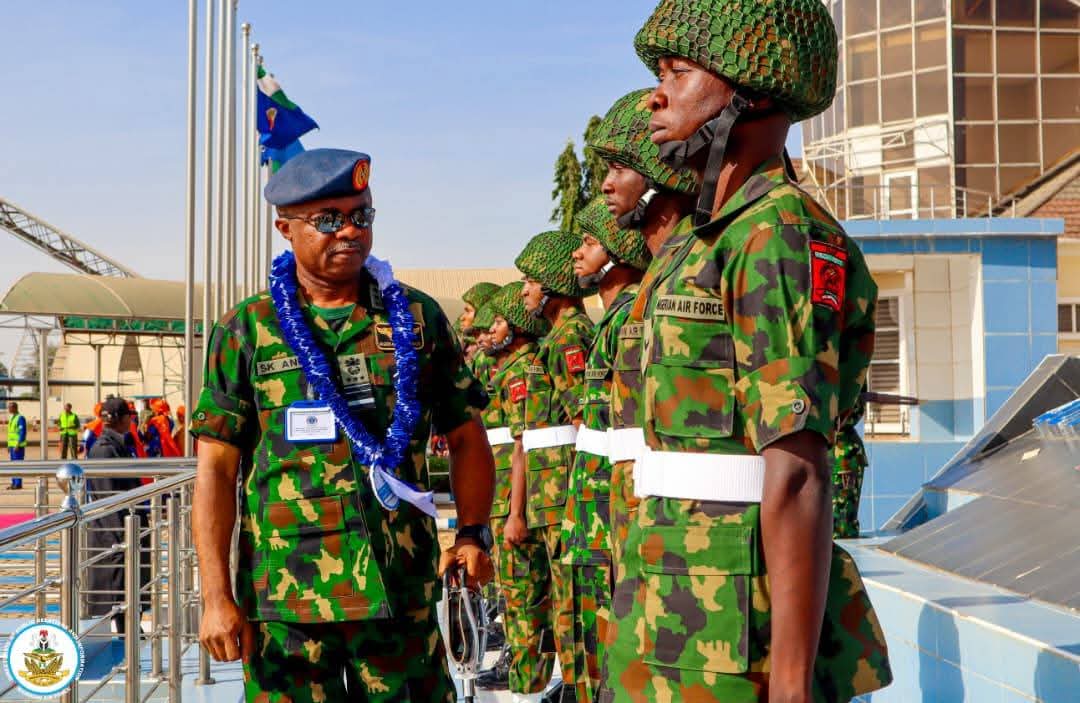
NAF Deepen Global Training Partnerships As CAS Leads Strategic Visit To Canadian Aviation Institutions
Aviation Institutions. The Chief of the Air Staff (CAS), Air Marshal Sunday Kelvin Aneke, led a Nigerian Air Force (NAF) delegation on a strategic facility visit to the International Test Pilots School and the International Tactical Training Centre in London, Ontario, Canada, in a decisive move to advance the Service’s operational capability development agenda. The visit underscored the NAF’s commitment to deepening international defence cooperation and adopting global best practices to enhance mission effectiveness.
Key areas of engagement included fighter lead-in training, helicopter tactical training, Unmanned Aerial Systems (UAS) operator development, technical training support, as well as flight test training and collaborative research initiatives.
During the engagements, Air Marshal Aneke emphasised the importance of building enduring partnerships that would accelerate the professional growth of NAF personnel and improve the Service’s technological edge. He noted that “the Nigerian Air Force remains resolute in its pursuit of operational excellence through strategic collaboration with globally recognised training institutions. This visit reflects our deliberate effort to strengthen capacity development, enhance airpower effectiveness, and ensure the sustained modernisation of our platforms and human capital.”
The discussions also explored collaborative opportunities in the overhaul and upgrade of NAF aircraft, alongside the development of advanced flight simulator systems tailored to the Service’s evolving operational requirements.
NAF
In response, the host institutions commended the Nigerian Air Force for its proactive approach to capability enhancement and expressed readiness to support the Service’s transformation drive. Representatives highlighted the value of structured cooperation in specialised aviation training and technological integration, noting that such partnerships would foster mutual growth and knowledge exchange.
The visit further reinforced the NAF’s strategic vision under Air Marshal Aneke’s leadership to build a technologically driven, highly professional, and globally connected air force capable of meeting contemporary security challenges.
International
Spain: NAF Advances Tactical Airlift Capability Through Strategic Operational Engagement With Airbus
Spain: NAF Advances Tactical Airlift Capability Through Strategic Operational Engagement With Airbus
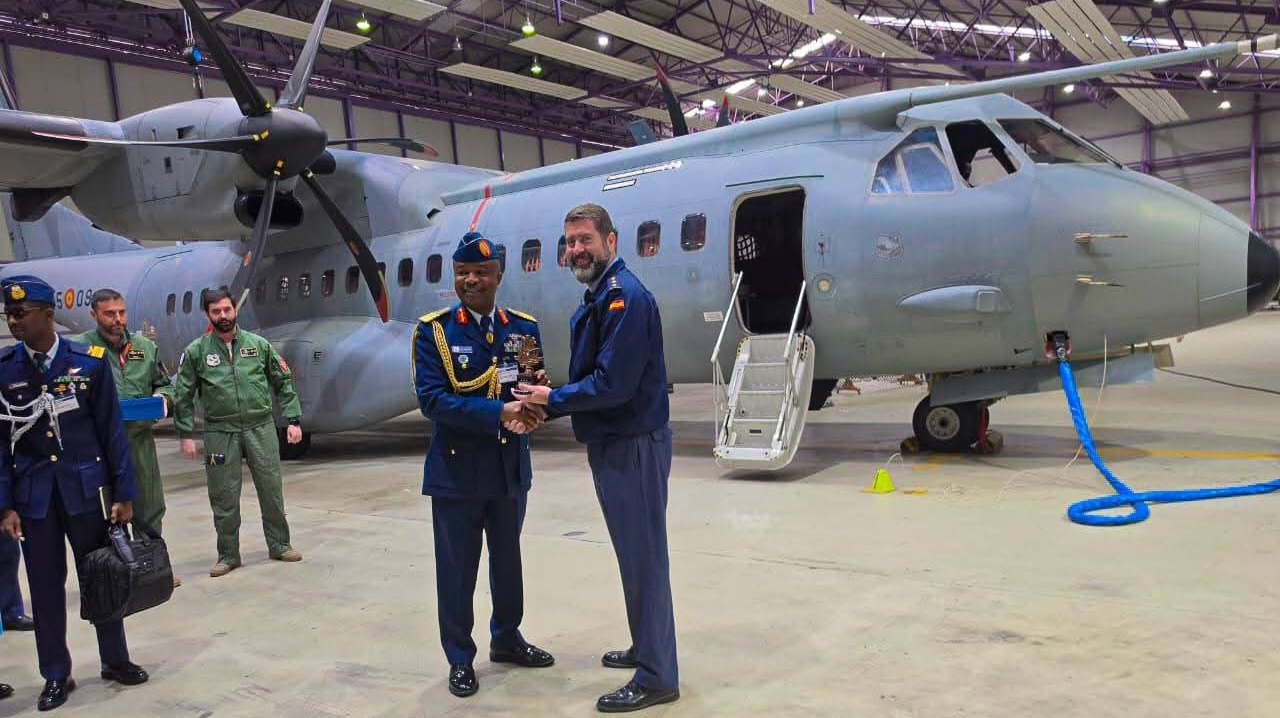
Strategic operational engagement with airbus in Spain. The Chief of the Air Staff (CAS), Nigerian Air Force (NAF), Air Marshal Sunday Kelvin Aneke, led a high-level delegation on an official visit to Airbus Defence and Space facilities in Spain from 14–18 March 2026 as part of ongoing efforts to enhance the Service’s tactical and medium airlift capability.
Central to the engagements were discussions on the potential acquisition of the CASA C-295 aircraft to strengthen operational mobility in support of counter-insurgency and counter-terrorism operations.
At the 35th Wing of the Spanish Air and Space Force, Getafe Air Force Base, the delegation was received and briefed on the aircraft’s operational employment, gaining valuable insights into its effectiveness in troop transport, logistics support, medical evacuation, and humanitarian missions, as well as its reliability, adaptability, and cost-effective maintenance profile.
The delegation subsequently held strategic discussions at the headquarters of Airbus Defence and Space in Madrid, focusing on the aircraft’s global acceptance, versatility, and proven performance across diverse operational environments. Airbus also highlighted its comprehensive support architecture, including training, logistics frameworks, and long-term sustainment packages tailored to customer requirements.
As part of exposure to emerging technologies, the delegation received a detailed briefing on the SIRTAP Next Generation Tactical Unmanned Aerial System, which demonstrated advanced intelligence, surveillance, and reconnaissance capabilities, as well as its potential integration with manned air operations.
The visit culminated at the Airbus production and assembly facility in Seville, where the CAS and his team undertook a guided tour of the production lines, observing first-hand the advanced manufacturing processes and quality assurance systems underpinning the production of both the C-295 and A400M aircraft.
Speaking during the engagements, Air Marshal Aneke expressed appreciation to the Spanish Air and Space Force and Airbus for their hospitality and transparency, noting that the visit provided critical operational and technical insights to support the Nigerian Air Force’s fleet modernisation drive.
NAF Advances Tactical Airlift Capability
“These engagements are vital to strengthening our tactical airlift capability and enhancing operational effectiveness in addressing Nigeria’s security challenges,” he stated. In response, Airbus representatives commended the NAF’s strategic vision and reaffirmed their readiness to support the Service through comprehensive partnership frameworks encompassing training, technology transfer, and sustainment solutions.
The visit underscores the Nigerian Air Force’s commitment to adopting modern, efficient, and mission-ready platforms in alignment with the Federal Government’s drive, under the leadership of President and Commander-in-Chief of the Armed Forces of the Federal Republic of Nigeria, President Bola Ahmed Tinubu, GCFR, to strengthen national security through continuous enhancement of military capabilities.
Nigeria Not Safe Country, Catholic Bishops Tell Pope Leo XIV
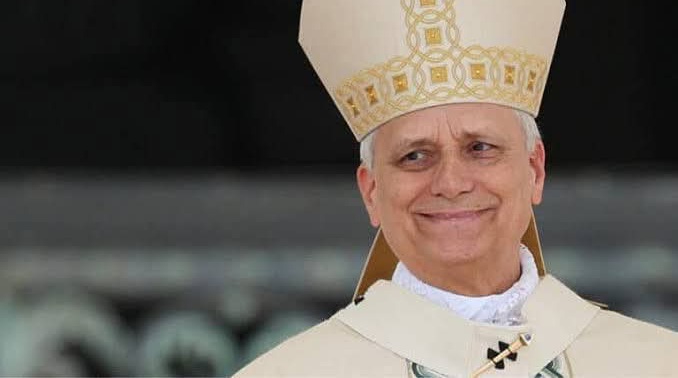
Nigeria not safe country, Catholic bishops tell Pope Leo XIV. The bishops told EWTN News they took the opportunity during their meeting with the pope to inform him of the problems facing the church in Nigeria.
Catholic Bishops’ Conference of Nigeria
Nigerian Catholic bishops, during their recent “ad limina” meeting with Pope Leo XIV in Rome, raised the alarm over the violence and insurgency they face as apostles serving in various parts of Nigeria.
The meeting of Nigerian bishops with the pontiff—held between March 1 and 16—takes place by canon law once every five years.
The bishops told EWTN News they took the opportunity during their meeting with the pope to inform him of the problems facing the church in Nigeria.
Archbishop Matthew Ndagoso of Kaduna, who was recently elected head of the Catholic Bishops’ Conference of Nigeria, said, “Before we came to Rome, we bishops sent reports on our dioceses to the Vatican, and the summary was given to the Holy Father.”
He added, “But beyond what was written, we discussed with him the violence, the insurgencies, and the difficulties we face as apostles on the ground.”
Archbishop Adewale Martins of Lagos said, “The issue of Christian violence came up very strongly with the pope, and he told us that he will use whatever possibilities he has to highlight our situation and see what he can do for us.”
Cardinal John Onaiyekan, one of Nigeria’s four cardinals and Archbishop Emeritus of Abuja, who also met with the pope, told the news agency Aleteia: “No one is safe in Nigeria today, whether Christian or Muslim.”
He added, “We’ve come to speak on behalf of all Nigerians who are suffering and wish to live in peace, whether they are Christians or Muslims.”
Pope Leo XIV Warns Of AI Risks To Young People
This comes amid a campaign on the “Christian genocide” in Nigeria, which the Nigerian government has repeatedly denied.
Last year, amid the campaign on “Christian genocide” in Nigeria, American President Donald Trump declared Nigeria a Country of Particular Concern.
On December 25, Mr Trump ordered the U.S. military to bomb terrorists in their enclave in Sokoto, while warning that more similar military actions will happen should the Nigerian government not stop reckless k1llings perpetrated by terrorists in Africa’s most populous country.
-

 Crime11 months ago
Kogi Assembly Considers Law To Regulate Rent, Establish Control Board: Tenancy Law
-

 News12 months ago
Atiku Reveals Why He Failed To Pick Wike As Running Mate In 2023
-

 Akwa Ibom1 year ago
The Apostolic Church Gets New Territorial Chairman, Exco
-

 Crime1 year ago
Federal High Court Jails 2 For Vandalizing Transformer, Telecom Mast In Kogi
-

 News1 year ago
The Apostolic Church Gets New National President, Executive
-
 Akwa Ibom1 year ago
Umo Eno Commences Payment Of 80,000 Naira Minimum Wage With Arrears
-

 News1 year ago
Senator Natasha Returns To Senate With Husband Amid Seat Dispute
-

 Economy10 months ago
Kiyosaki: Is Tinubu’s Government Afraid Of Ibrahim Traore?