
Economy
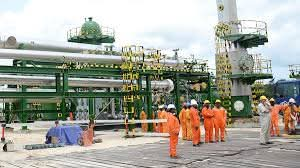
New NNPCL Board Sets To Tackle Industry’s Critical Problems

New NNPCL Board Sets To Tackle Industry’s Critical Problems
New NNPCL board sets to tackle industry’s critical problems. The new directors of NNPCL appointed by President Bola Tinubu last week have been widely welcomed by Nigeria’s oil industry chieftains and analysts for their cognate experience and impressive private sector background, but they are taking over a corporation buffeted by chronic political problems and unethical business practices.
These directors are from the other side of the table, as they had been dealing with NNPCL while they were in the leadership of some of the subsidiaries of the IOCs in Nigeria.
The new board chairman, Ahmadu Musa Kida, rose in the industry to become Total Nigeria’s deputy managing director of deep water services in 2015. Last year, he became an independent non-executive director at Pan Ocean-Newcross Group.
Bayo Ojulari, the new group CEO, was until his appointment the executive vice president and COO of Renaissance Africa Energy Company. The Renaissance Group recently led a consortium of indigenous energy firms in the landmark acquisition of the entire equity holding in Shell Nigeria worth $2.4 billion. I wrote an article on this transaction in January titled ‘’The exit of Shell’’. Ojulari himself is a Shell veteran, just as all other board members have worked at senior levels at other IOCs.
They are therefore well informed about the deficiencies of NNPCL and are well equipped technically to turn it around into another IOC, or a semblance of it. They can bring the best practices in the IOCs to bear on NNPCL. But they will have to overcome political interferences; opaque organizational culture; chronic industry problems and huge corruption, among many other typically Nigerian challenges.
Here are a few of the problems they will face.
The Upstream sector
a) Oil theft is a major problem and the new board will face many obstacles as it tries to fight it. Every barrel of crude oil must end up in one refinery somewhere in the world. The crude oil stolen from Nigeria is not refined in Nigeria. The refineries that buy them must know where the crude came from. Therefore, the syndicates stealing the Nigerian crude oil must be known within the Nigerian and global intelligence community. The new NNPCL board members have worked with Shell (HQ in London), ExxonMobil (HQ in the USA) and Total (France).
The home country intelligence networks of these IOCs do know how these thefts have been perpetuated over the years in the Niger Delta and the offshore oilfields. Since these new board members have worked at the highest level in the Nigerian subsidiary of these IOCs, they can seek help from their HQs on how to identify, name and shame the thieves thereby undermining their network. Of course, the Board has to have the support of the presidency for this move.
b) Professionalise the exploration and production arm of NNPCL, called NNPC E&P Limited (NEPL), formerly NPDC: For a long time now, NEPL (formerly NPDC) has been outsourcing the funding and development of its freely assigned oilfields to third parties, thus denying itself the opportunities to develop and retain corporate competencies and professionalism in-house.
NPDC (NEPL) was meant to be the National Oil Company (NOC) of Nigeria, like Statoil of Norway (now called Equinor); Petronas of Malaysia; Petrobras of Brazil; Pemex of Mexico and others of Dubai, Abu Dhabi, Oman, Brunei, etc. It is not too late for the new board to position NEPL to fund, develop and operate their Nigerian oilfields competently as there are many Nigerians in-country and in the diaspora who could be brought in to run the organisation efficiently and professionally.
The new board members were at the leadership of successfully operated IOC subsidiaries in Nigeria. Therefore, they have the operational template they can deploy in NEPL. If Equinor of Norway can succeed, with many Nigerians working there, then NEPL can as well.
c) Transparency of crude oil and natural gas sales: The current opaqueness in crude oil sales should be stopped. The opacity is at almost every facet of the business.
Even finance commissioners of the Niger Delta states do not understand how their states’ share of the 13% derivation is calculated. They do not even have the data on which the payments are calculated and paid. Therefore, the new board should ensure that the federation’s share of the revenue is accessible to the federating units without them depending on the freedom of information request.
d) Simply meet the funding obligations NNPCL has with their JV operators: Nigeria (NNPCL) has been a laughingstock in the global oil industry for not paying their 55% to 60% share for funding JV operations, yet would be the first to take their share of the JV production. The board should simply do the right thing. Pay up NNPCL’s share of funds and then earn its share of the produced crude oil and gas.
e) Expedite the contracting processes: Currently it takes about two years to go through the contract award process for major projects that require NNPCL’s approval. The new Board knows how major contracts are awarded in the home country of the IOCs. They should implement such best practices in NNPCL, with recognition of local peculiarities.
f) Merit-based hiring at NNPCL: During the eight years of President Buhari as the minister of petroleum, the ‘northernisation’ of NNPCL in many aspects was brazen. Going forward, an annual performance review of the employees should be done and the bottom 5% let go and replaced, if necessary. New recruitment should be transparent and merit-based.
g) Endless search for hydrocarbon in Northern Nigeria: Since the 1970s, NNPCL has been exploring for oil and gas in the northern part of Nigeria. There is no IOC that will continuously spend its money for more than 50 years on exploration in a particular area and despite no commercial find, continue investing more money on such fruitless search. Since the new directors are from IOCs, let them be bold enough to stop throwing good money into these fruitless explorations.
If for political reasons the searches must continue in the northern oilfields, NUPRC can award those oil blocks to private companies on a Production Sharing Contract (PSC) basis. The private companies can then take the risk and share the production with the Federation, upon success. The money saved can be used to buy shares in oilfields outside Nigeria, as done by successful NOCs in Nigerian oil fields.
To buttress the point, let’s recall that during Mele Kyari’s tenure, there was a huge song and dance about the discovery of one billion barrels of crude oil and 500 billion cubic feet of gas in Kolmani oilfield in Alkaleri, Bauchi state. Even President Buhari, in November 2022, had to perform an official inauguration of the Kolmani Development Project where an oil refinery of 120,000 bpd, a gas processing site of 500 million cubic feet per day and a 300 MW power plant were all to be built with the US$3 Billion fund already sourced.
About three years later, where are the projects? It is an open secret that doubts exist within the subsurface community of the Nigerian oil industry about such quantity of hydrocarbon being discovered since there has been no public declaration of the length of the pay sand encountered and at what depth, as is the standard industry publication when new discoveries are made. That same Kolmani Oil field was abandoned by Shell in the late 1990s when it could not make any commercial find. So, NNPCL should cut the losses by stopping frontier exploration up north.
Midstream Sector
a) Pipelines to refineries: Pipelines carrying crude oil to refineries have been vandalised for many years now. No matter how deep a replacement pipeline would be buried, when there is a will to puncture it, it will be punctured. Therefore, the new board should adequately and appropriately motivate every community a pipeline passes through to protect it against vandalism.
The board members have been dealing with communities their entire careers, so they are now in a position to delight the oil communities in a way their IOCs or NNPCL did not allow them to.
b) Pipelines from refineries to depots: Back in the 70s, there was a functioning pipeline network carrying various petroleum products from the various refineries to oil product depots situated in various cities across the country. With the depots not being in use for many years, the board should prioritise the reactivation of these pipelines and, again, motivate the communities to protect them all across the country.
c) The challenge of crude oil supply to Kaduna refinery: The Kaduna refinery’s only source of crude oil is one single oil pipeline that runs from NNPC Terminal at the Atlantic Ocean located beside Chevron’s Escravos Terminal, all the way to Kaduna. With that pipeline not in use for many years, there is a high possibility that it has been harvested just like other unused pipelines in the country. Therefore, even if the Kaduna refinery is refurbished, the replacement of that single-source pipeline to feed the refinery with its raw material will be a financial challenge.
NNPC
We note that the AKK pipeline is yet to be completed. How more difficult will it be to lay a new pipeline through the Niger Delta swamp and the dry land to Kaduna? The board should have a critical look at how to revamp the Escravos-Kaduna pipeline, if possible.
Downstream
a) Government-owned refineries: The four government-owned refineries are not functioning; not operable and more importantly, without secured pipelines to feed them with their raw material – crude oil. NNPCL has tried to bring those refineries back to life to no avail, despite having a full retinue of staff on the payroll for each of the four refineries. Furthermore, these refineries are at least 45 years old.
Without the appropriate maintenance and repairs over these years, they have come to the end of their technical life. No amount of money thrown into bringing an idle 45-year-old refinery back into production will achieve the purpose. The board should simply sell off all the existing refineries and allow private companies to seize the business opportunity of keeping the country wet.
b) Petrol stations: NNPCL should not spend its money building and operating petrol stations for one simple reason: The petrol station attendants will expect to be paid the full NNPCL salaries and allowances.
Rather, NNPCL should dispose of all its petrol stations to third parties who will continue to operate the stations under the NNPCL brand without the NNPCL carrying the operational cost on its balance sheet.








SEC Sign MoU With NYSC To Fight Ponzi Schemes
SEC sign MoU with NYSC to fight Ponzi schemes. The initiative was designed to sensitise young Nigerians to the risks of fraudulent investment schemes and promote sound, legitimate investment practices.
The Securities and Exchange Commission and National Youth Service Corps have signed a memorandum of understanding to establish a community development service group focused on investment education for corps members.
The initiative was designed to sensitise young Nigerians to the risks of fraudulent investment schemes and promote sound, legitimate investment practices.
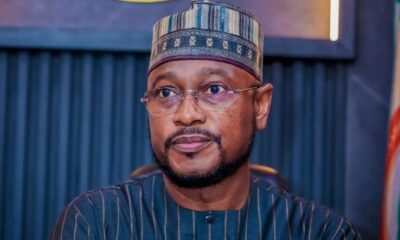
According to a statement by the SEC on Sunday, the MoU was recently signed by its director-general, Emomotimi Agama and NYSC director-general, Olakunle Nafiu.
It was also meant to promote financial literacy and sound investment habits among young Nigerians.
In addition, the collaboration will help equip corps members with essential knowledge and skills to identify and avoid Ponzi schemes and other illegal investment practices.
It will also help enhance public awareness campaigns against illegal financial schemes across all LGAs in the country, among other objectives.
“Based on the scope of the collaboration, SEC shall develop and provide relevant and up-to-date educational content, materials, and training modules on capital market operations, safe investment practices, and the identification and avoidance of Ponzi schemes.
“SEC will also be responsible for the content, resources and funding of training sessions for selected corps members and NYSC supervisors who will serve as trainers and facilitators in their respective communities.
SEC
“On its part, the NYSC shall facilitate the integration of anti-Ponzi scheme education into its Education and Enlightenment CDS programme. This may involve dedicated sessions, workshops, or awareness campaigns during orientation camps and throughout the service year,” said the statement.
The parties shall collaborate on joint awareness campaigns, utilising various channels and platforms, including social media, traditional media, and community outreach, to disseminate information on safe investment and expose fraudulent schemes.
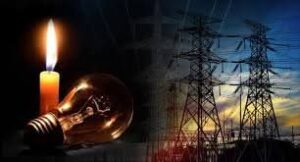
Persistent Grid Collapse, Weak Power Supply Worsening Economic Hardship: Oyintiloye
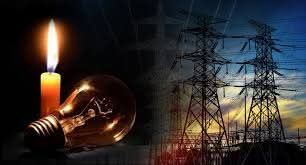
Speaking with journalists on Sunday in Osogbo, Oyintiloye said the situation had continued to deteriorate despite assurances and reforms introduced by authorities.
He described unreliable electricity as a major setback to the federal government’s reforms in the power sector.
He appealed to President Bola Tinubu to urgently intervene, noting that poor power supply is worsening economic hardship across the country.
Oyintiloye said the poor supply has compounded the effects of the current heatwave, making living conditions more difficult for many Nigerians.
The former lawmaker called for the constitution of a panel to investigate recurring national grid collapses and persistent supply challenges despite significant investments.
“It is a terrible situation across Nigeria with persistent poor power supply,” he said.
“Many small-scale businesses and large industrial players are affected, while most homes cannot boast of even three hours of electricity supply daily for domestic use.
“Despite numerous reforms and promises, the national grid continues to collapse. The situation is now compounded by gas supply shortages, weak transmission infrastructure, and chronic underinvestment across the power value chain.
“Nigerians are groaning, and urgent action must be taken by the Minister of Power, Adebayo Adelabu, and his team. The situation cannot continue like this.”
Oyintiloye warned that the situation has already triggered protests in parts of the country and could escalate if not addressed promptly.
“The situation must be quickly addressed before it becomes a national embarrassment. Nigerians need to be informed whether the issue is due to structural failure or sabotage within the power sector,” he said.
Electricity
“This epileptic power supply has led to a series of peaceful protests nationwide. I appeal for the President’s intervention before these protests turn violent.
“Electricity is essential for households and the survival of businesses. Since the end of last year, there has been no stable power supply across the country, despite assurances by those in charge and huge investments in the sector.
“Poor power supply should not be added to the challenges Nigerians are currently facing. The high cost of fuel has also made it difficult for those relying on generators to cope.”
Eid-el-Fitr: NRC Sets To Run Three Lagos–Ibadan Train Trips Monday
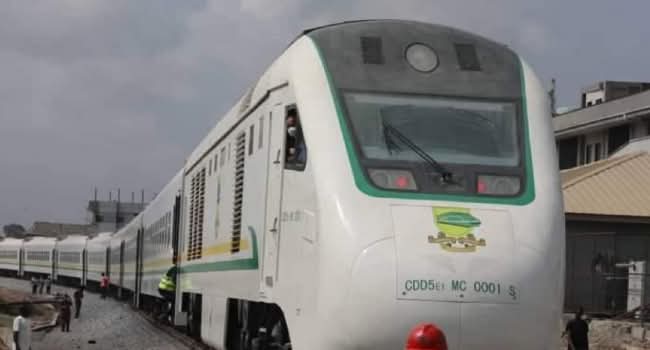
Eid-el-Fitr: NRC sets to run three Lagos–Ibadan train trips Monday. He assured passengers of NRC’s continued commitment to safe, reliable, and efficient rail services.
This was contained in a statement issued on Friday in Lagos by NRC chief public relations officer, Callistus Unyimadu.
He said the additional trip was in response to high passenger turnout during the Eid-el-Fitr travel period.
“The extra trip is aimed at easing passenger movement and providing more travel options for commuters returning after the Eid-el-Fitr celebrations.
“Under the schedule, departures from Lagos (Mobolaji Johnson Station, Ebute Metta) will be at 7.45 a.m., 1.40 p.m., and 4.00 p.m.
“From Ibadan (Obafemi Awolowo Station, Moniya), trains will depart at 8.00 a.m., 10.50 a.m., and 4.30 p.m.,” he said.
Mr Unyimadu assured passengers of NRC’s continued commitment to safe, reliable, and efficient rail services.
NRC Sets To Run Three Lagos–Ibadan Train Trips Monday
He advised travellers to arrive early, comply with ticketing and security procedures, and plan their journeys.
“The corporation appreciates the continued patronage of its services and wishes all passengers a safe and pleasant journey,” he added.
-
 Crime11 months ago
Kogi Assembly Considers Law To Regulate Rent, Establish Control Board: Tenancy Law
-

 News12 months ago
Atiku Reveals Why He Failed To Pick Wike As Running Mate In 2023
-
 Akwa Ibom1 year ago
The Apostolic Church Gets New Territorial Chairman, Exco
-

 Crime1 year ago
Federal High Court Jails 2 For Vandalizing Transformer, Telecom Mast In Kogi
-
 News1 year ago
The Apostolic Church Gets New National President, Executive
-
 Akwa Ibom1 year ago
Umo Eno Commences Payment Of 80,000 Naira Minimum Wage With Arrears
-

 News1 year ago
Senator Natasha Returns To Senate With Husband Amid Seat Dispute
-
 Economy10 months ago
Kiyosaki: Is Tinubu’s Government Afraid Of Ibrahim Traore?