
News
NAF ATSTC Inaugurates New Air Traffic Control Course For NAMA Cadets

NAF ATSTC Inaugurates New Air Traffic Control Course For NAMA Cadets
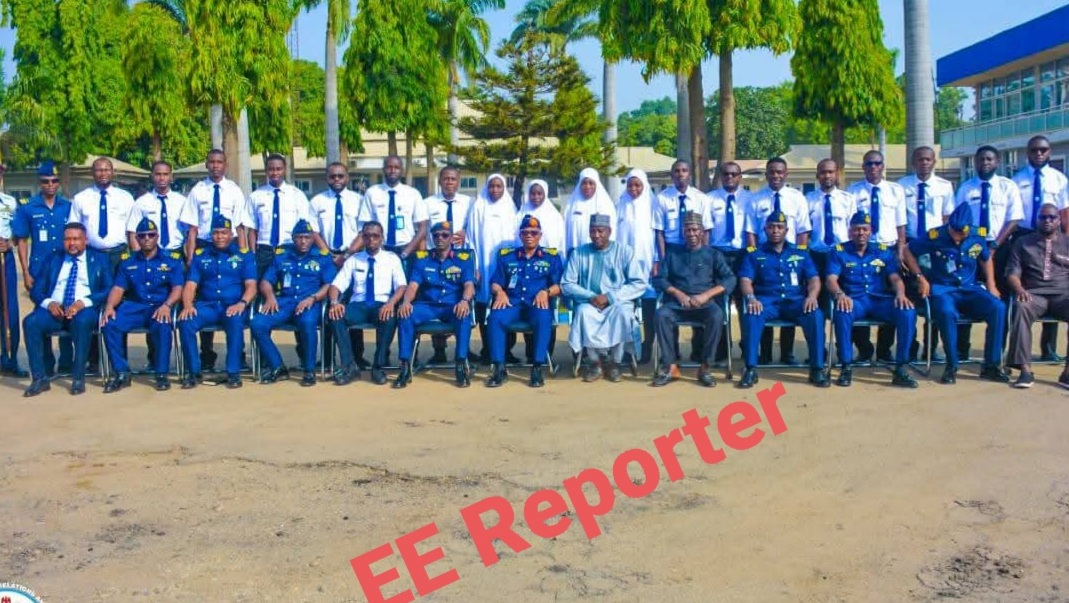
NAF ATSTC inaugurates new Air Traffic control course for NAMA cadets. The Nigerian Air Force (NAF) Air Traffic Services Training Centre (ATSTC) in Kaduna on 2 February 2026 inaugurated Air Traffic Control and Surveillance Radar Course 5, welcoming 20 cadets from the Nigerian Airspace Management Agency (NAMA).
Academic activities commenced immediately after the ceremony. The cadets, who reported on 26 January 2026, have begun a 65-week intensive training programme designed to equip them with advanced competencies in air traffic management, radar operations, and surveillance, strengthening their ability to manage Nigeria’s increasingly complex airspace environment.
Highlighting the strategic importance of the programme, the Chief of the Air Staff, Air Marshal Sunday Kelvin Aneke, stated: “This programme is more than just training air traffic controllers.
It demonstrates the Nigerian Air Force’s commitment to supporting civil aviation and ensuring national airspace safety. Through close collaboration with NAMA, we strengthen operational capacity and civil-military synergy for the benefit of all airspace users.”

NAF ATSTC Inaugurates New Air Traffic Control
The Commandant ATSTC, Air Vice Marshal NB Folaji, affirmed that the cadets will undergo world-class academic and practical instruction tailored to the realities of modern air traffic control. He noted that the partnership with NAMA underscores the NAF’s enduring support to civil authorities and its dedication to promoting safe, efficient, and secure skies nationwide.
The course aligns with the NAF’s broader capacity-building drive aimed at elevating professional standards, deepening civil-military cooperation, and reinforcing the Air Force’s role in safeguarding critical national infrastructure.











News
Remi Tinubu Condemns Ozoro ‘Rape Festival’, Says “No Tradition Allows Violation Of Women’s Rights”

Remi Tinubu Condemns Ozoro ‘Rape Festival’, Says “No Tradition Allows Violation Of Women’s Rights”
Remi Tinubu condemns Ozoro ‘rape festival. Mrs Tinubu maintained that no custom can justify violence or abuse against women.
In a statement on her X page on Sunday, Mrs Tinubu said she watched “horrific viral footage” showing girls being physically and sexually assaulted and subjected to humiliation and cruel treatment during what was meant to be a community celebration.
While expressing respect for Nigeria’s diverse cultures and traditions, she mentioned that no custom can justify violence or abuse against women.

Oluremi Tinubu
“No tradition or custom grants any man the right to violate the dignity or freedom of any woman or girl,” she said.
The first lady commended the Nigeria Police Force for the arrest of suspects and urged authorities to ensure that all perpetrators face the full weight of the law.
She also encouraged victims to seek medical and psychological help, and offered her prayers.

Persistent Grid Collapse, Weak Power Supply Worsening Economic Hardship: Oyintiloye
Speaking with journalists on Sunday in Osogbo, Oyintiloye said the situation had continued to deteriorate despite assurances and reforms introduced by authorities.
He described unreliable electricity as a major setback to the federal government’s reforms in the power sector.
He appealed to President Bola Tinubu to urgently intervene, noting that poor power supply is worsening economic hardship across the country.
Oyintiloye said the poor supply has compounded the effects of the current heatwave, making living conditions more difficult for many Nigerians.
The former lawmaker called for the constitution of a panel to investigate recurring national grid collapses and persistent supply challenges despite significant investments.
“It is a terrible situation across Nigeria with persistent poor power supply,” he said.
“Many small-scale businesses and large industrial players are affected, while most homes cannot boast of even three hours of electricity supply daily for domestic use.
“Despite numerous reforms and promises, the national grid continues to collapse. The situation is now compounded by gas supply shortages, weak transmission infrastructure, and chronic underinvestment across the power value chain.
“Nigerians are groaning, and urgent action must be taken by the Minister of Power, Adebayo Adelabu, and his team. The situation cannot continue like this.”
Oyintiloye warned that the situation has already triggered protests in parts of the country and could escalate if not addressed promptly.
“The situation must be quickly addressed before it becomes a national embarrassment. Nigerians need to be informed whether the issue is due to structural failure or sabotage within the power sector,” he said.

Electricity
“This epileptic power supply has led to a series of peaceful protests nationwide. I appeal for the President’s intervention before these protests turn violent.
“Electricity is essential for households and the survival of businesses. Since the end of last year, there has been no stable power supply across the country, despite assurances by those in charge and huge investments in the sector.
“Poor power supply should not be added to the challenges Nigerians are currently facing. The high cost of fuel has also made it difficult for those relying on generators to cope.”
News
CAS Kelvin Aneke Commends Troops Sacrifice, Reaffirms Operational Resolve At Eld-el-fitr Luncheon In Kaduna
CAS Kelvin Aneke Commends Troops Sacrifice, Reaffirms Operational Resolve At Eld-el-fitr Luncheon In Kaduna
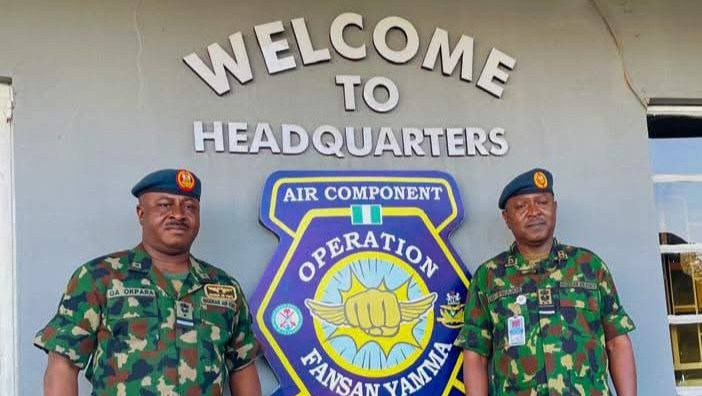
The Chief of the Air Staff (CAS), Air Marshal Sunday Kelvin Aneke, on 21 March 2026, hosted Nigerian Air Force personnel at an Eid-el-Fitr luncheon held at the Joint Task Force North West, Operation Fansan Yamma Sector 1 in Kaduna, in recognition of their sacrifices in ongoing counter-terrorism operations.
Represented by the Chief of Communications Information Systems, Headquarters Nigerian Air Force, Air Vice Marshal DD Pwajok, the CAS commended personnel for their resilience, professionalism, and steadfast commitment to national security.
He emphasised that the spirit of sacrifice and devotion symbolised by Eid reflects the core ethos of military service, while reaffirming the Nigerian Air Force’s continued focus on operational readiness, personnel welfare, training, and the enhancement of air capabilities. He also expressed appreciation to President Bola Ahmed Tinubu for his sustained support to the Service.
In his remarks, the Air Component Commander, Air Commodore OA Okpara, conveyed profound gratitude for the CAS’s unwavering support, noting that it has significantly strengthened morale and operational effectiveness.

Kelvin Aneke
He highlighted the impact of sustained air operations, precision engagements, intelligence, surveillance, and rapid mobility missions in disrupting terrorist activities, constraining their freedom of movement, and improving security conditions across affected communities. He reaffirmed the resolve of personnel to maintain operational momentum and consolidate gains achieved in the theatre.
The event, marked by cultural performances, entertainment, and the presentation of souvenirs, reinforced unity, camaraderie, and esprit de corps among personnel, while also providing an opportunity for reflection on shared values of sacrifice, discipline, and service to the nation.
Such engagements continue to strengthen cohesion, inspire renewed dedication, and underscore the Nigerian Air Force’s enduring commitment to professionalism and mission success in the defence of Nigeria.
-

 Crime11 months ago
Kogi Assembly Considers Law To Regulate Rent, Establish Control Board: Tenancy Law
-

 News12 months ago
Atiku Reveals Why He Failed To Pick Wike As Running Mate In 2023
-

 Akwa Ibom1 year ago
The Apostolic Church Gets New Territorial Chairman, Exco
-

 Crime1 year ago
Federal High Court Jails 2 For Vandalizing Transformer, Telecom Mast In Kogi
-

 News1 year ago
The Apostolic Church Gets New National President, Executive
-
 Akwa Ibom1 year ago
Umo Eno Commences Payment Of 80,000 Naira Minimum Wage With Arrears
-

 News1 year ago
Senator Natasha Returns To Senate With Husband Amid Seat Dispute
-

 Economy10 months ago
Kiyosaki: Is Tinubu’s Government Afraid Of Ibrahim Traore?