
Economy
Lagos: Reduce Cost Of Blood, NMA Tells Sanwo-Olu

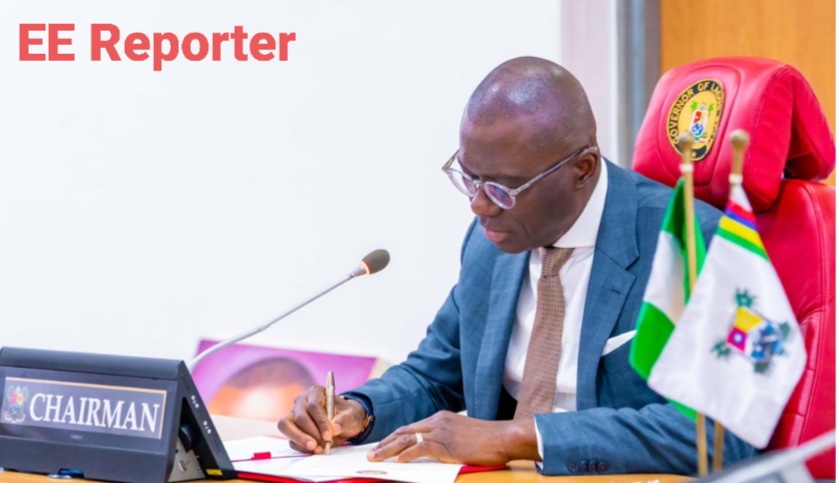
Lagos: Reduce Cost Of Blood, NMA Tells Sanwo-Olu
Lagos: Reduce cost of blood, NMA tells Sanwo-Olu. Mr Esegine said, “We were told that the government withdrew the subsidy on blood and that whatever subsidy there is cannot be extended to the private sector.
The Nigerian Medical Association (NMA) and the Association of Nigerian Private Medical Practitioners (ANPMP) have appealed to the Lagos State Government to develop mechanisms for reducing the unit cost of blood in the state.
The Lagos Chairman of NMA and ANPMP, Dr Babajide Saheed and Dr Jonathan Esegine, made the appeal in separate interviews on Saturday.
A circular dated November15, 2024, conveyed Governor Babajide Sanwo-Olu’s approval for an increase in the cost of blood screening for transfusion transmissible infections by private healthcare facilities.
The circular signed by Mrs Bukola Odoe, Special Adviser, to the Governor on Public-Private Partnership directed an increase in the cost of screening a pint of blood from N5,000 to N15,000 for the three existing private blood screening partners (Darlez, Banner & Solawunmi).
The circular further directed the Ministry of Health and the Lagos State Blood Transfusion Service (LSBTS) to ensure that the new price regime takes effect on November 18, 2024.
Every unit of blood collected by registered blood banks must be sent to one of the LSBTS-established screening centres for mandatory testing.
The LSBTS uses automated systems to screen every unit of blood for transfusion-transmissible infections, including HIV type 1 and 2, Hepatitis B, Hepatitis C, and syphilis, in line with international standards.
Consequently, members of the Blood Bank Society of Nigeria (BBSN), Lagos State Branch, held an online general meeting on November 17, 2024, during which they adjusted the prices for the issuance of blood to their customers.
According to them, the action was triggered by the state government’s sudden increase in the blood screening fee.
Thereafter, BBSN pricing for the issuance of blood saw a unit of positive blood rise from N25,000 to N60,000, while a unit of negative blood rose from N30,000 to N75,000.
Findings revealed that the unit cost of blood sells as high as N100,000 in some laboratories across the state.
One year after this development, Mr Saheed disclosed that many patients are suffering, struggling to survive and groaning under the new price regime, describing the unit cost of blood as ‘crazily expensive.’
Mr Saheed urged the government to regulate and subsidise the unit cost of blood, saying, “We cannot begin to commercialise and profit from an essential commodity like blood. He stated, “There are so many vulnerable members of society that depend on blood transfusions to stay alive at one time or the other. Most of these patients need multiple units of blood depending on their medical procedure.
“For example, a patient who requires three units of negative blood will spend over N200,000, this is minus the cost of the procedure and other expenses that may come up. Anything you are doing as a government, make it affordable and accessible so that every patient will be able to get it at the nearest place.
“The economy is having a biting effect on citizens. Many citizens are struggling to feed themselves, and those who are sick can barely afford their treatment costs. The government must show empathy in governance and policies.”
He further said that the high unit cost of blood would encourage commercialisation, lamenting that there was no regulation for controlling how blood is sourced in Lagos, especially financially induced donation.
“Blood is life. It should be given freely. We need to ask ourselves the questions, is it the bag, screening or the reagents that justify the sale of blood at N50,000 upward?” Saheed said.
Similarly, Mr Esegine disclosed that the association’s engagement with the government’s representative on the issue was unproductive.
Mr Esegine said, “We were told that the government withdrew the subsidy on blood and that whatever subsidy there is cannot be extended to the private sector.
“That is a very sorry statement to make because you are not subsidising any private sector or private practitioners, you are subsidising the health of the people.
“We are talking of poor maternal health individuals, we are talking about sickle cell anaemia children that need blood transfusions from time to time.
“We are talking of obstetric emergencies where you have haemorrhage as one of the major causes of mortality in women. So blood is such an essential commodity that cannot be allowed to be used as an equal of trade, to be profited from.”
The chairman emphasised that the private sector is a promoter of health, salvaging emergency situations, and servicing 85 per cent of Lagos residents with health services.
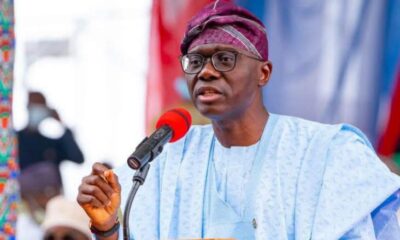
Sanwo-Olu
“You need blood, we get the blood from those who are providing blood service and we give the patient exactly the way it is given to us. We don’t do markup on blood transfusions.
“So when the government says it can’t subsidise the private sector, that is a very tragic statement to make and I would want the government to have a rethink,” Esegine said.
The cost of a unit of blood varies per laboratory, location and state.
In Ibadan, a unit of blood goes for N20,000 at the University College Hospital (UCH), costs N10,000 at the National Blood Transfusion Agency, while prices range between N20,000 to N30,000 in other laboratories.










Eid-el-Fitr: NRC Sets To Run Three Lagos–Ibadan Train Trips Monday
Eid-el-Fitr: NRC sets to run three Lagos–Ibadan train trips Monday. He assured passengers of NRC’s continued commitment to safe, reliable, and efficient rail services.
This was contained in a statement issued on Friday in Lagos by NRC chief public relations officer, Callistus Unyimadu.
He said the additional trip was in response to high passenger turnout during the Eid-el-Fitr travel period.
“The extra trip is aimed at easing passenger movement and providing more travel options for commuters returning after the Eid-el-Fitr celebrations.
“Under the schedule, departures from Lagos (Mobolaji Johnson Station, Ebute Metta) will be at 7.45 a.m., 1.40 p.m., and 4.00 p.m.
“From Ibadan (Obafemi Awolowo Station, Moniya), trains will depart at 8.00 a.m., 10.50 a.m., and 4.30 p.m.,” he said.
Mr Unyimadu assured passengers of NRC’s continued commitment to safe, reliable, and efficient rail services.

NRC Sets To Run Three Lagos–Ibadan Train Trips Monday
He advised travellers to arrive early, comply with ticketing and security procedures, and plan their journeys.
“The corporation appreciates the continued patronage of its services and wishes all passengers a safe and pleasant journey,” he added.
UBA, BII Sign Letter Of Intent To Explore Trade Finance Collaboration Across Africa
United Bank for Africa (UK) Limited (“UBA UK”) and British International Investment plc (“BII”), the UK’s development finance institution and impact investor, announced that they have signed a letter of intent to develop trade finance collaboration opportunities.
The proposed initiative aims to expand access to trade and working capital facilities for businesses operating across Africa.
Access to trade finance remains one of the most significant structural constraints on African trade. Businesses, particularly small and medium-sized enterprises, are frequently unable to secure letters of credit, guarantees, and supply chain finance on commercially viable terms, limiting their capacity to export and import competitively. This trade finance gap is estimated by the African Development Bank to be over USD 80 billion annually.
To help close this gap, UBA UK, the London subsidiary of UBA Group, Africa’s Global Bank, will leverage its deep relationships across the Group’s 20-country African network to originate and structure trade finance transactions. While BII, with a mandate to support productive, sustainable, and inclusive growth across Africa, can support transactions that might otherwise fall outside conventional commercial appetite.
“The signing of this letter with BII represents a landmark moment for UBA UK and for the UBA Group’s global ambitions. As the Group’s hub for Trade Operations, UBA UK is uniquely positioned to connect African businesses with the international financial system. Working alongside BII, we can extend that capability further — mobilising capital where it matters most and helping to close the trade finance gap that holds back so much African potential,” said Lok Mishra, Chief Executive Officer, UBA UK
“British International Investment is committed to catalysing private sector growth across Africa, and trade finance is a critical enabler of that growth. We welcome the opportunity to collaborate with UBA Group, whose pan-African network and deep institutional relationships can help advance our ambition to expand access to trade and working capital finance, particularly in frontier markets,” Chris Chijiuitomi, Managing Director and Head of Africa
The announcement builds on growing momentum around intra-African trade facilitated by the African Continental Free Trade Area (AfCFTA), which entered into force in 2021 and represents one of the world’s most significant trade integration initiatives. Both institutions have identified the operationalisation of AfCFTA as a priority catalyst for a trade finance facility, with UBA UK’s network across major AfCFTA economies offering a basis for supporting businesses navigating the emerging continental market.
This also complements the UK Government’s broader engagement with African economic development, including commitments made at the UK-Africa Investment Summit, and reinforces the City of London’s role as a leading international finance centre for Africa-focused capital mobilisation.
Future cooperation remains subject to further assessment, due diligence and the completion of internal approvals by both parties.
ABOUT UNITED BANK FOR AFRICA (UK) LIMITED
UBA UK is the London-based subsidiary of United Bank for Africa Plc, one of Africa’s leading financial institutions with operations across 20 African countries, the United Kingdom, the United States of America, France, and the United Arab Emirates. UBA UK serves as the Group’s hub for Trade Operations, providing a comprehensive suite of trade finance, treasury, and correspondent banking services to institutional and corporate clients worldwide.
UBA
ABOUT UNITED BANK FOR AFRICA GROUP
United Bank for Africa is one of the largest employers in the financial sector on the African continent, with 25,000 employees group-wide and serving over 45 million customers globally. Operating in twenty African countries, the United Kingdom, the United States of America, France and the United Arab Emirates, UBA provides retail, commercial and institutional banking services, leading financial inclusion and implementing cutting-edge technology.
ABOUT BRITISH INTERNATIONAL INVESTMENT
British International Investment is the UK’s development finance institution and impact investor. The organisation invests in businesses in developing countries to improve people’s lives and help protect the planet. BII’s work targets the underlying causes of poverty and the climate crisis, helping countries break free from aid dependency for good.
Between 2022-2026, at least 30 per cent of BII’s total new commitments by value will be in climate finance. BII is also a founding member of the 2X Challenge which has raised over $33.6 billion to empower women’s economic development.
The company has investments in over 1,600 businesses across 66 countries and total net assets of £9.87 billion. For more information, visit: www.bii.co.uk | watch here. Follow British International Investment on LinkedIn, Bluesky and X.

Eid-el-Fitr: President Tinubu Felicitates Muslims, Urges Renewed Unity, Patriotism
Eid-el-Fitr: President Tinubu felicitates Muslims, urges renewed unity, patriotism. Mr Tinubu called on Muslims to reflect on the spiritual lessons of Ramadan.
The president urged them to renew commitment to national unity, peaceful coexistence, and service to humanity as they celebrate the festival across the country on Friday.
This is contained in a statement issued by presidential spokesperson, Bayo Onanuga, on Thursday in Abuja.
Mr Tinubu called on Muslims to reflect on the spiritual lessons of Ramadan, noting that the holy month teaches discipline, sacrifice, compassion, and devotion to God and humanity.
He said: “We have a lot to draw from the noble lessons of Ramadan, especially at a time like this.
“We must continue to abide by the virtues of piety, selflessness, perseverance, kindness and compassion beyond this period.”
The president emphasised the need for Nigerians to remain united across religious and ethnic lines, stressing that national cohesion remains vital for sustainable peace and development.
He urged Muslims to extend acts of kindness and charity to the less privileged, irrespective of religious or ethnic background, in line with the enduring values of Islam.
Mr Tinubu noted that such gestures would strengthen social bonds, promote inclusiveness, and reinforce the spirit of brotherhood that defines the Nigerian society.
The president also called on religious leaders to use the occasion to offer prayers for peace, stability, and economic prosperity across the country.

Tinubu
He expressed optimism that with collective efforts, Nigeria would overcome its challenges and achieve lasting progress for the benefit of all citizens.
Mr Tinubu wished Muslims a joyous celebration, praying that the blessings of Ramadan would bring renewed hope, strength, and guidance to individuals, families, and the nation.
-
 Crime11 months ago
Kogi Assembly Considers Law To Regulate Rent, Establish Control Board: Tenancy Law
-

 News12 months ago
Atiku Reveals Why He Failed To Pick Wike As Running Mate In 2023
-
 Akwa Ibom1 year ago
The Apostolic Church Gets New Territorial Chairman, Exco
-

 Crime1 year ago
Federal High Court Jails 2 For Vandalizing Transformer, Telecom Mast In Kogi
-
 News1 year ago
The Apostolic Church Gets New National President, Executive
-
 Akwa Ibom1 year ago
Umo Eno Commences Payment Of 80,000 Naira Minimum Wage With Arrears
-

 News1 year ago
Senator Natasha Returns To Senate With Husband Amid Seat Dispute
-
 Economy10 months ago
Kiyosaki: Is Tinubu’s Government Afraid Of Ibrahim Traore?