
News
IGP Tunji Disu Submits Framework On State Police To Senate Constitution Review Panel

IGP Tunji Disu Submits Framework On State Police To Senate Constitution Review Panel
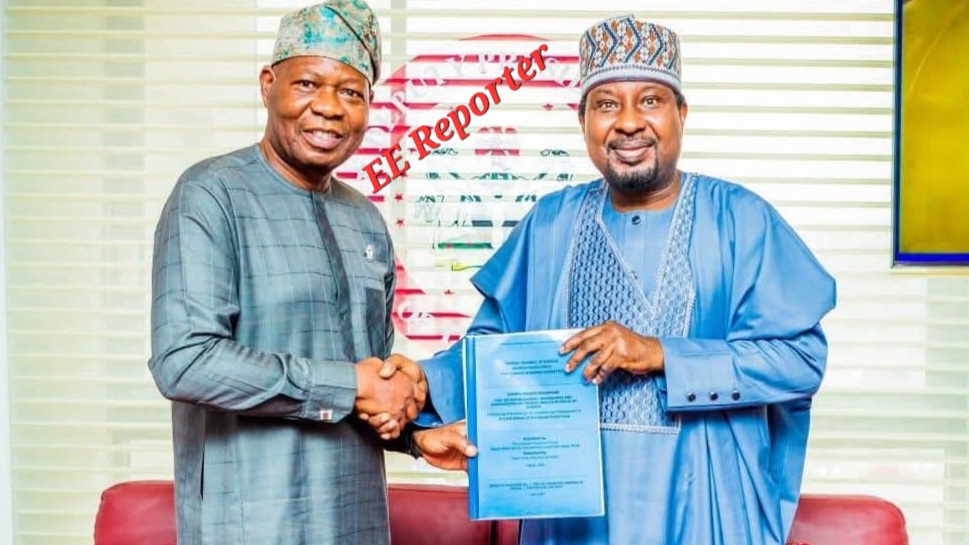
The inspector-general of police (IGP) Tunji Disu, has submitted a framework for the establishment of state police to the senate committee on the review of the 1999 Constitution.
Ismail Mudashir, special adviser on media to Barau Jibrin, deputy president of the senate, said in a statement that the committee received the framework on Thursday.
Barau chairs the senate constitution review committee.
According to Mudashir, Olu Ogunsakin, chairman of the committee set up by the Nigeria Police Force (NPF) to examine the modalities for establishing state police, submitted the 75-page framework on behalf of the IGP.
The document is titled “A comprehensive framework for the establishment, governance and coordination of federal and state police”.
Speaking on behalf of the IGP, Ogunsakin said the framework contains professional insights and recommendations from the police on the proposed creation of state police.
“The report covers the considered views, professional insights and strategic recommendations of the force, derived from extensive consultations and a careful assessment of the operational, legal and administrative implications of instituting state police in Nigeria,” he said.
“It is our expectation that the contents of this report will meaningfully contribute to ongoing deliberations and assist in shaping informed, balanced, and pragmatic decisions on this critical aspect of national security architecture.”
He noted that the framework was forwarded to the senate committee as the NPF’s contribution to the constitutional review process.
Responding, Barau commended the IGP for the proactive steps towards the establishment of state police, adding that the proposal aligns with the agenda of President Bola Tinubu to strengthen security across the country.

IGP Tunji Disu
Barau added that the committee would review the framework alongside other memoranda submitted for the constitutional amendment process.
On March 4, Disu inaugurated a seven-member steering committee led by Ogunsakin on the establishment of state police in Nigeria.
In February, President Bola Tinubu asked the leadership of the 10th national assembly to tinker with the constitution to create a legal framework for the establishment of state police.











Nigerian Farmers Urged To Use AI To Bridge Connectivity Gaps: Obaro
Farmers to use AI to bridge connectivity gaps. Juliet Obaro, an Internet of Things engineer, says that Edge AI can bridge connectivity gaps and empower smallholder farmers with real-time agricultural insights.
Juliet Obaro, an Internet of Things engineer, says that Edge artificial intelligence can bridge connectivity gaps and empower smallholder farmers with real-time agricultural insights.
She said this in an interview on Thursday in Abuja.
Ms Obaro explained that Edge AI is an emerging technology that enables data processing directly on devices without reliance on continuous internet connectivity.
She said the biggest barrier to digital agriculture was not the lack of innovation but the dependence of most solutions on internet access, which remains unreliable in rural farming clusters.
“Most smart farming tools today are cloud-dependent, meaning they require constant internet connectivity to function effectively. But for rural farmers, especially those in remote communities, this model simply does not work,” Ms Obaro said.
Ms Obaro said Edge AI addressed this gap by embedding intelligence directly into farm-based devices such as sensors, drones, and handheld tools, enabling them to analyse data locally and provide immediate feedback to farmers.
Ms Obaro stated that with Edge, devices could process soil conditions, weather patterns, and crop health data in the field without sending it to distant servers. According to her, this means farmers get real-time insights even when they are completely offline.
She explained that such systems could be deployed using low-power IoT devices equipped with pre-trained machine learning models that detect crop diseases, monitor moisture levels, and predict yield outcomes.
“Imagine a smallholder farmer in a remote village being alerted instantly that his crops are under pest attack, or that soil moisture is critically low, without needing internet access. That is the power of Edge AI,” Ms Obaro stated.
Ms Obaro further highlighted that integrating solar-powered devices could enhance the sustainability of Edge AI systems in rural areas, where electricity supply is also a challenge.
She identified power as another constraint, adding that designing these systems to run on solar energy would ensure that farmers were not limited by grid electricity. According to her, this makes the solution adaptable to rural realities.
She said localisation of AI models was crucial to effectiveness, noting that procedures should be tailored to Nigeria’s climate, soil types, and crop varieties.
“AI systems built with foreign datasets may not perform well here. We need locally trained models that understand indigenous crops like cassava, yam, and maize, as well as region-specific pests and diseases,” Ms Obaro said.

Nigerian Farmers
Ms Obaro said that for smallholder farmers who operate on thin margins, affordability is imperative. She maintained that Edge AI significantly lowers recurring costs because once the device is deployed, it can function independently.
On data security, Ms Obaro explained that Edge AI offered an added advantage by minimising data transmission risks. She said that since most data processing happens locally, there would be less exposure to cyber threats associated with cloud-based systems, allowing farmers to retain more control over their data.
Despite its potential, she acknowledged that challenges such as initial deployment costs and limited technical expertise remained.

2026 Policy Agenda: CBN Targets Single-Digit Inflation, Exchange Rate Stability
2026 policy agenda. The Central Bank of Nigeria (CBN) has unveiled its 2026 monetary policy agenda, outlining plans to reduce inflation to single digits, stabilise the exchange rate, and strengthen the country’s financial system.
Olayemi Cardoso, governor of the apex bank, announced the roadmap on Thursday in Abuja at the 2026 first monetary policy forum.
Cardoso said the monetary policy committee (MPC) will focus on consolidating recent economic gains by sustaining the decline in inflation, maintaining exchange rate stability, and improving liquidity flows within the banking system.
“Our next phase is focused on consolidation: anchoring inflation firmly on a downward trajectory toward a single-digit level, sustaining exchange-rate stability, strengthening reserve buffers through organic inflows, deepening interbank market development, and enhancing the robustness of our monetary-policy transmission,” he said.
The CBN governor noted that achieving the objectives would depend on strong collaboration between the central bank and fiscal authorities, alongside disciplined policy implementation and stakeholder engagement.
“Achieving these goals requires continued collaboration with the fiscal authority, disciplined policy execution, and strong stakeholder engagement, which is the very essence of today’s Forum,” Cardoso added.
He said the outlook for the Nigerian economy remains cautiously optimistic, despite persistent domestic and global risks.
The apex bank chief projected global economic growth at 3.3 percent in 2026, warning that tight financial conditions, the lingering effects of past monetary tightening, and geopolitical tensions could weigh on the outlook.
Cardoso also flagged developments in the Middle East as a potential risk to Nigeria’s economy, particularly through their impact on oil prices.
On the domestic front, he projected economic growth at 4.49 percent, driven by consistent policy direction, a market-reflective foreign exchange system, improved oil production, and ongoing structural reforms.
However, he identified food supply constraints, infrastructural deficits, and election-related spending pressures as key downside risks.
“Notwithstanding these challenges, our strengthened macroeconomic fundamentals, improved fiscal-monetary coordination, credible policy frameworks, and sound early warning systems position Nigeria to mitigate these risks more effectively than in the past,” he said.
FG TARGETS 7% GDP GROWTH
In his goodwill message, Wale Edun, minister of finance and coordinating minister of the economy, said the federal government is targeting stronger growth capable of improving living standards.
“Our broader objective remains economic transformation. In the near term, we are targeting GDP growth of about 7 percent, roughly double the pace of inflation. Growth at that level would be strong enough to lift millions of Nigerians out of poverty,” Edun said.
He said managing the trade-off between inflation and growth would remain a central challenge for policymakers.
“The relationship between growth and inflation will remain a key focus going forward. The challenge is to strike the right balance, keeping inflation under control while sustaining growth,” he said.
Edun added that interest rates remain a critical tool in controlling inflation, noting that tighter rates raise borrowing costs for government, businesses, and households.
He, however, expressed optimism that interest rate could ease gradually as inflation declines and reforms take hold.
The minister also emphasised the need for coordinated action across institutions, noting that macroeconomic stability cannot be delivered by any single agency.

CBN
Edun also welcomed ongoing efforts to improve transparency in the foreign exchange market, saying such measures would boost investor confidence, reduce uncertainty, and support disinflation.
He further commended the CBN’s move toward an inflation-targeting framework, describing it as a step that would strengthen policy credibility, enhance communication, and support long-term investment.
Also speaking, Mohammed Sani Abdullahi, deputy governor in charge of the economic policy directorate at the CBN, said Nigeria’s macroeconomic environment has improved since the last monetary policy forum held in January 2025.
Abdullahi said inflation has moderated, foreign exchange market conditions have improved, and investor confidence has strengthened, supported by better coordination between fiscal and monetary authorities.
“Despite these encouraging developments, we recognise that the journey towards sustainable macroeconomic stability is an ongoing process rather than a destination,” he said.
Abdullahi called for sustained reforms, stronger policy coordination, and deeper engagement among stakeholders, stressing that the effectiveness of monetary policy depends on collective action across the economy.
Health Study: Ejaculating Frequently May Boost Sperm Qualit
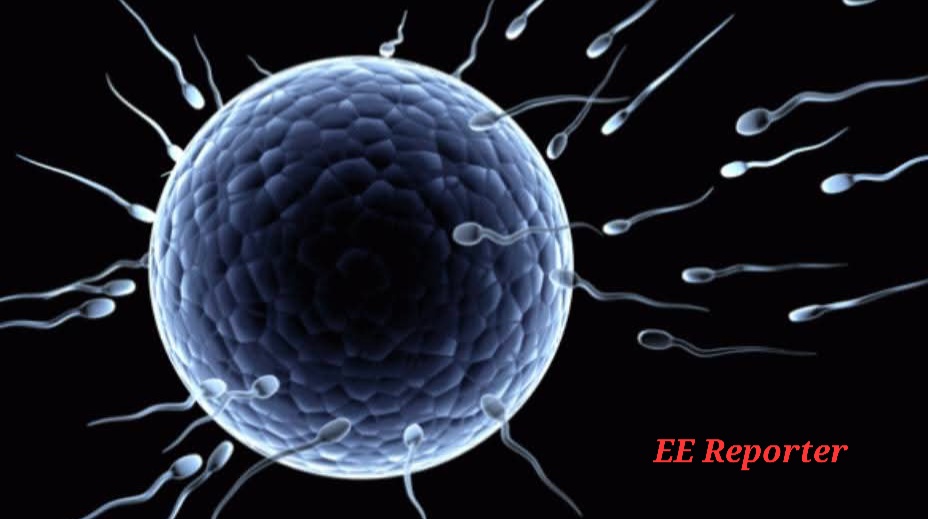
A new study has found that sperm quality declines during prolonged s3xual abstinence due to extended storage in the body.
The study, published in Proceedings of the Royal Society B on Monday, analysed semen data from 115 studies involving nearly 55,000 men, as well as 56 studies across 30 animal species, including birds, bees, reptiles, and other mammals, to assess the impact of sperm storage.
The findings showed that prolonged abstinence reduced sperm health, with declines in motility (ability to swim) and viability (how many are alive), and increased DNA damage.
In animals, the study found that embryos produced from stored sperm — whether kept in males before ejaculation or in females before fertilisation — had lower survival rates.
Researchers noted that the decline in quality may stem from biological changes in stored sperm compared to newly produced ones.
They also found that while sperm quality deteriorates in females after mating, the process occurs more slowly than in males, thanks to protective substances within the female reproductive tract that aid sperm preservation.
In humans, sperm can survive inside the female body for several days. In contrast, species such as queen ants, bees, and female bats are capable of storing sperm for months or even years before fertilisation.
The study’s authors suggested the findings could carry implications for infertility treatment, indicating that using freshly ejaculated sperm may lead to better fertility outcomes.
While the World Health Organization currently recommends abstaining from ejaculation for two to seven days prior to providing a sperm sample for analysis or procedures like IVF, the study proposes that shorter abstinence periods may be more beneficial for optimising sperm quality.

Sperm Qualit
Lead author Krish Sanghvi advised that prolonged abstinence may not always be advantageous, emphasising that sperm quality — not just quantity — plays a critical role in fertilisation success.
“All we recommend is that clinicians and couples reconsider whether long abstinence is always good, because abstinence leads to deterioration in sperm quality,” Sanghvi said.
“If sperm quantity is the only thing that matters for a clinic or couple, then s3xual abstinence is not necessarily a bad thing. But usually fertilisation success will be determined not only by how many sperm there are but the quality of the sperm too, for example, in IVF.”
-

 Crime11 months ago
Kogi Assembly Considers Law To Regulate Rent, Establish Control Board: Tenancy Law
-

 News1 year ago
Atiku Reveals Why He Failed To Pick Wike As Running Mate In 2023
-

 Akwa Ibom1 year ago
The Apostolic Church Gets New Territorial Chairman, Exco
-

 Crime1 year ago
Federal High Court Jails 2 For Vandalizing Transformer, Telecom Mast In Kogi
-

 News1 year ago
The Apostolic Church Gets New National President, Executive
-

 Akwa Ibom1 year ago
Umo Eno Commences Payment Of 80,000 Naira Minimum Wage With Arrears
-

 News1 year ago
Senator Natasha Returns To Senate With Husband Amid Seat Dispute
-

 Economy10 months ago
Kiyosaki: Is Tinubu’s Government Afraid Of Ibrahim Traore?