
Economy
Government, Partners Unite To Eliminate Infectious Diseases In Kwara

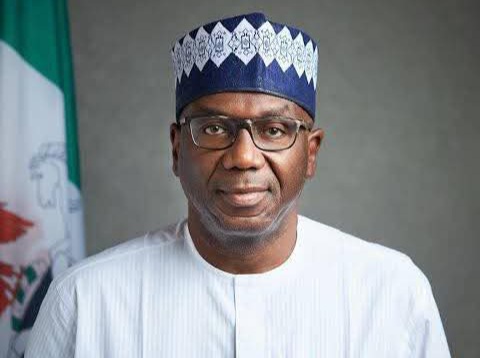
Government, Partners Unite To Eliminate Infectious Diseases In Kwara
Government, partners unite to eliminate infectious diseases in Kwara. He said infectious diseases such as HIV, viral hepatitis, syphilis, and malaria continue to pose serious challenges in the state.
The Kwara government, in collaboration with the National AIDs, Viral Hepatitis and STIs Control Programme and development partners, on Wednesday, organised a one-day summit geared towards elimination of infectious diseases.
Some of the development partners are the Trinity Healthcare Foundation, Abbott and Clinton Health Access Initiative and World Health Organisation (WHO).
The Infectious Diseases Summit is themed: “Synergising Efforts to End Infectious Diseases: Strengthening Investment, Innovation and Collaboration Against HIV, Viral Hepatitis, Syphilis, and Malaria in Kwara State.”
In her address, Amina El-Imam, commissioner for bealth, highlighted the summit’s importance in facilitating collaborative problem-solving and strengthening partnerships for meaningful impact.
The commissioner who was represented by the permanent secretary in the ministry, Dr Abdullahi Taoheed, said infectious diseases such as HIV, viral hepatitis, syphilis, and malaria continue to pose serious challenges in the state.
She stated that the objective of the summit was to strengthen investment and explore innovative financing for disease elimination.
According to her, it will also help to foster innovation through showcasing research and technology that can accelerate progress.
“This summit will lead to enhancing collaboration and uniting government, civil society, private sector, and development partners in a common cause,” she said.
The commissioner commended the federal government and development partners for their commitment to improving health outcomes through innovation and partnership.
She also commended Gov AbdulRahman AbdulRazaq for making significant progress in combating these diseases and strengthening the health system.
She listed some of the achievements on healthcare in the state to include expansion of access to HIV services, increased testing, and prevention of mother-to-child transmission (PMTCT) coverage.
According to her, others are improved access to antiretroviral therapy across health facilities and also strengthening malaria control efforts, among others.
In his presentation, an expert in Haematology and Blood Transfusion, Sulaimon Akanmu of the College of Medicine, University of Lagos, emphasised on early detection of HIV/AIDs and commencement of treatment.
The expert emphasised the need for active case-finding to identify those with acute HIV infections, enabling early treatment commencement and better health outcomes.
“There is need to expand study, so that we can determine the true burden and incidence of infection,” he said.
He explained that the estimated population with the infection was less than one per cent which can contribute to 20 per cent infection rate in the country if they are not tested and begin treatment.
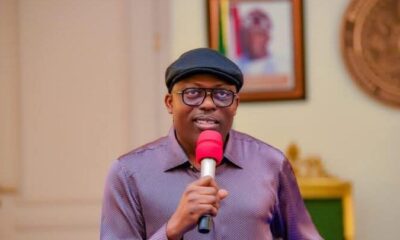
Abdulrahman Abdulrazaq
Mr Akanmu called for total commitment from the government and all stakeholders to achieve wider coverage in testing and treatment, enabling Nigeria to reach zero HIV/AIDS cases by 2030.
Khadijat Kamaldeen, the state epidemiologist, said Kwara faces risks from infectious diseases, noting that Congenital Syphilis remains a concern due to non-routine screening.
She noted that malaria remains a significant public health threat in Nigeria, particularly for vulnerable populations like pregnant women and children, who are disproportionately affected.
She, however, revealed that Kwara has made stride in control of malaria having recorded a decline and currently at six per cent.
She observed that though there is significant decline in new cases of HIV/AIDs infections, challenges such as stigma, poverty, gender inequality and weak infrastructure still persist.
Ms Kamaldeen urged enhanced surveillance and expanded prevention efforts, emphasising the need to address underlying social factors like poverty, education, stigma, and gender inequality.








Eid-el-Fitr: NRC Sets To Run Three Lagos–Ibadan Train Trips Monday
Eid-el-Fitr: NRC sets to run three Lagos–Ibadan train trips Monday. He assured passengers of NRC’s continued commitment to safe, reliable, and efficient rail services.
This was contained in a statement issued on Friday in Lagos by NRC chief public relations officer, Callistus Unyimadu.
He said the additional trip was in response to high passenger turnout during the Eid-el-Fitr travel period.
“The extra trip is aimed at easing passenger movement and providing more travel options for commuters returning after the Eid-el-Fitr celebrations.
“Under the schedule, departures from Lagos (Mobolaji Johnson Station, Ebute Metta) will be at 7.45 a.m., 1.40 p.m., and 4.00 p.m.
“From Ibadan (Obafemi Awolowo Station, Moniya), trains will depart at 8.00 a.m., 10.50 a.m., and 4.30 p.m.,” he said.
Mr Unyimadu assured passengers of NRC’s continued commitment to safe, reliable, and efficient rail services.

NRC Sets To Run Three Lagos–Ibadan Train Trips Monday
He advised travellers to arrive early, comply with ticketing and security procedures, and plan their journeys.
“The corporation appreciates the continued patronage of its services and wishes all passengers a safe and pleasant journey,” he added.
UBA, BII Sign Letter Of Intent To Explore Trade Finance Collaboration Across Africa
United Bank for Africa (UK) Limited (“UBA UK”) and British International Investment plc (“BII”), the UK’s development finance institution and impact investor, announced that they have signed a letter of intent to develop trade finance collaboration opportunities.
The proposed initiative aims to expand access to trade and working capital facilities for businesses operating across Africa.
Access to trade finance remains one of the most significant structural constraints on African trade. Businesses, particularly small and medium-sized enterprises, are frequently unable to secure letters of credit, guarantees, and supply chain finance on commercially viable terms, limiting their capacity to export and import competitively. This trade finance gap is estimated by the African Development Bank to be over USD 80 billion annually.
To help close this gap, UBA UK, the London subsidiary of UBA Group, Africa’s Global Bank, will leverage its deep relationships across the Group’s 20-country African network to originate and structure trade finance transactions. While BII, with a mandate to support productive, sustainable, and inclusive growth across Africa, can support transactions that might otherwise fall outside conventional commercial appetite.
“The signing of this letter with BII represents a landmark moment for UBA UK and for the UBA Group’s global ambitions. As the Group’s hub for Trade Operations, UBA UK is uniquely positioned to connect African businesses with the international financial system. Working alongside BII, we can extend that capability further — mobilising capital where it matters most and helping to close the trade finance gap that holds back so much African potential,” said Lok Mishra, Chief Executive Officer, UBA UK
“British International Investment is committed to catalysing private sector growth across Africa, and trade finance is a critical enabler of that growth. We welcome the opportunity to collaborate with UBA Group, whose pan-African network and deep institutional relationships can help advance our ambition to expand access to trade and working capital finance, particularly in frontier markets,” Chris Chijiuitomi, Managing Director and Head of Africa
The announcement builds on growing momentum around intra-African trade facilitated by the African Continental Free Trade Area (AfCFTA), which entered into force in 2021 and represents one of the world’s most significant trade integration initiatives. Both institutions have identified the operationalisation of AfCFTA as a priority catalyst for a trade finance facility, with UBA UK’s network across major AfCFTA economies offering a basis for supporting businesses navigating the emerging continental market.
This also complements the UK Government’s broader engagement with African economic development, including commitments made at the UK-Africa Investment Summit, and reinforces the City of London’s role as a leading international finance centre for Africa-focused capital mobilisation.
Future cooperation remains subject to further assessment, due diligence and the completion of internal approvals by both parties.
ABOUT UNITED BANK FOR AFRICA (UK) LIMITED
UBA UK is the London-based subsidiary of United Bank for Africa Plc, one of Africa’s leading financial institutions with operations across 20 African countries, the United Kingdom, the United States of America, France, and the United Arab Emirates. UBA UK serves as the Group’s hub for Trade Operations, providing a comprehensive suite of trade finance, treasury, and correspondent banking services to institutional and corporate clients worldwide.
UBA
ABOUT UNITED BANK FOR AFRICA GROUP
United Bank for Africa is one of the largest employers in the financial sector on the African continent, with 25,000 employees group-wide and serving over 45 million customers globally. Operating in twenty African countries, the United Kingdom, the United States of America, France and the United Arab Emirates, UBA provides retail, commercial and institutional banking services, leading financial inclusion and implementing cutting-edge technology.
ABOUT BRITISH INTERNATIONAL INVESTMENT
British International Investment is the UK’s development finance institution and impact investor. The organisation invests in businesses in developing countries to improve people’s lives and help protect the planet. BII’s work targets the underlying causes of poverty and the climate crisis, helping countries break free from aid dependency for good.
Between 2022-2026, at least 30 per cent of BII’s total new commitments by value will be in climate finance. BII is also a founding member of the 2X Challenge which has raised over $33.6 billion to empower women’s economic development.
The company has investments in over 1,600 businesses across 66 countries and total net assets of £9.87 billion. For more information, visit: www.bii.co.uk | watch here. Follow British International Investment on LinkedIn, Bluesky and X.

Eid-el-Fitr: President Tinubu Felicitates Muslims, Urges Renewed Unity, Patriotism
Eid-el-Fitr: President Tinubu felicitates Muslims, urges renewed unity, patriotism. Mr Tinubu called on Muslims to reflect on the spiritual lessons of Ramadan.
The president urged them to renew commitment to national unity, peaceful coexistence, and service to humanity as they celebrate the festival across the country on Friday.
This is contained in a statement issued by presidential spokesperson, Bayo Onanuga, on Thursday in Abuja.
Mr Tinubu called on Muslims to reflect on the spiritual lessons of Ramadan, noting that the holy month teaches discipline, sacrifice, compassion, and devotion to God and humanity.
He said: “We have a lot to draw from the noble lessons of Ramadan, especially at a time like this.
“We must continue to abide by the virtues of piety, selflessness, perseverance, kindness and compassion beyond this period.”
The president emphasised the need for Nigerians to remain united across religious and ethnic lines, stressing that national cohesion remains vital for sustainable peace and development.
He urged Muslims to extend acts of kindness and charity to the less privileged, irrespective of religious or ethnic background, in line with the enduring values of Islam.
Mr Tinubu noted that such gestures would strengthen social bonds, promote inclusiveness, and reinforce the spirit of brotherhood that defines the Nigerian society.
The president also called on religious leaders to use the occasion to offer prayers for peace, stability, and economic prosperity across the country.

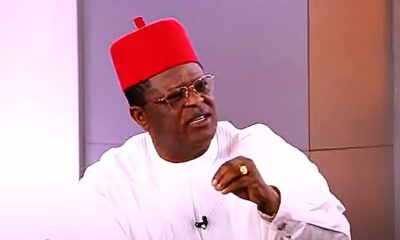
Tinubu
He expressed optimism that with collective efforts, Nigeria would overcome its challenges and achieve lasting progress for the benefit of all citizens.
Mr Tinubu wished Muslims a joyous celebration, praying that the blessings of Ramadan would bring renewed hope, strength, and guidance to individuals, families, and the nation.
-
 Crime11 months ago
Kogi Assembly Considers Law To Regulate Rent, Establish Control Board: Tenancy Law
-

 News12 months ago
Atiku Reveals Why He Failed To Pick Wike As Running Mate In 2023
-
 Akwa Ibom1 year ago
The Apostolic Church Gets New Territorial Chairman, Exco
-

 Crime1 year ago
Federal High Court Jails 2 For Vandalizing Transformer, Telecom Mast In Kogi
-
 News1 year ago
The Apostolic Church Gets New National President, Executive
-
 Akwa Ibom1 year ago
Umo Eno Commences Payment Of 80,000 Naira Minimum Wage With Arrears
-

 News1 year ago
Senator Natasha Returns To Senate With Husband Amid Seat Dispute
-
 Economy10 months ago
Kiyosaki: Is Tinubu’s Government Afraid Of Ibrahim Traore?