
Crime
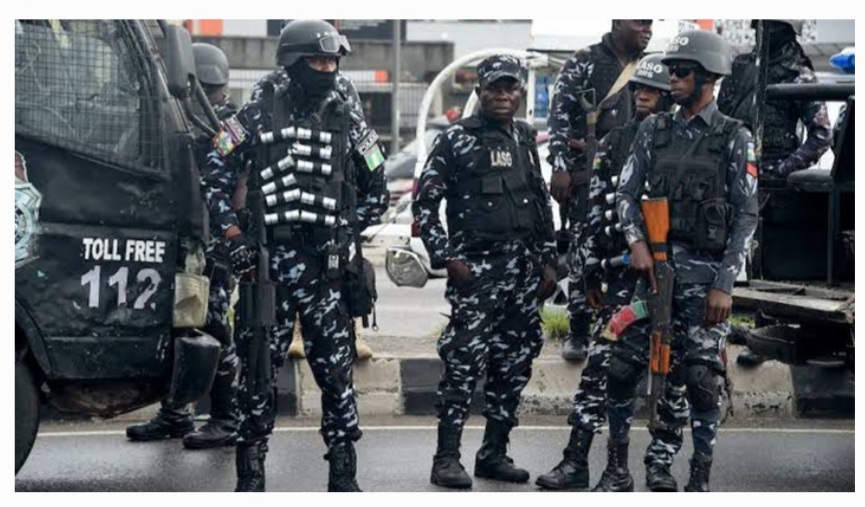
FRSC: Police Doesn’t Have Right To Arrests Over Expired Vehicle Papers

FRSC: Police Doesn’t Have Right To Arrests Over Expired Vehicle Papers
Police doesn’t have right to arrests over expired vehicle papers. Although the Nigerian Constitution does not explicitly outline the specific duties of the Nigeria Police Force (NPF) and the Federal Road Safety Corps (FRSC) concerning vehicle inspections, but there are relevant laws, including the Police Act, the FRSC Act, and the Road Traffic Laws that provide guidance on issues such as this.
1. Police Powers to Inspect Vehicle Documents
The Nigeria Police Act (2020) and Section 4 of the Police Act (2004) empower the police to maintain law and order, prevent crime, and enforce all laws. However, the Constitution does not give the police the specific role of checking vehicle particulars unless they suspect a crime (e.g., stolen vehicle or fraud).
Section 33 of the Police Act (2020) gives police officers the authority to request the production of documents relating to any motor vehicle on the road but that authority is limited.
Section 33 of the Police Act (2020) states:
“A police officer may stop and search any vehicle where he has reasonable grounds to suspect that the vehicle is carrying anything unlawful or that it is being used for the commission of a crime.”
This highlights that the police have no right to impound vehicles or arrest drivers solely because of expired documents unless the driver refuses to comply or there is suspicion of other crimes.
2. Federal Road Safety Corps (FRSC) vs. Police Responsibilities
The FRSC Act (2007) grants FRSC officers the specific duty of:
Enforcing road traffic regulations,
Conducting safety inspections,
Checking vehicle documents such as insurance, roadworthiness, and licenses.
This means that FRSC is primarily responsible for road safety and vehicle compliance, while the police focus on general law enforcement and criminal activities.
3. Constitutional Protections Against Police Harassment
On the issue of the harrasment given to the lady by the police officer in the video, the 1999 Constitution of Nigeria (as amended) provides certain protections against police misconduct:
Section 34(1): Prohibits inhumane or degrading treatment, meaning police cannot harass or intimidate drivers over expired vehicle documents.
Section 35(1): Guarantees personal liberty; police cannot unlawfully detain drivers or jump into people’s vehicles for minor traffic offenses like expired vehicle licenses.
Section 36(5): Presumes a person innocent until proven guilty, meaning the police cannot treat an expired document as a criminal offense warranting arrest.
4. Police Dragging Drivers to the Station for Expired Vehicle Papers.
No law allows police to take drivers to the police station solely because of expired vehicle documents. The correct procedure is to issue a ticket or refer the driver to the appropriate licensing authority for renewal.
Section 10(4) of the FRSC Act (2007) allows FRSC officials to issue fines for expired documents.

FRSC
Section 29 of the Police Act (2020) prohibits police from detaining individuals for offenses that are not criminal or do not require court proceedings.
In conclusion to my points here,
The Police have the power to inspect vehicle documents but cannot harass or arrest drivers for expired papers unless a crime is suspected.
The FRSC, not the police, is the primary body responsible for road safety enforcement.
Drivers have constitutional rights against illegal arrest and harassment.
If stopped for an expired document, police should refer the driver to the relevant licensing office, not drag them to the police station.
If police officers violate these rights, affected persons can report to the Police Complaints Response Unit (CRU), the Public Complaints Commission, or take legal action in court.
The police that is supposed to be our friend has turned into the enemy of the public and this is not good for our country.
I believe we can do better if our police have better knowledge of this sections of the Laws governing the police force, FRSC and the Nigerian Constitution.
Source- whatsap conversation










Contractor Julius Ejiogu Bags Two Years Imprisonment For Forgery
Justice F. A. Olubanjo of the Federal High Court sitting in Asaba, Delta State has convicted and sentenced Julius Ejiogu, a contractor to two years imprisonment for forgery.
The convict was arraigned on a three -count charge of conspiracy, forgery and uttering of false document on March 23, 2021 by the Benin Zonal Directorate of the Economic and Financial Crimes Commission, EFCC.
Upon arraignment, he pleaded not guilty to the charge setting the stage for trial.
The charge reads: “That you Julius Eljiogu and one Engr. E. Expert (at large) on or about the 2nd of August 2013, at Delta State within the jurisdiction of this honourable did conspires amongst yourselves to committed felony to wit: make a document titled Award of Contract for the Construction of Obudu-operation Road in Udu L.G.A. Delta State dated 2nd August 2013 on a letterhead paper on the Niger Delta Development Commission, NDDC, purported to have been issued or emanated from NDDC for the award of Contract which you knew to be false and thereby committed an offence contrary to Section 3(6) of the Miscellaneous Offence Act Cap M17 of the Revised Edition (Laws of the Federation of Nigeria) Act 2007 and punishable under Section 3 (1)(C) of the same Act.”
In the course of the trial, prosecution counsel, K.Y. Bello called four witnesses and tendered several documents which were admitted by the court while the defendant testified as sole witness for his case.

Jail
Justice Olubanjo in his judgment (on Thursday January 15, 2026) found the defendant guilty on count one of the charge but discharged and acquitted him on count two and three . The judge consequently sentenced the defendant to two years imprisonment with an option of N1 million fine.
The convict’s road to jail began when he purportedly got a letter for the award of Contract for the Construction of Obudu-Oleri Road in Udu Local Government Area, Delta State from one Engr. Eshitt of the Niger Delta Development Commission. He went ahead to sell the contract to the petitioner for N2 million only for him to discover that the said contract award was fake.

EFCC Boss Olukoyede Charges DNFBPs On SCUML Compliance In South-East
In its bid to frontally combat money laundering, terrorism financing, proliferation of weapons of mass destruction, safeguard businesses and strengthen the integrity of Nigeria’s financial system, the Executive Chairman of the Economic and Financial Crimes Commission, EFCC, Mr. Ola Olukoyede has called on operators of Designated Non-Financial Businesses and Professions, DNFBPs in the South-East to comply with mandatory registration under the Special Control Unit Against Money Laundering, SCUML.
He made this call recently on a live Radio programme at the Enugu State Broadcasting Service where he explained the importance of the SCUML certificate for businesses operating within the non-financial sector.
The Executive Chairman, who was represented by Assistant Commander of the EFCC, ACE II Promise Oluigbo, Head of SCUML Department in Enugu Zonal Directorate of the Commission noted that SCUML is responsible for the registration, regulation, monitoring and supervision of DNFBPs as provided for under the Money Laundering (Prevention and Prohibition) Act 2022.
“DNFBPs are categories of businesses identified under Section 30 of the Money Laundering Act and include sectors such as automobile dealerships, real estate businesses, construction firms, hospitality services, supermarkets, legal practitioners, consultants, and non-profit organizations.’
“ As a regulatory body responsible for overseeing the activities of these businesses in order to curb money laundering and financing of terrorism, it’s important I say it here that the registration process is completely free. Business owners do not need to engage any third party. All they need to do is visit the SCUML portal and complete the registration process”, he said.
According to him, with the introduction of electronic certification which has improved efficiency and eliminated the risk of fake certificates, over 480,000 (Four Hundred and Eighty Thousand ) entities have been registered nationwide. He warned members of the public against engaging agents who charge fees for SCUML registration, stressing that the Commission does not authorize third-party registrations. “The EFCC frowns at any individual or group collecting money from businesses under the guise of facilitating SCUML registration. The process is seamless and free of charge”, he said.

Ola Olukoyede
While emphasizing on the need for businesses to register and collect the certificate, Olukoyede enjoined them to ensue adherence to statutory requirements such as Know Your Customer, KYC procedures, customer due diligence, record keeping and reporting of suspicious transactions, adding that failure to comply constitutes a violation of the law and may attract fines, imprisonment or other regulatory sanctions as stipulated under the Act.
“The objective of the SCUML framework is not to stifle businesses but to protect the financial system and ensure transparency in commercial activities.
It is designed to safeguard businesses and strengthen the integrity of Nigeria’s financial system”, he said.

Kaduna Court Jails Three For Fraud
Kaduna court jails three for fraud. Justice A. Isiaka of the Kaduna State High Court, sitting in Kaduna has convicted and jailed the trio of Aliyu Hassan, Samuel Olamide and Solomon Joseph Christian for fraud.
They were prosecuted by the Kaduna Zonal Directorate of the Economic and Financial Crimes Commission, EFCC on separate one-count charge, bordering on criminal impersonation and obtaining by false pretence.
The charge against Hassan reads: “That you, Aliyu Hassan (a.k.a Ottaviani Loverules Giovanni) on or about the 9th of February, 2026 in Kaduna within the jurisdiction of the Honourable Court, impersonated one Ottaviani Loverules Giovanni (a citizen of Brazil) via Facebook platform and in such assumed character, you defrauded one Kerry the sum of N90,000.00 (Ninety Thousand Naira, only) and you thereby committed an offence contrary to Section 142(1) of the Kaduna State Penal Code Law, 2017 and punishable under the same law.”
Olamide’s charge reads: “That you, Samuel Olamide (a.k.a Johnny) on or about the 9th of February, 2026 in Kaduna within the jurisdiction of the Honourable Court, impersonated one Johnny (a United States of America) citizen via TikTok platform and in such assumed character, you defrauded one Jackie Sanders (an American ) and you thereby committed an offence contrary to Section 142(1) of the Kaduna State Penal Code Law, 2017 and punishable under the same law.”
Christian’s charge reads: “That you, Solomon Joseph Christian.(a.k.a Jenort) sometime in February, 2026 in Kaduna, within the jurisdiction of this Honourable Court, impersonated one Jenort via Facebook (a social media platform) and in that assumed character benefited the sum of $USD150 and you thereby committed an offence contrary to Section 142(1) of the Kaduna State Penal Code Law, 2017 and punishable under the same law.”
They all pleaded “guilty,” following which the prosecution counsel, M.U Gadaka prayed the court to convict and sentence them accordingly.
Justice Isiaka convicted and sentenced them to five years imprisonment each or to pay N300,000 (Three Hundred Thousand Naira) fine, respectively.

Court
In addition to the sentence, Hassan forfeited N90,000.00 (Ninety Thousand Naira) and a Samsung Galaxy Note 8 mobile phone with IMEI No SM-N9500, being the proceeds of his crime. Olamide forfeited a Samsung Galaxy S21 mobile phone with IMEI No 35198153052814, being the tool of his crime and Christian forfeited iPhone 14 Pro with IMEI NO 35771267218661 and the sum of $150 (One Hundred and Fifty Dollars) being the proceeds of his crime. All the forfeitures were to the federal government.
The convicts were arrested in Agwa, Kudende area of Kaduna following credible intelligence that linked them to fraudulent internet activities. They were charged to court and convicted.
-

 Crime11 months ago
Kogi Assembly Considers Law To Regulate Rent, Establish Control Board: Tenancy Law
-

 News12 months ago
Atiku Reveals Why He Failed To Pick Wike As Running Mate In 2023
-
 Akwa Ibom1 year ago
The Apostolic Church Gets New Territorial Chairman, Exco
-

 Crime1 year ago
Federal High Court Jails 2 For Vandalizing Transformer, Telecom Mast In Kogi
-
 News1 year ago
The Apostolic Church Gets New National President, Executive
-

 Akwa Ibom1 year ago
Umo Eno Commences Payment Of 80,000 Naira Minimum Wage With Arrears
-

 News1 year ago
Senator Natasha Returns To Senate With Husband Amid Seat Dispute
-

 Economy10 months ago
Kiyosaki: Is Tinubu’s Government Afraid Of Ibrahim Traore?