
Economy
FLNG: Nigeria Keys Into Floating LNG Infrastructure To Boost Gas Supply

FLNG: Nigeria Keys Into Floating LNG Infrastructure To Boost Gas Supply
FLNG: Nigeria keys into Floating LNG infrastructure to boost gas supply. As Africa’s natural gas demand is projected to rise by 60 per cent by 2050, Floating liquefied natural gas (FLNG) is expected to deliver efficient supply chain capacity, according to a new report.
The FLNG is rapidly becoming a central component of Africa’s natural gas development strategy as the continent prepares for a sharp rise in energy demand and seeks faster, lower-risk routes to market.
According to the State of African Energy 2026 Outlook published by the African Energy Chamber (AEC), Africa’s natural gas demand is projected to increase by 60 per cent by 2050, intensifying pressure on producers to bring new supply online efficiently. ‘
Offshore Nigeria, UTM Offshore is progressing toward a final investment decision on a $5 billion FLNG facility at the Yoho field.
The report notes that Africa already hosts the world’s highest concentration of FLNG infrastructure, positioning the continent as a global testbed for floating gas solutions.
FLNG technology enables offshore gas resources to be processed and exported directly at sea, thereby reducing reliance on extensive onshore infrastructure and mitigating security, land access, and logistical risks that have delayed several traditional LNG projects across Africa.
Cameroon’s Hilli Episeyo remains Africa’s first operational FLNG facility and is widely regarded as a global benchmark, having achieved production in record time. The project demonstrated the viability of FLNG in monetizing relatively small gas reserves while accelerating exports.
In West Africa, the Gimi FLNG vessel commenced commercial operations in 2025 at the bp-led Greater Tortue Ahmeyim project, located on the maritime border between Senegal and Mauritania.
Operated by Golar LNG, the facility is the first FLNG unit in the MSGBC region. It is expected to monetise up to 15 trillion cubic feet of gas over a 20-year lease period.
Additional projects are advancing elsewhere on the continent. In Gabon, Perenco is developing the Cap Lopez FLNG project, with a planned capacity of 700,000 tons per year, scheduled to commence in 2026.
The AEC notes that FLNG’s modular and scalable design reduces upfront capital requirements and shortens development timelines.
This approach has been demonstrated by the Congo LNG project, where operator Eni brought phase two production online in 2025, just 35 months after construction began and ahead of schedule. First exports are expected in 2026.
FLNG has also proven resilient in high-risk environments. In Mozambique, security challenges in Cabo Delgado delayed several onshore LNG projects, while offshore FLNG developments such as Coral Sul, which began operations in 2022, continued largely uninterrupted.
Nigeria Keys Into Floating LNG Infrastructure To Boost Gas Supply
A final investment decision for the Coral Norte FLNG project was reached in 2025.
Beyond exports, FLNG is expected to support gas-to-power projects, petrochemical development and regional energy security, contributing to broader economic growth and energy access across the continent.
However, the AEC cautions that successful deployment depends on clear regulatory frameworks, stable fiscal terms and alignment with national development strategies.
“These discussions will be central at African Energy Week 2026, where governments and industry leaders will explore how floating solutions can unlock Africa’s gas potential while managing risk and accelerating timelines,” the chamber said.
AEC executive chairman, NJ Ayuk, said FLNG offers African producers a pathway to faster monetisation and sustainable development.
“FLNG is changing the game for African gas producers by reducing exposure to security and infrastructure risks and generating revenues that can be reinvested into broader development,” Ayuk said.










Persistent Grid Collapse, Weak Power Supply Worsening Economic Hardship: Oyintiloye
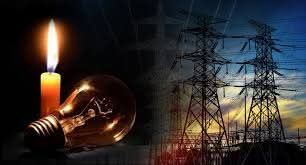
Speaking with journalists on Sunday in Osogbo, Oyintiloye said the situation had continued to deteriorate despite assurances and reforms introduced by authorities.
He described unreliable electricity as a major setback to the federal government’s reforms in the power sector.
He appealed to President Bola Tinubu to urgently intervene, noting that poor power supply is worsening economic hardship across the country.
Oyintiloye said the poor supply has compounded the effects of the current heatwave, making living conditions more difficult for many Nigerians.
The former lawmaker called for the constitution of a panel to investigate recurring national grid collapses and persistent supply challenges despite significant investments.
“It is a terrible situation across Nigeria with persistent poor power supply,” he said.
“Many small-scale businesses and large industrial players are affected, while most homes cannot boast of even three hours of electricity supply daily for domestic use.
“Despite numerous reforms and promises, the national grid continues to collapse. The situation is now compounded by gas supply shortages, weak transmission infrastructure, and chronic underinvestment across the power value chain.
“Nigerians are groaning, and urgent action must be taken by the Minister of Power, Adebayo Adelabu, and his team. The situation cannot continue like this.”
Oyintiloye warned that the situation has already triggered protests in parts of the country and could escalate if not addressed promptly.
“The situation must be quickly addressed before it becomes a national embarrassment. Nigerians need to be informed whether the issue is due to structural failure or sabotage within the power sector,” he said.

Electricity
“This epileptic power supply has led to a series of peaceful protests nationwide. I appeal for the President’s intervention before these protests turn violent.
“Electricity is essential for households and the survival of businesses. Since the end of last year, there has been no stable power supply across the country, despite assurances by those in charge and huge investments in the sector.
“Poor power supply should not be added to the challenges Nigerians are currently facing. The high cost of fuel has also made it difficult for those relying on generators to cope.”

Eid-el-Fitr: NRC Sets To Run Three Lagos–Ibadan Train Trips Monday
Eid-el-Fitr: NRC sets to run three Lagos–Ibadan train trips Monday. He assured passengers of NRC’s continued commitment to safe, reliable, and efficient rail services.
This was contained in a statement issued on Friday in Lagos by NRC chief public relations officer, Callistus Unyimadu.
He said the additional trip was in response to high passenger turnout during the Eid-el-Fitr travel period.
“The extra trip is aimed at easing passenger movement and providing more travel options for commuters returning after the Eid-el-Fitr celebrations.
“Under the schedule, departures from Lagos (Mobolaji Johnson Station, Ebute Metta) will be at 7.45 a.m., 1.40 p.m., and 4.00 p.m.
“From Ibadan (Obafemi Awolowo Station, Moniya), trains will depart at 8.00 a.m., 10.50 a.m., and 4.30 p.m.,” he said.
Mr Unyimadu assured passengers of NRC’s continued commitment to safe, reliable, and efficient rail services.

NRC Sets To Run Three Lagos–Ibadan Train Trips Monday
He advised travellers to arrive early, comply with ticketing and security procedures, and plan their journeys.
“The corporation appreciates the continued patronage of its services and wishes all passengers a safe and pleasant journey,” he added.
UBA, BII Sign Letter Of Intent To Explore Trade Finance Collaboration Across Africa
United Bank for Africa (UK) Limited (“UBA UK”) and British International Investment plc (“BII”), the UK’s development finance institution and impact investor, announced that they have signed a letter of intent to develop trade finance collaboration opportunities.
The proposed initiative aims to expand access to trade and working capital facilities for businesses operating across Africa.
Access to trade finance remains one of the most significant structural constraints on African trade. Businesses, particularly small and medium-sized enterprises, are frequently unable to secure letters of credit, guarantees, and supply chain finance on commercially viable terms, limiting their capacity to export and import competitively. This trade finance gap is estimated by the African Development Bank to be over USD 80 billion annually.
To help close this gap, UBA UK, the London subsidiary of UBA Group, Africa’s Global Bank, will leverage its deep relationships across the Group’s 20-country African network to originate and structure trade finance transactions. While BII, with a mandate to support productive, sustainable, and inclusive growth across Africa, can support transactions that might otherwise fall outside conventional commercial appetite.
“The signing of this letter with BII represents a landmark moment for UBA UK and for the UBA Group’s global ambitions. As the Group’s hub for Trade Operations, UBA UK is uniquely positioned to connect African businesses with the international financial system. Working alongside BII, we can extend that capability further — mobilising capital where it matters most and helping to close the trade finance gap that holds back so much African potential,” said Lok Mishra, Chief Executive Officer, UBA UK
“British International Investment is committed to catalysing private sector growth across Africa, and trade finance is a critical enabler of that growth. We welcome the opportunity to collaborate with UBA Group, whose pan-African network and deep institutional relationships can help advance our ambition to expand access to trade and working capital finance, particularly in frontier markets,” Chris Chijiuitomi, Managing Director and Head of Africa
The announcement builds on growing momentum around intra-African trade facilitated by the African Continental Free Trade Area (AfCFTA), which entered into force in 2021 and represents one of the world’s most significant trade integration initiatives. Both institutions have identified the operationalisation of AfCFTA as a priority catalyst for a trade finance facility, with UBA UK’s network across major AfCFTA economies offering a basis for supporting businesses navigating the emerging continental market.
This also complements the UK Government’s broader engagement with African economic development, including commitments made at the UK-Africa Investment Summit, and reinforces the City of London’s role as a leading international finance centre for Africa-focused capital mobilisation.
Future cooperation remains subject to further assessment, due diligence and the completion of internal approvals by both parties.
ABOUT UNITED BANK FOR AFRICA (UK) LIMITED
UBA UK is the London-based subsidiary of United Bank for Africa Plc, one of Africa’s leading financial institutions with operations across 20 African countries, the United Kingdom, the United States of America, France, and the United Arab Emirates. UBA UK serves as the Group’s hub for Trade Operations, providing a comprehensive suite of trade finance, treasury, and correspondent banking services to institutional and corporate clients worldwide.
UBA
ABOUT UNITED BANK FOR AFRICA GROUP
United Bank for Africa is one of the largest employers in the financial sector on the African continent, with 25,000 employees group-wide and serving over 45 million customers globally. Operating in twenty African countries, the United Kingdom, the United States of America, France and the United Arab Emirates, UBA provides retail, commercial and institutional banking services, leading financial inclusion and implementing cutting-edge technology.
ABOUT BRITISH INTERNATIONAL INVESTMENT
British International Investment is the UK’s development finance institution and impact investor. The organisation invests in businesses in developing countries to improve people’s lives and help protect the planet. BII’s work targets the underlying causes of poverty and the climate crisis, helping countries break free from aid dependency for good.
Between 2022-2026, at least 30 per cent of BII’s total new commitments by value will be in climate finance. BII is also a founding member of the 2X Challenge which has raised over $33.6 billion to empower women’s economic development.
The company has investments in over 1,600 businesses across 66 countries and total net assets of £9.87 billion. For more information, visit: www.bii.co.uk | watch here. Follow British International Investment on LinkedIn, Bluesky and X.
-
 Crime11 months ago
Kogi Assembly Considers Law To Regulate Rent, Establish Control Board: Tenancy Law
-

 News12 months ago
Atiku Reveals Why He Failed To Pick Wike As Running Mate In 2023
-

 Akwa Ibom1 year ago
The Apostolic Church Gets New Territorial Chairman, Exco
-

 Crime1 year ago
Federal High Court Jails 2 For Vandalizing Transformer, Telecom Mast In Kogi
-

 News1 year ago
The Apostolic Church Gets New National President, Executive
-

 Akwa Ibom1 year ago
Umo Eno Commences Payment Of 80,000 Naira Minimum Wage With Arrears
-

 News1 year ago
Senator Natasha Returns To Senate With Husband Amid Seat Dispute
-

 Economy10 months ago
Kiyosaki: Is Tinubu’s Government Afraid Of Ibrahim Traore?