
Economy
Fidelity Bank Faces Bankruptcy As Court Orders Banking Giant To Pay N225bn Damages To Nigerian Firm

Fidelity Bank Faces Bankruptcy As Court Orders Banking Giant To Pay N225bn Damages To Nigerian Firm
Fidelity Bank faces bankruptcy as Court orders banking giant to pay N225bn damages to Nigerian firm. The bank is in talks with Sagecom to hammer out a repayment plan, but the urgency stipulated in the ruling could hamper its ability to spread out the liability without going under.
Fidelity Bank is scrambling to stave off a looming insolvency after a Supreme Court panel found the top lender liable in a years-long tort dispute with a little-known general services venture operating out of Ibadan, Peoples Gazette heard from people familiar with the situation.
The Lagos-based banking group has opened talks with lawyers representing Sagecom Concept Ltd to hammer out a repayment plan, but The Gazette understands that the urgency stipulated in the judgement could hamper the bank’s ability to spread out the N225 billion liability without going under.
“To be honest, this is the biggest crisis the bank has ever faced,” a top management official told The Gazette via video conference over the weekend. “The obligation is simply too big.”
“If the bank is miraculously spared, we would have the altruism of the small business that got this unprecedented judgement to appreciate,” the C-suite official added with precise candour under anonymity to discuss a development that has rattled the entire management.
The company’s stock closed at N20.80 per share on Friday. Overall, it’s up nearly 140 per cent this year. Whereas the bank declared N385 billion in profit before tax at the end of 2024, officials said it was largely driven by interests from loans that had since been rolled over, saying they were not uncertain about the inability of its balance sheet to absorb the massive judgement. No other institutions that could underwrite the damages have been identified as of Monday morning, the people added.
A person familiar with banking regulations said the Central Bank of Nigeria might ultimately intervene rather than oversee the collapse of a top-tier commercial lender during a fragile economic environment.
A bank spokesman declined to comment on the development. The bank’s lawyers in the matter, including senior practitioners Kanu Agabi and Onyechi Ikpeazu, did not return requests for comments.
The April 11, 2025, unanimous decision of five justices who heard the matter stemmed from a pair of loans obtained by engineering giant G. Cappa Plc from FSB International Bank in the early 2000s. The loans, recorded as $3 million and N100 million at the time, were executed before Fidelity Bank bought FSB International and its liabilities as part of the banking sector consolidation in 2005.
The cumulative facility was issued at prohibitive interest per annum, and Fidelity began seizing G. Cappa’s assets in Ikoyi and Ibadan that had been used to secure the deal when the company allegedly defaulted in 2005. G. Cappa sued at the time, and a federal judge in Lagos ordered Fidelity to desist from its aggressive depletion of G. Cappa’s assets, court documents said.
But Fidelity’s management failed to obey the court order, and instead listed the assets for sale to potential buyers, including Sagecom. Court documents said Sagecom, run by Bamidele Ogunkanmi and U.S.-based Nigerian Dakore Miriki, paid N350 million to buy some of the properties from Fidelity Bank, but the company quickly sought to recoup its payment after seeing a January 2006 disclaimer that said a court order had enjoined Fidelity from selling G. Cappa’s assets.
Lagos high court, CEO Nneka Onyeali-Ikpe
The matter was later remanded to the Lagos State High Court. After several years of litigation, during which the bank lost repeatedly, including at the Lagos Division of the Court of Appeal, the dispute wound up at the Supreme Court in 2018, leading to the final judgement last month.
“Apart from the mountain of evidence against it, allowing the appellant to escape liability as it so desperately seeks to do here would be tantamount to allowing it to benefit from its own wrong,” the Supreme Court said in its lead opinion by Justice Adamu Jauro. “The notorious principle of equity that a court ought not to allow a person to take advantage of his own wrong still remains part of our jurisprudence.”
The Gazette exclusively obtained the Supreme Court judgement, which had not been previously reported, after being informed that Fidelity Bank’s management was holding unusually long and frequent meetings lately.
Sagecom, represented by Muiz Banire and Adeyinka Olumide-Fusika, successfully argued throughout the case that it suffered damages through Fidelity’s action because it borrowed the N350 million from FMCB to secure the troubled assets from Fidelity, enduring 19.5 per cent annual interest.
Fidelity lawyers argued that the bank was not responsible for the damages and blamed G. Cappa for collecting rents on the Lagos assets following the initial court injunction. But the Supreme Court justices said Fidelity must pay for its apparent decision to disregard a live injunctive relief from a federal court.
“At the heart of the matter lies the appellant’s somewhat egregious conduct in selling a property it knew was subject to a restraining court order,” the court said, adding that Fidelity deprived Sagecom of “the possession and the economic benefits of its purchase for many years.”
The justices were unsparing as to Fidelity management’s conduct at the early stages of the dispute, repeatedly stating throughout the judgement that the bank admitted that it received notice of the injunction that blocked it from selling G. Cappa’s assets but proceeded anyway.
Fidelity Bank Faces Bankruptcy
“This was not mere negligence but a deliberate disregard for both the court’s authority (with the intention to undermine it) and the first respondent’s rights as an innocent purchaser,” Justice Jummai Hannatu Sankey said in her concurring opinion. “The law remains that parties to a suit must obey court orders whether or not they are correct.” The three other justices on the panel were Mohammed Lawal Garba, Moore Aseimo Ibrahim Adumein and Abubakar Saqid Umar.
The justices also said that one way Fidelity might have prevailed in its appeal was if the bank had argued that there had been a perversion or miscarriage of justice in the lower courts.
“The appellant has failed to demonstrate any perversity in the findings of the lower courts or any miscarriage of justice warranting this court’s intervention,” the court added.
Consequently, the Supreme Court upheld the damages as calculated by the Lagos high court and imposed against Fidelity in a June 20, 2011, judgement, which Fidelity appealed. The Lagos judge, whom the Supreme Court lauded for doing a good job on the case, had ordered Fidelity to pay accrued earnings for several flats over many years Sagecom was unable to take possession of the assets.
Following the Supreme Court judgement, Justice Olabisi Akinlade of the Lagos State High Court calculated damages due to Sagecom, finding that as of May 16, 2025, Fidelity Bank owed the firm $139,064,896.18. The court put the naira value at N225,285,131,812.38, using N1620 per dollar as of the close of business on May 15, 2025.
Officials said Fidelity planned to argue the calculation during a court hearing before Mrs Akinlade, scheduled for May 19 at 9:00 a.m. However, sources familiar with the matter said it was unlikely the calculation would change.
Mrs Akinlade, however, noted in a worksheet seen by The Gazette that “naira equivalent to be determined using the official exchange rate on the date of actual payment.”
Representatives for G. Cappa and Sagecom could not be reached for comments.
Fidelity Bank, led by its first female CEO Nneka Onyeali-Ikpe, has consistently ranked among the biggest banks in Nigeria, often placed at number six for its massive asset base. Today’s opposition leader Peter Obi ran the bank in the early oughts, leaving as chairman to seek office as Anambra governor in 2003.
It has for years courted public dread as one of the financial institutions notorious for draconian loan practices, and a Lagos family recently blamed the bank’s management for the death of a real estate investor following a prolonged facility dispute.
The bank has maintained no wrongdoing, often blaming the central bank and other regulators for imposing virtually all loan conditions on commercial lenders nationwide. A CBN spokeswoman did not immediately return a request seeking comment.









Eid-el-Fitr: NRC Sets To Run Three Lagos–Ibadan Train Trips Monday
Eid-el-Fitr: NRC sets to run three Lagos–Ibadan train trips Monday. He assured passengers of NRC’s continued commitment to safe, reliable, and efficient rail services.
This was contained in a statement issued on Friday in Lagos by NRC chief public relations officer, Callistus Unyimadu.
He said the additional trip was in response to high passenger turnout during the Eid-el-Fitr travel period.
“The extra trip is aimed at easing passenger movement and providing more travel options for commuters returning after the Eid-el-Fitr celebrations.
“Under the schedule, departures from Lagos (Mobolaji Johnson Station, Ebute Metta) will be at 7.45 a.m., 1.40 p.m., and 4.00 p.m.
“From Ibadan (Obafemi Awolowo Station, Moniya), trains will depart at 8.00 a.m., 10.50 a.m., and 4.30 p.m.,” he said.
Mr Unyimadu assured passengers of NRC’s continued commitment to safe, reliable, and efficient rail services.

NRC Sets To Run Three Lagos–Ibadan Train Trips Monday
He advised travellers to arrive early, comply with ticketing and security procedures, and plan their journeys.
“The corporation appreciates the continued patronage of its services and wishes all passengers a safe and pleasant journey,” he added.
UBA, BII Sign Letter Of Intent To Explore Trade Finance Collaboration Across Africa
United Bank for Africa (UK) Limited (“UBA UK”) and British International Investment plc (“BII”), the UK’s development finance institution and impact investor, announced that they have signed a letter of intent to develop trade finance collaboration opportunities.
The proposed initiative aims to expand access to trade and working capital facilities for businesses operating across Africa.
Access to trade finance remains one of the most significant structural constraints on African trade. Businesses, particularly small and medium-sized enterprises, are frequently unable to secure letters of credit, guarantees, and supply chain finance on commercially viable terms, limiting their capacity to export and import competitively. This trade finance gap is estimated by the African Development Bank to be over USD 80 billion annually.
To help close this gap, UBA UK, the London subsidiary of UBA Group, Africa’s Global Bank, will leverage its deep relationships across the Group’s 20-country African network to originate and structure trade finance transactions. While BII, with a mandate to support productive, sustainable, and inclusive growth across Africa, can support transactions that might otherwise fall outside conventional commercial appetite.
“The signing of this letter with BII represents a landmark moment for UBA UK and for the UBA Group’s global ambitions. As the Group’s hub for Trade Operations, UBA UK is uniquely positioned to connect African businesses with the international financial system. Working alongside BII, we can extend that capability further — mobilising capital where it matters most and helping to close the trade finance gap that holds back so much African potential,” said Lok Mishra, Chief Executive Officer, UBA UK
“British International Investment is committed to catalysing private sector growth across Africa, and trade finance is a critical enabler of that growth. We welcome the opportunity to collaborate with UBA Group, whose pan-African network and deep institutional relationships can help advance our ambition to expand access to trade and working capital finance, particularly in frontier markets,” Chris Chijiuitomi, Managing Director and Head of Africa
The announcement builds on growing momentum around intra-African trade facilitated by the African Continental Free Trade Area (AfCFTA), which entered into force in 2021 and represents one of the world’s most significant trade integration initiatives. Both institutions have identified the operationalisation of AfCFTA as a priority catalyst for a trade finance facility, with UBA UK’s network across major AfCFTA economies offering a basis for supporting businesses navigating the emerging continental market.
This also complements the UK Government’s broader engagement with African economic development, including commitments made at the UK-Africa Investment Summit, and reinforces the City of London’s role as a leading international finance centre for Africa-focused capital mobilisation.
Future cooperation remains subject to further assessment, due diligence and the completion of internal approvals by both parties.
ABOUT UNITED BANK FOR AFRICA (UK) LIMITED
UBA UK is the London-based subsidiary of United Bank for Africa Plc, one of Africa’s leading financial institutions with operations across 20 African countries, the United Kingdom, the United States of America, France, and the United Arab Emirates. UBA UK serves as the Group’s hub for Trade Operations, providing a comprehensive suite of trade finance, treasury, and correspondent banking services to institutional and corporate clients worldwide.
UBA
ABOUT UNITED BANK FOR AFRICA GROUP
United Bank for Africa is one of the largest employers in the financial sector on the African continent, with 25,000 employees group-wide and serving over 45 million customers globally. Operating in twenty African countries, the United Kingdom, the United States of America, France and the United Arab Emirates, UBA provides retail, commercial and institutional banking services, leading financial inclusion and implementing cutting-edge technology.
ABOUT BRITISH INTERNATIONAL INVESTMENT
British International Investment is the UK’s development finance institution and impact investor. The organisation invests in businesses in developing countries to improve people’s lives and help protect the planet. BII’s work targets the underlying causes of poverty and the climate crisis, helping countries break free from aid dependency for good.
Between 2022-2026, at least 30 per cent of BII’s total new commitments by value will be in climate finance. BII is also a founding member of the 2X Challenge which has raised over $33.6 billion to empower women’s economic development.
The company has investments in over 1,600 businesses across 66 countries and total net assets of £9.87 billion. For more information, visit: www.bii.co.uk | watch here. Follow British International Investment on LinkedIn, Bluesky and X.
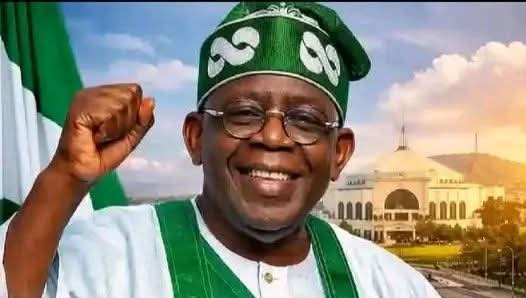
Eid-el-Fitr: President Tinubu Felicitates Muslims, Urges Renewed Unity, Patriotism
Eid-el-Fitr: President Tinubu felicitates Muslims, urges renewed unity, patriotism. Mr Tinubu called on Muslims to reflect on the spiritual lessons of Ramadan.
The president urged them to renew commitment to national unity, peaceful coexistence, and service to humanity as they celebrate the festival across the country on Friday.
This is contained in a statement issued by presidential spokesperson, Bayo Onanuga, on Thursday in Abuja.
Mr Tinubu called on Muslims to reflect on the spiritual lessons of Ramadan, noting that the holy month teaches discipline, sacrifice, compassion, and devotion to God and humanity.
He said: “We have a lot to draw from the noble lessons of Ramadan, especially at a time like this.
“We must continue to abide by the virtues of piety, selflessness, perseverance, kindness and compassion beyond this period.”
The president emphasised the need for Nigerians to remain united across religious and ethnic lines, stressing that national cohesion remains vital for sustainable peace and development.
He urged Muslims to extend acts of kindness and charity to the less privileged, irrespective of religious or ethnic background, in line with the enduring values of Islam.
Mr Tinubu noted that such gestures would strengthen social bonds, promote inclusiveness, and reinforce the spirit of brotherhood that defines the Nigerian society.
The president also called on religious leaders to use the occasion to offer prayers for peace, stability, and economic prosperity across the country.
Tinubu
He expressed optimism that with collective efforts, Nigeria would overcome its challenges and achieve lasting progress for the benefit of all citizens.
Mr Tinubu wished Muslims a joyous celebration, praying that the blessings of Ramadan would bring renewed hope, strength, and guidance to individuals, families, and the nation.
-
 Crime11 months ago
Kogi Assembly Considers Law To Regulate Rent, Establish Control Board: Tenancy Law
-

 News12 months ago
Atiku Reveals Why He Failed To Pick Wike As Running Mate In 2023
-
 Akwa Ibom1 year ago
The Apostolic Church Gets New Territorial Chairman, Exco
-

 Crime1 year ago
Federal High Court Jails 2 For Vandalizing Transformer, Telecom Mast In Kogi
-
 News1 year ago
The Apostolic Church Gets New National President, Executive
-
 Akwa Ibom1 year ago
Umo Eno Commences Payment Of 80,000 Naira Minimum Wage With Arrears
-

 News1 year ago
Senator Natasha Returns To Senate With Husband Amid Seat Dispute
-
 Economy10 months ago
Kiyosaki: Is Tinubu’s Government Afraid Of Ibrahim Traore?