
Economy
Experts Reveals What NNPCL Must Do Before Refineries’ Sale

Experts Reveals What NNPCL Must Do Before Refineries’ Sale
Experts reveals what NNPCL must do before refineries’ sale. Experts have urged the National Petroleum Company Limited (NNPCL) to engage in strategic decisions and foresight if it were to sell the four refineries it controlled, the Daily Trust reports.
It would be recalled that the Group Chief Executive Officer of the NNPCL, Bayo Ojulari, had in an interview with Bloomberg, said the company is currently reassessing the refineries’ strategies and could finalise the review by year-end.
But experts have said the decision should not be driven by sentiment or haste that would jeopardise Nigeria’s energy security while in the hands of cronies.
The move to sell the refineries is coming after the corporation spent trillions of naira in carrying out several controversial turnaround maintenance (TAM).
The National Assembly had alleged that over 11.3 trillion was spent on TAM between 2010 and 2020. Another report indicated that $3bn had been sunk into repairing the refineries in Port Harcourt, Warri and Kaduna which have a combined refining capacity of 445,000 bpd.
The NNPC boss, who spoke with Bloomberg on the sidelines of the 9th OPEC international seminar in Vienna, Austria, had admitted that it was becoming a ‘bit more’ complicated to revamp state-owned refineries.
Nigeria has four crude oil refineries, all managed by the NNPCL. They have long struggled with underperformance, inefficiency, and maintenance issues.
In November 2024, the state oil refinery said the Port Harcourt refinery had officially commenced crude oil processing, but the refinery shut down in May for maintenance.
The Warri and Kaduna refineries are, however, still undergoing rehabilitation.
“So refineries, we made quite a lot of investment over the last several years and brought in a lot of technologies. We’ve been challenged,” Ojulari said.
“Some of those technologies have not worked as we expected so far. But also, as you know, when you’re refining a very old refinery that has been abandoned for some time, what we’re finding is that it’s becoming a little bit more complicated.”
According to him, NNPCL is now conducting a comprehensive review of its refinery rehabilitation strategy and that conclusions from the exercise could prompt a change in approach.
“We hope before the end of the year, we’ll be able to conclude that review. That review may lead to us doing things slightly differently,” he added.
When asked whether the review could result in selling the refineries, Ojulari said a sale remains a possibility.
“But what we’re saying is that sale is not out of the question. All the options are on the table, to be frank, but that decision will be based on the outcome of the reviews we’re doing now,” he said.
Ojulari spoke just as the president of the Dangote Group, Alhaji Aliko Dangote, stated that Nigeria’s state-owned refineries, located in Port Harcourt, Warri, and Kaduna, may never operate properly again despite about $18 billion invested in their rehabilitation.
Dangote made the remark while hosting members of the Global CEO Africa, who visited the Dangote Petroleum Refinery.
He said the 650,000-barrel-per-day (bpd) refinery was constructed after the government of late President Umar Yar’adua declined to sell the refineries to him.
He said, “The refineries that we bought before, which were owned by Nigeria, were doing about 22 percent of PMS.
“We bought the refineries in January 2007. Then we had to return them to the government because there was a change of government.
“And the managing director at that time convinced Yar’adua that the refineries would work.
“They said they just gave them to us as a parting gift or something. And as of today, they have spent about $18bn on those refineries, and they are still not working. And I don’t think so, and I doubt very much if they will work.”
“(The turnaround maintenance) is like you trying to modernise a car that was built 40 years ago, when technology and everything had changed.
“Even if you change the engine, the body will not be able to take the shock of that new technology engine.”
It would be recalled that former President Obasanjo had last year expressed similar comments, adding that the NNPC was aware that it could not operate the refineries.
He said some investors, including Aliko Dangote, paid $750 million to take over the refineries; however, his successor, Yar’adua, aborted the transaction.
He said, “I ran to him (Yar’Adua), and I said, ‘You know this is not right.’ He said, ‘Well, NNPC said they can do it.’ I said, ‘NNPC cannot do it.’
“I told my successor that ‘the refineries, from what I heard and know, will not work, and when you want to sell them, you will not get anybody to buy them at $200m as scrap.’ And that is the situation we are in.
“So, why do we do this kind of thing to ourselves? NNPC knew that they could not do it, but they knew they could eat and carry on with the corruption that was going on in NNPC.
“When people were there to do it, they put pressure. In a civilised society, those people should be in jail.”
Earlier this year, former President Obasanjo also said, “I was told not too long ago that since that time, more than $2bn has been squandered on the refineries, and they still will not work.
“If a company like Shell tells me what they told me, I will believe them. If anybody tells you now that it (the refinery) is working, why are they now with Aliko (Dangote)? And Aliko will make his refinery work; he will not only make it work, but he will also make it deliver.”
Speaking with Daily Trust, Prof. Wumi Iledare, Professor Emeritus of Petroleum Economics & Director, Emmanuel Egbogah Foundation, stated that while NNPC Limited, as a commercial entity under the Petroleum Industry Act (PIA) 2021, has the legal right to dispose of its assets, any move to sell Nigeria’s state-owned refineries must be approached with strategic foresight—not driven by sentiment or haste.
He said the Port Harcourt, Warri, and Kaduna refineries have consistently underperformed but the issue has never been ownership as it is inefficiency rooted in poor governance and institutional weaknesses.
“Selling these assets outright, without addressing the fundamental challenges that crippled them, risks repeating the mistakes of the past and jeopardizing Nigeria’s energy security.
“Privatization, if it becomes necessary, should not translate into elite capture or unchecked monopoly. The process must be transparent, competitive, and structured to serve the public interest.
“A hybrid model such as performance-based concessions, public-private partnerships, or equity restructuring could offer a more prudent path. These alternatives align with the commercial ethos of the PIA and allow for accountability and performance tracking.”
He added that letting go of these assets may eventually be the right course, but it must be done strategically, not symbolically.
“Refining must remain competitive, efficient, and value-driven. Selling state refineries merely for the sake of selling, especially, amid growing private sector dominance could unintentionally undermine the goals of deregulation and the broader reform agenda.
“Ultimately, the objective should not be to offload assets, but to unlock value and reposition Nigeria’s downstream petroleum sector for sustainable growth and national benefit.
On his part, Prof Dayo Ayoade mni, Energy Law expert at the University of Lagos, said the NNPC Limited CEO is apt, but the fact that they are still talking about may be sold is what’s very interesting.
He said The NNPC has squandered in the region of 18 billion dollars on those refineries and the refineries have never really worked to full capacity and they are in a deteriorated state.
There’s no doubt that NNPC cannot run the refineries. The NNPC has been happy for the refineries to continue to exist on its books, pay all their staff, give them allowances, and spend an incredible amount of money on wages and so forth. Yet it doesn’t produce anything noisy relevant to the company.
He said since NNPC Limited is a private company in many ways, then it is time to reassess its assets, to sell off assets that are not useful and to invest in those assets that could be much more profitable for their bottom line.
“It’s very interesting looking ahead because I know that the unions will fight because there’s nobody who invests in those refineries without sacking most of those redundant staff.”
The Chief Executive Officer, Centre for Promotion of Private Enterprise (CPPE), Dr. Muda Yusuf, said the prospect of those refineries working efficiently and competitively is quite dim because of their age, technology and because of the prospect of the refineries being able to compete, especially in the light of what is happening, with the increase in domestic production that we are now seeing from Dangote.
“The prospect is even dimmer if the management continues to be in the hands of the NNPC. Look at how much we have spent trying to resuscitate the refineries.
“We are talking of billions of dollars, which ordinarily could have been used to even build new refineries. And yet, there have been no results. So fundamentally, if the business model remains as it is, there is no way it can work.
“But if there’s a change in the business model, maybe through privatization, through the coupling of the refineries from government and from the bureaucracy, there may be a fair chance of those refineries working, but there has to be a fundamental change in the business model.
“Otherwise, we will keep throwing good money away. So, we need to caution the new management of NNPC as to how much of the nation’s resources they should be committing to the refineries.”
Also, Human rights lawyer, Femi Falana (SAN) has warned that the Nigeria National Petroleum Company Ltd (NNPCL) does not have the power to sell the nation’s refineries.
Falana said the provisions of the law and the ongoing investigation into the funds previously approved for the rehabilitation would not permit the sell of the refineries.
In a statement on Sunday, Falana, who is the Chair of Alliance on Surviving Covid 19 and Beyond (ASCAB), said the public refineries are neither owned by the NNPCL nor the federal government, but by the Government of the Federation i.e the federal government, the 36 state governments and the 774 local governments in the country based on Section 44(3) of the Nigerian Constitution, 1999.
Experts Reveals What NNPCL Must Do Before Refineries’ Sale
Falana further said selling the nation’s refineries to a few individuals or a group will violate Section 16(2)(c) of the constitution provides that “the economic system is not operated in such a manner as to permit the concentration of wealth or the means of production and exchange in the hands of few individuals or of a group.
He also noted that the planned sale will frustrate the ongoing investigation of the criminal diversion of the sum of $2.9 billion paid to two foreign contractors for the rehabilitation of the refineries.
Furthermore, he stated that the nation’s refineries are not among the public enterprises listed for privatisation in the Commercialisation and Privatisation Act, as such would require an amendment of the Act, the sale of the four refineries by the NNPCL Management or the Federal Government will be set aside.
“In 2021, the Muhammadu Buhari administration approved the rehabilitation contracts of the Port Harcourt, Warri and Kaduna refineries for the sum of $2.9 billion. Whereas the bulk of the huge fund was criminally diverted, the Management of the NNPCL lied that the refineries had been rehabilitated.
Despite security reports that the rehabilitation was a hoax the NNPCL Management celebrated the commissioning of the Port Harcourt and Warri refineries,” he said.







Eid-el-Fitr: NRC Sets To Run Three Lagos–Ibadan Train Trips Monday
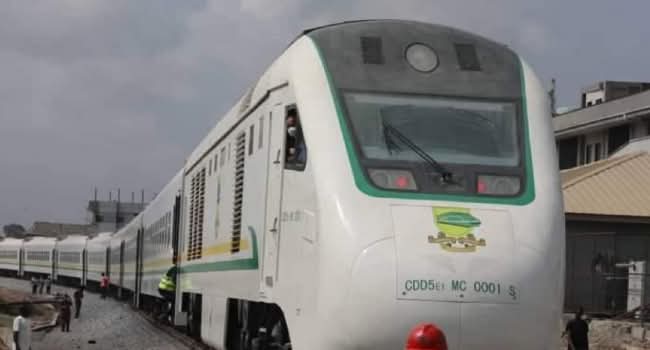
Eid-el-Fitr: NRC sets to run three Lagos–Ibadan train trips Monday. He assured passengers of NRC’s continued commitment to safe, reliable, and efficient rail services.
This was contained in a statement issued on Friday in Lagos by NRC chief public relations officer, Callistus Unyimadu.
He said the additional trip was in response to high passenger turnout during the Eid-el-Fitr travel period.
“The extra trip is aimed at easing passenger movement and providing more travel options for commuters returning after the Eid-el-Fitr celebrations.
“Under the schedule, departures from Lagos (Mobolaji Johnson Station, Ebute Metta) will be at 7.45 a.m., 1.40 p.m., and 4.00 p.m.
“From Ibadan (Obafemi Awolowo Station, Moniya), trains will depart at 8.00 a.m., 10.50 a.m., and 4.30 p.m.,” he said.
Mr Unyimadu assured passengers of NRC’s continued commitment to safe, reliable, and efficient rail services.

NRC Sets To Run Three Lagos–Ibadan Train Trips Monday
He advised travellers to arrive early, comply with ticketing and security procedures, and plan their journeys.
“The corporation appreciates the continued patronage of its services and wishes all passengers a safe and pleasant journey,” he added.
UBA, BII Sign Letter Of Intent To Explore Trade Finance Collaboration Across Africa
United Bank for Africa (UK) Limited (“UBA UK”) and British International Investment plc (“BII”), the UK’s development finance institution and impact investor, announced that they have signed a letter of intent to develop trade finance collaboration opportunities.
The proposed initiative aims to expand access to trade and working capital facilities for businesses operating across Africa.
Access to trade finance remains one of the most significant structural constraints on African trade. Businesses, particularly small and medium-sized enterprises, are frequently unable to secure letters of credit, guarantees, and supply chain finance on commercially viable terms, limiting their capacity to export and import competitively. This trade finance gap is estimated by the African Development Bank to be over USD 80 billion annually.
To help close this gap, UBA UK, the London subsidiary of UBA Group, Africa’s Global Bank, will leverage its deep relationships across the Group’s 20-country African network to originate and structure trade finance transactions. While BII, with a mandate to support productive, sustainable, and inclusive growth across Africa, can support transactions that might otherwise fall outside conventional commercial appetite.
“The signing of this letter with BII represents a landmark moment for UBA UK and for the UBA Group’s global ambitions. As the Group’s hub for Trade Operations, UBA UK is uniquely positioned to connect African businesses with the international financial system. Working alongside BII, we can extend that capability further — mobilising capital where it matters most and helping to close the trade finance gap that holds back so much African potential,” said Lok Mishra, Chief Executive Officer, UBA UK
“British International Investment is committed to catalysing private sector growth across Africa, and trade finance is a critical enabler of that growth. We welcome the opportunity to collaborate with UBA Group, whose pan-African network and deep institutional relationships can help advance our ambition to expand access to trade and working capital finance, particularly in frontier markets,” Chris Chijiuitomi, Managing Director and Head of Africa
The announcement builds on growing momentum around intra-African trade facilitated by the African Continental Free Trade Area (AfCFTA), which entered into force in 2021 and represents one of the world’s most significant trade integration initiatives. Both institutions have identified the operationalisation of AfCFTA as a priority catalyst for a trade finance facility, with UBA UK’s network across major AfCFTA economies offering a basis for supporting businesses navigating the emerging continental market.
This also complements the UK Government’s broader engagement with African economic development, including commitments made at the UK-Africa Investment Summit, and reinforces the City of London’s role as a leading international finance centre for Africa-focused capital mobilisation.
Future cooperation remains subject to further assessment, due diligence and the completion of internal approvals by both parties.
ABOUT UNITED BANK FOR AFRICA (UK) LIMITED
UBA UK is the London-based subsidiary of United Bank for Africa Plc, one of Africa’s leading financial institutions with operations across 20 African countries, the United Kingdom, the United States of America, France, and the United Arab Emirates. UBA UK serves as the Group’s hub for Trade Operations, providing a comprehensive suite of trade finance, treasury, and correspondent banking services to institutional and corporate clients worldwide.
UBA
ABOUT UNITED BANK FOR AFRICA GROUP
United Bank for Africa is one of the largest employers in the financial sector on the African continent, with 25,000 employees group-wide and serving over 45 million customers globally. Operating in twenty African countries, the United Kingdom, the United States of America, France and the United Arab Emirates, UBA provides retail, commercial and institutional banking services, leading financial inclusion and implementing cutting-edge technology.
ABOUT BRITISH INTERNATIONAL INVESTMENT
British International Investment is the UK’s development finance institution and impact investor. The organisation invests in businesses in developing countries to improve people’s lives and help protect the planet. BII’s work targets the underlying causes of poverty and the climate crisis, helping countries break free from aid dependency for good.
Between 2022-2026, at least 30 per cent of BII’s total new commitments by value will be in climate finance. BII is also a founding member of the 2X Challenge which has raised over $33.6 billion to empower women’s economic development.
The company has investments in over 1,600 businesses across 66 countries and total net assets of £9.87 billion. For more information, visit: www.bii.co.uk | watch here. Follow British International Investment on LinkedIn, Bluesky and X.
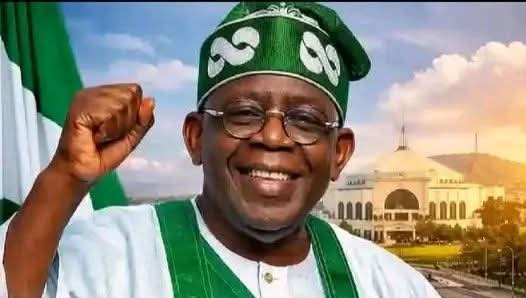
Eid-el-Fitr: President Tinubu Felicitates Muslims, Urges Renewed Unity, Patriotism
Eid-el-Fitr: President Tinubu felicitates Muslims, urges renewed unity, patriotism. Mr Tinubu called on Muslims to reflect on the spiritual lessons of Ramadan.
The president urged them to renew commitment to national unity, peaceful coexistence, and service to humanity as they celebrate the festival across the country on Friday.
This is contained in a statement issued by presidential spokesperson, Bayo Onanuga, on Thursday in Abuja.
Mr Tinubu called on Muslims to reflect on the spiritual lessons of Ramadan, noting that the holy month teaches discipline, sacrifice, compassion, and devotion to God and humanity.
He said: “We have a lot to draw from the noble lessons of Ramadan, especially at a time like this.
“We must continue to abide by the virtues of piety, selflessness, perseverance, kindness and compassion beyond this period.”
The president emphasised the need for Nigerians to remain united across religious and ethnic lines, stressing that national cohesion remains vital for sustainable peace and development.
He urged Muslims to extend acts of kindness and charity to the less privileged, irrespective of religious or ethnic background, in line with the enduring values of Islam.
Mr Tinubu noted that such gestures would strengthen social bonds, promote inclusiveness, and reinforce the spirit of brotherhood that defines the Nigerian society.
The president also called on religious leaders to use the occasion to offer prayers for peace, stability, and economic prosperity across the country.
Tinubu
He expressed optimism that with collective efforts, Nigeria would overcome its challenges and achieve lasting progress for the benefit of all citizens.
Mr Tinubu wished Muslims a joyous celebration, praying that the blessings of Ramadan would bring renewed hope, strength, and guidance to individuals, families, and the nation.
-
 Crime11 months ago
Kogi Assembly Considers Law To Regulate Rent, Establish Control Board: Tenancy Law
-

 News12 months ago
Atiku Reveals Why He Failed To Pick Wike As Running Mate In 2023
-
 Akwa Ibom1 year ago
The Apostolic Church Gets New Territorial Chairman, Exco
-

 Crime1 year ago
Federal High Court Jails 2 For Vandalizing Transformer, Telecom Mast In Kogi
-
 News1 year ago
The Apostolic Church Gets New National President, Executive
-
 Akwa Ibom1 year ago
Umo Eno Commences Payment Of 80,000 Naira Minimum Wage With Arrears
-

 News1 year ago
Senator Natasha Returns To Senate With Husband Amid Seat Dispute
-
 Economy10 months ago
Kiyosaki: Is Tinubu’s Government Afraid Of Ibrahim Traore?