
Economy
Era Of Dormant Oil Licences Over, Says NUPRC

Era Of Dormant Oil Licences Over, Says NUPRC
Era of dormant oil licences over, says NUPRC. She expressed delight over the number of applicants in the 2025 licensing round.
The Nigerian Upstream Petroleum Regulatory Commission (NUPRC) says the era of companies holding on to their oil prospecting licences without developing their assets is now officially over.
The commission chief executive, Oritsemeyiwa Eyesan, said this when she received the management of the Petroleum Directorate of Sierra Leone at the commission’s headquarters in Abuja.
Mrs Eyesan, in a statement on Friday, said one of the beauties of the Petroleum Industry Act (PIA) was Section 94, which compels operators to either commence work or relinquish the licence, a provision commonly referred to as Drill or Drop.
She said that the enforcement of the provision had now attracted more serious investors in the ongoing 2025 licensing rounds, which would increase Nigeria’s petroleum reserves.
“The PIA also opened the opportunities for small and big players because there is now a drill or drop provision in the Act. So, we have cured the problem of uncertainties.
“So, in the past we had operators who had 20-year licenses and sat on these blocks and did absolutely nothing.
“Now, we have moved from that era to drill or drop. So, now we have more assets in the basket which has given us the impetus to go for, if possible, annual bid rounds,” she said.
She also expressed delight over the number of applicants in the 2025 licensing round.
“The figure is quite impressive given that the licensing round guideline stipulates that no company – either as a single firm or as part of a consortium – can bid for more than two out of the 50 oil blocks on offer.
“For the 2025 licensing round we have 50 oil blocks on offer. And the outcome of the pre-qualification submission was a demonstration that there is indeed a very good appetite for the bid round,” she said.
Mrs Eyesan said that, in order to ensure total transparency in the licensing round, the NUPRC had added an extra layer of validation by partnering with a reputable audit firm to interrogate and validate the system.
“The result of that exercise will be made public just to boost investor confidence,” she said.
NUPRC
In his remarks, the director-general of the Petroleum Directorate of Sierra Leone, Foday Mansaray, said the aim of the meeting was to understand Nigeria’s petroleum sector and use the lessons to improve his country’s own hydrocarbon sector.
Mr Mansaray called for stronger and more sustainable energy collaboration between Sierra Leone and Nigeria.
“We are here to collaborate with the NUPRC at a bi-lateral level and learn from Nigeria, our big brothers in the industry.
“We are a small country of just eight million people but very ambitious,” he said while seeking the signing of a Memorandum of Understanding (MoU).








President Tinubu Establishes Petroleum Reform, Value Optimisation Task Force
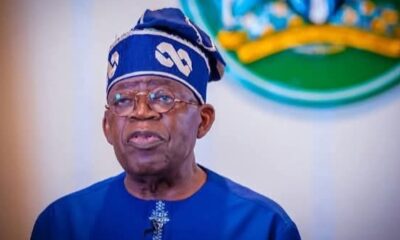
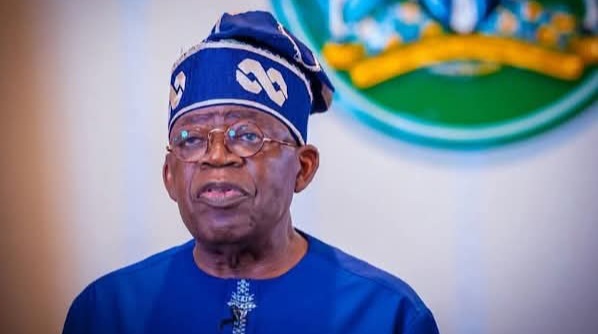
President Tinubu establishes petroleum reform, value optimisation task force. President Bola Tinubu has approved the creation of a Presidential Petroleum Reform and Value Optimisation Task Force to design the next phase of reforms in Nigeria’s petroleum sector.
This is contained in a statement issued by presidential spokesperson, Bayo Onanuga, on Friday in Abuja.
Mr Tinubu appointed Fola Adeola, co-founder of Guaranty Trust Bank and founder of Fate Foundation, as chairman of the task force.
Mr Adeola will coordinate the group’s activities and ensure the timely delivery of its mandate.
Other members include Ademola Adeyemi-Bero, Osagie Okunbor, Abubakar Suleiman, Adaeze Aguele, Farouk Gumel, Phillipa Osakwe-Okoye and Seyi Bella.
Mofoluwasho Fadayomi will serve as secretary of the task force.
According to Mr Onanuga, the group is a time-bound executive working body mandated to produce execution-ready reform blueprints for Nigeria’s petroleum industry.
“The task force will consolidate ongoing reforms, unlock capital within the sector and strengthen Nigeria’s position as a global energy investment destination,” he said.
He added that the initiative reflected the president’s commitment to building a competitive, transparent and value-driven petroleum industry.
“The task force will function as a technical reform body rather than a representative committee,” Mr Onanuga said.
He said the group would engage industry operators, regulators, investors and civil society organisations.
“The focus will remain on actionable policy design and implementation strategies,” he said.
Mr Onanuga said the task force would report directly to the president and submit monthly progress memoranda.
He added that an interim report would be delivered after three months, while the final report is expected within six months of inauguration.
Mr Tinubu expects the task force to produce three major reform blueprints.
One deliverable is an implementation toolkit for immediate structural fixes, including draft legislative amendments, executive instruments and institutional restructuring proposals.
Another is a Capital and Liquidity Acceleration Blueprint designed to unlock between five and ten billion dollars in sectoral liquidity.
The blueprint is also expected to safeguard Nigeria’s sovereign interests while attracting investment into the industry.
The third deliverable is a National Energy Transformation Strategy.
The strategy will provide a ten-year roadmap with measurable targets for production, foreign exchange earnings, GDP contribution and cost competitiveness.
Mr Tinubu directed all ministries, departments and agencies in the sector to provide full technical support to the task force.
President Tinubu
He also instructed them to submit inventories of ongoing initiatives to ensure alignment with the emerging reform framework.
The president further directed existing committees and reform teams in the petroleum sector to align their activities with the new task force.
The move, according to Mr Onanuga, will prevent duplication of mandates and ensure institutional coordination.
“All relevant documentation and ongoing workstreams must be made available to support the task force’s work,” he said.
The task force will automatically dissolve after submitting and securing acceptance of its final report.
ADC Says, 63% Poverty Is Tinubu’s Scorecard
ADC Says, 63% poverty is Tinubu’s scorecard. The African Democratic Congress (ADC) has described recent reports that Nigeria’s poverty rate has risen to 63% after the removal of petrol subsidy as the real scorecard of President Bola Tinubu and consequence of his ill-defined neoliberal economic policies.
In a statement signed by its National Publicity Secretary, Mallam Bolaji Abdullahi, the party said the new figures reflect the worsening economic hardship facing millions of Nigerians as rising fuel and transport costs continue to push up the cost of living. The ADC noted that the new report only confirms earlier surveys that indicate deep public dissatisfaction with the direction the country is heading under the APC administration.
The full statement read:
The African Democratic Congress (ADC) considers latest report showing that Nigeria’s poverty rate has risen to 63% following the removal of petrol subsidy by President Tinubu three years ago as a damning verdict on the administration’s economic policies. Yet, this report only confirms what millions of Nigerians already know from their daily experience: the cost of living is rising rapidly, purchasing power is collapsing, and families across the country are being pushed deeper into hardship.
The report, presented at a policy dialogue in Abuja Thursday indicated that poverty in Nigeria rose sharply from about 50 percent before the subsidy removal to 63 percent afterward, as higher fuel and transport costs spread through the economy and drove up the prices of food, transportation, and other basic necessities. This verdict reflects the real consequences of the APC government’s hasty removal of fuel subsidy without giving full consideration to how such a serious decision would impact on the livelihoods of ordinary citizens.
Government has repeatedly justified the removal of subsidy on the need to divert resources to areas of critical needs, including health and education. Three years on, none of these sectors has been funded any better, and citizens have not seen the benefits of subsidy removal.
Independent surveys already show that 93 percent of Nigerians believe that under President Tinubu, the country is heading in the wrong direction, even as 88 percent describe the national economy as bad, while another 74 percent say their personal living conditions are poor. These are not abstract statistics, they are the voices of a population under intense economic pressure.
There is also mounting evidence of widespread deprivation. A large majority of Nigerians report going without basic necessities such as food, clean water, medical care, cooking fuel, and even cash income at different times during the past year. For millions of households, economic hardship is no longer a temporary difficulty, it has become daily reality. This is what happens when government is more concerned with external validation than the well-being of its own people.
ADC
The African Democratic Congress believes that the standard measure of any economic policy is whether it has made life better for the majority of citizens and protected the most vulnerable. On this score, the APC government has failed.
Signed:
Mallam Bolaji Abdullahi National Publicity Secretary African Democratic Congress (ADC)
Umahi: Tinubu’s Legacy Projects Are Investments, Not Just Road Construction
Umahi: Tinubu’s legacy projects are investments, not Just road construction – Projects to last over 100 years without maintenance.
Umahi challenged political critics to reflect on their past records before questioning the current administration.
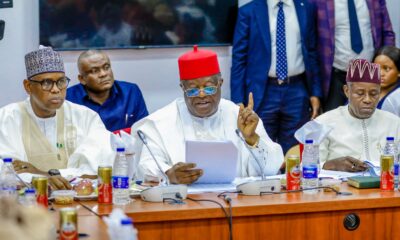
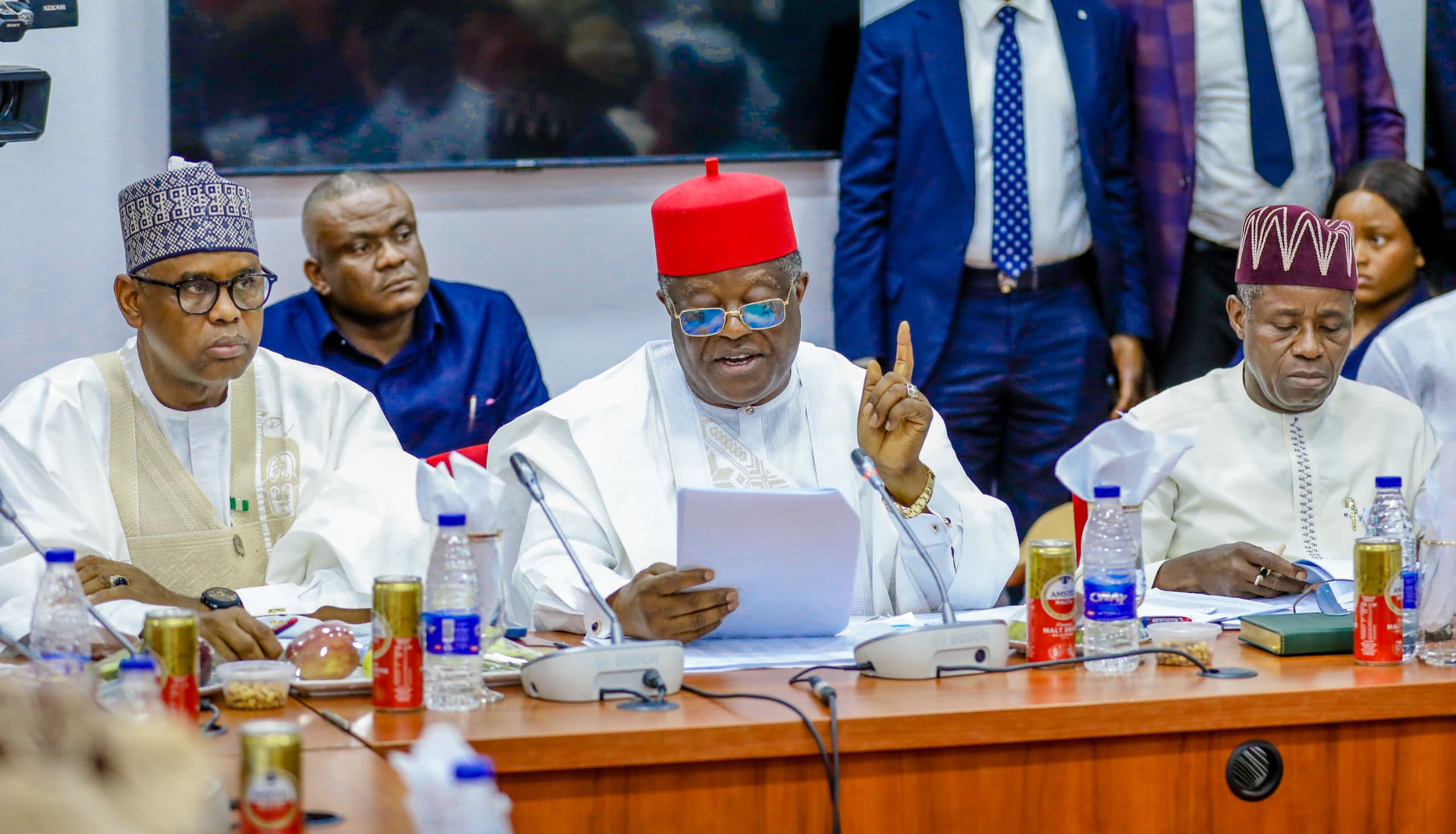
The Honourable Minister of Works, Senator Engr. David Umahi, CON, on Friday undertook an extensive inspection of federal road projects across the South-East, highlighting the Federal Government’s strong commitment to transformative infrastructure development under the administration of President Bola Ahmed Tinubu, GCFR
Speaking during the inspection on March 13, 2026 in Afikpo, the minister described the President’s flagship road programmes as historic investments designed not just to connect cities but to reshape Nigeria’s economic future for generations.
Umahi said the administration’s four major legacy road projects are carefully designed to interlink across the country and serve as enduring national assets.
“All the four legacy projects of the President are interconnected. They will last a hundred years. No maintenance,” the minister declared.
He explained that the projects represent a bold shift in infrastructure philosophy, moving away from temporary road solutions to durable concrete highways that can stand the test of time.
“Don’t forget that section one and two of the Lagos–Calabar Coastal Highway, where our people are running over themselves bidding to be given the right to toll the road and then pay back the Federal Government the entire money,” Umahi said.
“That’s why I continue to say that Mr. President is a very strategic personality and that these legacy projects are not just road construction. They are investments.”
The minister used the opportunity to call for constructive engagement from critics, stressing that national development requires a level of patriotism and responsible public discourse.
“Those criticizing us should criticize constructively. We have a duty to continue to offer explanations. There should be some elements of patriotism. Opposition does not mean that we talk without knowledge,” he said.
Umahi further challenged political critics to reflect on their past records before questioning the current administration.
“When people say they want to take over government in 2027, the question is: all these people talking like this, find out what they have done. Analyze them. The opportunities Nigerians gave them before, what did they do with it? Compare that to what President Bola Tinubu is doing now.”
Highlighting the scale of ongoing infrastructure development across the country, the minister said that the Tinubu administration has taken road construction to an unprecedented level.
“There is no part of this country where major road construction is not going on. Not just asphalt. We are putting concrete that will last a hundred years,” he said.
Umahi said history would ultimately vindicate the President’s ambitious infrastructure agenda.
“Whichever road is built under his eight years of administration, if you like you can insult me. I am a man of God, and when you insult a man of God you have to be very careful. You don’t insult a man of God and go free. My prayer is for forgiveness, but it won’t stop us from speaking the truth.”
“By eight years, the majority of our roads would have been totally rebuilt, and the legacy projects connected to them. We can beat our chest and say, ‘Yes, God really sent President Bola Tinubu.’”
During the inspection, the minister also provided detailed updates on several major road projects in the South-East, including the Dangote Tax Credit road initiative.
“It’s going to be 69km of Dangote tax credit roads. I will explain. In 2003, the President graciously approved Dangote tax credit of 60km dualized, 103 billion, passing through Afikpo in Ebonyi State and from Ebonyi to Abia State in Uturu, then you get to Okigwe,” he said.
However, the project could not commence as planned due to rising construction costs. Umahi explained that the Federal Executive Council resolved that existing contract sums would not be increased, prompting a strategic restructuring of the project.
“Generally in the country, what we agreed in the Federal Executive Council is that no project should be increased in terms of the amount. So what we are doing is rephasing and rescoping.”
“Instead of doing 120km, that is 60km dualized, we decided to take one full carriageway, 12m, from Afikpo down to Uturu down to Okigwe, and that is 60km. Then from the excess of the money, 103 billion, we still stick to that contract sum and do an extra 9km from Afikpo, that is from the Amasiri side.”
“So we have 60km plus 9km. That is 69km, reinforced concrete, 12m width. That is what we’re doing.”
Umahi noted that the project is being executed by HiTech Construction Company, the same firm handling other landmark projects such as the Lagos–Calabar Coastal Highway and the Lagos–Badagry Expressway.
“The contractors Dangote hired to do this are the contractors doing the Lagos–Calabar Coastal Highway and the Lagos–Badagry, and that is HiTech. HiTech has also built in the South-East,” he said.
“When we gave this contract they were shouting why not HiTech, so there is HiTech here working for the Dangote tax credit project. The job is very beautiful, but the job is very slow.”
The minister, however, assured that steps have already been taken to address the delay.
“The slow pace of work was not caused by the present management but the outgone one. I complained and they graciously removed the man who was delaying the job.”
Umahi
Providing further updates, Umahi highlighted ongoing works around Ndibe Beach and Eke Market while explaining the engineering challenges involved in expanding the road corridor due to dense developments along the route.
He said the ministry is exploring a bypass solution to protect businesses, churches and residential buildings along the existing alignment.
The minister also revealed that the Calabar–Abuja super highway corridor forms a major part of the administration’s long-term national infrastructure strategy.
“Calabar to Ndibe Beach, and from Ndibe Beach it goes through Afikpo, Amasiri–Akpoha, Onueke, Ezza South and Ezza North and comes out at Ukwuachi,” he explained.
“This section one is 125.35 kilometers, and the total contract sum is about 454 billion. Thirty percent has been paid by the President.”
He added that the project will eventually extend through Benue, Kogi and Nasarawa states before terminating in Abuja, forming part of a larger network of legacy highways expected to transform mobility, commerce and regional integration across Nigeria.
Umahi also praised the contractors handling the projects, noting their commitment to quality and adherence to engineering standards.
“This is beautiful work. Infoiuest is just another HiTech in terms of commitment, quality, partnership, and sticking to the rules of the job. So we’re happy with what they’re doing.”
Francis Nwaze, FIPMD
Senior Special Assistant to the Honourable Minister of Works (Media)
-
 Crime10 months ago
Kogi Assembly Considers Law To Regulate Rent, Establish Control Board: Tenancy Law
-

 News12 months ago
Atiku Reveals Why He Failed To Pick Wike As Running Mate In 2023
-
 Akwa Ibom1 year ago
The Apostolic Church Gets New Territorial Chairman, Exco
-

 Crime1 year ago
Federal High Court Jails 2 For Vandalizing Transformer, Telecom Mast In Kogi
-
 News1 year ago
The Apostolic Church Gets New National President, Executive
-
 Akwa Ibom1 year ago
Umo Eno Commences Payment Of 80,000 Naira Minimum Wage With Arrears
-

 News1 year ago
Senator Natasha Returns To Senate With Husband Amid Seat Dispute
-
 Economy10 months ago
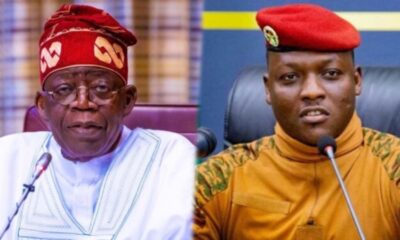
Kiyosaki: Is Tinubu’s Government Afraid Of Ibrahim Traore?