
Economy
Ekiti Governor Oyebanji Presents N415.57b Budget Proposal For 2026

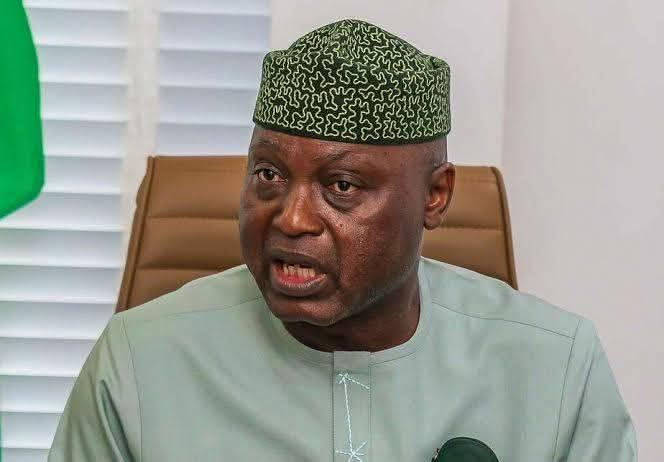
Ekiti Governor Oyebanji Presents N415.57b Budget Proposal For 2026
Ekiti Governor Oyebanji presents N415.57b budget proposal for 2026. Mr Oyebanji said the 2026 budget was tailored towards the completion of all ongoing infrastructural development projects.
Gov. Biodun Oyebanji of Ekiti, on Friday, presented a budget estimate of N415.57 billion for the 2026 fiscal year.
According to the governor, the budget is expected to focus on consolidating the various achievements recorded by his administration in the last three years.
Laying the budget proposal before members of the Ekiti State House of Assembly during a plenary held at the Old Assembly Complex, Ado-Ekiti, Mr Oyebanji said the 2026 budget was tailored towards the completion of all ongoing infrastructural development projects.
The 2026 budget estimate, christened “Budget of Impactful Governance”, is made up of a recurrent expenditure of N221.87 billion, representing 53 per cent, and a capital expenditure of N193.70 billion, which translates to 46 per cent.
The Ekiti budget proposal for the 2026 fiscal year is about 11 per cent higher than the approved 2025 budget, which stood at N375.79 billion, with N252.15 billion allocated to recurrent expenditure and N104.51 billion to capital expenditure.
According to the governor, the 2026 budget would also focus on investing in agriculture and the related value chain, addressing wealth creation, and enhancing the welfare of the people to further ensure the fulfilment of his administration’s shared prosperity agenda.
He said that the planned substantial investment in agriculture and wealth creation was also aimed at generating employment, stabilising food prices, assuring food security, and boosting the contribution of agriculture to the state’s Gross Domestic Product (GDP).
Mr Oyebanji explained that the revenue sources expected to fund the budget size of N415.57 billion include Federal Allocation, Value Added Tax (VAT), Independent Revenue (from MDAs and Tertiary Institutions), International Donor Agencies and other sundry income sources.
He stated that the 2026 budget estimate was a product of statewide consultations with the representatives of various towns and communities, various interest groups, revered traditional rulers and civil society organisations, at town hall meetings held across the three senatorial districts.
According to him, the town hall meetings enabled the people to articulate the pressing needs of their towns, communities and groups, for consideration in the budget.
He further explained that the 2026 budget, stemmed from the State Development Plan, 2021-2050, Medium Term Expenditure Framework (MTEF), 2026–2028, and the six pillars of his administration, and was prepared, in compliance with the National Chart of Accounts (NCoA) template, as unanimously agreed by the sub-nationals, through the Nigerian Governors’ Forum (NGF).
Mr Oyebanji pledged the government’s commitment to ensure fiscal responsibility in the implementation of the proposed 2026 budget, which he described as an embodiment of the policy thrust of his administration and direction of the state government in the coming year.
The governor noted that probity, transparency and accountability had been the hallmark of governance in Ekiti, under his watch, which he described as necessary in upholding good governance and improving the standard of living of the people.
He said: “Distinguished honourable members, without any fear of contradiction, I make bold to say that our Administration has demonstrated a high level of fiscal discipline and prudence in the utilisation of our commonwealth to implement laudable developmental projects.
“These projects are not only impactful, they will set our State on the path of realising the Shared Prosperity vision. I, therefore, affirm my commitment to continued fiscal discipline, transparency and accountability.
“To further promote good governance, we have designed a framework for effective policy formulation and implementation that would further boost the economy of our dear State. We have also institutionalised several fiscal reforms at the state and local government levels for quality service delivery. These reforms are already paying off.”
Mr Oyebanji also expressed his profound gratitude to President Bola Ahmed Tinubu “for his very strong support to the government and the good people of Ekiti”, noting that this support had translated to several interventions, which had assisted in alleviating poverty in the state, and in the delivery of his campaign promises to Ekiti people.
Reviewing the performance of the 2025 budget, Mr Oyebanji expressed satisfaction with the improvement in the budget performance.
He said that his government had ensured good implementation of the 2025 budget with several projects and programmes being executed in 2025, which include the construction and rehabilitation of several roads, renovation of eight general hospitals, among others.
In his remarks, the Speaker of the State Assembly, Adeoye Aribasoye, assured that the lawmakers would deliberate on the budget with diligence, patriotism, and impartiality, to ensure that the 2026 appropriation bill reflects the aspirations of the generality of Ekiti people.
The speaker urged his colleagues to act as stewards and work on the budget proposal with integrity, discipline and a shared sense of purpose.
Gov. Biodun Oyebanji
“With united effort, we can sustain the momentum of reforms, catalyse inclusive growth, and build an Ekiti State where opportunity is within reach for all”, he said.
He also urged heads of MDAs to be prepared to give a detailed explanation on their respective aspects of the budget when invited.
The speaker also reaffirmed the pledge of the state legislature “that every naira will be accounted for, and directed to priority sectors that yield maximum public benefit.”
The budget presentation was attended by the deputy governor, Monisade Afuye; secretary to the state government, Habibat Adubiaro and the head of service, Folakemi Olomojobi.
The list also includes: the chief of staff, Oyeniyi Adebayo; members of the state executive council, heads of government agencies, tertiary institutions, traditional rulers, heads of security agencies, and political leaders.










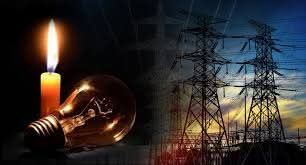
Persistent Grid Collapse, Weak Power Supply Worsening Economic Hardship: Oyintiloye
Speaking with journalists on Sunday in Osogbo, Oyintiloye said the situation had continued to deteriorate despite assurances and reforms introduced by authorities.
He described unreliable electricity as a major setback to the federal government’s reforms in the power sector.
He appealed to President Bola Tinubu to urgently intervene, noting that poor power supply is worsening economic hardship across the country.
Oyintiloye said the poor supply has compounded the effects of the current heatwave, making living conditions more difficult for many Nigerians.
The former lawmaker called for the constitution of a panel to investigate recurring national grid collapses and persistent supply challenges despite significant investments.
“It is a terrible situation across Nigeria with persistent poor power supply,” he said.
“Many small-scale businesses and large industrial players are affected, while most homes cannot boast of even three hours of electricity supply daily for domestic use.
“Despite numerous reforms and promises, the national grid continues to collapse. The situation is now compounded by gas supply shortages, weak transmission infrastructure, and chronic underinvestment across the power value chain.
“Nigerians are groaning, and urgent action must be taken by the Minister of Power, Adebayo Adelabu, and his team. The situation cannot continue like this.”
Oyintiloye warned that the situation has already triggered protests in parts of the country and could escalate if not addressed promptly.
“The situation must be quickly addressed before it becomes a national embarrassment. Nigerians need to be informed whether the issue is due to structural failure or sabotage within the power sector,” he said.

Electricity
“This epileptic power supply has led to a series of peaceful protests nationwide. I appeal for the President’s intervention before these protests turn violent.
“Electricity is essential for households and the survival of businesses. Since the end of last year, there has been no stable power supply across the country, despite assurances by those in charge and huge investments in the sector.
“Poor power supply should not be added to the challenges Nigerians are currently facing. The high cost of fuel has also made it difficult for those relying on generators to cope.”

Eid-el-Fitr: NRC Sets To Run Three Lagos–Ibadan Train Trips Monday
Eid-el-Fitr: NRC sets to run three Lagos–Ibadan train trips Monday. He assured passengers of NRC’s continued commitment to safe, reliable, and efficient rail services.
This was contained in a statement issued on Friday in Lagos by NRC chief public relations officer, Callistus Unyimadu.
He said the additional trip was in response to high passenger turnout during the Eid-el-Fitr travel period.
“The extra trip is aimed at easing passenger movement and providing more travel options for commuters returning after the Eid-el-Fitr celebrations.
“Under the schedule, departures from Lagos (Mobolaji Johnson Station, Ebute Metta) will be at 7.45 a.m., 1.40 p.m., and 4.00 p.m.
“From Ibadan (Obafemi Awolowo Station, Moniya), trains will depart at 8.00 a.m., 10.50 a.m., and 4.30 p.m.,” he said.
Mr Unyimadu assured passengers of NRC’s continued commitment to safe, reliable, and efficient rail services.

NRC Sets To Run Three Lagos–Ibadan Train Trips Monday
He advised travellers to arrive early, comply with ticketing and security procedures, and plan their journeys.
“The corporation appreciates the continued patronage of its services and wishes all passengers a safe and pleasant journey,” he added.
UBA, BII Sign Letter Of Intent To Explore Trade Finance Collaboration Across Africa
United Bank for Africa (UK) Limited (“UBA UK”) and British International Investment plc (“BII”), the UK’s development finance institution and impact investor, announced that they have signed a letter of intent to develop trade finance collaboration opportunities.
The proposed initiative aims to expand access to trade and working capital facilities for businesses operating across Africa.
Access to trade finance remains one of the most significant structural constraints on African trade. Businesses, particularly small and medium-sized enterprises, are frequently unable to secure letters of credit, guarantees, and supply chain finance on commercially viable terms, limiting their capacity to export and import competitively. This trade finance gap is estimated by the African Development Bank to be over USD 80 billion annually.
To help close this gap, UBA UK, the London subsidiary of UBA Group, Africa’s Global Bank, will leverage its deep relationships across the Group’s 20-country African network to originate and structure trade finance transactions. While BII, with a mandate to support productive, sustainable, and inclusive growth across Africa, can support transactions that might otherwise fall outside conventional commercial appetite.
“The signing of this letter with BII represents a landmark moment for UBA UK and for the UBA Group’s global ambitions. As the Group’s hub for Trade Operations, UBA UK is uniquely positioned to connect African businesses with the international financial system. Working alongside BII, we can extend that capability further — mobilising capital where it matters most and helping to close the trade finance gap that holds back so much African potential,” said Lok Mishra, Chief Executive Officer, UBA UK
“British International Investment is committed to catalysing private sector growth across Africa, and trade finance is a critical enabler of that growth. We welcome the opportunity to collaborate with UBA Group, whose pan-African network and deep institutional relationships can help advance our ambition to expand access to trade and working capital finance, particularly in frontier markets,” Chris Chijiuitomi, Managing Director and Head of Africa
The announcement builds on growing momentum around intra-African trade facilitated by the African Continental Free Trade Area (AfCFTA), which entered into force in 2021 and represents one of the world’s most significant trade integration initiatives. Both institutions have identified the operationalisation of AfCFTA as a priority catalyst for a trade finance facility, with UBA UK’s network across major AfCFTA economies offering a basis for supporting businesses navigating the emerging continental market.
This also complements the UK Government’s broader engagement with African economic development, including commitments made at the UK-Africa Investment Summit, and reinforces the City of London’s role as a leading international finance centre for Africa-focused capital mobilisation.
Future cooperation remains subject to further assessment, due diligence and the completion of internal approvals by both parties.
ABOUT UNITED BANK FOR AFRICA (UK) LIMITED
UBA UK is the London-based subsidiary of United Bank for Africa Plc, one of Africa’s leading financial institutions with operations across 20 African countries, the United Kingdom, the United States of America, France, and the United Arab Emirates. UBA UK serves as the Group’s hub for Trade Operations, providing a comprehensive suite of trade finance, treasury, and correspondent banking services to institutional and corporate clients worldwide.
UBA
ABOUT UNITED BANK FOR AFRICA GROUP
United Bank for Africa is one of the largest employers in the financial sector on the African continent, with 25,000 employees group-wide and serving over 45 million customers globally. Operating in twenty African countries, the United Kingdom, the United States of America, France and the United Arab Emirates, UBA provides retail, commercial and institutional banking services, leading financial inclusion and implementing cutting-edge technology.
ABOUT BRITISH INTERNATIONAL INVESTMENT
British International Investment is the UK’s development finance institution and impact investor. The organisation invests in businesses in developing countries to improve people’s lives and help protect the planet. BII’s work targets the underlying causes of poverty and the climate crisis, helping countries break free from aid dependency for good.
Between 2022-2026, at least 30 per cent of BII’s total new commitments by value will be in climate finance. BII is also a founding member of the 2X Challenge which has raised over $33.6 billion to empower women’s economic development.
The company has investments in over 1,600 businesses across 66 countries and total net assets of £9.87 billion. For more information, visit: www.bii.co.uk | watch here. Follow British International Investment on LinkedIn, Bluesky and X.
-
 Crime11 months ago
Kogi Assembly Considers Law To Regulate Rent, Establish Control Board: Tenancy Law
-

 News12 months ago
Atiku Reveals Why He Failed To Pick Wike As Running Mate In 2023
-

 Akwa Ibom1 year ago
The Apostolic Church Gets New Territorial Chairman, Exco
-

 Crime1 year ago
Federal High Court Jails 2 For Vandalizing Transformer, Telecom Mast In Kogi
-
 News1 year ago
The Apostolic Church Gets New National President, Executive
-
 Akwa Ibom1 year ago
Umo Eno Commences Payment Of 80,000 Naira Minimum Wage With Arrears
-

 News1 year ago
Senator Natasha Returns To Senate With Husband Amid Seat Dispute
-
 Economy10 months ago
Kiyosaki: Is Tinubu’s Government Afraid Of Ibrahim Traore?