
Education
Educationists Yakubu-Oyinloye Advocate Adequate Funding To Tackle Out-Of-School Menace


Educationists Yakubu-Oyinloye Advocate Adequate Funding To Tackle Out-Of-School Menace
Educationists Yakubu-Oyinloye advocate adequate funding to tackle out-of-school menace. Segun Olawole, an engineer, told journalists that tackling out-of-school syndrome in Nigeria would require a multi-faceted approach.
An educationist, Tokunbo Yakubu-Oyinloye, has called on the federal and state governments to establish more schools to accommodate more out-of-school children across the country.
Ms Yakubu-Oyinloye, the director of the Federal Education Quality Assurance Service (FEQAS), made the call in an interview with journalists on Sunday in Lagos.
“The federal and state governments will have to come together to see how more schools will be established,” she said.
She also emphasised the importance of education quality assurance, saying it was key to ensuring standards.
According to the director, FEQAS ensures that education standards are maintained in all schools below the tertiary level.
Segun Olawole, an engineer, told journalists that tackling out-of-school syndrome in Nigeria would require a multi-faceted approach.
“Addressing the issue requires the commitment of governments, civil societies, communities and families.
“Governments should increase funding of the education sector and allocate more resources for programmes to address out-of-school syndrome,” he said.
Mr Olawole said that despite the government’s efforts, the number of children out of school kept increasing.
He said efforts should be intensified by the three tiers of government, families, communities and civil society groups to adequately address the menace.
A teacher at Mulero High School in Agege, Lagos State, who preferred anonymity, told journalists that governments should develop and effectively implement more policies to address the root causes of the menace.
He listed the causes as poverty, conflict, and cultural barriers. The teacher also urged the establishment of alternative education programmes, such as non-formal or vocational training programmes, to cater to children not in formal schools.
Also, an educationist, Adebayo Olu-Adekoya, told journalists that governments should create more awareness across communities, particularly rural communities, on the importance of education.

Update
“Governments should organise awareness campaigns to sensitise communities and families about the importance of education,” he said.
A principal, Adetoro Habeeb, said, “Communities and governments should work together to ensure there is a decrease in the number of out-of-school children.
“Governments should support community-based initiatives that provide education and skills to out-of-school children.
“Governments and community leaders should also provide support, such as conditional cash transfers and scholarships, to families to enable them to send their children to school,” Mr Habeeb said.









SEC Sign MoU With NYSC To Fight Ponzi Schemes
SEC sign MoU with NYSC to fight Ponzi schemes. The initiative was designed to sensitise young Nigerians to the risks of fraudulent investment schemes and promote sound, legitimate investment practices.
The Securities and Exchange Commission and National Youth Service Corps have signed a memorandum of understanding to establish a community development service group focused on investment education for corps members.
The initiative was designed to sensitise young Nigerians to the risks of fraudulent investment schemes and promote sound, legitimate investment practices.
According to a statement by the SEC on Sunday, the MoU was recently signed by its director-general, Emomotimi Agama and NYSC director-general, Olakunle Nafiu.
It was also meant to promote financial literacy and sound investment habits among young Nigerians.
In addition, the collaboration will help equip corps members with essential knowledge and skills to identify and avoid Ponzi schemes and other illegal investment practices.
It will also help enhance public awareness campaigns against illegal financial schemes across all LGAs in the country, among other objectives.
“Based on the scope of the collaboration, SEC shall develop and provide relevant and up-to-date educational content, materials, and training modules on capital market operations, safe investment practices, and the identification and avoidance of Ponzi schemes.
“SEC will also be responsible for the content, resources and funding of training sessions for selected corps members and NYSC supervisors who will serve as trainers and facilitators in their respective communities.

SEC
“On its part, the NYSC shall facilitate the integration of anti-Ponzi scheme education into its Education and Enlightenment CDS programme. This may involve dedicated sessions, workshops, or awareness campaigns during orientation camps and throughout the service year,” said the statement.
The parties shall collaborate on joint awareness campaigns, utilising various channels and platforms, including social media, traditional media, and community outreach, to disseminate information on safe investment and expose fraudulent schemes.
Akwa Ibom
Umo Eno Urges Stakeholders To Safeguard Educational Facilities, Distributes Materials, Sports Equipment
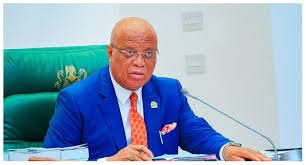
Umo Eno Urges Stakeholders To Safeguard Educational Facilities, Distributes Materials, Sports Equipment
Akwa Ibom State Governor, Pastor Umo Eno,PhD has charged teachers, school administrators, and community stakeholders to take collective responsibility in protecting and maintaining the facilities and materials provided by government to ensure their durability and continued impact.
The Governor spoke when he flagged off the distribution of teaching and learning materials, as well as sports equipment, to basic education schools across Akwa Ibom State, reaffirming government’s commitment to strengthening foundational education.
The items, acquired by Akwa Ibom State Universal Basic Education Board(AK-SUBEB), in collaboration with the Universal Basic Education Commission (UBEC), were distributed at the SUBEB Headquarters in Uyo to mark the first phase of the distribution exercise, to 75 primary schools and 33 junior secondary schools across the State.
Representing the Governor, the Commissioner for Education, Prof. Ubong Umoh, applauded teachers for their resilience and unwavering dedication to nurturing young minds.
He noted that the present administration which places high premium on basic education has injected a counterpart funding of N3.5bn yearly to access UBEC projects and programmes.
He further urged pupils and stakeholders to remain appreciative of government efforts and to make judicious use of the materials provided.
Prof. Umoh described Governor Umo Eno as a visionary and education-friendly leader who has consistently prioritized the welfare of both teachers and students as a strategic pathway to academic excellence.
Earlier in his opening remarks, the Chairman of AK-SUBEB, Rt Hon. Anietie Etuk, Ph.D, expressed profound appreciation to the Governor for his strong commitment to supporting education through collaboration with UBEC.
This, Dr Etuk said, has continued to yield positive outcomes in the basic education sector.
He highlighted the ongoing remodeling of primary schools across the 31 Local Government Areas as a clear demonstration of the administration’s commitment to revitalizing education at its foundation.
Dr. Etuk also extended gratitude to President Bola Ahmed Tinubu, GCFR, for his sustained federal interventions targeted at improving the learning environment for school children nationwide.
He noted that the current distribution exercise is part of such strategic interventions designed to bridge gaps and promote inclusive access to quality education.
Representing the UBEC Executive Secretary, Aisha Garba, the South-South Director of UBEC, Mr. Ossom Akapn Ossom, commended the AK-SUBEB Chairman for maintaining high standards and effective coordination within the sector.
He assured stakeholders that UBEC remains committed to rolling out additional programmes and interventions to further strengthen basic education delivery.
The SSA to the Governor on Research and Documentation, Dr. Essien Ndueso commended the Governor for his strong commitment to the education sector, noting that from his first day in office, he made it clear that massive investment in education would be a top priority.
Umo Eno
He emphasized that the governor’s interventions are driven by genuine concern rather than public showmanship, explaining that his focus remains on ensuring that children learn in comfortable and well-equipped environments.
Dr. Ndueso, further encouraged parents to enroll their children in public schools, stressing that the standard of facilities and quality of teachers now surpassed what’s obtained in some private schools.
Other dignitaries, including the Permanent Secretary, AK-SUBEB, Dr. Roseline Etuk, the Permanent Secretary of the State Secondary Education Board, and Dean of Education Secretaries Mr John Ekefre, in their separate remarks, lauded the collaboration between UBEC and SUBEB.
They described the initiative as timely and impactful, while also commending Governor Umo Eno for his visible commitment to educational development.
ASUU President Reveals Why Some Federal Universities Couldn’t Pay Full January Salaries
ASUU president Reveals Why some federal Universities couldn’t pay full January salaries. Christopher Piwuna, president of the Academic Staff Union of Universities (ASUU), has explained why some federal universities were unable to pay their lecturers full salaries for January.
After nearly 16 years of implementation stalemate, the federal government finally signed a renegotiated agreement with ASUU on January 14 to address the incessant strikes in Nigeria’s public tertiary institutions.
The fresh agreement followed intensive renegotiations between a federal government committee and ASUU leadership which was concluded in December 2025.
However, since the beginning of February, there have been reported delays in the payment of lecturers’ salaries across federal universities.
Last week, ASUU members at the University of Lagos (UNILAG) declared an indefinite strike over the non-payment of their full salaries by the university management.
The lecturers later called off the strike after a series of meetings with the management.
As of the time of filing this report, indications suggest that many federal universities have been unable to pay full salaries of lecturers.
A source familiar with developments within the academic community told TheCable that the federal government is yet to release funds to the universities.
According to the source, the ministry of education directed the institutions to pay the full salaries of lecturers from their respective internally generated revenue (IGR).
Piwuna said the situation is largely due to practical difficulties surrounding the implementation of a new salary agreement between the union and the federal government, particularly the delay in passage of the 2026 budget.
According to him, the government has shown a willingness to implement the agreement in full, but the new salary structure cannot be fully effected until the 2026 budget is passed and signed into law.
“Concerning the new agreement, the intention of government is clear; it is to implement it in full. But I want to believe there are practical difficulties at the moment. One is that the 2026 budget has not been passed, let alone becoming law. It is until that is done that the new salary structures will be fully implemented,” the ASUU president told Nigerian Tribune.
He added that payments made in January and February largely stemmed from the efforts of vice chancellors who tried to implement the agreement with available resources.
“In January, some universities were paid in full. When I said ‘in full’ it means that what they paid reflected what we agreed on in the new agreement, while other universities couldn’t meet up with full payment,” he said.
Piwuna added that as of the time of speaking, he was not aware of any university that had paid salaries for February.
“Even for February, I don’t know of any university, as we are speaking, that has paid its workers,” he said.
‘WHY IMPLEMENTATION PROCESS HAS BEEN COMPLICATED’
According to the ASUU president, the implementation process has been complicated by issues relating to special allowances for lecturers in the medical field, with some universities paying the allowance while others are yet to do so.
He said the ministry of education is working with the national salaries, incomes and wages commission to clarify the payment process and ensure lecturers receive what is due to them.
ASUU
Piwuna further said there have been questions from some vice chancellors about whether lecturers on sabbatical should benefit from the new agreement, underscoring that ASUU’s position is that such members are entitled to full payment.
“We do not expect that anybody on sabbatical will be denied any aspect of this agreement,” he said.
He also noted that state universities are yet to begin implementing the agreement with their lecturers, adding that ASUU has written to state governors, who are visitors to their respective universities, urging them to ensure the agreement is implemented to avoid a backlog of arrears.
“We should know that ASUU agreements cover all members across both federal and state-owned universities nationwide. So, we don’t want any university to be left behind in this new agreement,” he said.
Piwuna appealed to lecturers across the public universities to exercise patience over the delay in salary payments, expressing appreciation to vice chancellors who have made efforts to ensure partial implementation of the agreement.
He added that ASUU is hopeful the situation will improve once the 2026 budget is signed into law, which he said is expected later this month.
-
 Crime11 months ago
Kogi Assembly Considers Law To Regulate Rent, Establish Control Board: Tenancy Law
-

 News12 months ago
Atiku Reveals Why He Failed To Pick Wike As Running Mate In 2023
-
 Akwa Ibom1 year ago
The Apostolic Church Gets New Territorial Chairman, Exco
-

 Crime1 year ago
Federal High Court Jails 2 For Vandalizing Transformer, Telecom Mast In Kogi
-
 News1 year ago
The Apostolic Church Gets New National President, Executive
-
 Akwa Ibom1 year ago
Umo Eno Commences Payment Of 80,000 Naira Minimum Wage With Arrears
-

 News1 year ago
Senator Natasha Returns To Senate With Husband Amid Seat Dispute
-
 Economy10 months ago
Kiyosaki: Is Tinubu’s Government Afraid Of Ibrahim Traore?