
Education
Education minister Tunji Alausa Decries Proliferation Of Versities, Seeks Improvement Of Existing Ones

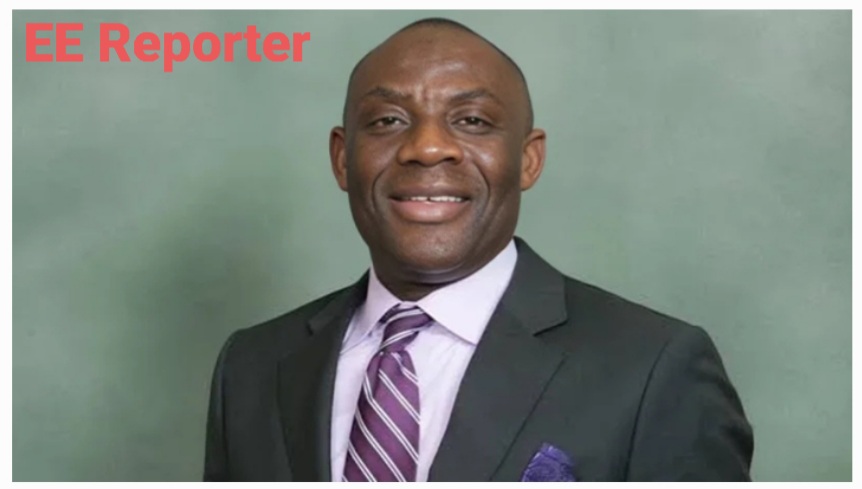
Education minister Tunji Alausa Decries Proliferation Of Versities, Seeks Improvement Of Existing Ones
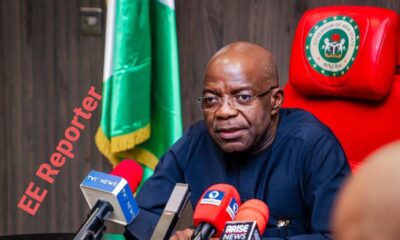
Education minister Tunji Alausa decries proliferation of Versities, seeks improvement of existing ones. Mr Alausa said that there was no need to put pressure on the president to establish new universities
The Minister of Education, Tunji Alausa, has hinged the current proliferation of universities on the increasing pressure being mounted by lawmakers.
Mr Alausa spoke at the third edition of the 2025 Ministerial Press Briefing in Abuja on Thursday.
The federal government is facing mounting pressure to reform the country’s education sector.
With almost 200 bills pending in the National Assembly for the creation of universities, there is a growing concern that the system is becoming overwhelmed.
Mr Alausa explained that renewing the capacities of existing institutions was more important than establishing new ones.
According to him, there is no need to put pressure on the president to establish new universities.
He said, “We must focus on our capacities. We need to stop this from happening. There’s so much pressure on the president. We have to at least be sensitive to it as well.
“They (lawmakers) are passing a lot of bills. Today I can tell you that there are almost 200 bills in the National Assembly. We can’t continue this. Even though we have a lot of them, the capacity for a university to admit is not there. What we need to do now is to rebuild the capacities so that we can offer more viable courses to our citizens.’’
He added that the enrolment rate was not commensurate with the recent number of universities.
“If you look at the entire enrolment together, the one per cent of private universities account for just 7.5 per cent of total undergraduate enrolment. The total number of undergraduate enrolments today is just about 875,000, which is at least fairly low.
We have universities with less than 1,000 undergraduate students, and there’s this intense demand for more universities to be opened. We have to stop that,” he said.
He added that several key proposals had been put forward to address the challenges facing Nigeria’s education sector.
Speaking on specialised universities, the minister appealed to the institutions to focus on their mandate.
According to him, there is a need to reduce the number of non-technical courses offered in specialised universities and instead make them available in conventional universities.
He also pledged the commitment of the federal government to reducing the number of out-of-school children and creating opportunities for them in tertiary institutions.
On speculation of scrapping the Tertiary Education Trust Fund (TETfund), Mr Alausa said the Education Tax Fund would continue indefinitely.
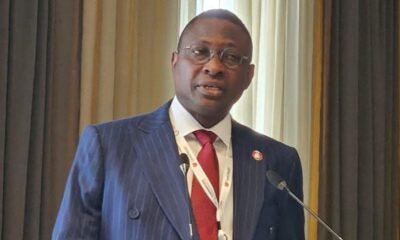
Education minister Tunji Alausa
“What we now need to do is to begin to open up more resources to develop infrastructure, build engineering workshops and build laboratories in these universities.
We also must recruit international standard teachers so that we can begin to get these universities to deliver high-quality education that will be known throughout the country.
“When it comes to the education tax, I think a tax fund is going to be advanced now because I’ve heard some information in the new tax bill about tax funds being subsidised by the year 2030,” he said.







Akwa Ibom
Umo Eno Urges Stakeholders To Safeguard Educational Facilities, Distributes Materials, Sports Equipment
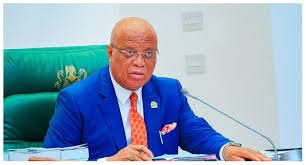
Umo Eno Urges Stakeholders To Safeguard Educational Facilities, Distributes Materials, Sports Equipment
Akwa Ibom State Governor, Pastor Umo Eno,PhD has charged teachers, school administrators, and community stakeholders to take collective responsibility in protecting and maintaining the facilities and materials provided by government to ensure their durability and continued impact.
The Governor spoke when he flagged off the distribution of teaching and learning materials, as well as sports equipment, to basic education schools across Akwa Ibom State, reaffirming government’s commitment to strengthening foundational education.
The items, acquired by Akwa Ibom State Universal Basic Education Board(AK-SUBEB), in collaboration with the Universal Basic Education Commission (UBEC), were distributed at the SUBEB Headquarters in Uyo to mark the first phase of the distribution exercise, to 75 primary schools and 33 junior secondary schools across the State.
Representing the Governor, the Commissioner for Education, Prof. Ubong Umoh, applauded teachers for their resilience and unwavering dedication to nurturing young minds.
He noted that the present administration which places high premium on basic education has injected a counterpart funding of N3.5bn yearly to access UBEC projects and programmes.
He further urged pupils and stakeholders to remain appreciative of government efforts and to make judicious use of the materials provided.
Prof. Umoh described Governor Umo Eno as a visionary and education-friendly leader who has consistently prioritized the welfare of both teachers and students as a strategic pathway to academic excellence.
Earlier in his opening remarks, the Chairman of AK-SUBEB, Rt Hon. Anietie Etuk, Ph.D, expressed profound appreciation to the Governor for his strong commitment to supporting education through collaboration with UBEC.
This, Dr Etuk said, has continued to yield positive outcomes in the basic education sector.
He highlighted the ongoing remodeling of primary schools across the 31 Local Government Areas as a clear demonstration of the administration’s commitment to revitalizing education at its foundation.
Dr. Etuk also extended gratitude to President Bola Ahmed Tinubu, GCFR, for his sustained federal interventions targeted at improving the learning environment for school children nationwide.
He noted that the current distribution exercise is part of such strategic interventions designed to bridge gaps and promote inclusive access to quality education.
Representing the UBEC Executive Secretary, Aisha Garba, the South-South Director of UBEC, Mr. Ossom Akapn Ossom, commended the AK-SUBEB Chairman for maintaining high standards and effective coordination within the sector.
He assured stakeholders that UBEC remains committed to rolling out additional programmes and interventions to further strengthen basic education delivery.
The SSA to the Governor on Research and Documentation, Dr. Essien Ndueso commended the Governor for his strong commitment to the education sector, noting that from his first day in office, he made it clear that massive investment in education would be a top priority.
Umo Eno
He emphasized that the governor’s interventions are driven by genuine concern rather than public showmanship, explaining that his focus remains on ensuring that children learn in comfortable and well-equipped environments.
Dr. Ndueso, further encouraged parents to enroll their children in public schools, stressing that the standard of facilities and quality of teachers now surpassed what’s obtained in some private schools.
Other dignitaries, including the Permanent Secretary, AK-SUBEB, Dr. Roseline Etuk, the Permanent Secretary of the State Secondary Education Board, and Dean of Education Secretaries Mr John Ekefre, in their separate remarks, lauded the collaboration between UBEC and SUBEB.
They described the initiative as timely and impactful, while also commending Governor Umo Eno for his visible commitment to educational development.
ASUU President Reveals Why Some Federal Universities Couldn’t Pay Full January Salaries
ASUU president Reveals Why some federal Universities couldn’t pay full January salaries. Christopher Piwuna, president of the Academic Staff Union of Universities (ASUU), has explained why some federal universities were unable to pay their lecturers full salaries for January.
After nearly 16 years of implementation stalemate, the federal government finally signed a renegotiated agreement with ASUU on January 14 to address the incessant strikes in Nigeria’s public tertiary institutions.
The fresh agreement followed intensive renegotiations between a federal government committee and ASUU leadership which was concluded in December 2025.
However, since the beginning of February, there have been reported delays in the payment of lecturers’ salaries across federal universities.
Last week, ASUU members at the University of Lagos (UNILAG) declared an indefinite strike over the non-payment of their full salaries by the university management.
The lecturers later called off the strike after a series of meetings with the management.
As of the time of filing this report, indications suggest that many federal universities have been unable to pay full salaries of lecturers.
A source familiar with developments within the academic community told TheCable that the federal government is yet to release funds to the universities.
According to the source, the ministry of education directed the institutions to pay the full salaries of lecturers from their respective internally generated revenue (IGR).
Piwuna said the situation is largely due to practical difficulties surrounding the implementation of a new salary agreement between the union and the federal government, particularly the delay in passage of the 2026 budget.
According to him, the government has shown a willingness to implement the agreement in full, but the new salary structure cannot be fully effected until the 2026 budget is passed and signed into law.
“Concerning the new agreement, the intention of government is clear; it is to implement it in full. But I want to believe there are practical difficulties at the moment. One is that the 2026 budget has not been passed, let alone becoming law. It is until that is done that the new salary structures will be fully implemented,” the ASUU president told Nigerian Tribune.
He added that payments made in January and February largely stemmed from the efforts of vice chancellors who tried to implement the agreement with available resources.
“In January, some universities were paid in full. When I said ‘in full’ it means that what they paid reflected what we agreed on in the new agreement, while other universities couldn’t meet up with full payment,” he said.
Piwuna added that as of the time of speaking, he was not aware of any university that had paid salaries for February.
“Even for February, I don’t know of any university, as we are speaking, that has paid its workers,” he said.
‘WHY IMPLEMENTATION PROCESS HAS BEEN COMPLICATED’
According to the ASUU president, the implementation process has been complicated by issues relating to special allowances for lecturers in the medical field, with some universities paying the allowance while others are yet to do so.
He said the ministry of education is working with the national salaries, incomes and wages commission to clarify the payment process and ensure lecturers receive what is due to them.
ASUU
Piwuna further said there have been questions from some vice chancellors about whether lecturers on sabbatical should benefit from the new agreement, underscoring that ASUU’s position is that such members are entitled to full payment.
“We do not expect that anybody on sabbatical will be denied any aspect of this agreement,” he said.
He also noted that state universities are yet to begin implementing the agreement with their lecturers, adding that ASUU has written to state governors, who are visitors to their respective universities, urging them to ensure the agreement is implemented to avoid a backlog of arrears.
“We should know that ASUU agreements cover all members across both federal and state-owned universities nationwide. So, we don’t want any university to be left behind in this new agreement,” he said.
Piwuna appealed to lecturers across the public universities to exercise patience over the delay in salary payments, expressing appreciation to vice chancellors who have made efforts to ensure partial implementation of the agreement.
He added that ASUU is hopeful the situation will improve once the 2026 budget is signed into law, which he said is expected later this month.
Education
Peter Obi: There’ll Be Violence If Leaders Continue To Use Forged Certificates For Elections
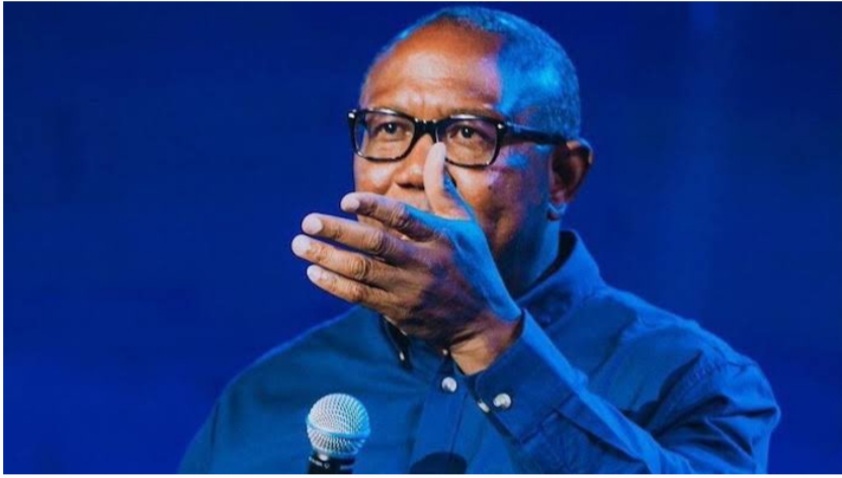
Peter Obi: There’ll Be Violence If Leaders Continue To Use Forged Certificates For Elections
Peter Obi: There’ll be violence if leaders continue to use forged certificates for elections. “If we continue down this path, violence may become the future of our democracy,” said Mr Obi. “We must recognise that fraud and violence cannot create true leadership.”
Ambali Abdulkabeer • March 16, 2026
Bola Tinubu and forged Chicago State University certificate (Credit: Ahmed Oluwasanjo/Peoples Gazette)
Bola Tinubu and forged Chicago State University certificate (Credit: Ahmed Oluwasanjo/Peoples Gazette)
Former Labour Party presidential candidate, Peter Obi, says violence may become the future of Nigeria’s democracy if politicians seeking elective positions are allowed to present forged certificates during elections.
“The ability for individuals to present forged certificates for election sends a troubling message to our society,” the politician stated in a statement on Sunday. “If we continue down this path, violence may become the future of our democracy.”
Mr Obi stated that the non-recognition of qualification, certificate and credibility as necessary requirements for candidates seeking elective offices further highlights the plummeting leadership standards in the country.
He added, “In the current state of Nigeria, what can we expect when leadership standards have plummeted to the extent that qualification, certification, and credibility are no longer deemed necessary for public office?”
The African Democratic Congress chieftain further condemned attacks on the party office in Bakassi, noting the development reflected how dangerously low the country’s democratic standards had fallen.
“What occurred at the ADC office in Bakassi, Cross River state, is not merely an attack on a political party; it is an attack on democracy itself.
“When thugs can storm a party office and destroy property without facing arrest, it reflects how dangerously low our democratic standards have fallen,” Mr Obi stated.
The politician reiterated that fraud and violence cannot create true leadership, adding that they will only result in chaos, which will ultimately affect our children and us.
President Bola Tinubu presented a forged degree certificate to the Independent National Electoral Commission when he filed his paperwork to lead Nigeria in June 2022, Peoples Gazette can report based on the testimony of the institution he arrogated, introducing a new but potentially fatal front in the ongoing battle to oust the Nigerian leader for his documented misdeeds from years gone by.
The official repudiation of Mr Tinubu’s certificate—the only academic qualification he presented to the electoral office—came at a deposition of school officials on Tuesday in Chicago. An expanded transcript of the session is still being processed, but The Gazette has learnt about what has perhaps been the most crucial expectation of Nigerians: How the school would characterise Mr Tinubu’s certificate under oath and penalty of perjury.
Caleb Westberg, the registrar at Chicago State University, said Mr Tinubu’s certificate, dated June 22, 1979, and tendered to INEC on June 17, 2022, was not issued by the school and its administrators could, therefore, not be able to authenticate its source, The Gazette learnt.
Mr Westberg, CSU’s registrar since November 2020, also said, during the deposition that lasted about 5.5 hours, that Mr Tinubu did not apply for a replacement certificate, nor was he ever issued one.
Peter Obi
The categorical statement capped a successful outcome for the monthslong legal strategy of Atiku Abubakar, Mr Tinubu’s main opponent, who approached the United States District Court for the Northern District of Illinois in Chicago to ascertain the authenticity or otherwise of the document.
Federal district judge Nancy Maldonado granted a final order for CSU administrators to turn over all documents relating to Mr Tinubu to the school and also sit down for deposition by an adversarial team of lawyers deployed by Mr Abubakar.
-
 Crime11 months ago
Kogi Assembly Considers Law To Regulate Rent, Establish Control Board: Tenancy Law
-

 News12 months ago
Atiku Reveals Why He Failed To Pick Wike As Running Mate In 2023
-
 Akwa Ibom1 year ago
The Apostolic Church Gets New Territorial Chairman, Exco
-

 Crime1 year ago
Federal High Court Jails 2 For Vandalizing Transformer, Telecom Mast In Kogi
-
 News1 year ago
The Apostolic Church Gets New National President, Executive
-
 Akwa Ibom1 year ago
Umo Eno Commences Payment Of 80,000 Naira Minimum Wage With Arrears
-
 News1 year ago
Senator Natasha Returns To Senate With Husband Amid Seat Dispute
-
 Economy10 months ago
Kiyosaki: Is Tinubu’s Government Afraid Of Ibrahim Traore?