
News
COPAC Tells Amaechi, Kwankwaso, Tambuwal To Speak Out Early Against Injustice In El-Rufai Case

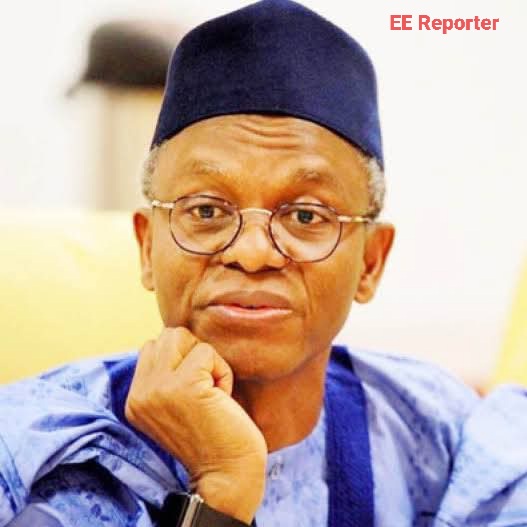
COPAC Tells Amaechi, Kwankwaso, Tambuwal To Speak Out Early Against Injustice In El-Rufai Case
Coalition Political Action Committee (COPAC) TO AMAECHI, KWANKWASO, TAMBUWAL: SPEAK OUT EARLY AGAINST INJUSTICE IN EL-RUFAI CASE
– DEMANDS STRICT COMPLIANCE WITH DUE PROCESS IN THE DETENTION OF NASIR EL-RUFAI
– SAYS NIGERIA IS NOT A POLICE STATE
The Coalition Political Action Committee (COPAC) warns the Federal Government that the rule of law in Nigeria cannot be suspended to satisfy political convenience.
The 14-day remand order obtained by investigators in the case involving Nasir El-Rufai has expired. That order was granted for a specific and limited purpose: to allow investigators complete their work within a defined constitutional window. It was not granted as a licence for indefinite detention, procedural manipulation, or political theatre.
Under Section 35 of the Constitution of the Federal Republic of Nigeria, the liberty of every citizen is protected by law. Investigative detention is strictly temporary and must lead, within a reasonable time, to either formal charges before a competent court or the immediate release of the detainee.
The Federal Government must therefore understand that it must now do one of two things in the case involving El-Rufai: file formal charges before a court or release the detainee immediately.
Anything outside these clearly defined legal options would amount to acting illegally and unconstitutionally, and would render the continued detention an abuse of state power and a violation of the constitutional rights guaranteed to every Nigerian citizen.
Such conduct would also run contrary to Nigeria’s obligations under international human rights law, including Article 9 of the International Covenant on Civil and Political Rights and Article 6 of the African Charter on Human and Peoples’ Rights, both of which prohibit arbitrary arrest and detention and require that any deprivation of liberty be strictly governed by law and subject to judicial oversight.
Make no mistake, the danger of this moment cannot be overstated. Nigeria is witnessing a disturbing pattern in which state institutions are willing to deploy investigative powers against political actors in a manner that raises legitimate questions about selectivity, timing, and motive.
This is why silence from other opposition leaders at this moment is both dangerous and irresponsible.
COPAC therefore calls directly on leading opposition figures including Atiku, Peter Obi, Tambuwal, Amaechi, and Kwankwaso, along with all leaders who claim to stand for democratic accountability, to speak out immediately against any attempt to harass, intimidate or clampdown on the opposition.
This is not about El-Rufai. This is about the law being a level playing field. The rule of law must never become a selective weapon used against those who fall out of favour with those who hold power.
History teaches us what happens when political leaders watch in silence as the machinery of state power is gradually turned against one opponent after another.
First they came for Tambuwal, And I did not speak out Because I was not Tambuwal.
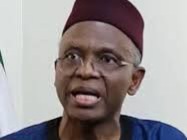
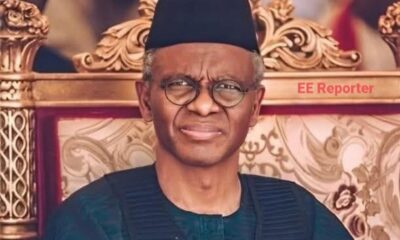
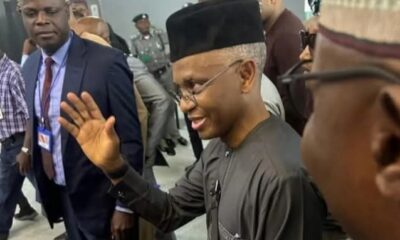
El-Rufai
Then they came for Malami, And I did not speak out Because I was not Malami.
Then they came for Kwankwaso, And I did not speak out Because I was not Kwankwaso.
Then they came for El-Rufai, And I did not speak out Because I was not El-Rufai.
Then they came for me — And there was no one left To speak out for me.
COPAC therefore states clearly: if the government has evidence, it should file charges. If it does not, it must release the detainee.
The law is not optional. The Constitution is not a suggestion. And the Nigerian people will not remain silent if the guarantees of liberty written into our Constitution are treated as expendable.
Nigeria is a constitutional democracy, not a police state.
Signed:
Aminu Datti-Ahmad
Coalition Political Action Committee (COPAC)
Abuja, Nigeria





Abuja: Fire Guts Section Of Federal Secretariat
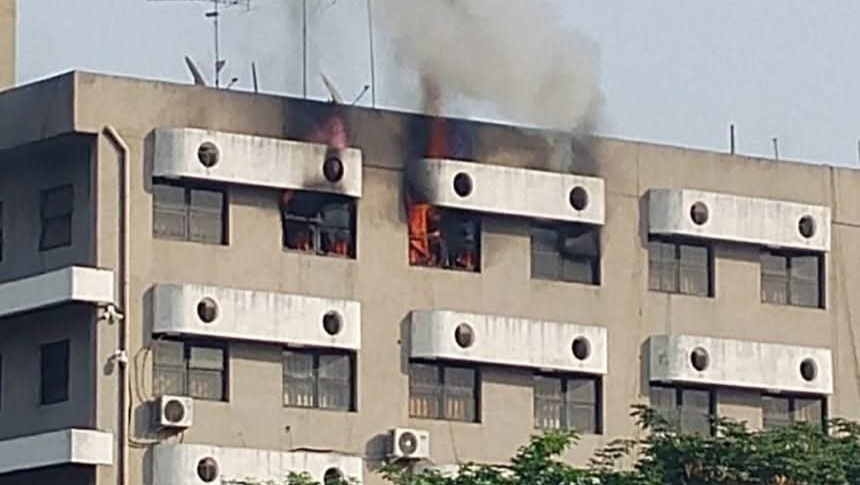
Abuja: Fire guts section of federal secretariat. There was panic at the federal secretariat in Abuja on Monday morning after a section of the office of the head of service of the federation caught fire.
Eyewitnesses said the fire was first noticed at about 8:20am. Social media footage showed plumes of black smoke billowing from the affected section of the building.
The incident occurred at Section C of the building within the federal secretariat complex.
Staff members were seen evacuating the area after emergency responders had been alerted.
The media department of the office of the head of service confirmed the incident.
The office said the outbreak was limited to Section C of the building.

Fire Guts Section Of Federal Secretariat
Officials said emergency responders were already working to contain the fire.
“The fire outbreak is limited to Section C of the building and is currently being attended to by emergency officials,” the office said.
The cause of the fire had yet to be disclosed at the time of filing this report.
Abuja (FCT)
federal secretariat in Abuja
head of service office in Abuja.
News
Borno ICPC Establishes Closer Ties With North-East Civil Society To Fortify Grassroots Anti-Corruption Fight
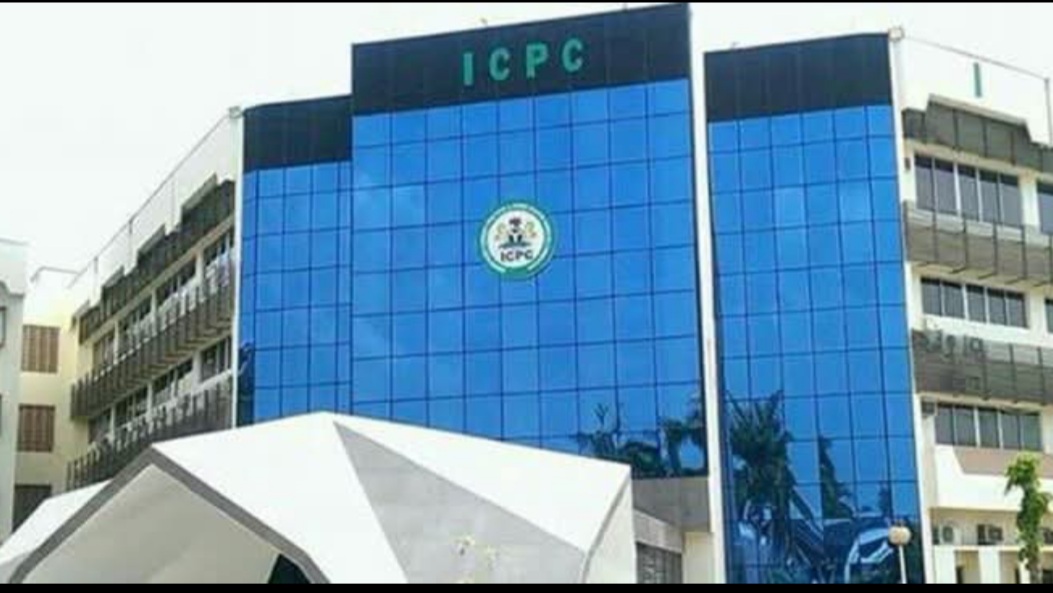
Borno ICPC Establishes Closer Ties With North-East Civil Society To Fortify Grassroots Anti-Corruption Fight
Borno ICPC establishes closer ties with North-East Civil Society to fortify grassroots anti-corruption fight. In a significant move to deepen the fight against corruption at the community level, the Independent Corrupt Practices and Other Related Offences Commission (ICPC) has undertaken a pivotal engagement with the North-East Civil Society Organisation of Nigeria (NECSOB), covering Borno and Yobe states.
The initiative underscores a growing recognition that sustainable governance reforms require the active participation of civil society as frontline partners.
The courtesy visit, led by the Commission’s Resident Anti-Corruption Commissioner (RACC), was strategically designed to bolster collaborative frameworks for public enlightenment, community sensitisation, and the robust monitoring of government-funded projects. A central focus of the dialogue was the work of the Constituency and Executive Project Tracking Division (CEPTD), a unit vital for ensuring that public spending translates into tangible development for citizens.
Receiving the ICPC team, the Chairman of NECSOB, Ambassador Ahmed Shehu, hailed the visit as a timely and essential intervention in the collective battle against corruption. He stressed that synergy between state institutions and civil society is not merely beneficial but indispensable for promoting transparency and good governance.
“We cannot overstate the importance of this partnership. Civil society organisations are the bridge to the communities, and together with the ICPC, we can ensure that every naira allocated for development is accounted for,” Ambassador Shehu stated.
He introduced a distinguished array of stakeholders at the meeting, underscoring the broad-based support for the initiative. Notable figures included Comrade Bulama Asiso (NECSOB), Comrade Yusuf Inuwa (Executive Director, NLC), Comrade Mamman Bukar (Director, NLC), Ambassador Shettima Jaafar Imam (PACHE), Baba-Kura Bukar (FACDA), and Ambassador Kaltume Jaafaru (PCRC).
In his address, the RACC articulated the Commission’s vision of embedding anti-corruption norms within the social fabric. He emphasised that community-based organisations are critical allies in the effort to monitor constituency and executive projects, acting as the “eyes and ears” on the ground to ensure public funds serve their intended purpose. The Commissioner noted that empowering communities with the knowledge to oversee local projects is a powerful deterrent against abandonment and substandard execution.
The interactive session delved into specific mechanisms for enhancing accountability. The Second-in-Command to the RACC, A.D. David Samuel Damdakalak highlighted the importance of collaborative efforts to help Government Ministries, Departments, and Agencies (MDAs) meet their Key Performance Indicators (KPIs). He provided insights into the Commission’s whistle-blowing framework, describing it as a crucial instrument for citizens to safely expose malfeasance and encourage a culture of accountability within public institutions.
Barrister Ibrahim Garba added a legal perspective, calling for more stringent enforcement measures and improved monitoring systems to curb the diversion and mismanagement of public funds. Broadening the scope of the discussion, he also raised a critical concern regarding sexual harassment in society, urging collective action to tackle this misconduct as an integral part of comprehensive integrity reforms.
A former Chairman of the Nigeria Union of Teachers (NUT) brought attention to specific corrupt practices observed in project execution under the CEPTI, particularly concerning e-procurement processes. He advocated for unwavering transparency and strict adherence to due process to eliminate loopholes for corruption.
Adding a vital dimension to the conversation, Hajiya Kaltume Ja’afaru passionately emphasised the indispensable role of women in fostering accountable governance. She called for their increased and meaningful inclusion in advocacy, sensitisation campaigns, and all accountability initiatives, noting that women are often the most affected by poor service delivery and are powerful agents of change within their communities.

ICPC
As a tangible demonstration of its commitment to grassroots education, the ICPC delegation presented a collection of anti-corruption literature and sensitisation materials to the NECSOB Chairman. These resources are intended to support and amplify public awareness campaigns across the region.
The high-level engagement concluded with both parties reaffirming their dedication to sustained collaboration. This renewed partnership will focus on joint project tracking, continuous public education, and the strengthening of transparency mechanisms in Borno and Yobe States. A group photograph marked the occasion, symbolising a unified step forward in the shared resolve to combat corruption and champion the principles of good governance for the benefit of all citizens.
Abuja NUJ Calls For Greater Support For Women Chairwoman Of The Council
Abuja NUJ calls for greater support for women Chairwoman of the council. Grace Ike, made the call in a statement on Sunday in Abuja to commemorate the 2026 International Women’s Day celebration.
The Nigerian Union of Journalists, FCT council, has urged stronger synergy between government and stakeholders to dismantle barriers hindering women’s participation and progress across sectors in Nigeria’s development.
Chairwoman of the council, Grace Ike, made the call in a statement on Sunday in Abuja to commemorate the 2026 International Women’s Day celebration.
Ms Ike said empowering women produced far-reaching benefits, as inclusive newsrooms encouraged richer storytelling, strengthened governance, promoted fairness in representation, and helped build more equitable societies.
She noted that women in journalism continued to demonstrate resilience, professionalism and dedication to truth, despite challenges, contributing significantly to public service and the strengthening of democratic values.
According to her, female journalists are breaking new ground by covering difficult beats, shaping public discourse, mentoring younger colleagues and proving consistently that professional excellence knows no gender.
“Our celebration must go beyond recognition and translate into action by mentoring young female journalists, creating safe workplaces, providing leadership opportunities and ensuring women’s voices are heard.
“These are the investments that will yield the greatest returns for journalism and society. The United Nations theme, ‘Rights. Justice. Action. For All Women and Girls’. reinforces collective responsibility.
“Governments, institutions, media organisations and communities must work together to dismantle barriers hindering women’s progress and ensure equal opportunities for women and girls everywhere,” stated Ms Ike.
Ms Ike said that as the first female chairperson of the NUJ FCT Council, she stood on the shoulders of courageous women who broke barriers, challenged stereotypes and rejected limitations.

Abuja NUJ
She added that her leadership journey reflected what became possible when society deliberately provided women with opportunities to lead, contribute meaningfully and excel across professional fields.
“Let us recommit to giving more opportunities, support, mentorship and recognition to women because when women rise, journalism thrives, communities prosper, and our nation grows stronger,” she said.
-

 Crime10 months ago
Kogi Assembly Considers Law To Regulate Rent, Establish Control Board: Tenancy Law
-

 News12 months ago
Atiku Reveals Why He Failed To Pick Wike As Running Mate In 2023
-
 Akwa Ibom1 year ago
The Apostolic Church Gets New Territorial Chairman, Exco
-

 Crime1 year ago
Federal High Court Jails 2 For Vandalizing Transformer, Telecom Mast In Kogi
-
 News1 year ago
The Apostolic Church Gets New National President, Executive
-
 Akwa Ibom1 year ago
Umo Eno Commences Payment Of 80,000 Naira Minimum Wage With Arrears
-

 News1 year ago
Senator Natasha Returns To Senate With Husband Amid Seat Dispute
-

 Economy10 months ago
Kiyosaki: Is Tinubu’s Government Afraid Of Ibrahim Traore?