
International
CAS Advance Global Defence Diplomacy, Capacity Building During Strategic Visit To CZECH Republic

CAS Advance Global Defence Diplomacy, Capacity Building During Strategic Visit To CZECH Republic
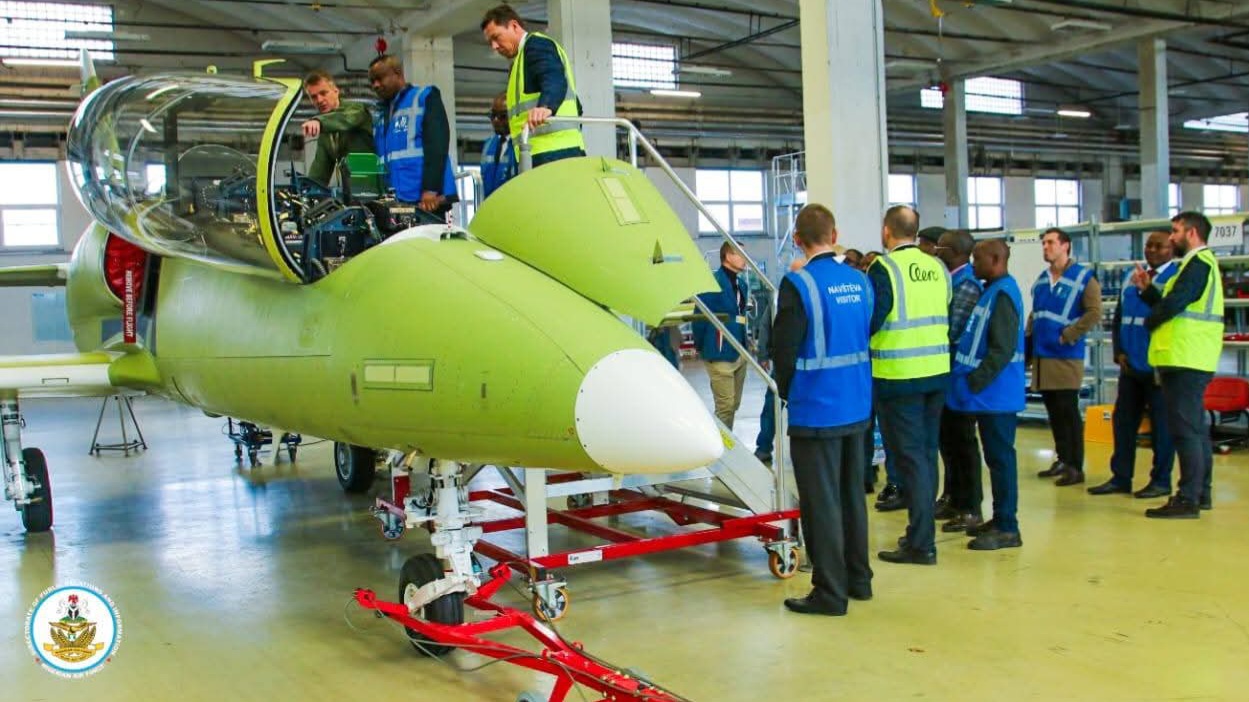
CAS advance global defence diplomacy, capacity building during strategic visit to CZECH Republic. The Chief of the Air Staff (CAS), Air Marshal Sunday Kelvin Aneke, reinforced the Nigerian Air Force’s (NAF) commitment to modernisation, self-reliance and strategic global partnerships during an official visit to the Czech Republic from 23–24 February 2026.
The visit underscored his deliberate drive to leverage international collaboration in strengthening training, sustainment and operational capability development in response to contemporary security realities. It further highlighted the NAF’s growing profile as a forward-looking and professionally adaptive air force focused on long-term institutional capacity.
During engagements with Aero Vodochody Aerospace, the CAS reaffirmed the enduring partnership supporting the overhaul and upgrade of the L-39ZA aircraft, which continues to enhance pilot training and operational proficiency.
Discussions also centred on the NAF’s structured transition to the more advanced L-39 Skyfox platform, ensuring alignment of training systems with modern warfare dynamics while maintaining continuity in pilot development. High-level talks with the Czech Air Force expanded cooperation in training, simulator capacity development and logistics collaboration across rotary- and fixed-wing operations, reflecting a shared commitment to professional excellence and capability enhancement.
Additional engagements with defence industry stakeholders provided valuable insights into advanced simulators, parachute training systems, unmanned aerial technologies and other emerging solutions critical to modern air power.

NAF
Emphasising that contemporary defence partnerships must extend beyond acquisition to knowledge exchange and technology transfer, the CAS reiterated that sustainable modernisation requires innovation and local capacity development.
The visit therefore delivered strategic momentum towards his Command Philosophy of leveraging innovation, emerging technologies and international partnerships to build a resilient, mission-focused and globally engaged Nigerian Air Force.










Africa CDC Commended Equatorial Guinea’s Malaria Progress
Africa CDC commended Equatorial Guinea’s malaria progress. “Only nine countries out of 55 in Africa are malaria-free. Equatorial Guinea is on track to become the next,” Africa CDC chief said.
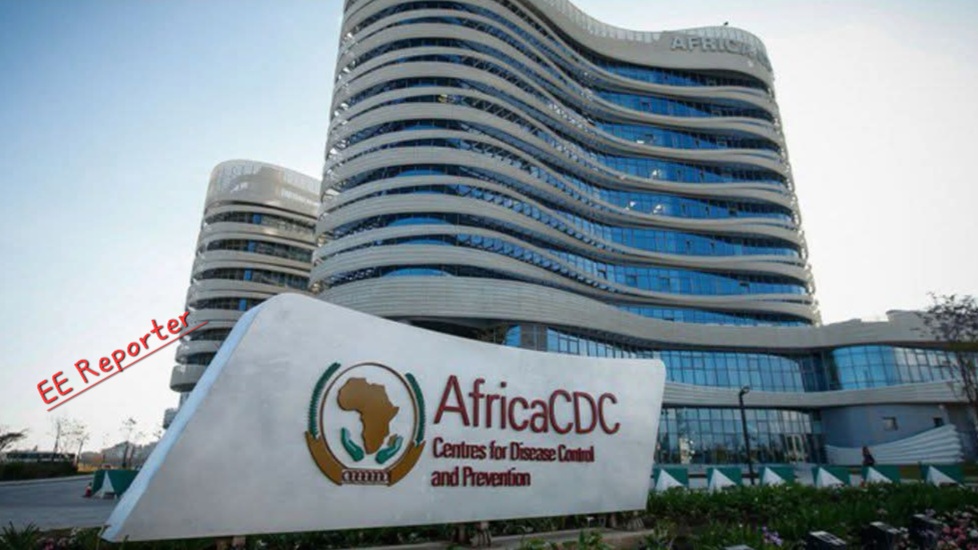
The Africa Centres for Disease Control and Prevention has commended Equatorial Guinea’s milestone in malaria control, highlighting broader continental advances in disease surveillance, outbreak response, and local manufacturing of essential health commodities.
Jean Kaseya, director general of Africa CDC, disclosed this during a weekly high-level regional press briefing on Thursday, outlining progress in malaria elimination, emergency preparedness, and institutional reforms across member states.
Mr Kaseya said children under five and pregnant women remained most affected by malaria, which accounted for 95 per cent of global cases and 96 per cent of related deaths recorded worldwide.
He described Equatorial Guinea’s malaria response as a pilot model for elimination that other African countries could replicate, noting that sustained political commitment and targeted interventions were critical to progress.
“Only nine countries out of 55 in Africa are malaria-free. Equatorial Guinea is on track to become the next,” he said, underscoring the country’s steady advances toward elimination status.
He warned that drug and insecticide resistance, alongside climate change, were expanding malaria transmission zones, threatening recent gains and complicating efforts to reduce infections and deaths continent-wide.
The director-general reported that Africa CDC had significantly strengthened outbreak detection and response capacities through expanded surveillance systems, improved coordination mechanisms, and enhanced technical support to member states.
“Public Health Emergency Operations Centres increased from five in 2022 to 32 in 2025, while laboratory networks and pathogen genomic capacity have improved dramatically. As a result, reported outbreaks dropped from 189 in early 2025 to 72 in 2026,” he added.
He attributed the decline to faster detection and coordinated regional responses.
Mr Kaseya said funding utilisation at Africa CDC rose from 34 per cent in 2022 to 95 per cent, while overall funding increased from $52 million to $463 million.
He said human resources were expanded and repurposed rather than reduced, with deliberate attention to gender balance and equitable geographic representation across the institution’s workforce and leadership structures.

Africa CDC
Mr Kaseya said the African Union recently endorsed the Africa Executive Sovereignty agenda, replacing the “new public health order” framework that has guided the continent’s health security reforms.
Mr Kaseya announced plans for an extraordinary summit on local manufacturing in Nairobi in May 2026 and the Conference on Public Health in Africa in Ethiopia in November 2026.
He said Africa CDC also planned to establish an African medical prize, starting in 2027, to recognise outstanding contributions by African scientists advancing medicine and public health innovation.
He highlighted recent outbreak responses, including Uganda’s anthrax outbreak, where Africa CDC supplied 10,000 vaccine doses, and cholera outbreaks in Mozambique, Somalia, and Zambia, worsened by flooding.
Mr Kaseya stressed the importance of Africa producing its own vaccines and diagnostics to reduce reliance on external suppliers and strengthen the continent’s long-term health security.
Equatorial Guinea’s health minister joined the briefing, outlining how the country analysed malaria trends, implemented pilot interventions, and scaled elimination efforts.

Nigeria, US Defence Partnership Advances As NAF Earns Praise For AH-1Z Preparedness
Nigeria, US defence partnership advances as NAF earns praise for AH-1Z preparedness. The United States Government has commended the Nigerian Air Force (NAF) for its high level of preparedness ahead of the delivery of the AH-1Z helicopters to Nigeria, including the readiness of designated NAF facilities where the aircraft will be domiciled.
The commendation was conveyed during a three-day high-level engagement between the US Government delegation from PMA-276, led by Robert Galan, and senior NAF stakeholders at Headquarters Nigerian Air Force, Abuja.
The meeting focused on the comprehensive Programme and Support Plan designed to ensure seamless integration, sustainment, and operational effectiveness of the incoming fleet.
The Chief of the Air Staff, Air Marshal Sunday Kelvin Aneke, was represented at the engagement by the Chief of Policy and Plans, Air Vice Marshal Abubakar Abdullahi, who reaffirmed the Service’s unwavering commitment to aligning all operational, technical, and logistical requirements to guarantee immediate operational readiness upon delivery of the aircraft.

NAF
The engagement underscores the steady advancement of Nigeria–United States defence cooperation, anchored on mutual trust, shared security objectives, and institutional professionalism.
The commendation reflects international recognition of the Nigerian Air Force’s meticulous planning, strategic foresight, and disciplined modernization drive under the leadership of the Chief of the Air Staff.
Beyond fleet acquisition, this collaboration strengthens Nigeria’s airpower capability, reinforces national security architecture, and contributes meaningfully to broader national stability and sustainable development.
Weak Gender Law Enforcement Limiting Nigeria’s Economic Growth, Says World Bank
Weak gender law enforcement limiting Nigeria’s economic growth, says World Bank. The World Bank says Nigeria’s weak enforcement of gender equality laws and lack of parenthood support policies are constraining women’s participation in the workforce and limiting the country’s economic growth.
In its Women, Business and the Law 2026 report on Wednesday, the bank said Nigeria scores 50 out of 100 on gender equality laws but just 21.7 out of 100 on the systems required to implement them, including funding, services and institutional support.
The report also gave Nigeria a 0 out of 100 score on parenthood policies, citing the absence of federally mandated paid maternity leave of at least 14 weeks, paid paternity leave, and protections against dismissal of pregnant workers.
The World Bank warned that gaps between legislation and enforcement are creating “huge opportunity gaps” that undermine productivity in developing economies.
Indermit Gill, chief economist and senior vice-president for development economics at the World Bank Group, said there is a wide gap between laws on paper and their real-world application.
“On paper, most countries are doing reasonably well: the average country scores 67 out of 100 on the adequacy of laws to enable economic equality between women and men,” Gill said.
“But when it comes to enforcing the laws, the average score drops to 53. And when the systems needed to implement those rights are assessed, the adequacy score is just 47. These numbers reflect huge opportunity gaps.”
The report noted that globally, only 4 percent of women live in economies with near-full legal equality.
In Nigeria, the Bretton Woods institution said the absence of structured childcare systems, paid parental leave, and enforceable equal pay provisions weakens female labour force retention and limits the country’s ability to harness its demographic potential.
“The country currently lacks federal laws mandating at least 14 weeks of paid maternity leave, paid paternity leave, or explicit prohibitions against the dismissal of pregnant workers. Across all Nigerian states, there are virtually no explicit provisions ensuring access to affordable and quality childcare,” the report reads.
“Less than half of the 190 economies globally provide financial support for families, and Nigeria lacks the critical tax support or government-administered mechanisms to keep mothers in the workforce.”
It also noted that across Nigerian states, there are virtually no explicit provisions guaranteeing access to affordable and quality childcare.
The report added that Nigeria lacks tax incentives or government-administered financial support systems aimed at helping families balance work and caregiving responsibilities.
WORLD BANK SAYS LABOUR RESTRICTIONS, PAY GAP PERSIST
The report said sections 55, 56 and 57 of the Nigerian Labour Act still restrict women from working in certain industrial jobs or at night.
“The lack of legal mandates for equal remuneration for work of equal value contributes to a global reality highlighted in the report: women earn, on average, just 77 cents for every dollar paid to men,” the report added.
On safety, the report said although Nigeria passed the violence against persons (Prohibition) Act, supportive frameworks remain underfunded.
“Globally, enforcement of safety laws fails 80% of the time, leaving women disproportionately vulnerable and less able to work consistently,” World Bank said.
The report also noted disparities across Nigerian states.
“States like Lagos and Oyo lead the country in legal gender equality, with Lagos operating specialized family courts and comprehensive services for survivors of gender-based violence,” it said.
“Conversely, states like Bauchi and Kano operating heavily under varying customary or religious laws show urgent gaps, with some northern states scoring as low as 25.0 out of 100 on legal frameworks limiting women’s marital and inheritance rights.”
Speaking on the performance, Shirley Ewang, advocacy lead at Gatefield, said Nigeria’s legal progress is being undermined by weak institutional backing.

World Bank
“The data is clear: our legal progress is being severely undermined by a lack of institutional backing, reflected in our 0 out of 100 score on the Parenthood indicator,” she said.
Ewang called for concrete reforms, including a minimum fully paid 16-week maternity leave, 14-day paid paternity leave, and investment in childcare infrastructure.
“Until these support systems are in place, empowering Nigerian women remains an illusion, and economic growth will be constrained,” she added.
Tea Trumbic, manager of the Women, Business and the Law project, warned of demographic urgency, noting that 1.2 billion young people, half of them girls, will enter the global workforce over the next decade.
The World Bank said closing Nigeria’s supportive framework gap is critical to unlocking women’s economic participation and avoiding long-term growth constraints.
-

 Crime10 months ago
Kogi Assembly Considers Law To Regulate Rent, Establish Control Board: Tenancy Law
-

 News11 months ago
Atiku Reveals Why He Failed To Pick Wike As Running Mate In 2023
-

 Akwa Ibom1 year ago
The Apostolic Church Gets New Territorial Chairman, Exco
-

 Crime1 year ago
Federal High Court Jails 2 For Vandalizing Transformer, Telecom Mast In Kogi
-

 News1 year ago
The Apostolic Church Gets New National President, Executive
-

 Akwa Ibom1 year ago
Umo Eno Commences Payment Of 80,000 Naira Minimum Wage With Arrears
-

 News12 months ago
Senator Natasha Returns To Senate With Husband Amid Seat Dispute
-

 Economy9 months ago
Kiyosaki: Is Tinubu’s Government Afraid Of Ibrahim Traore?