
Economy
Atiku Asks NNPC To Discontinue Proposed Refinery Deal, Says “Should Have Been Sold Before Rehabilitation”

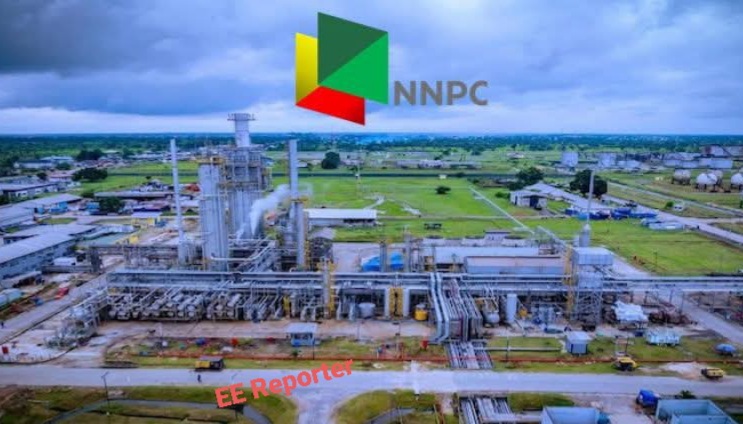
Atiku Asks NNPC To Discontinue Proposed Refinery Deal, Says “Should Have Been Sold Before Rehabilitation”
Atiku asks NNPC to discontinue proposed refinery deal, says “should have been sold before rehabilitation”. Former Vice-President Atiku Abubakar has asked the Nigerian National Petroleum Company (NNPC) Limited to discontinue any proposed deal for its refineries.
On November 24, 2025, NNPC announced plans to partner with private refinery operators to repair and maintain its refineries, leveraging their technical expertise.
NNPC said agreements will be finalised in mid-2026.
On February 4, Bayo Ojulari, the group chief executive officer (CEO) of NNPC, said the company is discussing a potential partnership with a Chinese firm over one of the state-owned refineries.
However, in a statement on Sunday, Abubakar said any deal, including with foreign partners, repeats failed models.
“The latest push to “revive” these refineries was driven by political pressure, not economic sense. Politics must never substitute for sound, transformative policy,” he said.
“Accordingly, any proposed refinery deal, including with foreign partners, should be discontinued, as it merely repeats failed models.
“Nigeria would have been better served by selling the refineries pre-rehabilitation to avoid ballooning debt and the steady depreciation of what have effectively become liabilities.”
Abubakar said when he previously suggested the idea that the refineries should be sold, he was accused of plotting to sell the national assets to his “friends,” but now, the administration of President Bola Tinubu have embraced the idea.
“After gulping $1.5bn, the Nigerian National Petroleum Company Limited has now admitted that reopening the Port Harcourt Refinery is a waste of scarce resources. This belated admission validates my long-held position that Nigeria’s refineries should be privatised,” the former vice president said.
NNPC
“It is instructive that the Tinubu administration has finally come to terms with an inevitable truth: pouring public funds into moribund refineries is economically indefensible. Paying billions in salaries to facilities that produce not a single litre of petrol does not serve the national interest.
“For years, I advanced this patriotic position and was vilified and accused of plotting to sell public assets to “friends.”
“Today, the facts have caught up with the rhetoric. Decades of so-called turnaround maintenance have swallowed billions of dollars with nothing to show for it, exposing deep deficits in capacity, technical know-how, and financial discipline.”
In July 2025, Ojulari said it is becoming a “bit more” complicated to revamp state-owned refineries.
NNPC had said it spent N100 billion on the rehabilitation of the nation’s refineries in 2021.








CBN Acknowledges High Court Ruling Over Dissolution Of Union Bank Board
Union Bank board. The court ruled that the CBN acted beyond its legal powers and, therefore, overturned that decision.
(CBN), on Thursday, acknowledged the judgement of a Federal High Court, Lagos Division, over its regulatory action on the Union Bank of Nigeria Plc (UBN) in January 2024.
This is contained in a statement by its acting director, Corporate Communications Department, Hakama Sidi-Ali, made available to journalists in Abuja.
Ms Sidi-Ali said that the apex bank was currently obtaining the Certified True Copy of the judgement and would review it carefully. She reaffirmed the CBN’s unwavering commitment to the rule of law.
“As the apex regulatory authority, the CBN remains committed to acting in accordance with its mandate and established legal processes.
“The CBN assures the public that UBN’s status is unchanged and that it remains fully capable of meeting its obligations to customers, depositors, and all stakeholders.
“The CBN will continue to provide the necessary regulatory oversight to ensure that the Union Bank operates in a safe, sound, and stable manner, while maintaining public confidence in the financial system,” she said.
CBN
The court ruling of Wednesday relates to an earlier action taken by the CBN in January 2024, which dissolved UBN’s board and management.
The court ruled that the CBN acted beyond its legal powers and therefore overturned that decision.
Kano Governor Yusuf Sacks Commerce Commissioner
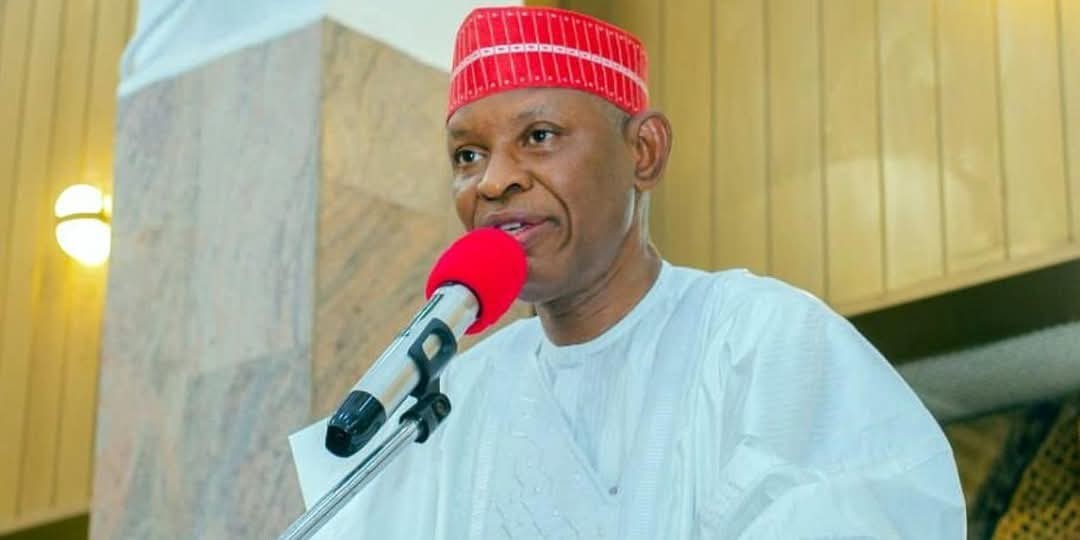
Kano Governor Yusuf sacks commerce commissioner. Mr Yusuf expressed appreciation for the services rendered by the former commissioner.
Governor Abba Yusuf of Kano State has sacked Shehu Sagagi, commissioner for investment, commerce and industry, with immediate effect.
This is contained in a statement issued on Thursday in Kano by the governor’s spokesperson, Sunusi Dawakin-Tofa.
He said that Mr Sagagi has been directed to hand over the affairs of the ministry to the director of commerce pending further directives.
Mr Yusuf expressed appreciation for the services rendered by the former commissioner during his tenure in office.
He acknowledged Mr Sagagi’s contributions to the development of the state, particularly in politics, religion, and the growth of small and medium-sized enterprises.
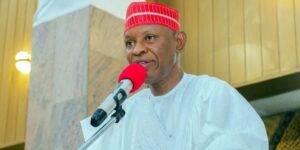
Abba Yusuf
The governor wished him success in his future endeavours and reassured the public that his administration remains committed to efficient service delivery and to the ongoing strategic realignment of government structures for sustainable development in Kano State.

Court Jails Man for $19,400 Bitcoin Fraud In Edo
Bitcoin fraud. The Benin Zonal Directorate of the Economic and Financial Crimes Commission has secured the conviction and sentence of Osamudiamen Philip Ikilo for fraud.
The convict was arraigned on one -count charge of stealing before Justice W.I. Aziegbemhin of the Edo State High Court sitting in Benin City.
Upon arraignment the defendant pleaded not guilty to the charge, setting the stage for trial.
The charge reads: That you Osamudiamen Philip Ikilo (m) sometime in March 2024 within the jurisdiction of this Honourable Court did steal Bitcoin worth the sum of $19,400 (Nineteen thousand, four Hundred United States Dollars) belonging to one Cynthia Imade Alile by fraudulently converting the said sum to your own use, and thereby committed an offence contrary to Section 287 of the Criminal Law of Edo State Law 2022 and punishable under Section 294 of the same Law.
Bitcoin
In the course of the trial, prosecution counsel, A. S. Bala-Ribah called two witnesses and also tendered documents which were admitted by the court. On his part, the defendant called two witnesses including himself.
Delivering judgment on Monday, March 23, 2026 Justice Aziegbemhin found the defendant guilty of the charge and sentenced him to two years imprisonment without an option of fine.
Ikilo’s road to jail began when he offered to assist the petitioner convert her 0.52092582 Bitcoin worth $19,400 but failed to remit the money to the petitioner as he converted same to his personal use.
-
 Crime11 months ago
Kogi Assembly Considers Law To Regulate Rent, Establish Control Board: Tenancy Law
-

 News12 months ago
Atiku Reveals Why He Failed To Pick Wike As Running Mate In 2023
-
 Akwa Ibom1 year ago
The Apostolic Church Gets New Territorial Chairman, Exco
-

 Crime1 year ago
Federal High Court Jails 2 For Vandalizing Transformer, Telecom Mast In Kogi
-
 News1 year ago
The Apostolic Church Gets New National President, Executive
-
 Akwa Ibom1 year ago
Umo Eno Commences Payment Of 80,000 Naira Minimum Wage With Arrears
-

 News1 year ago
Senator Natasha Returns To Senate With Husband Amid Seat Dispute
-
 Economy10 months ago
Kiyosaki: Is Tinubu’s Government Afraid Of Ibrahim Traore?