
Economy
ASUU President Reveals Why Some Federal Universities Couldn’t Pay Full January Salaries

ASUU President Reveals Why Some Federal Universities Couldn’t Pay Full January Salaries
ASUU president Reveals Why some federal Universities couldn’t pay full January salaries. Christopher Piwuna, president of the Academic Staff Union of Universities (ASUU), has explained why some federal universities were unable to pay their lecturers full salaries for January.
After nearly 16 years of implementation stalemate, the federal government finally signed a renegotiated agreement with ASUU on January 14 to address the incessant strikes in Nigeria’s public tertiary institutions.
The fresh agreement followed intensive renegotiations between a federal government committee and ASUU leadership which was concluded in December 2025.
However, since the beginning of February, there have been reported delays in the payment of lecturers’ salaries across federal universities.
Last week, ASUU members at the University of Lagos (UNILAG) declared an indefinite strike over the non-payment of their full salaries by the university management.
The lecturers later called off the strike after a series of meetings with the management.
As of the time of filing this report, indications suggest that many federal universities have been unable to pay full salaries of lecturers.
A source familiar with developments within the academic community told TheCable that the federal government is yet to release funds to the universities.
According to the source, the ministry of education directed the institutions to pay the full salaries of lecturers from their respective internally generated revenue (IGR).
Piwuna said the situation is largely due to practical difficulties surrounding the implementation of a new salary agreement between the union and the federal government, particularly the delay in passage of the 2026 budget.
According to him, the government has shown a willingness to implement the agreement in full, but the new salary structure cannot be fully effected until the 2026 budget is passed and signed into law.
“Concerning the new agreement, the intention of government is clear; it is to implement it in full. But I want to believe there are practical difficulties at the moment. One is that the 2026 budget has not been passed, let alone becoming law. It is until that is done that the new salary structures will be fully implemented,” the ASUU president told Nigerian Tribune.
He added that payments made in January and February largely stemmed from the efforts of vice chancellors who tried to implement the agreement with available resources.
“In January, some universities were paid in full. When I said ‘in full’ it means that what they paid reflected what we agreed on in the new agreement, while other universities couldn’t meet up with full payment,” he said.
Piwuna added that as of the time of speaking, he was not aware of any university that had paid salaries for February.
“Even for February, I don’t know of any university, as we are speaking, that has paid its workers,” he said.
‘WHY IMPLEMENTATION PROCESS HAS BEEN COMPLICATED’
According to the ASUU president, the implementation process has been complicated by issues relating to special allowances for lecturers in the medical field, with some universities paying the allowance while others are yet to do so.
He said the ministry of education is working with the national salaries, incomes and wages commission to clarify the payment process and ensure lecturers receive what is due to them.
ASUU
Piwuna further said there have been questions from some vice chancellors about whether lecturers on sabbatical should benefit from the new agreement, underscoring that ASUU’s position is that such members are entitled to full payment.
“We do not expect that anybody on sabbatical will be denied any aspect of this agreement,” he said.
He also noted that state universities are yet to begin implementing the agreement with their lecturers, adding that ASUU has written to state governors, who are visitors to their respective universities, urging them to ensure the agreement is implemented to avoid a backlog of arrears.
“We should know that ASUU agreements cover all members across both federal and state-owned universities nationwide. So, we don’t want any university to be left behind in this new agreement,” he said.
Piwuna appealed to lecturers across the public universities to exercise patience over the delay in salary payments, expressing appreciation to vice chancellors who have made efforts to ensure partial implementation of the agreement.
He added that ASUU is hopeful the situation will improve once the 2026 budget is signed into law, which he said is expected later this month.







Lent, Ramadan: President Tinubu Orders Nationwide Rice Distribution To Christians, Muslims
Lent, Ramadan: President Tinubu orders nationwide rice distribution to Christians, Muslims. President Bola Tinubu has ordered the distribution of rice across Nigeria for Christians and Muslims during Ramadan and Lent.
Tosin Ajuwon • March 16, 2026
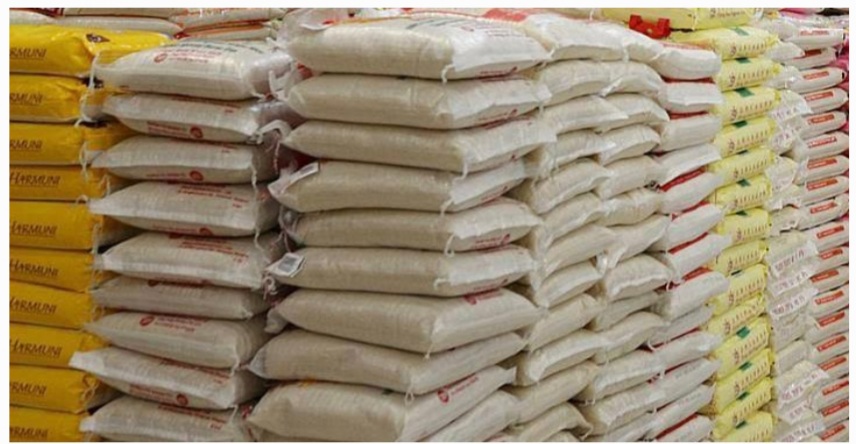
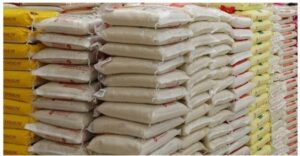
BAGS OF RICE used to illustrate the story
Bags of rice [Credit: Premium Times Nigeria]
President Bola Tinubu has ordered the distribution of rice across Nigeria for Christians and Muslims during Ramadan and Lent.
A statement by the State House on Sunday said the gesture was intended to support families during the fasting period.
The statement said the intervention reflects the values of compassion, charity and solidarity associated with the two sacred seasons, which are widely observed across the country.
“Under the directive, the Renewed Hope Ambassadors will deploy their grassroots network nationwide to coordinate the distribution through structures at the state, local government and ward levels, structure, ensuring that families across the country benefit from the support during this season of fasting and reflection,” said the statement.
According to the statement, a similar intervention was implemented during last year’s Christmas celebrations, when rice was distributed nationwide to support Nigerians during the festive season.
It further explained that the continuation of the programme demonstrates Mr Tinubu’s administration’s commitment to supporting citizens during significant religious and cultural moments while promoting national unity.
“Both Muslim and Christian communities will benefit from the nationwide distribution as part of the effort to ensure that the spirit of compassion that defines Ramadan and Lent is reflected in political support for families across the country,” it added.
Rice
Lauding the gesture, Governor Hope Uzodimma said the programme reflected the president’s belief in strengthening national unity through acts of care and support for citizens.
According to the Imo governor, Ramadan and Lent are periods that remind Nigerians of sacrifice, generosity and the need to support one another.
He said the Renewed Hope Ambassadors network would ensure that the distribution reaches communities across the federation.

NLC Demands FG’s Intervention Over Fuel Hike, Tax Relief For Low-Income Earners
NLC demands FG’s intervention over Fuel Hike, tax relief for low-income earners. Mr Ajaero said the rising cost of petrol had worsened the hardship faced by Nigerian workers.
The Nigeria Labour Congress (NLC) has called for government’s intervention to address the surge in petrol prices between N1,170 and N1,300 per litre across the country.
The demand was contained in a statement signed by the President of the NLC, Joe Ajaero, on Thursday.
Mr Ajaero said the rising cost of petrol had worsened the hardship faced by Nigerian workers, particularly in transportation, food prices and general cost of living.
He stated, “The sudden increase in petrol price to between N1,170 and N1,300 per litre has further deepened the economic hardship faced by Nigerian workers and the general populace.
“The rising cost of fuel has made transportation increasingly unaffordable for workers, while food prices and other essential commodities continue to surge beyond the reach of ordinary Nigerians.
“The government must urgently introduce measures, including wage support and cost-of-living relief, to cushion the devastating impact of the current fuel price crisis on workers and vulnerable citizens.”
The NLC boss urged the Federal Government to introduce immediate relief measures, including wage support and policies to cushion the impact of the price increase on workers and vulnerable citizens.
Mr Ajaero said the current situation had exposed the vulnerability of Nigeria’s downstream petroleum sector to global market volatility.
He stressed the need for the government to ensure that public refineries in the country become fully operational to reduce dependence on imported petroleum products.
According to him, reviving the nation’s refineries will help stabilise domestic supply and shield Nigerians from sudden price shocks.
The NLC president also called for tax relief for low-income earners and expanded social support programmes for vulnerable Nigerians.

NLC Demands FG’s Intervention Over Fuel Hike
He said such measures would help cushion the harsh economic realities confronting workers and their families.
Mr Ajaero further urged the government to ensure transparency in the management of expected oil revenue gains arising from current global developments.
He noted that any windfall from rising crude oil prices should be channelled toward improving the welfare of Nigerians.
He also called for sincere dialogue between government and organised labour to address the growing economic challenges facing workers.
UNILORIN Partner NNPCL To Establish Research Centre
UNILORIN partner NNPCL to establish research centre. The centre will be dedicated to practical engineering and technology-driven research.
The University of Ilorin and the Nigerian National Petroleum Company Limited (NNPCL) have set up a joint strategic committee to establish a research centre and promote cooperation between the two institutions.
This was contained in a statement by the director of Corporate Affairs of the University, Kunle Akogun, on Saturday in Ilorin.
Mr Akogun disclosed that Wahab Egbewole, SAN, the Vice-Chancellor of the institution, and Bashir Ojulari, the managing director/chief executive officer of the NNPCL, led their teams, respectively.
“Discussions between the two parties centred on the establishment of a Centre of Excellence at the University, the first in West Africa.

NNPC
“It will be dedicated to practical engineering and technology-driven research and the endowment of an NNPC professorial chair at the University, to promote industry-leading expertise.
“The joint committee, which will refine the details of the partnership, is expected to report back within four weeks,” Mr Akogun said.
The director said that members of the UNILORIN delegation included Mukhtar Etudaiye, Deputy Vice-Chancellor (Research, Technology and Innovation).
Others included Mansur Alfanla, the registrar, and the Dean of the Faculty of Engineering and Technology, Joshua Olaoye, among others.
-
 Crime10 months ago
Kogi Assembly Considers Law To Regulate Rent, Establish Control Board: Tenancy Law
-

 News12 months ago
Atiku Reveals Why He Failed To Pick Wike As Running Mate In 2023
-
 Akwa Ibom1 year ago
The Apostolic Church Gets New Territorial Chairman, Exco
-

 Crime1 year ago
Federal High Court Jails 2 For Vandalizing Transformer, Telecom Mast In Kogi
-
 News1 year ago
The Apostolic Church Gets New National President, Executive
-
 Akwa Ibom1 year ago
Umo Eno Commences Payment Of 80,000 Naira Minimum Wage With Arrears
-

 News1 year ago
Senator Natasha Returns To Senate With Husband Amid Seat Dispute
-
 Economy10 months ago
Kiyosaki: Is Tinubu’s Government Afraid Of Ibrahim Traore?