
News
APC chieftains are runaway PDP stalwarts, Apart from Tinubu, says Lamido


APC chieftains are runaway PDP stalwarts, Apart from Tinubu, says Lamido
APC chieftains are runaway PDP stalwarts. Former Governor Sule Lamido has described the party as the mother of political movements in Nigeria, claiming that many key players in other major parties, including the All Progressives Congress, were original products of the PDP.
“If you look at the APC, if you take away President Bola Tinubu, all of them are PDP. I urge those who ran away from their home to please come back. This is the party that honoured you, made you president, governor, and minister,” said Mr Lamido.
The former Jigawa governor appealed to aggrieved members to set aside individual egos for the sake of Nigeria’s democracy, asserting that the PDP remains the only credible alternative for the country.
“We are willing to forgive and forget because of PDP. Let us embrace unity. It is not about any individual. It is about Nigerian ownership,” he said.
Meanwhile, former Senate President Bukola Saraki has reiterated his commitment to the Peoples Democratic Party’s reconciliation process, calling for unity among party members ahead of the 2027 elections.
Speaking during the party’s national convention, Mr Saraki restated the need to rebuild trust, close ranks, and prioritise party interests over personal ambitions.
Mr Saraki described the gathering as a restoration process anchored on reconciliation, accommodation, repositioning, and rejuvenation.
“By the grace of God, it will not be under our watch that this party will die through non-participation in the general election.
“I will be part of the process of reconciliation. I call on those of us who have seen the legality and validity of the ongoing process here today, let us put our heads together and make sure that we forge ahead as a family.
“For those who are not yet here, I appeal to you, it is not about our partisan interest or individual interest. It is a collective responsibility,” the former Kwara governor said.
Mr Saraki added that, with the convention, the PDP was sending a clear signal to doubting Thomases that it is alive and kicking.

APC
“We have created a viable platform for all our aspirants who have been spending money to build and sustain the party across the 774 LGAs in the country.
“The PDP is still there to help them achieve their goals and aspirations. I boldly say it that what is democracy in Nigeria without PDP? PDP epitomises democracy in Nigeria. This is the only party that can present a credible alternative to Nigerians.
“We now have a party, and people can no longer blackmail our aspirants by saying to them that they will not be on the ballot paper. Now, we know PDP will be on the ballot paper. PDP has come to stay,” he said.
He urged the newly elected National Working Committee to prioritise a transparent candidate selection process and a robust membership registration exercise to raise the bar for the party.








Governor Zulum Sacks ALL Commissioners, Dissolves Borno Executive Council
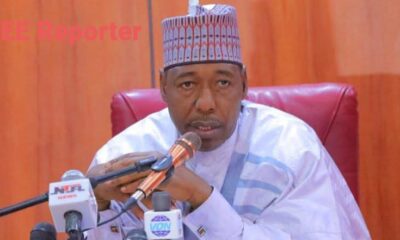
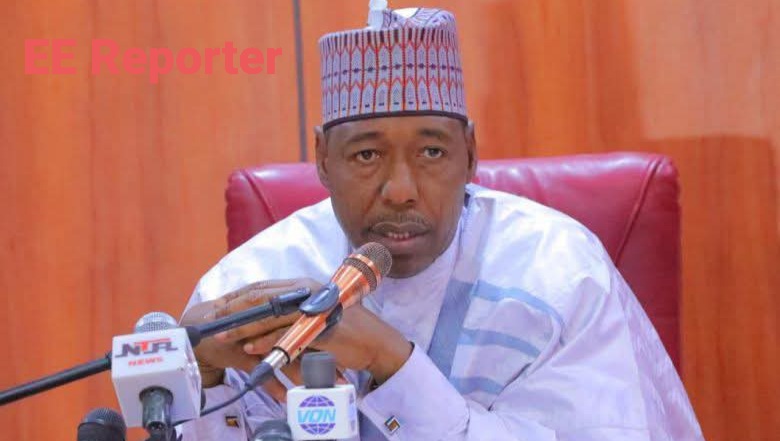
Governor Zulum sacks ALL commissioners. Babagana Zulum, governor of Borno, has sacked all commissioners in his cabinet, dissolving the state’s executive council.
In a statement on Monday, Bukar Tijani, secretary to the state government, said the governor has directed the commissioners to hand over the affairs of their respective ministries to permanent secretaries on or before Friday, April 3.
“The decision is to provide an enabling environment for any member of the council who may wish to contest elective positions in the forthcoming general elections,” the statement reads.
“The governor has therefore directed all commissioners to hand over the affairs of their respective ministries to the Permanent Secretaries on or before Friday, April 3, 2026.
Governor Zulum
“Governor Zulum expressed his profound appreciation to the outgoing Commissioners for their dedication, commitment, and invaluable contributions to the development and service of the people of Borno state.”
Several state governors have given their political appointees seeking elective offices up to March 31 to resign — in line with the amended Electoral Act.
NNPC Boss Bayo Ojulari Hailed For Productive Reforms, Achievements
Productive reforms. The People’s Wellbeing Association, a human rights and advocacy group, has lauded NNPC CEO Bayo Ojulari for his reforms.
The People’s Wellbeing Association, a human rights and advocacy group, has lauded NNPC CEO Bayo Ojulari for his reforms.
The group’s spokesman, Mr Abba Abubakar, gave the commendation in a statement on Monday in Abuja.
Mr Abubakar, who cited unprecedented reforms and operational achievements since Mr Ojulari’s appointment in April 2025, said the NNPC boss had put the company on the path of greatness.
He said that despite facing opposition from “greedy oil thieves”, Mr Ojulari had remained steadfast in his commitment to transparency and commercial discipline.
According to him, under Mr Ojulari’s leadership, NNPC has recorded transformative milestones across its upstream, midstream, and downstream operations.
He said that the company’s upstream subsidiary under Mr Ojulari had achieved a daily crude oil production level of 355,000 barrels, the highest in 36 years, surpassing the level last recorded in 1989.
He said that this achievement had significantly strengthened national output performance and enhanced foreign exchange earnings.
Mr Abubakar said that the company had also reinstated monthly operational and financial performance reports, a transparency move rarely seen in its history.
He also commended Mr Ojulari for introducing modern Delegation of Authority and Delegation of Financial Authority frameworks, which have improved decision-making efficiency, accountability, and internal governance standards.
He said that governance reforms were further strengthened through the creation of the chief compliance and chief sustainability offices.
He said that the company was now overhauling its refinery rehabilitation strategy, moving away from contractor-led models toward partnerships with established global refinery operators.
According to Mr Abubakar, beyond endorsing Mr Ojulari’s leadership, the People’s Wellbeing Association also raised concerns about pipeline surveillance contracts.
He affirmed the group’s commitment to urging President Bola Tinubu not to renew existing arrangements without carrying other stakeholders along.
NNPC
Mr Abubakar expressed the group’s demand for fairness and pipeline surveillance, saying that contracts should be equitably split among the Niger Delta stakeholders.
He further suggested that the Nigerian Army and Navy should take over pipeline surveillance contracts, arguing that security agencies are better positioned to handle such critical national infrastructure.
He said that equitable distribution of pipeline surveillance contracts among Niger Delta stakeholders would foster peace, enhance security, and ensure that host communities derive maximum benefits from oil and gas operations.

NUPRC-SeaSeis Seismic Data Project, Future Of Nigeria’s Oil And Gas Sector
Recently, the Nigerian Upstream Petroleum Regulatory Commission (NUPRC) signed a three-year Petroleum Exploration Licence (PEL) agreement with SeaSeis Geophysical Limited (SeaSeis), authorising the company, in partnership with the Commission and TGS, to undertake the acquisition and processing of new 3D seismic and gravity data.
The major seismic data acquisition project, PEL No. 5, covers an area of 11,700 square kilometres offshore in the Outer Fold and Thrust Belt of the eastern Niger Delta, in water depths of 400–2,800 metres. This zone is one of Nigeria’s most prolific yet geologically complex regions.
The agreement, signed on March 24, 2026, also empowers the partnership to issue data-use licences, with revenues to be shared between the company and the Commission.
Upon assumption of office in December 2025, the Commission Chief Executive (CCE), Mrs. Oritsemeyiwa Eyesan, emphasised the importance of data integrity in operations and stated clearly that every aspect of the Commission’s work must be measurable and demonstrably so. “Going forward, NUPRC positions itself on the tape line to be measured by faster, predictable regulatory approvals; secure and sustainable production; credible licensing and disciplined acreage performance; world-class HSE and process safety; and trusted measurement, transparency, governance, and data integrity.”
Emphasising that success will be judged not by policy volume but by tangible outcomes such as higher production, safer operations, reduced losses, credible data, faster approvals, and stronger investor confidence, the CCE fixed her gaze not only on increasing production levels but on doing so at reduced cost. The signing of the recent data acquisition project aligns with this commitment. She reiterated this during the agreement signing, noting that the issuance of the PEL 5 licence reflects the Commission’s continued commitment to data-driven exploration, transparency and long-term value creation for Nigeria’s oil and gas sector.
Advertisement
The licence is expected to unlock stronger prospecting potential, enhance subsurface understanding and support more efficient development of Nigeria’s hydrocarbon resources, in line with Section 71(1–10) of the Petroleum Industry Act (PIA) 2021. The project itself entails the acquisition of new 3D seismic and gravity data and is highly significant for Nigeria’s oil industry. Fundamentally, it is about improving subsurface knowledge, providing a clearer and more accurate picture of what lies beneath the country’s sedimentary basins.
It enables better identification of new oil and gas reserves, as 3D seismic technology offers far greater detail. This allows geoscientists to map underground structures with increased precision, thereby reducing exploration uncertainty. Consequently, it increases the chances of discovering commercially viable hydrocarbon deposits, especially in underexplored frontier basins. It also reduces exploration risk. By generating high-quality data that can be marketed to investors, the NUPRC lowers entry barriers. Oil companies are more likely to invest when guided by reliable data.
In addition, the project creates a new revenue stream, as multiple companies can purchase and utilise the data. This enhances Nigeria’s attractiveness during licensing rounds and helps draw both international oil companies and indigenous firms. Furthermore, it will help revitalise dormant or underexplored basins. Areas that previously lacked detailed data, such as parts of inland basins or deep offshore zones, can now be reassessed using modern technology, potentially unlocking new production zones.
Advertisement
This serves as a boost to Nigeria’s efforts to meet its oil production quota under the Organisation of the Petroleum Exporting Countries (OPEC). It is noteworthy that Nigeria’s production quota depends not only on existing wells but also on sustainable reserves and new discoveries. Therefore, this initiative contributes in several ways, including expanding the reserves base, enabling faster field development, improving production efficiency and boosting investor confidence and activity levels. Indeed, increased exploration activity leads to more drilling and ultimately more production. Without continuous exploration, production naturally declines as older fields mature.
The broader implication is that this agreement signals a data-driven strategy to reverse the long-standing challenge of meeting OPEC quotas, often caused by underinvestment, ageing infrastructure and declining reserves replacement. Simply put, more accurate data leads to more discoveries, more investment and more production. While the impact may not be immediate, in terms of increased output, which is typically incremental, the medium to long-term outlook is promising, especially with improvements in security, infrastructure and regulatory stability.
This move is significant because OPEC quotas depend largely on what a country can sustainably produce, not merely what it aspires to produce. The project supports reserve replacement, unlocks new basins and increases drilling success rates. With this strategic initiative, the NUPRC is not merely regulating; it is building a national data repository. This repository will not only serve as a store of critical data but will also generate revenue, as organisations pay for access. In effect, the country can earn income even before oil is discovered, while also making licensing rounds more competitive.
Thus, the agreement serves as a foundation for Nigeria’s future oil output: it reduces uncertainty, attracts capital, improves discovery rates and supports long-term production growth. This outlook becomes even stronger as government agencies address insecurity in oil-producing areas, sustain policy stability and improve the investment climate.
That Nigeria possesses substantial reserves yet struggles with low output is no longer news. The challenge lies not in resource availability but in production constraints. The NUPRC–SeaSeis–TGS project is poised to address these challenges significantly, complementing other integrated strategies aimed at increasing oil and gas production. It targets structural, long-term issues, including declining discoveries, weak exploration-to-production cycles and underutilised frontier and deepwater potential, while also improving efficiency in existing fields.
A notable strategic shift is evident: Nigeria is transitioning from a passive regulator to an active data provider and investment enabler. This is critical because data drives exploration decisions globally, and countries with high-quality data attract more capital.
Although this project may not immediately resolve Nigeria’s challenges in meeting its OPEC quota, it positions the country to meet, and potentially exceed, future quotas sustainably. Without such initiatives, production would continue to decline, risking reduced relevance in global oil markets. With them, alongside broader reforms, Nigeria stands to achieve new discoveries, increased reserves and higher long-term output.

NUPRC-SeaSeis
Eyesan has emphasised that the PEL 5 initiative underscores the importance of credible partnerships in achieving national production and reserve growth targets: “The PIA recognises that licences can be assigned on non-exclusive acreages to contractors willing to undertake exploration activities. As the chief superintendent of the industry, we must also maintain our production targets, including reserves. The only way to achieve this successfully is through partnerships with committed explorers.”
The project is SeaSeisGeophysical Limited’s largest in Africa, according to its managing director, Goke Adeniyi. Adeniyi noted that the project underscores the scale of opportunity within Nigeria’s upstream sector. “We are pleased to be here, not just as SeaSeis but in partnership with TGS,” he said at the signing ceremony. His organisation will leverage TGS’s GeoStreamer dual-sensor technology, featuring long offsets, wide tow, and triple-source broadband acquisition.
The resulting high-fidelity 3D seismic data is expected to provide operators with the quality needed to evaluate prospects with greater confidence.
James, a fellow of the Nigerian Guild of Editors (NGE) and member of the International Press Institute (IPI), lives in Abuja.
-
 Crime11 months ago
Kogi Assembly Considers Law To Regulate Rent, Establish Control Board: Tenancy Law
-

 News1 year ago
Atiku Reveals Why He Failed To Pick Wike As Running Mate In 2023
-

 Akwa Ibom1 year ago
The Apostolic Church Gets New Territorial Chairman, Exco
-

 Crime1 year ago
Federal High Court Jails 2 For Vandalizing Transformer, Telecom Mast In Kogi
-

 News1 year ago
The Apostolic Church Gets New National President, Executive
-
 Akwa Ibom1 year ago
Umo Eno Commences Payment Of 80,000 Naira Minimum Wage With Arrears
-

 News1 year ago
Senator Natasha Returns To Senate With Husband Amid Seat Dispute
-

 Economy11 months ago
Kiyosaki: Is Tinubu’s Government Afraid Of Ibrahim Traore?