
Abuja
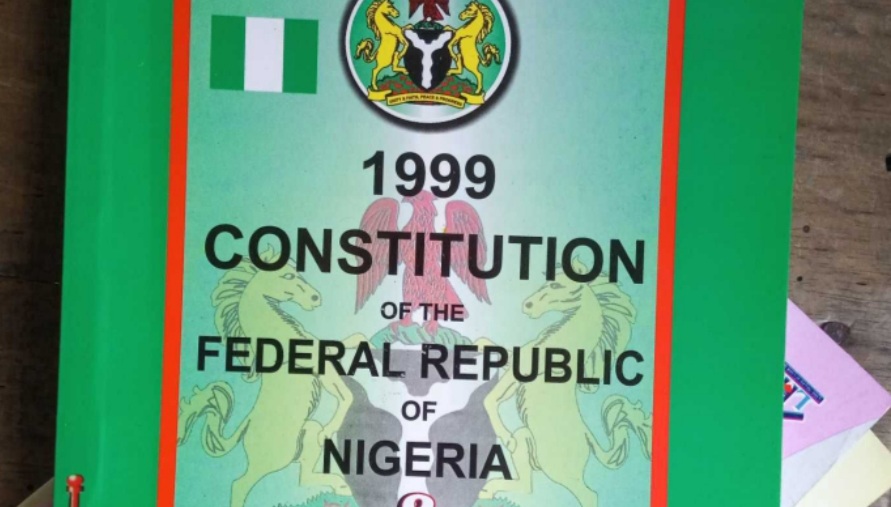
Nigeria’s Endless Constitutional Review; Who Really Benefits From It?

Nigeria’s Endless Constitutional Review; Who Really Benefits From It?
Nigeria’s endless constitutional review; Who really benefits from it?. Since democracy was restored in Nigeria in 1999, every administration has embarked on a quest to get what they describe as a ‘peoples constitution’.
And just like its predecessors, this current 10th national assembly has kicked off yet another round of zonal public hearings as part of its now-familiar constitutional review exercise.
But the question that should confront every Nigerian is simple: who really benefits from what has become a ritual every legislative cycle?
Ever since 1999, the issues being debated for constitutional review have remained constant. Issues such as political restructuring, electoral reforms, resource control, true federalism, devolution of power, and re-jigging of the security architecture in the form of state police.
First, let me be clear: I do not have a quarrel with the idea of reviewing or amending our constitution. After all, nation-building is a work in progress. It is never finished or sacrosanct.
However, what I quarrel with – which should trouble every Nigerian – is the industry that has been built around it.
Just like those who have turned electoral reforms into a business that resurfaces every election cycle, some have turned constitutional review into guaranteed enterprise every legislative cycle.
It is, therefore, my hope that this discourse can stir deeper reflections and allow us to suggest other ways that help resolve this.
Each time a constitutional review is discussed, one constant excuse is that the lawmakers have to aggregate the yearnings of Nigerians from all walks of life through zonal public hearings, collect memoranda from various interest groups throughout the country, as well as embarking on a progressive engagement with state governments and legislatures and the federal government to achieve consensus on all issues.
However, what is rarely discussed is the cost of such projects and what Nigerians get in return. What has been our return on investments?
Every regime of the national assembly has initiated a fresh Constitution amendment project for which some N4 billion is approved, to be appropriated and released on the basis of N1 billion per year.
This is in addition to some extra funds released to the committee for any unforeseen expenditure.
Nobody talks about the fact that close N26.8 billion has been expended by the senate and the house of representatives on this perennial exercise. And what have been the results?
The sad truth is that these reviews have largely failed to address the deeper structural, political, and governance problems Nigerians care most about.
Yes, under the 9th assembly, we got the Not Too Young to Run Act, early funding for INEC, and financial autonomy for state legislatures and judiciaries.
But ask yourself: With all the billions spent, what has been the real impact on governance and the lives of ordinary Nigerians?
The truth can be inconvenient: Key reforms keep failing. Some of the most critical and widely demanded reforms—like state police, local government autonomy, electoral reforms that strengthen INEC, and clearer procedures for creating new states—have repeatedly failed to pass, usually blocked by state assemblies, vested interests, or political elite calculations.
But, of course, we have to return another four years later to hold public hearings on the same old issues.
Beyond constitutional review, electoral reforms have become another well-worn excuse that resurfaces predictably every election season.
Like clockwork, as each election approaches, committees are set up, public hearings are announced, and memoranda are collected — all under the banner of “fixing the electoral process.
Instead of being treated as urgent national priorities, electoral reforms have become talking points politicians recycle to project concern, without any real intention to push them through.
Public hearings for constitutional amendment have quietly evolved into an industry of their own—an elaborate show that consumes huge resources yet often delivering little more than promises and news headlines.
My concern is what happened to the views aggregated during the zonal public hearings in the 8th assembly and 9th assembly? Have the issues changed so dramatically that we must spend billions to “hear” them again?
And why do we need new hearings to discuss issues like state creation when the constitution already lays out the process for state creation clearly?
If the legal requirements are met, no one can stop it. Yet the topic keeps coming back—because keeping the “constitutional reform industry” alive serves some interests. This is my theory.
Is it really coincidence that almost every deputy senate president or deputy speaker who chaired these constitutional review committees ended up running for the office of governor? Emeka Ihedioha. Ike Ekweremadu. Ovie Omo-Agege.
And now, the current Deputy Speaker Benjamin Kalu is reportedly eyeing the same path. Shouldn’t we at least admit what is obvious?
Beyond that, who are the consultants hired to draft the memoranda and facilitate the zonal meetings? Was there ever competitive bidding?
Did the national assembly advertise these contracts? How much funds did donors contribute to these hearings? The details stay hidden, far from the eyes of the people
It is time to ask the uncomfortable questions. We pretend these hearings are about democracy and inclusion, but the reality is that they have become convenient budget lines, annual talking points, and photo opportunities.
Instead of lawmakers doing the real work through their constituency offices—which, in principle, should function as mini public hearing centres—we gather crowds in hotels, announce zonal consultations, and repeat the same debates every four years.
We must face the truth: if Nigeria’s 360 house members and 109 senators truly had active, engaged constituency offices, these repeated national hearings would be redundant.
The endless rounds of public hearings are, in many ways, an indictment of lawmakers’ disconnect from the very people they claim to represent.
Did we have public hearings during the 8th Assembly? Yes. The 9th Assembly? Again, yes.
Nigeria’s Endless Constitutional Review
Have the core issues changed? Hardly. So, when will we admit that something deeper beyond genuine reform is driving this cycle?
It is time to stop turning constitutional review into a permanent campaign, a money-spinner, and a ritual that enriches a few while exhausting everyone else’s patience. Nigerians deserve real reform, not an industry of endless hearings.
Eleven years after some 500 delegates, drawn from all parts of the country and representing diverse interests, concluded a five-month deliberation about the political system and future of Nigeria, where they passed more than 600 resolutions and produced a 10,335-page report, which was submitted to former President Goodluck Jonathan for implementation
What has happened to that report. A decade after that report was submitted, it is still gathering dust in the government’s archives. Every administration had promised to review that report.
The problem of Nigeria isn’t the absence of laws or recommendations. The problem is political will. To alter any section of the constitution, 24 out of 36 houses of assembly must approve the bill with a two-thirds majority.
Yet in the last round, only 11 states complied with some sections recommended for amendment, despite all the billions spent.
With the current hardship facing Nigerians; think for a moment about the difference those billions could make: in schools, hospitals, clean water, and security.
While billions disappear into conferences and consultations, millions of Nigerians struggle to afford food, medicine, or school fees.
So, what must change?
Like I stated before, the essence of this discourse is not to complain but to stir deeper reflections.
For me, it starts with honesty. We must tell ourselves the home truth by admitting that we can not keep pouring billions into hearings that yield nothing but fresh frustration.
Lawmakers must prove their commitment by turning constituency offices into true centres of citizen engagement—where real voices are heard daily, not just every four years.
Nigerians must demand transparency: who got paid, how much, and for what?
Above all, we must remember that no constitution, no matter how perfect on paper, can save a country whose leaders lack the courage to do what is right.
Real reform will never come from annual rituals and hotel gatherings; it will only come when the political class puts the nation above ambition and service above self.
Ezenwa Nwagwu is the executive director, Peering Advocacy and Advancement Center in Africa (PAACA).
BY EZENWA NWAGWU






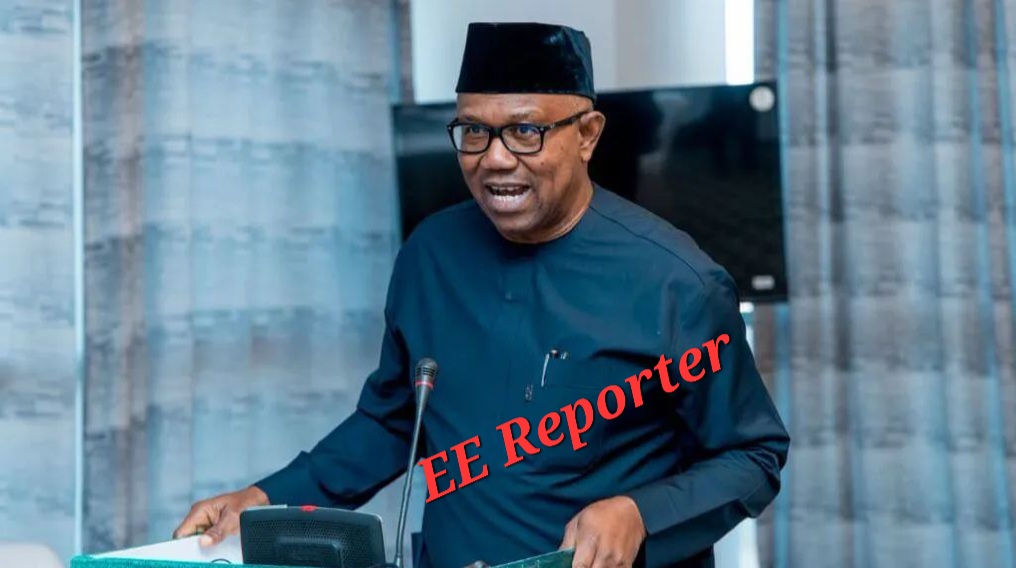
Obi, Amaechi, Others Meet In Abuja, Discuss Nigeria’s Democratic Future
Rotimi Amaechi, former minister of transportation, on Saturday hosted Peter Obi, the 2023 presidential candidate of the Labour Party (LP), and other opposition leaders at his Abuja residence.
Victor Umeh, senator representing Anambra central, Achike Udenwa, former governor of Anambra; and Victor Oganku were also at the meeting.
TheCable understands that discussions by the politicians centred on strengthening the opposition front and Nigeria’s democratic future.
Amaechi, Obi and former Vice-President Atiku Abubakar are members of the African Democratic Congress (ADC) and are eyeing the party’s presidential ticket ahead of the 2027 elections.
The former minister contested the All Progressives Congress (APC) presidential primary and came second behind President Bola Tinubu, who won the party’s ticket.
In March, Bolaji Abdullahi, national publicity secretary of the ADC, said the party was working to adopt a consensus approach in selecting its presidential candidate for the 2027 poll.
Abdullahi said the party had the options of direct primaries and consensus for electing its presidential candidate, adding that indirect primaries were “no longer on the table”, as stipulated in the amended Electoral Act.
Speaking during an interview on Channels Television on Friday, Amaechi said he has positioned himself as a viable contender for the next presidential race on the ADC platform.
Amaechi rejected the call for a consensus arrangement within the ADC ahead of the 2027 poll, insisting that aspirants must be allowed to test their popularity at the ballot.
Peter Obi
He said Nigerians are yearning for competent leadership to address economic hardship and insecurity.
The former governor of Rivers, however, said he would support Abubakar if the former vice-president emerges as the party’s standard-bearer for the 2027 presidential poll.
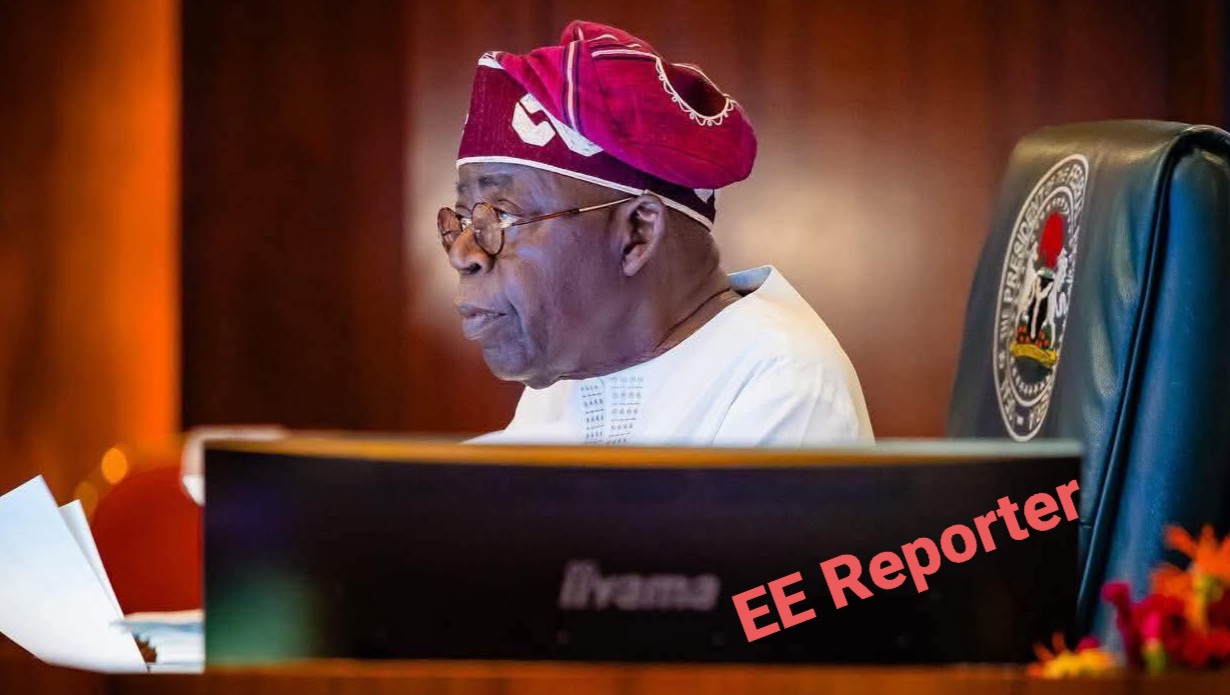
FG Warns Against Illegal Use Of Ambassador Title, Fake Diplomatic Identities
President Bola Tinubu-led federal government has warned against the rising abuse of diplomatic titles in Nigeria, particularly the illegal use of the designation “Ambassador” by unauthorised individuals and groups.
The warning was contained in a statement issued on Friday by the spokesperson for the Ministry of Foreign Affairs, Kimiebi Ebienfa, in Abuja.
“Some of the persons conferred illegally with the Ambassadorial titles unfortunately parade themselves as such in official communications and even in engagements with foreign embassies in Nigeria which has caused serious embarrassment to the federal government.
“The Ministry warns that individuals parading themselves as “Ambassadors” based on such deceitful conferment are engaging in impersonation, which is a criminal offence and therefore strongly cautions all persons involved in such illegalities or parading themselves as Ambassadors to desist forthwith,” the statement said.
The government also raised alarm over the use of fake diplomatic passports, identity cards, vehicle number plates, and other materials bearing the insignia of the Federal Republic of Nigeria by impostors.
Tinubu
According to the statement, some of those involved in the practice go as far as parading themselves as ambassadors in official correspondence and in dealings with foreign missions in Nigeria, a development it said has embarrassed the country.
It, however, stressed that only the president and Commander-in-Chief of the Armed Forces has the constitutional authority to appoint and accredit ambassadors for Nigeria, adding that no individual, group, or organisation has the power to confer diplomatic titles.
NPF Debunks False Terror Alert In FCT, Arrests Suspect For Incitement
False terror alert in FCT,. The Nigeria Police Force wishes to categorically debunk a viral video circulating on social media alleging an ongoing terrorist attack in the Federal Capital Territory (FCT), Abuja. The Force states unequivocally that no such incident occurred, and the claims contained in the video are entirely false, misleading, and malicious.
Preliminary investigations revealed that the video was deliberately curated using misleading footage sourced from online platforms to construct a false narrative aimed at causing panic, inciting public fear, and undermining public confidence in the security architecture of the nation’s capital.
In furtherance of its commitment to maintaining public order, operatives of the Nigeria Police Force have arrested one Pam Joseph in connection with the creation and dissemination of the false content. The arrest followed credible intelligence and digital forensic investigations linking the suspect to the origin and circulation of the video.
The Force reiterates that while citizens have the right to freedom of expression, such rights do not extend to the deliberate spread of misinformation capable of threatening public peace and national security. Members of the public are therefore advised to verify information before sharing and to refrain from engaging in activities that may incite fear or disorder.
Police
The suspect is currently in custody and will be charged to court upon the conclusion of investigations.
The Nigeria Police Force remains committed to safeguarding public order and national security, and will continue to monitor digital spaces and take decisive action against individuals who engage in the dissemination of false or misleading information.
DCP ANTHONY OKON PLACID psc(+) mni
Force Public Relations Officer
Force Headquarters, Abuja
10th April, 2026
-
 Crime12 months ago
Kogi Assembly Considers Law To Regulate Rent, Establish Control Board: Tenancy Law
-
 News1 year ago
Atiku Reveals Why He Failed To Pick Wike As Running Mate In 2023
-
 Akwa Ibom1 year ago
The Apostolic Church Gets New Territorial Chairman, Exco
-

 Crime1 year ago
Federal High Court Jails 2 For Vandalizing Transformer, Telecom Mast In Kogi
-
 News1 year ago
The Apostolic Church Gets New National President, Executive
-
 Akwa Ibom1 year ago
Umo Eno Commences Payment Of 80,000 Naira Minimum Wage With Arrears
-

 News1 year ago
Senator Natasha Returns To Senate With Husband Amid Seat Dispute
-
 Economy12 months ago
Kiyosaki: Is Tinubu’s Government Afraid Of Ibrahim Traore?