
Economy
Experts Reveals What NNPCL Must Do Before Refineries’ Sale

Experts Reveals What NNPCL Must Do Before Refineries’ Sale
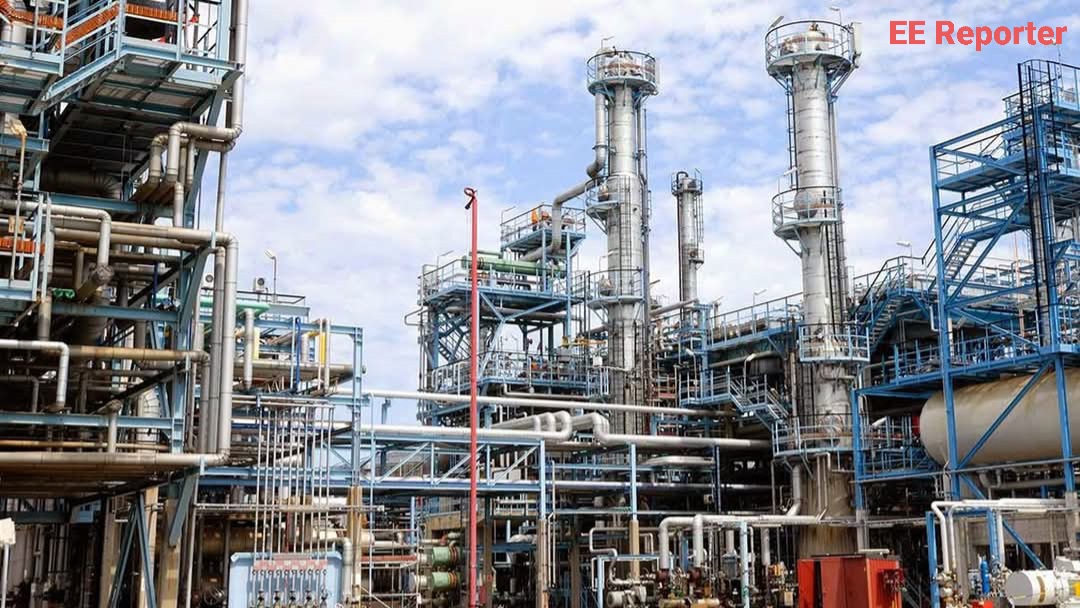
Experts reveals what NNPCL must do before refineries’ sale. Experts have urged the National Petroleum Company Limited (NNPCL) to engage in strategic decisions and foresight if it were to sell the four refineries it controlled, the Daily Trust reports.
It would be recalled that the Group Chief Executive Officer of the NNPCL, Bayo Ojulari, had in an interview with Bloomberg, said the company is currently reassessing the refineries’ strategies and could finalise the review by year-end.
But experts have said the decision should not be driven by sentiment or haste that would jeopardise Nigeria’s energy security while in the hands of cronies.
The move to sell the refineries is coming after the corporation spent trillions of naira in carrying out several controversial turnaround maintenance (TAM).
The National Assembly had alleged that over 11.3 trillion was spent on TAM between 2010 and 2020. Another report indicated that $3bn had been sunk into repairing the refineries in Port Harcourt, Warri and Kaduna which have a combined refining capacity of 445,000 bpd.
The NNPC boss, who spoke with Bloomberg on the sidelines of the 9th OPEC international seminar in Vienna, Austria, had admitted that it was becoming a ‘bit more’ complicated to revamp state-owned refineries.
Nigeria has four crude oil refineries, all managed by the NNPCL. They have long struggled with underperformance, inefficiency, and maintenance issues.
In November 2024, the state oil refinery said the Port Harcourt refinery had officially commenced crude oil processing, but the refinery shut down in May for maintenance.
The Warri and Kaduna refineries are, however, still undergoing rehabilitation.
“So refineries, we made quite a lot of investment over the last several years and brought in a lot of technologies. We’ve been challenged,” Ojulari said.
“Some of those technologies have not worked as we expected so far. But also, as you know, when you’re refining a very old refinery that has been abandoned for some time, what we’re finding is that it’s becoming a little bit more complicated.”
According to him, NNPCL is now conducting a comprehensive review of its refinery rehabilitation strategy and that conclusions from the exercise could prompt a change in approach.
“We hope before the end of the year, we’ll be able to conclude that review. That review may lead to us doing things slightly differently,” he added.
When asked whether the review could result in selling the refineries, Ojulari said a sale remains a possibility.
“But what we’re saying is that sale is not out of the question. All the options are on the table, to be frank, but that decision will be based on the outcome of the reviews we’re doing now,” he said.
Ojulari spoke just as the president of the Dangote Group, Alhaji Aliko Dangote, stated that Nigeria’s state-owned refineries, located in Port Harcourt, Warri, and Kaduna, may never operate properly again despite about $18 billion invested in their rehabilitation.
Dangote made the remark while hosting members of the Global CEO Africa, who visited the Dangote Petroleum Refinery.
He said the 650,000-barrel-per-day (bpd) refinery was constructed after the government of late President Umar Yar’adua declined to sell the refineries to him.
He said, “The refineries that we bought before, which were owned by Nigeria, were doing about 22 percent of PMS.
“We bought the refineries in January 2007. Then we had to return them to the government because there was a change of government.
“And the managing director at that time convinced Yar’adua that the refineries would work.
“They said they just gave them to us as a parting gift or something. And as of today, they have spent about $18bn on those refineries, and they are still not working. And I don’t think so, and I doubt very much if they will work.”
“(The turnaround maintenance) is like you trying to modernise a car that was built 40 years ago, when technology and everything had changed.
“Even if you change the engine, the body will not be able to take the shock of that new technology engine.”
It would be recalled that former President Obasanjo had last year expressed similar comments, adding that the NNPC was aware that it could not operate the refineries.
He said some investors, including Aliko Dangote, paid $750 million to take over the refineries; however, his successor, Yar’adua, aborted the transaction.
He said, “I ran to him (Yar’Adua), and I said, ‘You know this is not right.’ He said, ‘Well, NNPC said they can do it.’ I said, ‘NNPC cannot do it.’
“I told my successor that ‘the refineries, from what I heard and know, will not work, and when you want to sell them, you will not get anybody to buy them at $200m as scrap.’ And that is the situation we are in.
“So, why do we do this kind of thing to ourselves? NNPC knew that they could not do it, but they knew they could eat and carry on with the corruption that was going on in NNPC.
“When people were there to do it, they put pressure. In a civilised society, those people should be in jail.”
Earlier this year, former President Obasanjo also said, “I was told not too long ago that since that time, more than $2bn has been squandered on the refineries, and they still will not work.
“If a company like Shell tells me what they told me, I will believe them. If anybody tells you now that it (the refinery) is working, why are they now with Aliko (Dangote)? And Aliko will make his refinery work; he will not only make it work, but he will also make it deliver.”
Speaking with Daily Trust, Prof. Wumi Iledare, Professor Emeritus of Petroleum Economics & Director, Emmanuel Egbogah Foundation, stated that while NNPC Limited, as a commercial entity under the Petroleum Industry Act (PIA) 2021, has the legal right to dispose of its assets, any move to sell Nigeria’s state-owned refineries must be approached with strategic foresight—not driven by sentiment or haste.
He said the Port Harcourt, Warri, and Kaduna refineries have consistently underperformed but the issue has never been ownership as it is inefficiency rooted in poor governance and institutional weaknesses.
“Selling these assets outright, without addressing the fundamental challenges that crippled them, risks repeating the mistakes of the past and jeopardizing Nigeria’s energy security.
“Privatization, if it becomes necessary, should not translate into elite capture or unchecked monopoly. The process must be transparent, competitive, and structured to serve the public interest.
“A hybrid model such as performance-based concessions, public-private partnerships, or equity restructuring could offer a more prudent path. These alternatives align with the commercial ethos of the PIA and allow for accountability and performance tracking.”
He added that letting go of these assets may eventually be the right course, but it must be done strategically, not symbolically.
“Refining must remain competitive, efficient, and value-driven. Selling state refineries merely for the sake of selling, especially, amid growing private sector dominance could unintentionally undermine the goals of deregulation and the broader reform agenda.
“Ultimately, the objective should not be to offload assets, but to unlock value and reposition Nigeria’s downstream petroleum sector for sustainable growth and national benefit.
On his part, Prof Dayo Ayoade mni, Energy Law expert at the University of Lagos, said the NNPC Limited CEO is apt, but the fact that they are still talking about may be sold is what’s very interesting.
He said The NNPC has squandered in the region of 18 billion dollars on those refineries and the refineries have never really worked to full capacity and they are in a deteriorated state.
There’s no doubt that NNPC cannot run the refineries. The NNPC has been happy for the refineries to continue to exist on its books, pay all their staff, give them allowances, and spend an incredible amount of money on wages and so forth. Yet it doesn’t produce anything noisy relevant to the company.
He said since NNPC Limited is a private company in many ways, then it is time to reassess its assets, to sell off assets that are not useful and to invest in those assets that could be much more profitable for their bottom line.
“It’s very interesting looking ahead because I know that the unions will fight because there’s nobody who invests in those refineries without sacking most of those redundant staff.”
The Chief Executive Officer, Centre for Promotion of Private Enterprise (CPPE), Dr. Muda Yusuf, said the prospect of those refineries working efficiently and competitively is quite dim because of their age, technology and because of the prospect of the refineries being able to compete, especially in the light of what is happening, with the increase in domestic production that we are now seeing from Dangote.
“The prospect is even dimmer if the management continues to be in the hands of the NNPC. Look at how much we have spent trying to resuscitate the refineries.
“We are talking of billions of dollars, which ordinarily could have been used to even build new refineries. And yet, there have been no results. So fundamentally, if the business model remains as it is, there is no way it can work.
“But if there’s a change in the business model, maybe through privatization, through the coupling of the refineries from government and from the bureaucracy, there may be a fair chance of those refineries working, but there has to be a fundamental change in the business model.
“Otherwise, we will keep throwing good money away. So, we need to caution the new management of NNPC as to how much of the nation’s resources they should be committing to the refineries.”
Also, Human rights lawyer, Femi Falana (SAN) has warned that the Nigeria National Petroleum Company Ltd (NNPCL) does not have the power to sell the nation’s refineries.
Falana said the provisions of the law and the ongoing investigation into the funds previously approved for the rehabilitation would not permit the sell of the refineries.
In a statement on Sunday, Falana, who is the Chair of Alliance on Surviving Covid 19 and Beyond (ASCAB), said the public refineries are neither owned by the NNPCL nor the federal government, but by the Government of the Federation i.e the federal government, the 36 state governments and the 774 local governments in the country based on Section 44(3) of the Nigerian Constitution, 1999.
Experts Reveals What NNPCL Must Do Before Refineries’ Sale
Falana further said selling the nation’s refineries to a few individuals or a group will violate Section 16(2)(c) of the constitution provides that “the economic system is not operated in such a manner as to permit the concentration of wealth or the means of production and exchange in the hands of few individuals or of a group.
He also noted that the planned sale will frustrate the ongoing investigation of the criminal diversion of the sum of $2.9 billion paid to two foreign contractors for the rehabilitation of the refineries.
Furthermore, he stated that the nation’s refineries are not among the public enterprises listed for privatisation in the Commercialisation and Privatisation Act, as such would require an amendment of the Act, the sale of the four refineries by the NNPCL Management or the Federal Government will be set aside.
“In 2021, the Muhammadu Buhari administration approved the rehabilitation contracts of the Port Harcourt, Warri and Kaduna refineries for the sum of $2.9 billion. Whereas the bulk of the huge fund was criminally diverted, the Management of the NNPCL lied that the refineries had been rehabilitated.
Despite security reports that the rehabilitation was a hoax the NNPCL Management celebrated the commissioning of the Port Harcourt and Warri refineries,” he said.











EFCC Arraigns Former SKye Bank Chairman, Tunde Ayeni For N15.6b Fraud
The Economic and Financial Crimes Commission, EFCC, on Monday, May 4, 2026, arraigned a former Chairman, Board of Directors of the defunct Skye Bank Plc, Tunde Ayeni before Justice Jude Onwuzuruike of the Federal Capital Territory, FCT, High Court, Apo, Abuja.
Ayeni was arraigned on a 17-count charge bordering on criminal breach of trust, misappropriation and conversion of investors’ funds to the tune N15,665,085,429 (Fifteen Billion, Six hundred and Sixty five Million, Eighty five thousand, Four Hundred and Twenty-nine Naira (N15,665,085,429).
Prosecution counsel E.E. Iheanacho, SAN, informed the court that the matter was slated for arraignment and prosecution ready for trial.
“We have before the court 17-count charge dated April 28, 2026, we humbly apply that the charge be read to the defendant”, he said.
Eereporter.com
Count three of the charge reads: “That you, Tunde Ayeni, whilst being the Chairman, Board of Directors of the defunct Skye Bank Plc between 21st of October, 2014 and 19th November, 2014 at Abuja within the jurisdiction of this Honourable Court and having dominion over depositors funds domiciled in the defunct Skye bank Plc’s Suspense Account, committed criminal breach of trust when you dishonestly misappropriated the aggregate sum of Three billion, Two hundred and One million, Five Hundred and Thirty Five Thousand, Four Hundred and Twenty Nine Naira, Forty two kobo(N3,201,535,429.42) by transferring same to Misa Limited’s account No: 1011295717 and 1011295718 domiciled with Zenith Bank in Violation of the Prudential Guidelines and other regulations and thereby committed an offence contrary to Section 311 of the Penal Code and punishable under Section 312 of the same Act.
Count five of the charge reads: “That you Tunde Ayeni, whilst being the Chairman, Board of Directors of the Defunct Skye Bank Plc on or about 27th November, 2014, at Abuja within the Jurisdiction of this Honourable Court and having dominion over depositors’ funds domiciled in the defunct Skye bank Plc’s Suspense Account, committed criminal breach of trust when you dishonestly misappropriated the sum of Five Billion, Seventy Eight million, Five hundred and Fifty thousand Naira(N5, 078,550,000) by transferring same to Union Registrar Limited’s Account No: 0003490559 domiciled with Union Bank in violation of the Prudential Guidelines and other Regulations and thereby Committed an offence contrary to Section 311 of the Penal Code and Punishable under Section 312 of same Act.”

Fraud
Ayeni pleaded “not guilty” to the charges when they were read to him.
In view of his “not guilty” plea, Iheanacho prayed the court for a trial date and urged the court to remand the defendant in a Correctional Centre.
Defence counsel, Ahmed Raji Bashir, SAN, informed the court that the charge was given to the defendant on a public holiday adding that he considered it imperative to inform the court. He also prayed the court to release the defendant to him or return him to the custody of the EFCC.
Justice Onwuzuruike adjourned the matter to May 13, 2026, for hearing of the bail application, while the defendant was remanded at the Kuje Correctional Centre pending determination of bail application.
Economy
World Press Freedom Day: FG Calls For Collaboration To Address Disinformation, Misinformation

World Press Freedom Day: FG Calls For Collaboration To Address Disinformation, Misinformation
The Federal Government has called for stronger collaboration among the media, government institutions, and other stakeholders to address the growing threat of disinformation and misinformation, stressing that collective action is essential to protect public trust and national stability. The Honourable Minister of Information and National Orientation, Mohammed Idris, made this known on Monday in Abuja at the 2026 World Press Freedom Day commemoration held at Radio House.
“This administration has prioritised collaboration with media stakeholders and international partners to promote responsible journalism, counter disinformation and misinformation,” said the Minister.
He described press freedom as a fundamental right guaranteed under the Constitution, noting that the Federal Government remains fully committed to its protection. “The Federal Government fully recognises press freedom as a fundamental right and remains committed to fostering an environment where the media can operate freely, safely, and responsibly, in accordance with democratic principles and the rule of law,” he stated.
Idris noted that the Federal Government, under the leadership of President Bola Ahmed Tinubu, has taken deliberate steps to strengthen transparency and access to information through sustained media engagement, implementation of the Freedom of Information Act, and investment in public communication platforms.
Eereporter.com
He further pointed to Nigeria’s partnership with UNESCO in establishing the International Media and Information Literacy Institute (IMILI) in Abuja as a key step towards building a more informed and discerning public. “This pioneering initiative reflects our commitment to strengthening media and information literacy, empowering citizens to engage with information critically, and promoting responsible communication in the digital age.”
The Minister urged journalists to uphold professionalism, fairness, and ethical standards in their work, stressing that press freedom must go hand in hand with responsibility. “The true test of press freedom lies not in our declarations, but in our actions, how safely journalists can do their work, how truthfully information is shared, and how responsibly it is consumed,” he said.
Earlier in her welcome address, the Permanent Secretary of the Federal Ministry of Information and National Orientation, Dr. Binyerem Ukaire, described the event as a critical platform for strengthening collaboration across institutions.
“This gathering reflects our shared commitment to strengthening press freedom and fostering a more informed and inclusive society. It provides an opportunity for constructive engagement on how best to advance a media environment that is both free and responsible,” she said.

World Press Freedom Day
Ukaire emphasised the need for coordinated responses to the challenges posed by the evolving information ecosystem, particularly the spread of misinformation. “The expansion of digital platforms has introduced new complexities that require coordinated institutional responses, especially in addressing misinformation and strengthening public trust,” she noted.
She added that the Ministry remains committed to facilitating dialogue, strengthening partnerships, and promoting professionalism within the media space.
The Federal Government reiterated its commitment to working with the media, civil society, and international partners to build a resilient information system that supports democratic governance, national unity, and sustainable development.
The event was attended by the Inspector General of Police, represented by FPRO, DCP Anthony Okon Placid, mni, mnipr; the Director-General of the Department of State Services, represented by Director of Protocol M. O. Chukwuka, fsi; Executive Secretary, Nigerian Press Council, Dr Dilli Ezughah; Head of UNESCO Abuja Office, represented by the Head of Communication and Information Sector, Ms Yachat Nuhu.
Rabiu Ibrahim
Special Assistant (Media) to the Honourable Minister of Information and National Orientation
Monday, May 4, 2026
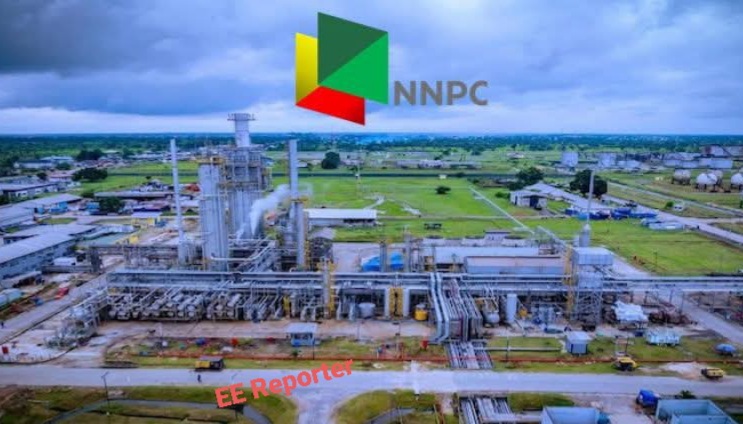
NNPC, Chinese Firms Sign MoU Towards Restart, Expansion Of Warri, Port Harcourt Refineries
The NNPC Ltd has signed a Memorandum of Understanding (MoU) with two Chinese companies, Sanjiang Chemical Company Limited and Xinganchen (Fuzhou) Industrial Park Operation and Management Co. Ltd, for collaboration through a potential Technical Equity Partnership in support of the completion and operation of the Port Harcourt and Warri Refineries.
The MoU was signed by the Group CEO, NNPC Ltd, Engr. Bashir Bayo Ojulari; Chairman, Sanjiang Chemical Company, Guan Jianzhong and Chairman of Xinganchen (Fuzhou) Industrial Park Operation and Management Co. Ltd, Bill Bi, in Jiaxing City, China, on Thursday, April 30, 2026.
Eereporter.com
The potential framework would cover completion of outstanding work at the two refineries, together with operating and maintaining both facilities to achieve best-in-class, sustainable performance. Planned expansion and upgrades would elevate both facilities to cleaner, more profitable product standards.
The potential collaboration also contemplates expanding the refineries’ petrochemical capacities and harnessing gas and downstream opportunities through the development of co-located, gas-based industrial hubs.
Speaking shortly after signing the dotted lines, the GCEO NNPC Ltd, Engr. Bashir Bayo Ojulari, described the MoU execution as a significant milestone, following more than six months of concerted engagement between the technical and management teams of NNPC and the two Chinese partners.
“All parties recognise mutually beneficial opportunities for the development and long-term sustainable profitability of NNPC’s refining assets in Nigeria, and the collective weight required for success,” Ojulari noted.
NNPC
The GCEO further stated that the MoU is a significant step on the journey towards identifying potential technical equity partner(s) to restart and expand NNPC’s refineries, and to explore opportunities in co-located petrochemicals and gas-based industries.
The MoU reflects the parties’ shared intent to progress discussions in good faith, with any definitive arrangements to follow in due course and subject to customary approvals.
-
 Crime12 months ago
Kogi Assembly Considers Law To Regulate Rent, Establish Control Board: Tenancy Law
-

 News1 year ago
Atiku Reveals Why He Failed To Pick Wike As Running Mate In 2023
-

 Akwa Ibom1 year ago
The Apostolic Church Gets New Territorial Chairman, Exco
-

 Crime1 year ago
Federal High Court Jails 2 For Vandalizing Transformer, Telecom Mast In Kogi
-
 News1 year ago
The Apostolic Church Gets New National President, Executive
-
 Akwa Ibom1 year ago
Umo Eno Commences Payment Of 80,000 Naira Minimum Wage With Arrears
-

 News1 year ago
Senator Natasha Returns To Senate With Husband Amid Seat Dispute
-
 Economy12 months ago
Kiyosaki: Is Tinubu’s Government Afraid Of Ibrahim Traore?