Education
FG Moves To Address Out-of-school Children Menace


FG Moves To Address Out-of-school Children Menace
The Minister of Education, Dr Olatunji Alausa seeks Federal Government commitment, State Governors to tackle the menace of out-of-school children, pointing out that the number in Nigeria is mind boggling and disturbing.
He informed that the Ministry had met with the state governors and all the six commissioners for education, including FCT to find lasting solutions to the problem.
Alausa disclosed this at the 2025 Budget Defence session of the joint Committee on Tertiary Institutions and TetFund and Education held on Tuesday in Abuja.
The Minister decried that the Almajiri Schools built during the administration of former President Goodluck Jonathan were abandoned and called for efforts to revive them.
He promised that the ministry would ensure human capital development to boost the education sector.
“So we’re working together on this. So, it now has to be a collaborative effort on what we have to do.
“The number of the out-of-school children is mind boggling and disturbing. It is not in just one geopolitical region. It is everywhere.
“We need to confront it else we will be consumed by it. We have to engage with our governors and we have held meeting with the Nigerian Governors’ Forum on how to collaborate on this.
“We are also working with all the 36 commissioners for education including that of the FCT.
“Of the over a hundred of the schools built for out-of-school children, only few are operational.
“The funding of the Almajiri and out-of- School Commission is not enough. We need more funding in this regard.
“We want them to develop. It’s the best part of any society. Without education, we an’t survive as a society.
“And if you look at the human capital index, Nigeria has one of the lowest human capital indeyx in the world” he stressed.
Meanwhile, in his open remarks, the Chairman, Senate Committee on Tertiary Institutions and TETFund, Sen. Muntari Dandutse, emphasised the important role of education in national development.
Dandutse said the proposed 2025 budget is expected to demonstrate a clear vision for addressing the gaps identified in the 2024 Appropriation.
“As lawmakers, we have a constitutional responsibility to ensure that resources allocated to this critical sector are strategically planned and utilised”l.
“While also introducing innovative strategies to tackle emerging challenges in the education sector” he noted.

Crime
Koso Grammar School at 50th: ICPC Inaugurates Anti-Corruption Clubs in Five Schools to Marks Anniversary
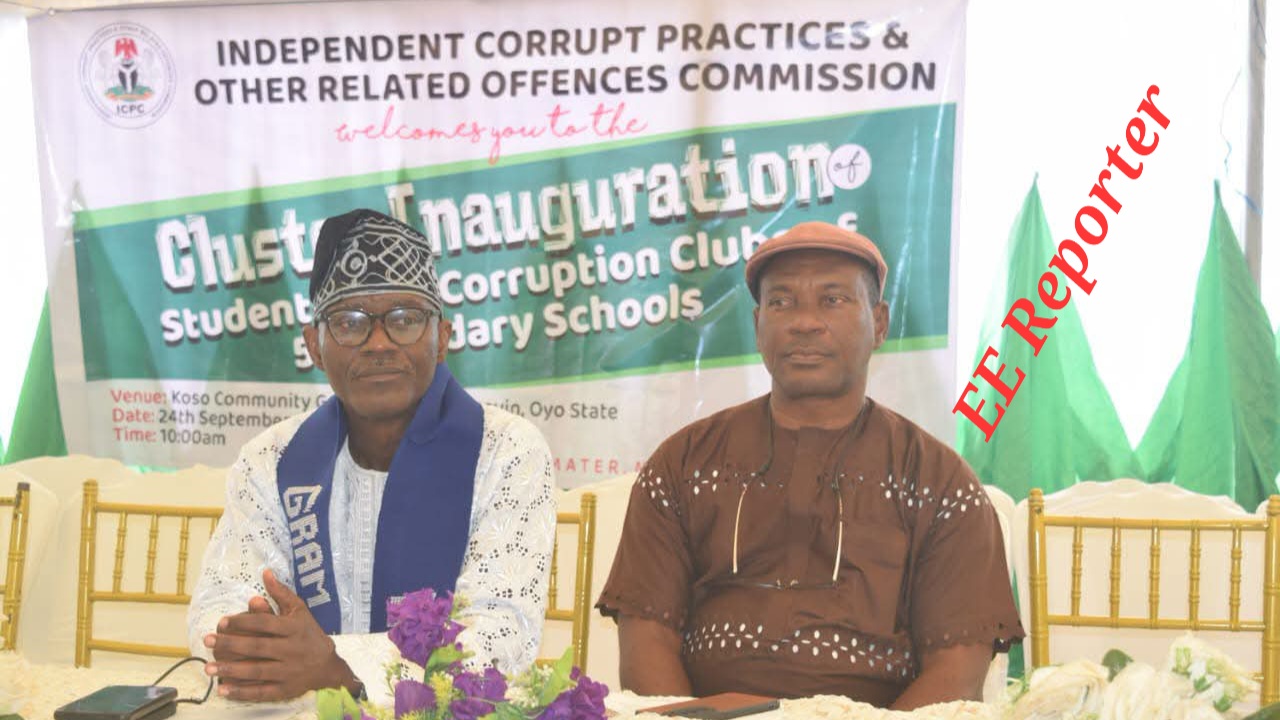
Koso Grammar School at 50th: ICPC Inaugurates Anti-Corruption Clubs in Five Schools to Marks Anniversary
The Independent Corrupt Practices and Other Related Offences Commission (ICPC) on Thursday inaugurated its National Schools Integrity Programme (NSIP) and Students’ Anti-Corruption Clubs (SACs) in Koso Community Grammar School, Iseyin, and four other secondary schools, timing the exercise to coincide with Koso’s Golden Jubilee celebration.
Eereporter.com
The dual event drew government officials, traditional rulers, teachers, alumni and students, with goodwill messages centred on character development, integrity, responsible citizenship and anti-corruption awareness.
In a video message, the ICPC Chairman, Dr. Musa Adamu Aliyu, congratulated Koso Community Grammar School on 50 years of service, describing the milestone as an opportunity to celebrate not just its history, but also the values it had instilled in generations of students.
While the Commission is widely known for its investigative, preventive and enforcement functions, he said, tackling corruption also requires shaping the values, attitudes and choices that influence individual behaviour.
He said the NSIP was designed to give young Nigerians “the values, knowledge and courage to recognise, reject and resist corrupt practices,” noting that corruption extends beyond the misuse of public funds to include dishonesty, examination malpractice, bribery, cheating, deception and abuse of trust.
With the clubs now inaugurated across the five schools, members will take part in continuous value-based activities and can progress into Anti-Corruption Vanguards at the tertiary level and later into Anti-Corruption Community Development Service (CDS) groups in partnership with the National Youth Service Corps (NYSC).
The Chairman said the goal was not to frighten children with tales of corruption, but to prepare them to make responsible choices, urging students to reject dishonest shortcuts because, in his words, “a certificate obtained through dishonesty cannot build a successful nation.”
Koso’s selection for the inauguration also tied into the ICPC’s MAMMILL — My Alma Mater, My Integrity Legacy — initiative, as the school is the alma mater of the Commission’s Director of Public Education, Mr. Demola Bakare, FSI.
Bakare told the students that he once sat in the same classrooms and regarded the school as proof that the classroom could be a starting point for national service.
He urged the students to pursue their ambitions diligently, avoid examination malpractice and cheating, and recognise that sound character must accompany academic achievement.
He also encouraged them to remain focused on their dreams while resisting shortcuts and other practices that could undermine their future.
In his welcome address, the President of the Alumni Association, Chief Taofeeq Adegboyega Adeyoke, FCA, thanked the Oyo State Government, traditional institution, teachers and alumni for their support.
He noted that the school, founded in 1976, had produced graduates across public service, the military, industry and academia, and appealed for continued support for the development of the institution.

Koso Grammar School
The Principal, Mr. Raheem Sule Ademola, commended the Alumni Association for its past contributions and appealed for further support towards perimeter fencing, construction of an auditorium and provision of science laboratory equipment.
He also urged the students to remain focused on their studies, pursue academic excellence and uphold the good reputation of the school.
The ICPC reaffirmed its commitment to preventive anti-corruption education through the NSIP, SACs and MAMMILL, while congratulating Koso Community Grammar School on its Golden Jubilee.
The Commission also called for sustained collaboration among schools, families, alumni, government institutions and communities in nurturing a generation of young Nigerians committed to integrity, accountability and responsible citizenship.
Eereporter.com

IGP Disu Receives Lifetime Achievement Award From Alma Mater, St. Gregory’s College
The Inspector-General of Police, IGP Olatunji Rilwan Disu, psc(+), NPM, was today, 26th September 2026, honoured with a Lifetime Achievement Award by the St. Gregory’s College Old Boys Association at a grand reception held in Lagos State.
Eereporter.com
The IGP was honoured alongside the Governor of the Central Bank of Nigeria, Dr. Olayemi Cardoso at the event, which celebrated distinguished old boys who have made remarkable contributions in their respective fields of national service and leadership.
The award recognised the IGP’s distinguished career in public service, leadership and over three decades of service to the Nigeria Police Force, as well as his professional accomplishments since leaving St. Gregory’s College, where he completed his secondary education in 1985.
The recognition highlighted the IGP’s journey through frontline policing, criminal investigation, intelligence operations, international peacekeeping and senior command responsibilities. Since joining the Nigeria Police Force as a Cadet Assistant Superintendent of Police in 1992, he has served in several operational and leadership capacities, including as Commander of the Lagos State Rapid Response Squad, Head of the Intelligence Response Team, Commissioner of Police, and in other senior responsibilities before his appointment as the 23rd indigenous Inspector-General of Police in February 2026.
The award also acknowledged the IGP’s continued emphasis on professionalism, intelligence-led policing, accountability, personnel welfare, community partnership and the responsible deployment of technology in strengthening policing and public safety.
The IGP expressed appreciation to the St. Gregory’s College Old Boys Association for the honour, describing the recognition by his alma mater as particularly significant. He reaffirmed his commitment to serving the country with integrity and to strengthening the Nigeria Police Force as a professional, accountable and people-centred institution.
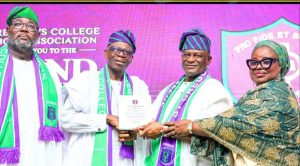
Alma Mater, St. Gregory’s College
The Nigeria Police Force remains committed to promoting exemplary leadership, professionalism and dedicated service, while recognising the importance of values, education and mentorship in shaping officers who contribute meaningfully to national development.
CSP ANI INIEDU, anipr
Force Public Relations Officer
Force Headquarters, Abuja
26th September 2026
Eereporter.com
Education
NACOLM Students Witness NAF Special Forces Combat Display in Bauchi During Study Tour Visit

NACOLM Students Witness NAF Special Forces Combat Display in Bauchi During Study Tour Visit
Students of the Nigerian Army College of Logistics and Management (NACOLM), Lagos, have witnessed the combat capabilities of the Nigerian Air Force (NAF) Regiment Special Forces during a study tour of the Regiment Training Centre Annex (RTCA), Bauchi. The visit provided practical exposure to the employment of Special Forces in contemporary military operations.
Eereporter.com
Welcoming the delegation, the Commandant of RTCA, Squadron Leader Edeama Akpan, highlighted the Centre’s mandate to train and develop NAF Regiment Special Forces personnel, while also providing specialised training for sister Services and other security agencies to enhance joint operational effectiveness.
The students subsequently witnessed a combat demonstration featuring tactical manoeuvre, target engagement, casualty evacuation and coordinated combat operations in a simulated security environment.
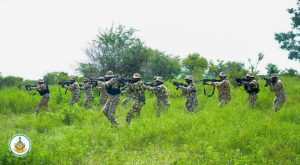
NACOLM
The demonstration provided valuable insight into the precision, teamwork and readiness required for Special Forces operations, while underscoring the NAF’s commitment to realistic training and inter-Service collaboration in support of national security.
Eereporter.com
-
 Crime1 year ago
Kogi Assembly Considers Law To Regulate Rent, Establish Control Board: Tenancy Law
-

 News2 years ago
Atiku Reveals Why He Failed To Pick Wike As Running Mate In 2023
-
 Akwa Ibom2 years ago
The Apostolic Church Gets New Territorial Chairman, Exco
-

 Crime2 years ago
Federal High Court Jails 2 For Vandalizing Transformer, Telecom Mast In Kogi
-
 News2 years ago
The Apostolic Church Gets New National President, Executive
-
 Akwa Ibom2 years ago
Umo Eno Commences Payment Of 80,000 Naira Minimum Wage With Arrears
-

 News2 years ago
Senator Natasha Returns To Senate With Husband Amid Seat Dispute
-

 Economy1 year ago
Kiyosaki: Is Tinubu’s Government Afraid Of Ibrahim Traore?