
Education
Government Seeks Reversal Of Mother Tongue As Medium Of Learning In Primary Schools

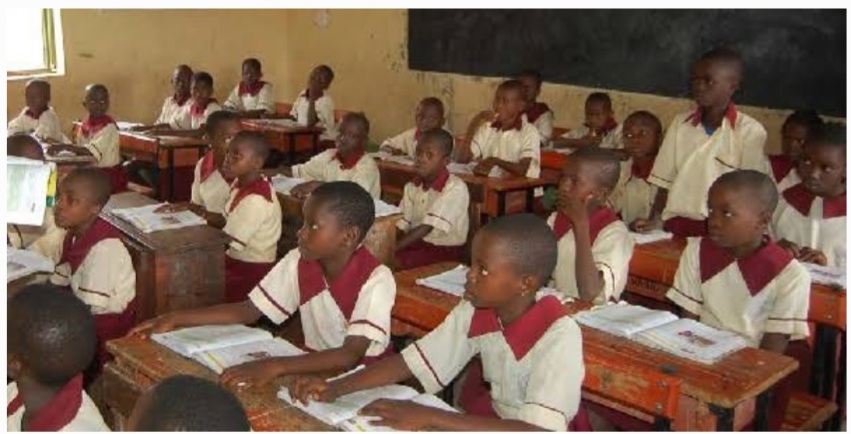
Government Seeks Reversal Of Mother Tongue As Medium Of Learning In Primary Schools
Government seeks reversal of mother tongue as medium of learning in primary schools. The policy aimed to preserve Nigerian languages and enhance foundational learning.
The federal government has urged the National Council on Education and stakeholders to approve the reversal of the use of mother tongue as the medium of instruction from primary one to six.
The Minister of State for Education, Suwaiba Ahmad, made the appeal at the 2025 Extraordinary National Council on Education Meeting in Abuja on Thursday.
Mr Ahmad also called on the council to approve the review of the national policy on education to restrict the use of mother tongue to Early Childhood Care Development and Education and primary one.
The NCE had previously advocated the use of the mother tongue of the immediate environment as the medium of instruction in the first three years of primary education.
The policy aimed to preserve Nigerian languages and enhance foundational learning.
However, the Federal Executive Council approved its implementation on November 30, 2022.
The minister of state highlighted several challenges hindering the implementation of the policy.
“Inconsistencies in policy execution, especially in urban areas and some parts of the country, impede implementation. We use English from the start, contradicting the policy.
With over 500 languages in Nigeria, implementation becomes complex, making it difficult to select a dominant language in multilingual communities. Limited availability of instructional materials and textbooks, among other factors, hinders implementation,” she said.
She added that the ministry and NCE must initiate a policy review to implement the necessary changes.
The Minister of Education, Tunji Alausa, also advocated integrating secondary education into basic education, extending it to 12 years.
Mr Alausa said this initiative aligned with global best practices and Sustainable Development Goal 4 (SDG4), which aims to ensure inclusive and equitable quality education for all.
“Subsuming secondary education into basic education is necessary to improve access, retention, and completion. By making secondary education a part of basic education, students will benefit from uninterrupted learning up to the age of 16.
This reform will also reduce dropout rates by eliminating financial and systemic barriers that currently prevent students from completing secondary education,” he said.
Mr Alausa further explained the importance of converting the Federal Science and Technical Colleges (FSTCs) into Federal Technical Colleges (FTCs).
According to him, technical education facilitates the acquisition of practical and applied skills, enabling young people to develop an intelligent understanding of the increasing complexity of technology.
He said, “This transformation is not just a policy shift; it is a crucial step towards realigning our education system with the demands of an evolving economy and a technologically driven world. Another major issue facing the nation is youth unemployment.
Nigeria’s youthful demographic has over 60 per cent of the population under 30. In tackling this pressing issue, my administration introduced the TVET initiative, which aims to restructure and enhance technical and vocational education in Nigeria. This will align educational outcomes with industry demands.’’

Primary Schools
Speaking on the incorporation of the 16-year minimum admission age policy for tertiary institutions into the NCE framework, the minister said this was necessary to standardise entry requirements for tertiary education.
The meeting brought together commissioners for education from the 36 states and the FCT, heads of agencies, international organisations, and the deputy governor of Kano State.








Akwa Ibom
Governor Eno Unveils Miva Study Centre in Uyo as University Student Population Hits 34,000

Governor Eno Unveils Miva Study Centre in Uyo as University Student Population Hits 34,000
Akwa Ibom State Governor, Pastor Umo Eno, has unveiled the Uyo Study Centre of Miva Open University, reaffirming his administration’s commitment to expanding access to quality education and developing human capital in the state.
Eereporter.com
The study centre, located at No. 26 Udo Udoma Avenue, Uyo, was officially unveiled on Friday by the Governor, who was represented at the ceremony by the Commissioner for Information, Rt. Hon. Aniekan Umanah.
Speaking at the event, Umanah commended the founder and management of Miva Open University for choosing Akwa Ibom as a location for its study centre, describing the initiative as a significant addition to the state’s growing educational sector.
The Commissioner described Governor Eno as an education-friendly leader, noting that education remains a key priority of the administration’s ARISE Agenda. He said the government had continued to implement policies and programmes aimed at improving access to education, strengthening human capital and equipping young people with the knowledge and skills needed to succeed in a rapidly changing world.
Umanah assured private educational institutions and other stakeholders of the state government’s continued support and partnership, while expressing optimism that the presence of Miva Open University in Uyo would create more opportunities for students and contribute to the state’s human capital development.
Earlier, the Chief Operating Officer of Miva Open University, Aniekeme Umoh, said the institution was excited to deepen its relationship with Akwa Ibom through the establishment of the Uyo Study Centre.
Umoh commended the Governor’s ARISE Agenda, particularly its focus on education, human capital development, youth empowerment and shared prosperity, saying the priorities align with the university’s mission of providing accessible and relevant higher education.
She disclosed that Miva Open University, which began operations with about 500 students, has grown to more than 34,000 students.
According to her, the Uyo Study Centre was established to provide students in Akwa Ibom with a conducive environment for learning, interaction with other students and access to opportunities within the university’s wider academic community.

Governor Enoum
She added that the university was committed to creating a new category of higher education that responds to the realities of modern students and the demands of a rapidly changing world.
A 100-level Computer Science student of the university, Solomon Egheose, also commended the founder and management of Miva Open University for maintaining high standards in the administration of the institution.
Miva Open University is licensed by the National Universities Commission (NUC) and operates as an Open and Distance Learning (ODL) institution.
Eereporter.com

Abia State University Suspends Lecturer Nnamdi Nwaeze Over Facebook Post on Workers’ Pay
The management of Abia State University, Uturu, has suspended Professor Nnamdi Nwaeze of the Department of Economics, Faculty of Economics and Management Sciences, over comments he made on Facebook concerning the plight of lecturers at the institution.
Eereporter.com
This was contained in a statement issued by the Deputy Registrar and Public Relations Officer of the university, Chijioke Nwogu, on Thursday.
The statement partly read, “The suspension follows concerns arising from various social media posts attributed to Professor Nwaeze, which are inimical to the interests of the University and uncomplimentary to the Visitor of the University.”
Nwaeze had, on Wednesday, in a post on his Facebook account, alleged that members of the Academic Staff Union of Universities at ABSU were among the least-paid university lecturers in Nigeria.
He said lecturers at the university were still being paid under the 2009 ASUU-Federal Government salary structure, while being taxed based on the 2024 tax rate.
He also alleged that a 2024 ASUU-FG salary structure had not been implemented at ABSU and that another salary structure approved in December 2025 and effective from January 1, 2026, was yet to be implemented at the university.
Nwaeze further alleged that lecturers promoted between 2023 and 2026 had not been paid salaries corresponding to their new ranks, while some members had outstanding salaries dating back as far as 44 months.
According to him, about N163m in cooperative deductions was allegedly being owed by the government, while professors in federal and most state universities earned between N1.3m and N1.4m, compared with what he described as significantly lower earnings at ABSU.
He further queried the disparity in the earnings of professors at the institution, asking, “Did you know that most professors in ABSU earn less than N400k monthly? At this salary scale, a Keke driver who earns a daily net income of just N15k (many earn N20k & above daily) would earn more than a professor in ABSU (N15k x 30 = N450k per month)?”
Nwaeze also alleged that more than 85 per cent of lecturers no longer drove their cars and that staff members were relying on personal savings, borrowing, rental income and royalties from intellectual property to subsidise their work.
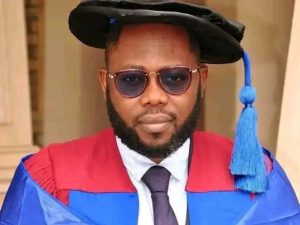
Nnamdi Nwaeze
He stated, “Hence, rather than receive a subsidy from the government, staff are the ones subsidising the state government.”
However, the university management said it had constituted an investigative panel to examine the matter.
“Consequently, Management has constituted an Investigative Panel to consider the matter. The suspension takes immediate effect pending the outcome of the investigation by the Panel,” the statement added.
Eereporter.com
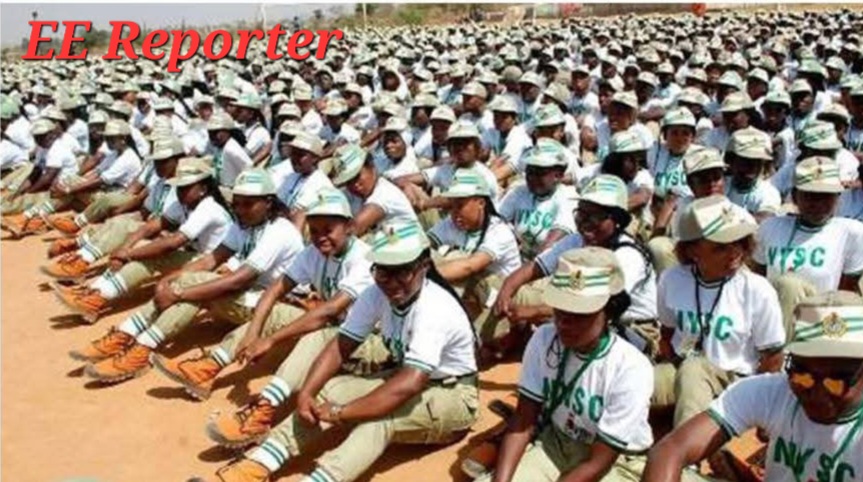
Olukoyede to Corps Members: Strive to be New Breed Youths in Fight Against Corruption
The Executive Chairman of the Economic and Financial Crimes Commission, EFCC, Mr. Ola Olukoyede, has charged members of the National Youth Service Corps NYSC, across the country to strive to be new breed youths by taking ownership of the fight against corruption, economic and financial crimes and upholding integrity, discipline and dedication in all they do.
Eereporter.com
He gave the charge on Thursday, August 13, 2026, while addressing Batch “B” Stream II Corps members at the NYSC Permanent Orientation Camp, Ikare-Akoko, Akoko North East Local Government Area, Ondo State.
Delivering a lecture titled, “New Breed Youths as Catalysts for National Development,” through the Deputy Superintendent of the EFCC, DSE Emmanuel Onuminya, Olukoyede described youths as critical stakeholders in the fight against corruption, economic and financial crimes, observing that Nigeria’s progress depended largely on the commitment of young people in sanitising the country and resisting corrupt practices.
“It is not enough to see yourselves as youths in today’s Nigeria; you need to see and carry yourselves as new breed youths. A new breed of youth should be angry with the failures of the past and develop strengths for new successes. As new breed youths, decide to be a solution rather than a problem, a builder, not a breaker, a thinker, not a plunderer, a pillar, not an evil caterpillar! Nigeria needs new breed youths who will be catalysts of development and springboards of progress,” he said.
While noting that corruption is the major obstacle to national progress, he stressed that young Nigerians must embrace a new mindset in order to break away from the longstanding culture of corruption that has hindered the nation’s development.
“Every terror in our land can be traced to corrupt practices. Hunger, diseases, untimely death, banditry, inflation, indebtedness, unemployment and other issues of social dislocation are caused by corruption. New breed youths should not be comfortable with these grim scenarios. You need to be a new breed of youth to pursue a fresh agenda of progress, integrity, development and anti-corruption in every realm. A new breed of youth is hungry for new results, angry with compromises and zealous for transparency. A new breed youth is willing and serious to interrogate his or her environment and expose shadiness and corruption.
“A new breed of youth is not interested in following the lines of least resistance. He fashions a new route of purpose and gives all it takes to walk in that route. A new breed of youth is the answer to the need for progress in our land. You need to be a new breed of youth to align with the mandate of the Economic and Financial Crimes Commission, EFCC,” he said.
The EFCC boss further challenged the corps members to see themselves as vanguards of positive change, urging them to be foot soldiers in the collective effort to rid Nigeria of corruption, economic and financial crimes.
He called on them to demonstrate integrity in their personal lives and professional engagements, stressing that the responsibility of building a better Nigeria rests significantly on the choices and actions of the younger generation.
The EFCC’s boss gave the same charge at NYSC Orientation Camp in Girei , Adamawa State.
Represented by Chief Superintendent of the EFCC ,CSE Ogolekwu Mary, the Chairman charged the youths to harness their energies into developing the country. At the NYSC Orientation Camp in Nonwa Gbam, Tai Local Government Area of Rivers State, Port Harcourt, Olukoyede spoke through Assistant Superintendent of the EFCC II, Otagada Sunday Ogar and enjoined corps members to embrace a value-driven life strengthened by patriotic desires to move the nation forward.
Speaking through Chief Superintendent of the EFCC , CSE Nana Fatima Abubakar in Kaduna at the NYSC Temporary Orientation Camp in Kaduna State, the EFCC Chairman urged corps members to be more committed to values of integrity and national development, stressing that their choices would determine the direction of the country’s future.

Corps Members
At the NYSC Orientation Camp in Keffi, Nasarawa State and speaking through the Head of Public Affairs Unit, EFCC Abuja Zonal Directorate, CSE Ngoundu Nguetar, Olukoyede enjoined corps members to see corruption as an affront and open war against their possibilities and future and they must therefore be brigade commanders and generals tackling the menace of graft
In Lagos, Abuja, Yenagoa, Maiduguri, Uyo, Benin-City, Ilorin, Makurdi and other locations in Nigeria, the anti-graft czar spoke passionately about the need for youths’ ownership of the anti-corruption fight and using their intellect and courage to save the nation the scourge of corrupt practices.
Eereporter.com
-
 Crime1 year ago
Kogi Assembly Considers Law To Regulate Rent, Establish Control Board: Tenancy Law
-

 News1 year ago
Atiku Reveals Why He Failed To Pick Wike As Running Mate In 2023
-
 Akwa Ibom2 years ago
The Apostolic Church Gets New Territorial Chairman, Exco
-

 Crime2 years ago
Federal High Court Jails 2 For Vandalizing Transformer, Telecom Mast In Kogi
-
 News2 years ago
The Apostolic Church Gets New National President, Executive
-
 Akwa Ibom2 years ago
Umo Eno Commences Payment Of 80,000 Naira Minimum Wage With Arrears
-

 News1 year ago
Senator Natasha Returns To Senate With Husband Amid Seat Dispute
-

 Economy1 year ago
Kiyosaki: Is Tinubu’s Government Afraid Of Ibrahim Traore?