
Judiciary
Nigeria’s Fading Lights Of Justice, Edo Election Tribunal

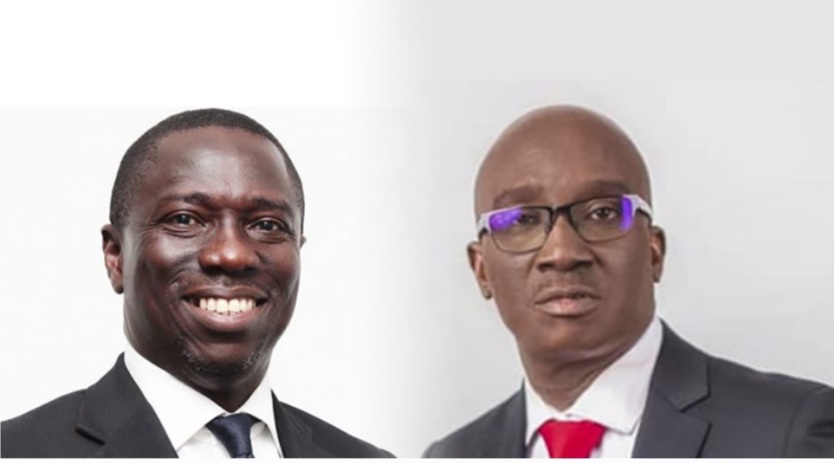
Nigeria’s Fading Lights Of Justice, Edo Election Tribunal
Nigeria’s fading lights of justice, Edo election tribunal. This was not the first time that the decision of an election petition tribunal in Nigeria would be foreshadowed by suggestions or allegations of a leak ahead of its delivery.
As he settled in to deliver the Edo State Governorship Election Petition Tribunal judgment on April 2, 2025, presiding judge Wilfred Kpochi felt obliged to get one ritual out of the way.
Glancing left and right, he asked each of his two colleagues on the three-person tribunal to confirm that the judgment he was about to deliver was unanimous. Justice Kpochi only proceeded after each, one to his left and the other to his right, nodded their affirmation.
The judge had good reason for this preliminary ritual. 48 hours before it was due, a leaked document purporting to be the tribunal’s judgment went into circulation.
Ahead of judgment day, both leading parties in the electoral contest, which had inexorably mutated into a judicial one – the Peoples Democratic Party (PDP) and the All Progressives Congress (APC) – felt compelled to issue duelling statements denouncing the leak and blaming the other for it.
The APC claimed that “the PDP leaked a fake judgment, knowing they would lose”, while the PDP “accused the APC of using the leaked fake document to gauge public reaction.”
The leaked document suggested that the tribunal would deliver a split verdict, with one of the three judges dissenting from the majority of two who were supposed to decide against the petition of the PDP and its candidate, Asue Ighodalo.
When, therefore, the presiding judge asked his colleagues to affirm that the judgment was unanimous, he sought to telegraph that tales of the leak of their judgment were unfounded or, in any case, had misdescribed the tribunal’s decision. Instead of a split decision suggested by the leak, this was a unanimous court.
This was far from the first time that the decision of an election petition tribunal in Nigeria would be foreshadowed by suggestions or allegations of a leak ahead of its delivery.
At the onset of presidentialism in Nigeria in 1979, the contest between Shehu Shagari of the National Party of Nigeria (NPN) and Obafemi Awolowo of the Unity Party of Nigeria (UPN) ended before the presidential election tribunal.
On August 20, 1979, Obafemi Awolowo filed his petition against Shehu Shagari’s declaration as the election winner. The following day, military ruler, General Olusegun Obasanjo, invited Atanda Fatayi Williams to the Dodan Barracks (as the seat of government then in Lagos was called) and offered him the office of the Chief Justice of Nigeria (CJN).
Fatayi Williams’ first task was to adjudicate Chief Awolowo’s petition. The military had committed to handing over power on 1 October, a mere 40 days later. General Obasanjo, overseeing arrangements for a high-profile handover to an elected successor, was anxious that the Supreme Court would not torpedo his plans.
It was credibly suspected that he received the necessary assurances from his hand-picked CJN well ahead of the judgment.
In March 2008, Action Congress (AC), the party then led by Bola Ahmed Tinubu, vigorously alleged that the outcome of the presidential election petition challenging the announcement of Umaru Musa Yar’Adua of the PDP as the winner of the 2007 presidential election had leaked.
At the time, Lai Mohammed, the party spokesperson, denounced the leak, proclaiming that the judgment would “not stand the test of time.”
Fifteen years later, as the Presidential Election Petition Tribunal issued a 48-hour notice of the delivery of its judgment on 4 September 2023, Bola Ahmed Tinubu, the candidate of the APC, whose announcement on 1 March as the winner of the presidential election was under challenge, departed for New Delhi, India, to attend the G-20 Summit.
He arrived India on September 5, the day before the judgment, guaranteeing that he would be outside the country when the tribunal delivered its judgment.
Many people believed that Tinubu traveled to India with the confidence of a man who had been assured ahead of schedule of the outcome that the tribunal would announce the day after he landed in India.
Whether these allegations were true in any specific case is a subject for another day. Far from diminishing over the years, however, credible suspicions of breaching the deliberative confidentiality of judicial decision-making in Nigeria’s election disputes and political cases have grown.
They enjoy high credulity with the public, an indication of a deep-seated deficit of credibility that now clearly afflicts the business of what judges do in political and electoral disputes in Nigeria.
At the valedictory session of the 9th Senate in June 2023, Adamu Bulkachuwa, the senator for Bauchi North, confirmed suspicions of unconscionably intimate dalliances between judges and politicians when he appreciated his colleagues “whom (sic) have come to me and sought for my help when my wife was the President of the Court of Appeal.”
Senator Bulkachuwa did not forget to thank his wife “whose freedom and independence I encroached upon while she was in office…. She has been very tolerant, accepted my encroachment and extended her help to my colleagues.”
His wife, Zainab, was President of the Court of Appeal from 2014 to 2020.
For insisting on calling attention to this kind of criminal acccessorisation of judges, Nyesom Wike, the Minister of the Federal Capital Territory who is also a member of Nigeria’s Body of Benchers (BoB), invited the grandees of the BoB who visited him in his office at the end of last month to dispense with basic niceties of process and “punish” me.
His 36-minute-long harangue to the old men and women of the BoB who were his guests was occasionally punctuated with enthusiastic applause belying the average age of the group as well as the kind of undisguised ridicule they had to endure for both themselves and the institutions of the judicial process in Nigeria.
Such cravenness from the leadership of the self-described “body of practitioners of the highest distinction in the legal profession in Nigeria” bodes ill for judicial credibility and independence.
As Mr. Wike was busy advertising his undisguised contempt for them and telling the leaders of Nigeria’s legal profession that they were no better than deodorised sex workers with an inflated price tag, an advocate who had spent his life campaigning against that tendency took a characteristically unpretentious leave.
Edo Election Tribunal
Raised in Agbor, Delta State, by a father who was a high school teacher from Imo State, Joseph Otteh was one of the first two colleagues with whom I engaged in the legal directorate of the Civil Liberties Organisation (CLO) in Lagos in 1991.
He brought tremendous integrity, intellect, and industry to the role and had remarkable reserves of empathy.
In 1999, Joe founded Access to Justice to work towards rebuilding the institutional credibility of the Nigerian legal and justice system, restoring public faith in its institutions.”
He approached that task with courage and single-mindedness, doing a lot of good along the way.
Joe epitomised the lawyer as a gentleman and professional of civic virtue. On 28 March, he succumbed reportedly to complications from Diabetes, leaving behind an aged mother, wife and three children.
Thirty years ago, in 1995, Joe authored a defining study of the customary court system in the 17 states of southern Nigeria under the title The Fading Lights of Justice. As an advocate, Joseph Otteh did his utmost to keep those lights aflame.
That title could only have come from a man who was well ahead of his time and had the acuity to see the future. The acquisition of this incredible angel will enrich the Heavens.








Enugu: EFCC Quizzes Trader For Alleged Dealing In Currency Counterfeiting
Enugu: EFCC Quizzes Trader for alleged dealing in currency counterfeiting. Operatives of the Enugu Zonal Directorate of the Economic and Financial Crimes Commission, EFCC, have commenced investigation into the activities of a 31- year old trader, Oduburu Lucy Oluchi also known as Eze Chiamaka Lucy caught with fake currency to the tune of N192, 000. 00 (One Hundred and Ninety-two Thousand Naira).
Oluchi was arrested on December 23, 2025 at Eke Nibo market in Awka South Local Government Area of Anambra State by her fellow traders, while attempting to purchase goods in the market.
Upon her arrest, she was handed over to Agunechemba Quasi Security outfit (Vigilante) who handed her over to the Department of State Services.
Receiving the suspect from the DSS on December 29, 2025, the Commission discovered that she had in her possession fake One Thousand Naira notes totaling the said sum, with six different serial numbers.

EFCC
Twenty-five (25) notes have serial number A/33 334233; Thirty (30) notes have serial number B/33 334432; Fifty-one (51) notes have serial number A/83 353504; Forty-three (43) notes have serial number A/29 894433; Forty-two (42) notes have serial number A/29 894434 while One (1) note has serial number A29/ 898248.
The offence is contrary to Section 151 of the Criminal Code and Sections 4 and 5 of the Counterfeit Currency (Special Provisions) Act.
The suspect will be charged to court as soon as investigations are concluded.

Nnamdi Kanu Says There’s No Charge Against Him, Refuses To Open Defence
Nnamdi Kanu says there’s no charge against him, refuses to open defence. Nnamdi Kanu, leader of the Indigenous People of Biafra (IPOB), has refused to open his defence in the terrorism charge filed against him.
At the resumed proceedings on Monday, Kanu who has opted to defend himself after sacking his team of lawyers, said he has gone through his case file and there is no charge against him.
“Join me in praising God. I have gone through my case file, and there is no charge against me,” he started.
Nnamdi Kanu
“There is no extant law in this country upon which the prosecution can predicate the charges against me. If there’s any, let my Lord read it out to me.
“So, I should not enter any defence in a charge that does not exist under any law in Nigeria. I urge you to release me today or grant me bail.”
Economy
Atiku Slams Tinubu Over ‘Reckless’ Presidential Pardon Says “It Undermines Justice, Emboldens Criminality”
Atiku Slams Tinubu Over ‘Reckless’ Presidential Pardon Says “It Undermines Justice, Emboldens Criminality”
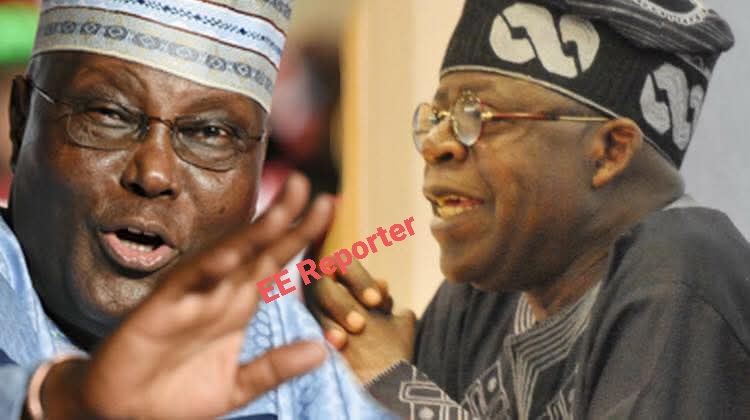
Atiku slams Tinubu over ‘reckless’ presidential pardon says “It undermines justice, emboldens criminality”. Former Vice-President Atiku Abubakar has criticised President Bola Tinubu for what he described as the “reckless and morally indefensible” use of presidential pardon.
In a statement on Sunday, Abubakar said the latest exercise of clemency by Tinubu “undermines justice and emboldens criminality,” arguing that it betrays the spirit of the constitutional power it is meant to represent.
“The recent announcement of a presidential pardon by President Bola Ahmed Tinubu has, as expected, provoked outrage across the nation,” Abubakar said.
“Ordinarily, the power of presidential pardon is a solemn prerogative, a moral and constitutional instrument designed to temper justice with mercy and to underscore the humanity of the state.
“When properly exercised, it elevates justice and strengthens public faith in governance. Regrettably, the latest pardon issued by the Tinubu administration has done the very opposite.”
He said granting clemency to individuals convicted of serious crimes such as drug trafficking, kidnapping, murder, and corruption “not only diminishes the sanctity of justice but also sends a dangerous signal to the public and the international community about the values this government upholds”.
“At a time when Nigeria continues to reel under the weight of insecurity, moral decay, and a surge in drug-related offences, it is both shocking and indefensible that the presidency would prioritise clemency for those whose actions have directly undermined national stability and social order,” he added.
The former vice-president said it is “particularly worrisome” that nearly a third of those pardoned were convicted for drug-related offences.
“Particularly worrisome is the revelation that 29.2 percent of those pardoned were convicted for drug-related crimes at a time when our youth are being destroyed by narcotics, and our nation is still struggling to cleanse its image from the global stain of drug offences,” he said.
“Even more disturbing is the moral irony that this act of clemency is coming from a president whose own past remains clouded by unresolved and unexplained issues relating to the forfeiture of thousands of dollars to the United States government over drug-related investigations.
“It is, therefore, no surprise that this administration continues to demonstrate a worrying tolerance for individuals associated with criminal enterprise.”
According to him, a presidential pardon is meant to symbolise “restitution and moral reform,” but Tinubu’s action “has become a mockery of the criminal justice system, an affront to victims, a demoralisation of law enforcement, and a grave injury to the conscience of the nation.”
“Clemency must never be confused with complicity,” Atiku said, adding that “when a government begins to absolve offenders of the very crimes it claims to be fighting, it erodes the moral authority of leadership and emboldens lawlessness,” the former vice-president.
“Nigeria deserves a leadership that upholds justice, not one that trivialises it.”
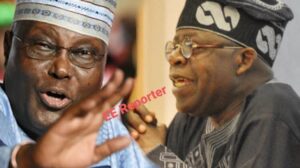
Tinubu, Atiku
Recently, 175 persons received a presidential pardon following the approval of the national council of state.
Among the 175 beneficiaries are Herbert Macaulay, one of Nigeria’s foremost nationalists; Farouk Lawan, a former member of the house of representatives; Mamman Vatsa, a major general and poet executed in 1986 over alleged treason; and Maryam Sanda, who was sentenced to death for killing her husband in 2017.
Drug offenders, illegal miners, white-collar convicts, and foreigners are also among the recipients of the presidential pardon.
In a statement on Saturday, Bayo Onanuga, special adviser to the president on information and strategy, said Tinubu granted clemency to most of the convicts based on reports that they had shown remorse and good conduct.
-
 Crime12 months ago
Kogi Assembly Considers Law To Regulate Rent, Establish Control Board: Tenancy Law
-
 News1 year ago
Atiku Reveals Why He Failed To Pick Wike As Running Mate In 2023
-
 Akwa Ibom1 year ago
The Apostolic Church Gets New Territorial Chairman, Exco
-

 Crime1 year ago
Federal High Court Jails 2 For Vandalizing Transformer, Telecom Mast In Kogi
-
 News1 year ago
The Apostolic Church Gets New National President, Executive
-
 Akwa Ibom1 year ago
Umo Eno Commences Payment Of 80,000 Naira Minimum Wage With Arrears
-

 News1 year ago
Senator Natasha Returns To Senate With Husband Amid Seat Dispute
-
 Economy12 months ago
Kiyosaki: Is Tinubu’s Government Afraid Of Ibrahim Traore?