
Health care
NCDC Reports Decline In Lassa Fever Cases In Nigeria

NCDC Reports Decline In Lassa Fever Cases In Nigeria
NCDC reports decline in Lassa fever cases in Nigeria. Public health experts have called for more proactive measures to address gaps in early detection.
The Nigeria Centre for Disease Control and Prevention (NCDC) has reported a decline in new confirmed Lassa fever cases in its Epidemiological Week 9 2025 report.
The NCDC via its official website on Sunday, said that the fatality rate remained alarmingly high at 18.7 per cent, with 100 deaths recorded so far in 2025.
According to the Lassa Fever Situation Report released by the agency, 29 new cases were confirmed across nine states, a drop from 54 cases recorded in the previous week (Week 8).
It said that the affected states included Ondo, Bauchi, Edo, Taraba, Ebonyi, Plateau, Cross River, Nasarawa, and Enugu.
The NCDC highlighted that 72 per cent of all confirmed cases were reported from just three states—Ondo 31 per cent, Bauchi 24 per cent, and Edo 17 per cent.
It said that these states continued to bear the brunt of the outbreak, raising concerns over the effectiveness of ongoing containment efforts.
Furthermore, it noted that one new healthcare worker was infected in Week 9, bringing the total number of affected health workers in 2025 to 17.
“This underscores the urgent need for better protective measures, adequate supply of personal protective equipment (PPEs), and enhanced infection prevention protocols in hospitals,” it said.
The NCDC outlined several challenges impacting the response to the outbreak, including: “Late presentation of cases, leading to high fatality rates”.
“Poor health-seeking behaviour, attributed to the high cost of Lassa fever treatment and management.
“Poor environmental sanitation conditions in high-burden communities and low awareness about Lassa fever symptoms and preventive measures”.
In response to the outbreak, it said that the National Rapid Response Team (NRRT) had been deployed to Gombe, Nasarawa, and Benue states to provide technical support.
Additionally, the NCDC said it had intensified risk communication efforts and conducted training for healthcare workers in Bauchi, Ebonyi, and Benue states.
The agency said it was also collaborating with international partners such as WHO, MSF Geneva, and Georgetown Global Health Nigeria to improve case management and enhance surveillance.
Comparative data from the NCDC showed that while the number of confirmed cases in 2025 (535 cases as of Week 9) is lower than in 2024 (682 cases during the same period), the fatality rate remains nearly the same (18.7% vs. 18.8%).
“The NCDC continues to advise Nigerians to: “avoid contact with rodents and their droppings, store food properly to prevent contamination, and seek medical attention immediately if they experience symptoms such as fever, headache, sore throat, and unexplained bleeding,” it reported.
Meanwhile, public health experts said this called for more proactive measures to address gaps in early detection, treatment affordability, and public awareness to reduce mortality rates in future outbreaks.
They urged state governments, donor agencies, and community leaders to intensify awareness campaigns and improve healthcare infrastructure in Lassa fever hotspots.
As Nigeria battles this recurrent public health challenge, experts emphasised the need for long-term investments in disease surveillance, public health education, and improved access to treatment to curb future outbreaks.
Lassa fever is a viral hemorrhagic disease caused by the Lassa virus, primarily spread through contact with food or household items contaminated by the urine, faeces, or saliva of infected rodents.
Lassa Fever
Human-to-human transmission can also occur, particularly in healthcare settings, with inadequate infection prevention and control (IPC) measures.
Nigeria records Lassa fever cases year-round, with peak transmission occurring between October and May.
The high burden of the disease is linked to widespread rodent infestations, poor sanitation, and a lack of awareness in many communities.
Efforts to combat Lassa fever in the country include: surveillance and early detection, case management, and public health awareness campaigns.
In spite of these efforts, Lassa fever remains a significant public health challenge, with high mortality rates and the potential for international spread, as seen in the recent report.












NAF, NEMA Deepen Partnership for Enhanced Disaster Response
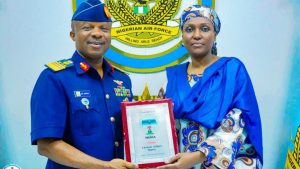
Strengthening Nigeria’s capacity to respond swiftly and effectively to emergencies was at the heart of discussions on 29 September 2026, as the Director-General of the National Emergency Management Agency (NEMA), Mrs Zubaida Umar, paid a courtesy visit to the Chief of the Air Staff (CAS), Air Marshal Sunday Kelvin Aneke, at Headquarters NAF, Abuja.
Eereporter.com
The engagement provided an opportunity to reinforce the longstanding partnership between NEMA and the Nigerian Air Force (NAF), particularly in disaster management, search and rescue, medical support and emergency response.
A key focus of the discussions was the enhanced participation of NAF Disaster Response Units in search and rescue exercises, alongside greater medical cooperation and improved operational preparedness.
Both agencies also explored opportunities for joint training, specialised disaster-management simulations and capacity development to ensure more effective coordination in responding to emergencies and humanitarian situations.
The CAS acknowledged NEMA’s vital role in national disaster management and reaffirmed NAF’s readiness to strengthen collaboration in areas that directly enhance the protection of lives and communities.
NEMA
The engagement reflects the CAS’s broader commitment to strategic inter-agency partnerships that harness complementary capabilities to strengthen disaster response, search and rescue, humanitarian assistance and national resilience.
Eereporter.com
Cancer Not Death Sentence – Former First Lady Amosun
A former Ogun State First Lady, Olufunso Amosun, has urged women not to see cancer as a death sentence, stressing that early detection and prompt treatment can save lives.
Eereporter.com
Mrs Amosun made the call on Wednesday at the flag-off of the 2026 free breast and cervical cancer screening organised at the Federal Medical Centre, Abeokuta.
She said the annual screening exercise was more than a routine medical check, describing it as an opportunity to provide life-saving interventions and ensure that women have timely access to healthcare.
Mrs Amosun, while highlighting the growing burden of cancer in Nigeria, said breast cancer incidence in the country had risen by nearly 300 per cent over the past three decades.
Citing data from the Global Cancer Observatory 2022, she said Nigeria recorded 32,278 new breast cancer cases and 16,332 deaths, giving the country the highest burden on the African continent.
She, however, emphasised that early detection remained one of the most effective ways of reducing cancer-related deaths.
According to her, survival rates for patients diagnosed at an early stage could exceed 90 per cent, compared with less than 30 per cent for those diagnosed at an advanced stage.
Reflecting on the 2025 edition of the programme, the former first lady said more than 600 women benefited from the screening, while 22 women were found to have breast-related concerns.
“Out of these, 11 women diagnosed with suspicious breast lumps underwent free lumpectomy surgeries and post-operative care funded entirely by the foundation in November 2025.
Amosun encouraged women participating in the 2026 exercise to make preventive healthcare a priority, urging them not to allow fear to delay them from seeking medical attention.
She also called on the beneficiaries to become advocates for cancer awareness by sharing the message of early screening with their families, friends and communities.
Her message was simple: cancer may be a serious health challenge, but with awareness, early detection and timely treatment, it does not have to be a death sentence.
In his remarks, a Medical Consultant and Surgeon at the Federal Medical Centre, Ebenezer Nkom, de-emphasised the efficacy of native remedial measures, stating that early clinical detection will prevent mortality.
The medical expert also warned against narratives that sucking a human breast may cure breast cancer, appealing to Nigerians to pay attention to themselves.
He added that women should do away with fears of losing their breast; practitioners can reconstruct another artificial breast for the concerned.
Cancer Is Death Sentence
“You shouldn’t be afraid of losing your breast; it is when you are alive that you can talk of the beauty of your husband. Some of you even thought that when a man sucks your breast, you will be healed of cancer; that is not true. Go through screening and whenever you notice anything, meet a doctor immediately.”
According to the National Cancer Institute, Cancer is a disease where abnormal cells divide without control and can invade nearby tissues or spread to other parts of the body.
Eereporter.com
Economy
Nigeria Customs Commissions Healthcare Rehabilitated Facility to Boost Community Development in Rivers

Nigeria Customs Commissions Healthcare Rehabilitated Facility to Boost Community Development in Rivers
The Nigeria Customs Service (NCS) has commissioned the rehabilitated Ebubu Primary Healthcare Centre in Eleme, Rivers State, as part of its Corporate Social Responsibility initiative, known as ‘Customs Cares’, aimed at supporting communities and contributing to their social development.
Eereporter.com
The Comptroller-General of Customs, Adewale Adeniyi, who spoke on Tuesday, 15 September 2026, during the commissioning of the facility, said the intervention reflected the Service’s responsibility to contribute to the wellbeing of communities beyond its statutory mandates of revenue collection, trade facilitation and border security.
CGC Adeniyi, who recalled how NCS officially launched the CSR Programme in March 2025, said “School renovations, scholarships, medical outreaches, healthcare facility rehabilitation, food distribution, agricultural initiatives, skills acquisition, solar-powered lighting, borehole projects and other community infrastructure as areas where Customs Cares had made interventions.”
He said the Ebubu project was particularly significant because healthcare was fundamental to human dignity, productivity and community development, noting that the condition of the centre before the intervention had affected the delivery of quality primary healthcare services to residents and surrounding communities, adding that, “What we have achieved here is therefore more than physical rehabilitation. We have invested in access, dignity and hope.”
He, however, stressed that the rehabilitation of the facility would only achieve its purpose if the centre were properly managed and maintained, adding that its sustainability would require adequate staffing, regular maintenance and continued support from relevant government institutions and the community.
The CGC also appreciated the traditional rulers, community leaders, Rivers State Government, Rivers State Primary Health Care Board, Eleme Local Government Council, healthcare professionals, and other stakeholders who contributed to the project’s success.
The Customs Area Controller, Port Harcourt II Area Command, Onne, Comptroller Aliyu Alkali, said the Service’s impact should not be measured only by revenue figures or enforcement statistics, but also by the positive difference its presence makes in the communities where it operates.

Nigeria Customs
Also speaking, the Comptroller in charge of the Corporate Social Responsibility Unit, Comptroller Patience Ibrahim, said the initiative reflected the Service’s belief that its responsibility to Nigerians extended beyond revenue collection to making a meaningful difference in the communities it serves.
Meanwhile, dignitaries who attended the function said the rehabilitated centre would bring quality healthcare closer to residents, while urging the community and other stakeholders to take ownership of the facility and ensure its continued usefulness.
Eereporter.com
-

 Crime1 year ago
Kogi Assembly Considers Law To Regulate Rent, Establish Control Board: Tenancy Law
-

 News2 years ago
Atiku Reveals Why He Failed To Pick Wike As Running Mate In 2023
-

 Akwa Ibom2 years ago
The Apostolic Church Gets New Territorial Chairman, Exco
-

 Crime2 years ago
Federal High Court Jails 2 For Vandalizing Transformer, Telecom Mast In Kogi
-

 News2 years ago
The Apostolic Church Gets New National President, Executive
-

 Akwa Ibom2 years ago
Umo Eno Commences Payment Of 80,000 Naira Minimum Wage With Arrears
-

 News2 years ago
Senator Natasha Returns To Senate With Husband Amid Seat Dispute
-

 Economy1 year ago
Kiyosaki: Is Tinubu’s Government Afraid Of Ibrahim Traore?