
News
FRSC Says Addressing Underage Driving Requires Multi-Faceted Approach

FRSC Says Addressing Underage Driving Requires Multi-Faceted Approach
FRSC says addressing underage driving requires multi-faceted approach. The FRSC commander said such an approach would involve effective law enforcement, education and community engagement.
The Federal Road Safety Corps (FRSC) says addressing underage driving requires a multi-faceted approach.
Corps commander Kehinde Hamzat, Lagos State sector commander, FRSC, made the assertion in an interview with journalists in Lagos.
He said such an approach would involve effective law enforcement, education and community engagement.
Mr Hamzat also said it would involve consideration of socio-economic factors.
He noted that the National Road Traffic Regulation specified that drivers must possess a valid licence appropriate for the type of vehicle they would be operating.
According to him, in Nigeria, the legal age for driving a vehicle depends on the type of vehicle. He said the minimum age for driving standard cars was 18 years.
“Twenty-six years of age is the minimum requirement for driving articulated vehicles in Nigeria,” he said.
The sector commander called for increased public awareness campaigns about the dangers of underage driving.
He also urged the provision of more comprehensive driver education and training programmes, especially for those driving large vehicles.
“There is also a need to encourage community involvement to encourage reporting of violations and educating of people on road safety to curb underage driving,” he said.
He disclosed that underage drivers often lacked the experience and maturity to handle large and complex vehicles.
According to him, this can lead to higher risks of accidents, endangering not only the lives of the driver but also the lives of other road users.
Mr Hamzat noted that underage driving had legal, safety, social and economic implications.
“For legal implications, underage drivers operate without licences and avoid insurance policies, and these can result in a criminal record.
“The safety implications have to do with increased accident risk, endangering passengers’ lives, and less likelihood to recognise and respond appropriately to the needs of pedestrians and cyclists.
“On social implications, underage driving can be influenced by peer pressure, promoting a culture of irresponsible behaviour among teens and resulting in a heightened concern for neighbourhood safety. It also leads to stress.
FRSC
“The economic implications have to do with increased costs, loss of opportunities and loss of public resources,” he said.
The FRSC boss recommended measures to ensure that only mature and experienced drivers operate articulated vehicles.
He listed the measures as strict licensing requirements, enforcement of minimum age policy, mandated advanced training programme and continual assessment.
He expressed the hope that implementing the strategies would promote road safety by ensuring that only mature and skilled drivers would operate articulated vehicles.










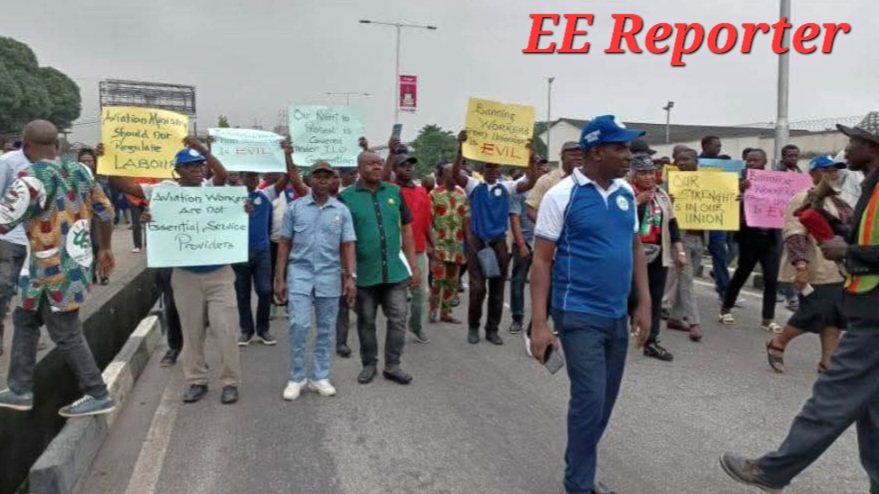
Federal Workers Threaten Nationwide Strike Over Wages, Insecurity
The Federal Workers Forum (FWF) has threatened to mobilise federal workers for an indefinite nationwide strike over rising insecurity and unresolved wage issues.
The forum, in a communiqué issued after an online meeting on Saturday, condemned the Nigeria Labour Congress and the Trade Union Congress for failing to show leadership in this respect.
Eereporter.com
In the communique signed by the National Coordinator and Secretary, Messrs Andrew Emelieze and Ayo Ogundele, respectively, and made available to journalists in Ibadan on Sunday, the forum accused the federal government of exploiting workers and failing to guarantee their safety.
The group said an online poll of its members overwhelmingly backed immediate strike action to address the current hardship and insecurity crisis confronting Nigeria.
It said the July 2024 minimum wage adjustment was a hoax for federal workers.
According to the forum, only N40,000 was added flat to salaries across all grade levels, and that amount was taxed, leaving workers with much less.
The group also alleged that the promised 40 per cent peculiar allowance, which the Head of Service of the Federation, Mrs Didi Walson-Jack, said would take effect from May 1, 2026, was later denounced by the Office of the Accountant General.
“May 2026 salaries have been paid, but no wage award was given as promised by the Minister of Finance, and consequential adjustments remain outstanding.
“Federal workers are already getting used to forfeiting their promotion arrears, and as a matter of fact, some salaries and numerous arrears have entered ‘voice mail’,” the communique stated.
It further listed unpaid entitlements, including two months of wage award arrears since July 2024 and outstanding duty tour allowance arrears.
The forum rejected a recent N100,000 minimum wage proposal by the Nigerian Governors’ Forum, calling it a “Greek gift” meant to keep wages low and describing it as a “wicked conspiracy against workers.”
It demanded a living wage and immediate clearance of all outstanding arrears, and a cost-of-living allowance.
Federal Workers protest
On insecurity, the FWF said that federal workers now live daily in fear and uncertainty, with kidnappings and attacks becoming routine.
It specifically condemned recent kidnappings in Oyo and Borno states involving children and teachers.
The forum therefore mandated the leadership of the NLC and the TUC to engage the government with a view to the speedy resolution of hardship and insecurity.
It also demanded that the federal government use all means, including negotiation, to free hostages, especially children in captivity in Oyo State and other parts of the country.
It equally called on the National Assembly to legislate the right of Nigerians to bear firearms.
The forum urged the convocation of a sovereign national conference to discuss the state of the nation.

How Arukwe Drives NNPC Foundation’s CSR Success
It’s fair to say that Emmanuella Arukwe has become the most recognisable face behind NNPC’s social impact programs. That is because she heads NNPC Foundation—the official Corporate Social Responsibility (CSR) arm of NNPC.
Park that.
To know her is to understand why she navigates this role the way she does. First, Arukwe comes from a line of strong women who she says were unaware of limitations. Her mother was married as a teenager, raised five children, then returned to school to earn two master’s degrees and a PhD. Her grandmother was self educated and became a politician and businesswoman. Most importantly, she was raised by a father who taught his daughters to believe they could do anything.
“I didn’t know there was a difference between men and women,” she said jokingly.
Eereporter.com
That explains a lot about her confidence, resilience and refusal to accept excuses.
Long before becoming the first MD of NNPC Foundation, Arukwe had built a reputation within the company as a legal and corporate governance professional. During a pivotal period, she served as Acting Company Secretary during NNPC’s transition from corporation to limited liability company. In just eight months, she helped steer one of the most consequential transitions in the company’s history.
“We held over 17 board meetings and about 18 committee meetings in eight months,” she recalled. “Sometimes I hardly caught my breath.”
Today, her role is different, but no less demanding. Under her leadership, NNPC Foundation has rapidly become one of Africa’s most visible CSR platforms focused on health, education, access to energy and environmental sustainability.
“People think NNPC is only about energy…The essence of the Foundation is branding. We are rewriting NNPC’s story through actions, not words,” she said.
Arukwe says the brand must earn the trust of stakeholders. She understands that communities are more receptive when they feel seen, heard and respected. Whether engaging the Eze in Nnewi or the Olowo of Owo, she moves comfortably between boardrooms and traditional institutions, understanding that successful interventions are as much about relationships as they are about resources.
In three years, the Foundation has won four awards at the Sustainability, Enterprise, and Responsibility Awards (SERAS) Africa CSR Awards in 2024 and five in 2025, including the prestigious Most Responsible Organisation in Africa Award. Arukwe herself was named Sustainability Professional of the Year 2025.
Yet behind the awards and initiatives are human stories like the nationwide cataract intervention programme that has screened over 23,000 Nigerians and performed over 6,000 surgeries. She shakes her head as a reminder of the impact these figures translate to.
“We removed the cataracts, and gave the blind sight,” she said. “At first, communities thought the programme was fake because they could not believe something so life-changing could be free.”
She is passionate about these interventions which she says are the best part of her job because they are not statistics on PowerPoint slides. They transform the lives of real people.
I saw that passion firsthand at the Nnamdi Azikiwe University Teaching Hospital, Nnewi where the Foundation commissioned a state-of-the-art 1.5 Tesla Magnetic Resonance Imaging (MRI) machine. The diagnostic equipment, installed at the hospital means access to advanced screening for patients across South-Eastern Nigeria who previously had to travel as far as Lagos and pay high fees for MRI services.
Arukwe understands personally what it means for a family to access timely diagnosis for neurological, cardiovascular or cancer-related conditions.
“These are human beings behind these interventions,” she kept repeating.
Her passion for young people is equally evident. What started as a financial literacy initiative eventually evolved into a business development and entrepreneurship programme.
“Young Nigerians need more than financial knowledge…they need a route to economic independence.”
That initiative expanded into the NYSC entrepreneurship programme where Corpers received training on business fundamentals and startup development. In collaboration with the Corporate Affairs Commission (CAC), Corps members received a 45% discount for business name registration after the Foundation engaged the CAC Registrar-General/Chief Executive Officer who facilitated the intervention.
It is that same instinct to help people see possibilities that shapes the way she approaches mentorship — particularly of younger women. Early in her career, she was asked to relocate to Benin for a demanding role when her children were very young. Arukwe hesitated. Her mentor encouraged her to take the role. She now credits that move as one of the experiences that sharpened her leadership skills.
Years later, she became the encouraging voice to a young graduate trainee while working at Integrated Data Services Limited (IDSL).
“She was offered a role she felt unprepared for…I told her she could and must do it,” she said.
Today, the woman is a Company Secretary—proof of the powerful role mentorship plays in shaping women leaders in a majority male environment.

Arukwe
Arukwe says the establishment of Women in NNPC (WIN) is a legacy-defining initiative because representation alone is never enough and the pressure that comes with having a few women at the top is unsustainable.
So is the unseen pressure behind the work of NNPC Foundation where requests never stop. Yet despite the endless demands, the Foundation operates through clearly defined priorities, careful research and measurable impact.
“The Foundation is data and statistics driven. We must be even when demonstrating care…but I never forget that empathy is the foundation that grounds me,” she explained.
Arukwe does not forget how she was carried while building her career. Her mother helped significantly with childcare. There were nannies, relatives and young people she supported who became part of the ecosystem that helped her balance leadership and family.
What legacy does she hope to leave behind?
“I want people to know that I worked for a great company that gave me the wings and support to change people’s lives,” she said.
After listening to her speak about restored sight, empowered young people and dignity restored, one could argue that it’s a fair legacy to hope for.
Eereporter.com
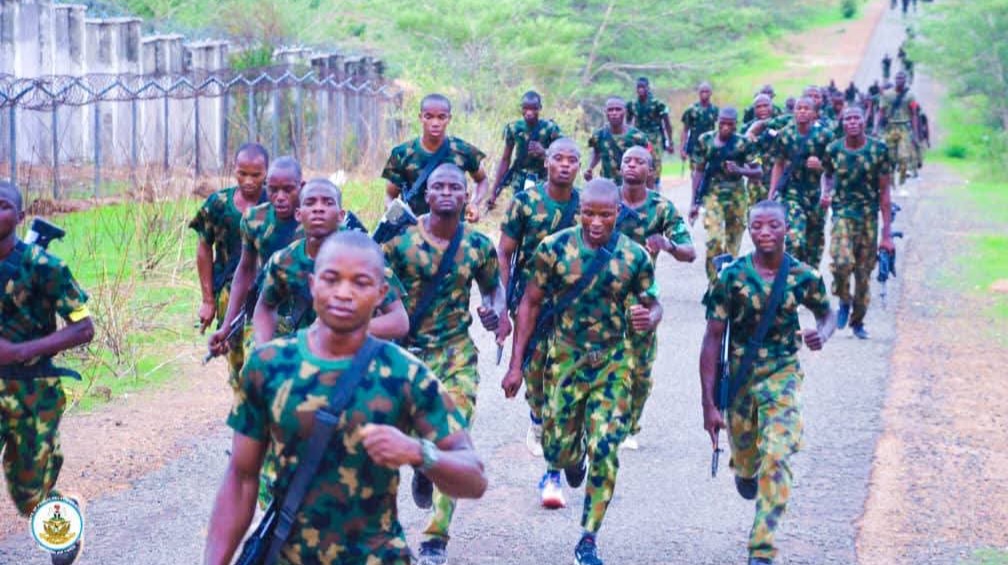
NAF Special Forces Raise The Bar: Only The Fittest Advance In The Fight Against Terrorism
For the Nigerian Air Force (NAF), operational success begins with rigorous training and uncompromising standards. On 30 May 2026, the Regiment Training Centre Annex (RTCA) Bauchi conducted the final Physical Fitness Test for trainees of Special Forces Course 13/2026 in a demonstration of the Service’s unwavering commitment to building an elite and combat-ready force.
The assessment formed a critical phase of the selection process, challenging trainees through a series of intense physical and mental evaluations designed to identify those possessing the endurance, resilience, discipline and fighting spirit required for Special Forces operations. The exercise underscores the NAF’s determination to sustain a highly capable force prepared to confront terrorism and other emerging security threats in complex operational environments.
Eereporter.com
The final Physical Fitness Test highlights the Nigerian Air Force’s relentless drive to produce mission-ready personnel capable of supporting ongoing counter-terrorism and internal security operations across the country. It also reflects the vision of the Chief of the Air Staff, Air Marshal Sunday Kelvin Aneke, who has consistently emphasized realistic training as the foundation of operational success. Reaffirming this commitment, the CAS stated: “The security challenges confronting our nation demand personnel who are physically robust, mentally resilient and operationally decisive.
Through realistic training and uncompromising standards, the Nigerian Air Force will continue to produce Special Forces operators capable of taking the fight to the enemy and defending Nigeria’s sovereignty wherever duty calls.” Through initiatives such as this, the NAF continues to strengthen its operational capability and maintain a force ready to dominate the battlespace in defence of the nation.
NAF Special Forces
Earlier, speaking during the exercise, the Commandant of RTCA Bauchi, Squadron Leader Edeama Lawrence Akpan, stated that the assessment was designed to ensure that only trainees who demonstrate exceptional physical fitness, determination and operational readiness continue on the course.
He emphasized that Special Forces personnel are routinely called upon to undertake demanding missions under austere and hostile conditions, making rigorous training and high standards indispensable.
Throughout the exercise, trainees displayed remarkable grit, perseverance and mental toughness as they strove to meet the exacting requirements expected of future Special Forces operators.
Eereporter.com
-
 Crime1 year ago
Kogi Assembly Considers Law To Regulate Rent, Establish Control Board: Tenancy Law
-

 News1 year ago
Atiku Reveals Why He Failed To Pick Wike As Running Mate In 2023
-
 Akwa Ibom1 year ago
The Apostolic Church Gets New Territorial Chairman, Exco
-

 Crime1 year ago
Federal High Court Jails 2 For Vandalizing Transformer, Telecom Mast In Kogi
-
 News1 year ago
The Apostolic Church Gets New National President, Executive
-

 Akwa Ibom1 year ago
Umo Eno Commences Payment Of 80,000 Naira Minimum Wage With Arrears
-

 News1 year ago
Senator Natasha Returns To Senate With Husband Amid Seat Dispute
-

 Economy1 year ago
Kiyosaki: Is Tinubu’s Government Afraid Of Ibrahim Traore?