
News
Nigerian Police Retirees Suspend Nationwide Protest Over Ondo Air Force Crash, Set New Date to Resume

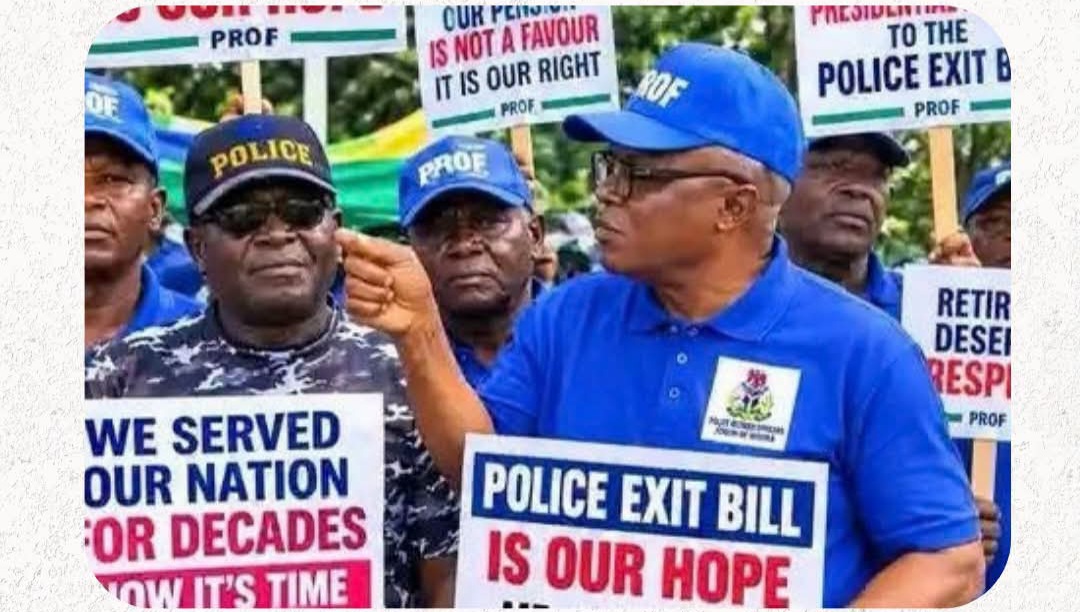
Nigerian Police Retirees Suspend Nationwide Protest Over Ondo Air Force Crash, Set New Date to Resume
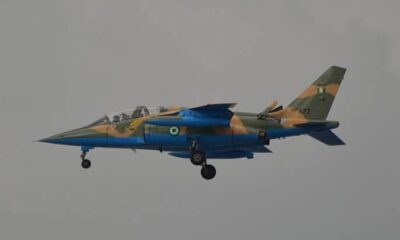
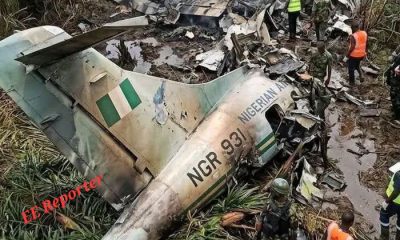
The Police Retired Officers Forum of Nigeria (PROF) has announced the suspension of its ongoing national peaceful protest, code-named “No Retreat, No Surrender,” following the tragic crash of a Nigerian Air Force aircraft in Ondo State.
Eereporter.com
In a statement issued on Thursday, signed by its National Coordinator, CSP Raphael Irowainu (rtd.), the PROF, said the protest, which was reactivated on September 29, 2026, would be paused to allow the Forum to commiserate with the Federal Government and the Nigerian Armed Forces over the loss of 20 passengers and five crew members.
The crash occurred at Igbokoda, the headquarters of Ilaje Local Government Area of Ondo State, on October 5, 2026.
“The suspension is to enable the Forum to commiserate with His Excellency, President Bola Ahmed Tinubu, GCFR, the Commander-in-Chief of the Armed Forces of the Federal Republic of Nigeria; the Honourable Minister of Defence, General Christopher Musa (Rtd.); the Chief of Defence Staff (CDS), General Olufemi Olatubosun Oluyede; the Chief of the Air Staff, Air Marshal Sunday Kelvin Aneke; the bereaved families; and the good people of Nigeria over the tragic loss,” the statement read.
The retired officers said the protest, initially reactivated to pressure President Tinubu to grant Presidential Assent to the Police Exit Bill currently before him, will now resume on Monday, October 12, 2026.
PROF noted that the decision to suspend the demonstration was in compliance with the Presidential declaration of three days of national mourning in honour of the fallen officers and personnel.
Describing the incident as a “monumental loss,” the Forum extended its condolences to the families of the victims and the Nigerian Armed Forces, stating that their sacrifice and service to the Federal Republic of Nigeria will not be forgotten.
“We pray that the Almighty God will grant His Excellency, the President; the Honourable Minister of Defence; the Chief of Defence Staff; the Chief of the Air Staff; the bereaved families; the Nigerian Armed Forces; and all Nigerians the fortitude to bear this irreparable loss,” the statement added.
“May the souls of the departed rest in perfect peace. Amen.”
The police retirees had earlier reactivated their nationwide protests under the banner “No Retreat, No Surrender,” demanding that President Tinubu immediately assent to the Police Exit Bill.
The retirees are protesting extreme financial hardship, citing that many members are unable to afford basic food and medical bills due to meager pension payouts. They are demanding a full exit from the Contributory Pension Scheme (CPS), pointing out that other security bodies like the military, Department of State Services (DSS), and Defence Intelligence Agency (DIA) have already been exempted.
Eereporter.com








News
FG Announces Additional Measures: NNPC Sell Fuel at cost to Cushion the Impact of Global Crude Oil Price Shocks
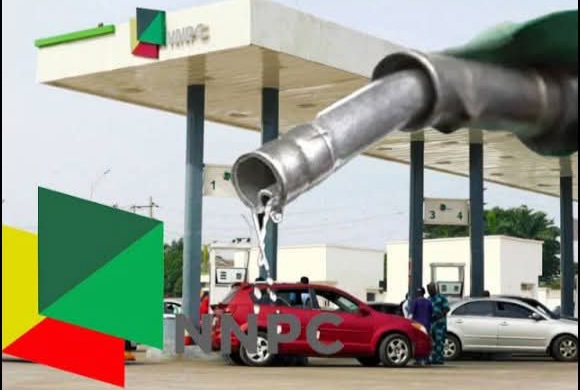
FG Announces Additional Measures: NNPC Sell Fuel at cost to Cushion the Impact of Global Crude Oil Price Shocks
The Nigerian National Petroleum Company (NNPC) agreed today to forgo its petrol retail profit margin and sell to Nigerians at cost to cushion the impact of global crude oil price shocks and volatility on vulnerable households.
Eereporter.com
NNPC Retail, which already sells petrol at the lowest price in the market, will offer this new deal within the next 30 days. This means if NNPC’s landing cost is N1300, it will sell fuel to Nigerians, especially commercial vehicles, at the same price.
The company’s discount gesture, backed by President Bola Ahmed Tinubu, was among the raft of measures the Finance Minister and Coordinating Minister of the Economy, Taiwo Oyedele, announced today.
Oyedele said he hoped other marketers would take a cue from the NNPC, as the sharp rise in crude and petrol prices is not expected to last long.
Oyedele was emphatic that NNPC agreeing to sell at a discount must not be misinterpreted as the restoration of petrol subsidy, which ended on May 29, 2023.
In addition, Oyedele announced forward sales of crude to domestic refineries. As production rises and previously committed crude is freed up, this is expected to shield pump prices from global market volatility.
Oyedele also said the Federal Government is negotiating a ceiling of N1,350 a litre on the ex-gantry or landing cost of petrol, to keep pump prices stable. Where costs rise above the ceiling, refiners and importers will carry the shortfall and recover it later, when crude prices or the exchange rate allow, without breaching the ceiling.
“This is neither a subsidy nor a price control: it is designed to smooth prices over time rather than suppressing them. The reasoning is simple. 1,400 naira a litre today and 1,400 tomorrow is better than 1,500 today and 1,300 tomorrow, because volatility itself adds to uncertainty and cost. And when fares rise sharply, they rarely fall as fast. The ceiling will be reviewed monthly, reset as costs require, and the figures published for transparency,” Oyedele said.
Oyedele also said that, under the 2025 tax reform laws, the Federal government, in collaboration with the states and security agencies, is reining in the collection of road taxes and levies that inflate fares and logistics costs.
The Federal government is also increasing funding for cash transfers to the most vulnerable households and subsidised credit for small businesses and consumers.
Other measures announced:
A faster CNG rollout:
The federal government is scaling up CNG deployment with the states. The government expects transporters to pass the savings on to passengers in lower fares. CNG is 60-70 per cent cheaper than petrol.
An excess profit tax:
This will be considered for operators who take undue advantage of consumers, anywhere along the energy value chain. The government said it will use proceeds from taxes on price gouging exclusively to cushion the impact of fuel prices through transport support or vouchers for urban minimum-wage earners, who are most vulnerable. The Federal Government will also work with the National Assembly to consider enhanced tax relief for low-income earners under the 2027 Finance Bill.
Less red tape: The Federal Government is cutting regulatory costs that feed into the cost of doing business and, indirectly, into higher prices of goods and services.
National Strategic Fuel Reserve:
To protect households and businesses from future energy shocks, the Federal Government is investing in a National Strategic Fuel Reserve. The government will release refined products into the market under clear, published rules whenever a global disruption or hoarding threatens supply and price stability. This is not a subsidy, and it does not fix prices; rather, it secures supply and reduces price volatility. It will prevent artificial scarcity, deter market manipulation, and anchor long-term energy security, so a deregulated market delivers stable growth rather than sudden price shocks.
Better traffic and logistics management:
Traffic management agencies will improve traffic flow, especially in major urban centres, to reduce fuel consumption. Also, NIPOST’s newly launched address codes will help make logistics more efficient and cheaper.
To be clear, none of these measures restores a blanket subsidy. Doing so would create longer-term harm for a short-term cure. Each measure is designed to reach the people who need help, without putting the wider economy at risk.
The Presidency acknowledged the challenges the people face over the high cost of fuel.
NNPC Ltd
“Removing the fuel subsidy came at a price. But the alternative has been tried. Nigeria has already lived through that cycle: scarcity, smuggling, a collapsing currency and a fiscal crisis. We cannot afford to live through it again, least of all in response to a temporary disruption, and at the very moment the results of reform are gathering pace.”
“Government is not out to reverse a necessary reform designed to set our country on the path towards sustained prosperity. It is to ensure its gains reach more Nigerians, faster and in more tangible ways. That is our work, and we are committed to doing it.
“The Federal Government is also working on a comprehensive package of fiscal measures to bring inflation down to single digits sustainably in the near term.”
Bayo Onanuga
Special Adviser to the President
(Information & Strategy)
October 8, 2026
Eereporter.com
News
Nigeria Customs Boss CGC Adeniyi Signs Anti-Corruption Documents, Activates ICRAM Steering Committee
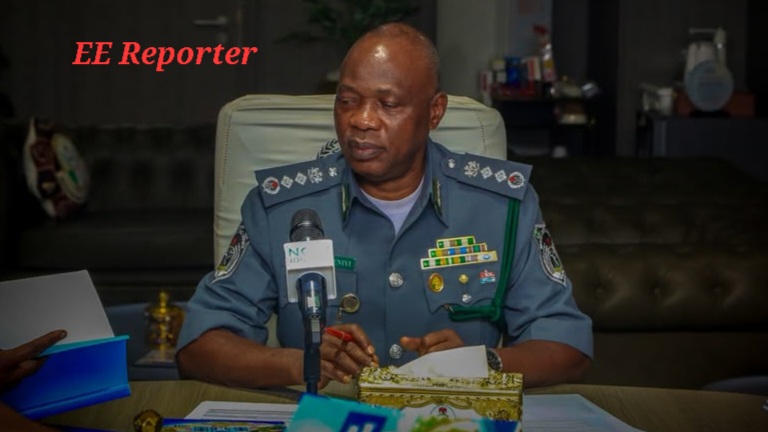
Nigeria Customs Boss CGC Adeniyi Signs Anti-Corruption Documents, Activates ICRAM Steering Committee
The Comptroller-General of Customs (CGC), Adewale Adeniyi, on Tuesday signed the Standard Operating Procedure (SOP) for Conducting Internal Corruption Risk Analysis and Mapping (ICRAM), the ICRAM Handbook, and the Integrity Action Plan, while directing their immediate implementation across all zones, commands, and units of the Nigeria Customs Service (NCS).
Eereporter.com
The Comptroller-General gave the directive on Tuesday, 6 October 2026, during a ceremony held at his office in the NCS Headquarters, Maitama, Abuja. As part of the milestone event, CGC Adeniyi also formally activated the ICRAM Steering Committee, cementing the Service’s systematic framework for identifying, assessing, and mapping corruption risks across all operational and administrative processes.
CGC Adeniyi said the documents resulted from a painstaking process involving an internal team, the World Customs Organisation (WCO), and partner administrations such as His Majesty’s Revenue and Customs (HMRC), noting that the objective was to ensure integrity remains central to all operations.
“These two documents are products of a painstaking process which we have undertaken with efforts from an internal team working together with our partners from the WCO and a number of other Customs administrations that have walked this path with us to ensure that we have a Service where integrity leads,” CGC Adeniyi said.
He explained that the documents were developed as practical tools to enable officers at ports, borders, and airports to identify and map corruption risks within their areas of operation and implement targeted measures to eliminate them.
“We want to believe that we have laid a practical step, very easy to follow, for all our operatives at the ports, the borders, and the airports, to be able to conduct corruption risk mapping in their places, giving them the opportunity and capacity to implement the action plan to instil integrity in our system,” he added.
Earlier, the Assistant Comptroller-General of Customs in charge of the Strategic Research and Policy Department, ACG Nafi’u Isyaku, who led senior officers to present the documents, sought approval for its full rollout across the Service.
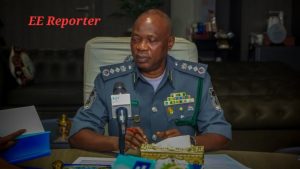
Nigeria Customs Boss CGC Adeniyi
Before the formal launch, the ICRAM methodology was piloted across seven key Commands and Units, covering 66 processes across regulatory, core Customs, and support functions. The pilot locations included:
Sea Modality: Apapa Area Command
Air Modality: Murtala Muhammed Cargo (MMAC) and Murtala Muhammed International Airport (MMIA) Commands
Land Modality: Seme Area Command
Specialised Units: Customs Police Unit Zone A, PAAR Ruling Centre, and the Procurement Unit.
The pilot produced a comprehensive Integrity Action Plan (IAP) with 101 Action Items and 295 Sub-Action Items. Key focal areas include enhanced automation, strengthened supervision and accountability, robust audit trails and traceability, clear segregation of duties, regular staff rotation, targeted training, and improved officer-stakeholder controls.
Eereporter.com
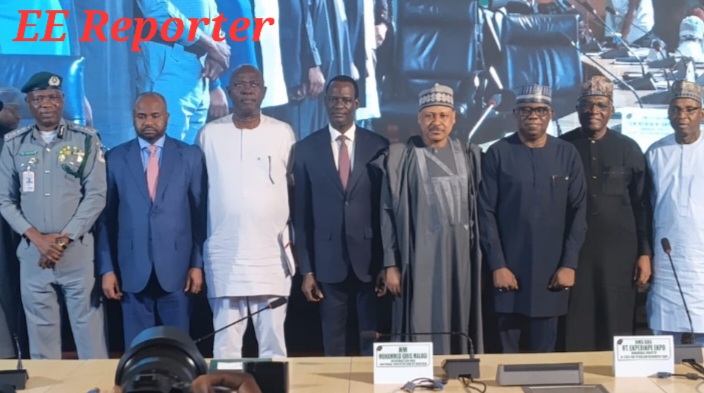
FG Unveils Plans to Reduce Fuel Price for Nigerians
The Federal Government has announced a 30-day petrol price relief plan aimed at making fuel cheaper for Nigerians at NNPC filling stations.
Eereporter.com
Speaking at a press conference in Abuja on Thursday, the Minister of Finance and Coordinating Minister of the Economy, Taiwo Oyedele, said the discount would particularly benefit public transporters.
According to him, the government will also implement a “negotiated landing cost” for petrol, with the arrangement subject to monthly review.
Taiwo Oyedele
“There’ll be a discount on NNPC petrol for the next 30 days, with priority for public transporters,” Oyedele stated.
More details on the implementation of the plan are expected from the Federal Government.
Eereporter.com
-
 Crime1 year ago
Kogi Assembly Considers Law To Regulate Rent, Establish Control Board: Tenancy Law
-

 News2 years ago
Atiku Reveals Why He Failed To Pick Wike As Running Mate In 2023
-
 Akwa Ibom2 years ago
The Apostolic Church Gets New Territorial Chairman, Exco
-

 Crime2 years ago
Federal High Court Jails 2 For Vandalizing Transformer, Telecom Mast In Kogi
-
 News2 years ago
The Apostolic Church Gets New National President, Executive
-
 Akwa Ibom2 years ago
Umo Eno Commences Payment Of 80,000 Naira Minimum Wage With Arrears
-

 News2 years ago
Senator Natasha Returns To Senate With Husband Amid Seat Dispute
-

 Economy1 year ago
Kiyosaki: Is Tinubu’s Government Afraid Of Ibrahim Traore?