
Economy
Deepwater Development on the Cards as GCEO NNPC Limited Meets NAE MD

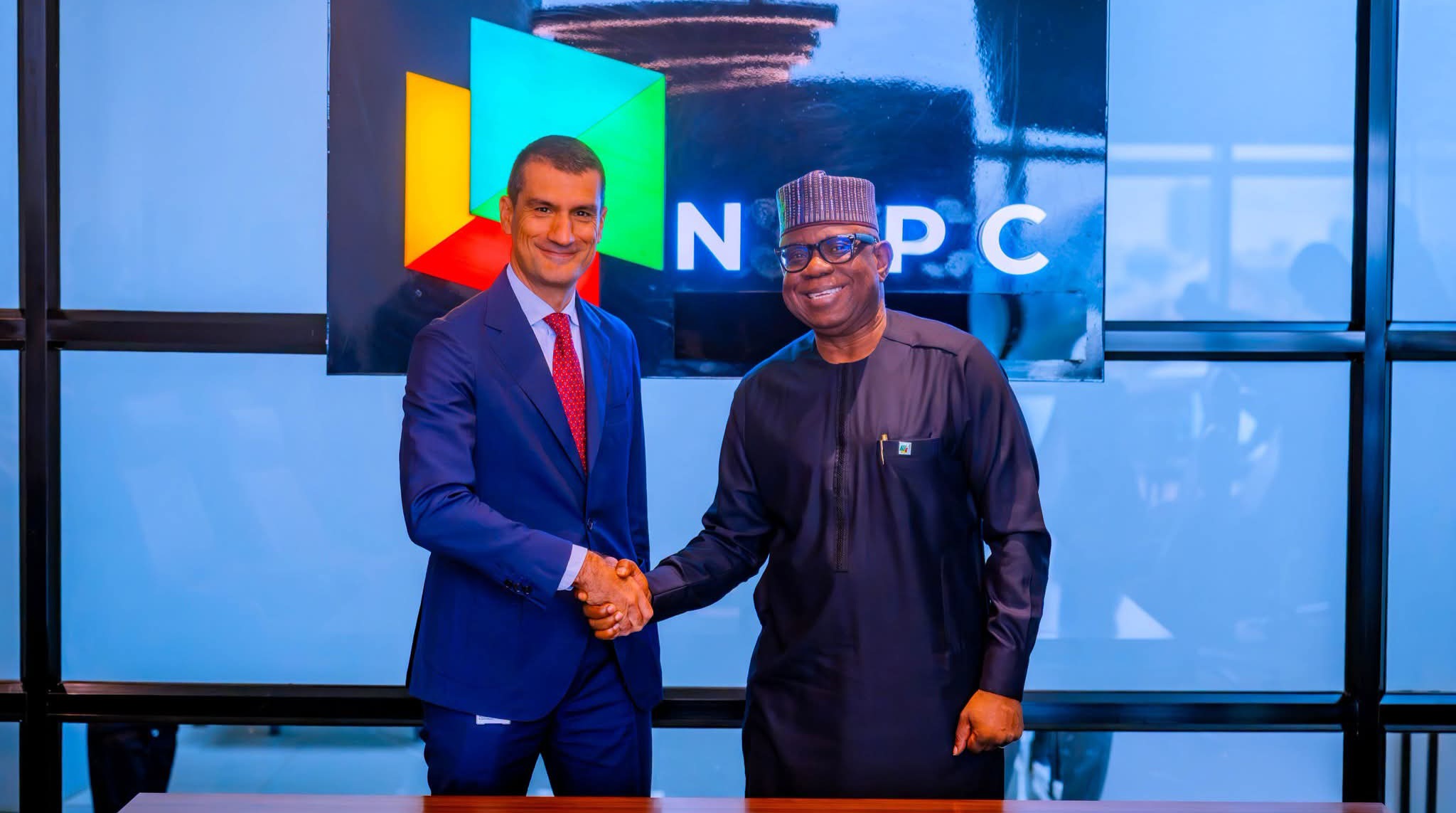
Deepwater Development on the Cards as GCEO NNPC Limited Meets NAE MD
Group CEO of NNPC Limited, Engr. Bashir Bayo Ojulari, received in audience the Vice Chairman/Managing Director of Nigerian Agip Exploration Limited (NAE), Mr. Maurizio Pinna, in Abuja recently.
Eereporter.com
Discussions centred on deepwater development with a focus on the work underway on the acreage held by the two companies as well as expected production.

NNPC, NAE
NAE operates the licences converted from OPL 245 together with NNPC Limited and SNEPCo. The acreage holds the Zabazaba and Etan deepwater fields, estimated at 500 MMbbl of reserves.
Eereporter.com








NNPC, EITI Strengthen Cooperation on Deeper Disclosures, Global Standards
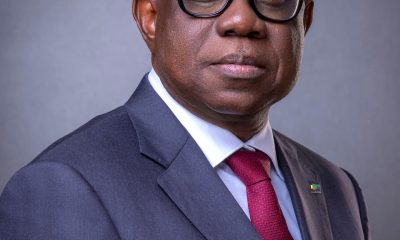
The Nigerian National Petroleum Company (NNPC) Limited and the Extractive Industries Transparency Initiative (EITI) have pledged to deepen their cooperation towards deeper disclosures, transparent reporting, and compliance with global EITI standards.
Eereporter.com
The pledge came on the heels of a visit by the EITI Africa Country Director, Gilbert Makore, to the NNPC Towers recently. The visit forms part of the ongoing validation of Nigeria against the 2023 EITI Standard.
Makore particularly commended NNPC Limited’s measurable progress on outstanding validation requirements and with disclosures that now track EITI expectations more closely.
Group CEO of NNPC Limited, Engr. Bashir Bayo Ojulari, who described the EITI as a useful platform for attracting investment and building stakeholder confidence, said it allows the company to show its governance and transparency records.

NNPC
Makore was accompanied on the visit by the EITI Validation Lead, Riley Zecca; the Nigeria Extractive Industries Transparency Initiative (NEITI) Director, Policy, Planning and Strategy, Dieter Bassi; Director, Technical, Sa’ad Balarabe; and Director, Communications and Stakeholder Management, Obiageli Onuorah.
Technical sessions with the NNPC’s Governance, Risk, and Compliance (GRC) Division were held to review the work done to close identified validation gaps.
Eereporter.com
Crime
EFCC Commences Investigations of Suspect, $73,000, £15,957 & 827,800 SAR Intercepted at Kano Airport
EFCC Commences Investigations of Suspect, $73,000, £15,957 & 827,800 SAR Intercepted at Kano Airport
The Kano Zonal Directorate of the Economic and Financial Crimes Commission (EFCC) has commenced investigation of a suspect, Haruna Yusuf and multiple undeclared foreign currencies, , $73,000( Seventy Three United States Dollar) £15,957 ( Fifteen Thousand, Nine Hundred and Fifty Seven Pound Sterling) & 827,800 Saudi Riyal intercepted by the Nigeria Customs Service, NCS, at the Mallam Aminu Kano International Airport, MAKIA.
Eereporter.com
The investigation commenced after the handover of the suspect and the undeclared currencies by the Acting Customs Area Comptroller of the Kano/Jigawa Command, Deputy Comptroller U. U. Adamu at the Customs Area Command in Kano.
The intercepted currencies, which exceeded the legally permitted threshold, were discovered during routine primary and secondary screenings of arriving passengers between August 8 and August 12, 2026.
The Acting Zonal Director of the EFCC, Kano Directorate, Assistant Commander of the EFCC, ACE1 Friday S. Ebelo, received the suspect and the recovered funds on behalf of the Commission.
According to Adamu, the Customs made two separate interceptions.
On August 8, 2026, “at approximately 14:20 hours, officers conducting passenger screening at the baggage seat of MAKIA intercepted an unaccompanied Saudi Air luggage containing 827,800 Saudi Riyals and $53,300 The currencies were found concealed inside a footwear.” Adamu stated.
Similarly, on August 12, 2026 “at approximately 13:50 hours, officers of the Nigerian Custom Service also flagged a luggage belonging to one Mr. Haruna Yusuf, who arrived at MAKIA on board Ethiopian Airlines flight ET941. During secondary screening using Non-Intrusive Inspection Technology, $20,000 USD and £15,957 were found concealed inside sportswear shoes”, he said.
Adamu thereafter formally handed over the suspect, Mr. Haruna Yusuf, alongside all recovered exhibits to Ebelo for further investigation and prosecution. He noted that the handover was in accordance with Section 4(f) of the NCS Act 2023, which empowers the Service to collaborate with other border regulatory agencies.
Adamu further explained that, “these interceptions demonstrate the readiness and vigilance of our officers in detecting cross-border movement of undeclared foreign currencies above the allowed threshold. The Command will continue to deploy technology, professional expertise, and intelligence-driven measures, including inter-agency collaboration to strengthen border controls and protect the integrity of Nigeria’s financial systems.”
Receiving the suspect and exhibits on behalf of the Executive Chairman of the EFCC, Mr. Ola Olukoyede, Ebelo expressed profound gratitude to the Customs Service for its professionalism and cooperation with EFCC officers recently deployed to the airport.
“We must sustain this vigilance at all our entry points to counter the illegal movement of currency. The failure to declare large sums of currency and its equivalent is a violation of the Money Laundering (Prevention and Prohibition) Act, 2022,” he said.
He urged the public to comply with the law, emphasizing that declaring currency attracts no penalty, only the source of undeclared funds may raise legal concerns.
“Once more, we call on the general public: as much as we are Nigerians and we encourage trade in and out of the country, people must adhere to the laws of the land. You must declare the currency you are carrying. If you declare it, nobody will seize your currency,” he said.
EFCC
Ebelo reaffirmed the EFCC’s commitment to thorough investigations and prosecution, stating that the Commission would continue to follow the law diligently
Both Ebelo and Adamu applauded the longstanding synergy between the EFCC and NCS which has been critical to combating financial crimes and illegal cash movement across Nigeria’s borders.
Eereporter.com
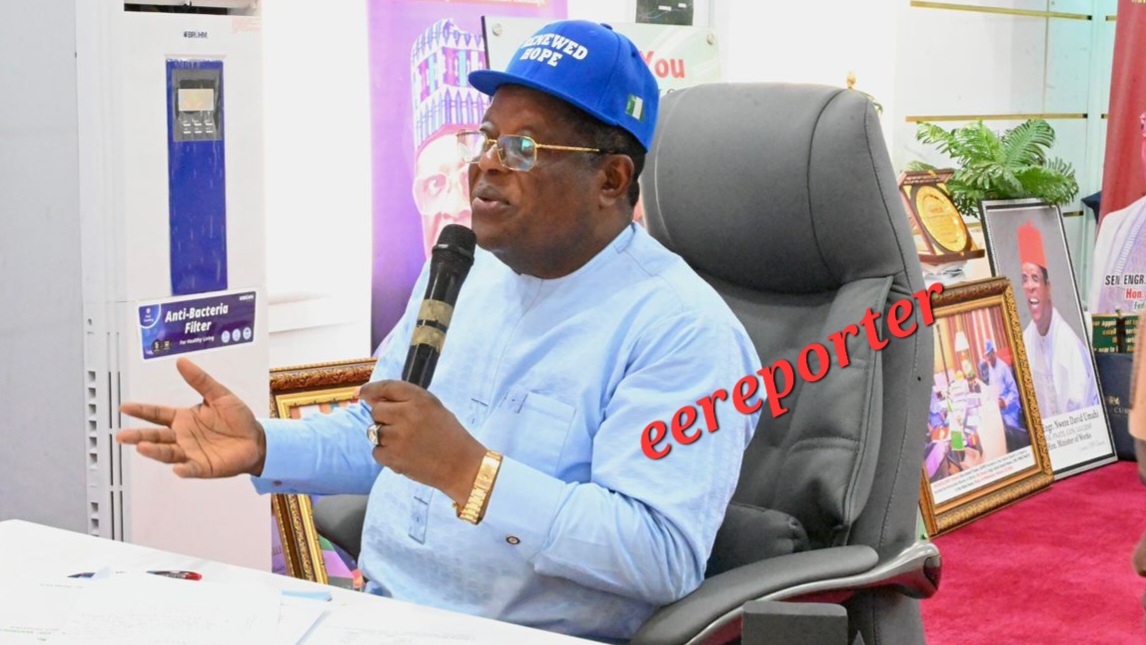
Umahi Response to Critics Over Benin-Onitsha Road Neglect Claims
The debate over the condition of the Benin–Onitsha corridor is legitimate. Nigerians have every right to demand good roads, safe journeys and value for public investment. But legitimate concern must not be distorted into a narrative that ignores history, contractual obligations, and the substantial road infrastructure intervention currently taking place across the South-East.
Eereporter.com
The article titled “The Benin–Onitsha Road: A Monument to Neglect and the Insensitivity of Power” raises serious concerns, but its central argument requires important clarification.
The first question the writer should answer is simple: How many times has he acknowledged the enormous number of Federal road projects being executed across the South-East under the Renewed Hope Infrastructure Renaissance of President Bola Ahmed Tinubu, GCFR?
The second equally important question is:
Was the Benin–Onitsha Road in its present condition only after President Tinubu assumed office?
And the third question, which is germane to responsible public debate is: Must every road in Nigeria be fixed within three years of a new administration assuming office, regardless of inherited contracts, concession agreements, funding constraints, and procurement laws?
These fundamental questions do not dismiss the suffering of motorists and road users. Rather, they place the problem in its proper context.
It is intellectually dishonest to present the present condition of the Benin–Onitsha road as though it was created by the Tinubu administration. It inherited a vast network of deteriorating 2,064 Federal roads and bridges projects after decades of accumulated infrastructure deficits. It is instructive to note that the condition of major highways across the country predates the present administration.
Indeed, the Federal Government itself has acknowledged the historic deterioration of major South-East roads. On the Enugu–Onitsha Expressway, for instance, the Ministry has been undertaking substantial reconstruction works, including concrete pavement, and in April, 2026 reopened an initial 15-kilometre completed section.
Therefore, the question should not merely be “Why is every kilometre not yet perfect?” But the more responsible questions should be: “What has this administration inherited, what is it fixing, what contractual constraints exist, and what is being done to accelerate delivery?”
One of the most significant omissions in the criticism is the contractual status of the Benin–Asaba road project. The project was incorporated into the Federal Government’s Highway Development and Management Initiative (HDMI) as a Value-Added Concession. Official records of the Infrastructure Concession and Regulatory Commission (ICRC) describe the 125-kilometre Benin–Asaba Expressway as a 25-year concession involving the concessionaire, with the project designed to attract private-sector investment for development and management of the road.
The Federal Ministry of Works has also explained that under the Value-Added Concession model, the road pavement and the entire Right-of-Way are concessioned for development and management by the concessionaire. This diminishes the simplistic argument that the Minister of Works can simply wake up one morning, terminate the arrangement, and award another contract.
Government is bound by law. It is bound by contract. And it must observe due process.
Also, it cannot arbitrarily terminate an existing Concession Agreement without considering the legal and financial consequences, including the possibility of litigation and humongous claims against the Federal Government.
The Minister’s position is, therefore, clear: the Ministry has been engaging the Concessionaire over the pace of work and demanding better performance. The fact that the road is concessioned does not mean the Federal Government has abandoned responsibility. It means that responsibility must be exercised within the framework of the existing contractual and legal arrangements.
Indeed, the Federal Government commenced a review of inherited highway concession agreements in 2025 precisely to address concerns surrounding transparency, accountability, performance and value for money.
The critic’s argument would have Nigerians believe that the Tinubu administration has done little or nothing for the South-East. The facts do not support that sweeping conclusion.
Across the zone, the Federal Government is executing or advancing major road projects that had remained stalled, neglected, or merely conceptualised for years. These include but are not limited to the Enugu–Akwa-Onitsha Expressway, the Onueke Highway and Flyover, and the Calabar–Ebonyi–Benue Trans-Sahara Superhighway, Rehabilitation and Dualisation of Enugu – Abakaliki – Ogoja Road, Dualisation of Afikpo – Okigwe Road, Construction of Access Roads to the 2nd Niger Bridge linking Asaba and Onitsha in Delta and Anambra States, Rehabilitation of Aba – Owerri Road, Rehabilitation Of Onitsha -Owerri Expressway in Anambra/Imo States, Rehabilitation of Enugu-Port Harcourt Expressway and the Dualisation of Aba-Ikot Ekpene Road.
The Minister has repeatedly described these projects as part of President Tinubu’s broader infrastructure intervention in the South-East. Recent reporting also documents the reopening of completed sections of the Enugu–Onitsha highway and continuing reconstruction works along the corridor.
The argument, therefore, cannot reasonably be reduced to: “One road has a problem, therefore the government is doing nothing in the South-East.” That is not a fair assessment of infrastructure policy and delivery.
The Minister has, on numerous occasions, publicly acknowledged the importance of the corridor and has been engaging with the challenges surrounding the delivery of Federal roads in the South-East and elsewhere. In fact, the Ministry has demonstrated a broader approach of confronting underperforming contractors and concessionaires rather than merely making excuses for them.
In June, 2026, the Minister publicly warned non-performing contractors and expressed dissatisfaction with the pace of work on major roads, insisting that contractors must fulfil their contractual obligations. This is hardly the posture of a government that has simply abandoned the nation’s roads.
The Minister’s hands may be constrained by existing legal arrangements, but that does not mean the Ministry is indifferent.
There is a difference between being unable to lawfully terminate a contract and being unwilling to act. Those two things must not be confused.
The Minister has openly spoken about the scale of infrastructure being delivered under the Renewed Hope Agenda of President Tinubu and has, consistently, urged the South-East to recognise and support the administration.
Whether one agrees with the message or not, it should not automatically be transformed into the claim that a road is being deliberately “neglected” because its people did not vote for the President. There is no basis for equating political advocacy with a government policy of denying roads to citizens.
Indeed, the Federal Government’s road programme extends across all six geopolitical zones of the country. The Minister’s central argument is that Nigerians should recognise projects being delivered under the Renewed Hope Administration and judge by the records.
That is a political argument. It is not evidence that infrastructure is being distributed according to party membership.
Criticism is necessary in a democracy. Government officials must be questioned. Ministers must be held accountable. Contractors must be challenged. And poor roads must be reported.
But criticism should not become selective memory.
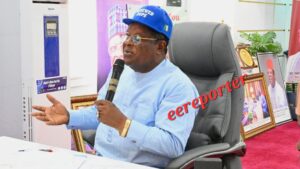
Umahi
When government undertakes major projects in a region, those projects should also be acknowledged.
When an abandoned road is being reconstructed, that fact should be recognised.
When a 15-kilometre section of the Enugu–Onitsha Expressway is completed and reopened, Nigerians should be told. When new strategic highways are initiated, the public deserves to know. When inherited concession agreements constrain immediate intervention, that context must also be explained.
A balanced assessment should contain both the failures that remain and the progress that has been made. Anything less, risks turning journalism into advocacy rather than investigation.
Nigeria has thousands of kilometres of federal highways, many of which require reconstruction, dualisation, bridges, drainage, right-of-way management and sustainable financing.
No serious infrastructure policy can assume that every inherited road will be completely reconstructed within three years.
The Tinubu administration assumed office in May, 2023. It inherited projects at different stages: some abandoned, some stalled, some underfunded, some affected by contractual disputes, and others under concession arrangements. The appropriate test is, therefore, not whether every road has been completed, but whether the administration has established a credible programme for addressing the infrastructure deficit and whether projects are actually moving.
Even within the present administration, the Ministry has had to adjust project scopes because of funding limitations, while prioritising critically failed sections for immediate intervention. The Ministry disclosed, for example, that one section of the Abuja–Lokoja project had to be reduced from 49.28 kilometres to 28 kilometres to concentrate available resources on the most critical portions of the alignment. That reality illustrates the complexity of infrastructure financing in Nigeria.
The South-East should not have to beg to be treated as part of Nigeria. Its people deserve good roads, bridges, rail connections, security and economic infrastructure. But the same principle applies to every region of Nigeria. The answer to perceived marginalisation should not be another narrative of division. It should be a factual assessment of what has been done, what remains outstanding and what obstacles must be overcome.
President Tinubu’s administration is pursuing major road interventions across the country, including strategic projects that connect regions and economic centres.
The South-East is not outside that programme. On the contrary, several of the projects now being advanced in the region are designed precisely to strengthen regional integration, trade, transportation and economic activity. Recent inspections and government statements have highlighted the strategic importance of these projects to the South-East, South-South and adjoining zones.
None of this means that road users should be told to endure a bad road indefinitely.
The complaints of commuters are real.
The pressure on businesses is real.
The delays, vehicle damage and safety concerns are real.
That is precisely why the Ministry must continue to press the concessionaire, enforce contractual obligations and use every lawful mechanism available to secure improvement.
The Minister’s position is not that the road does not matter. His position is that the road matters, the Ministry knows it, the concession arrangement is known, the concessionaire has obligations, and the government must operate within the law, while compelling performance.
Then comes the fourth question, which the article conveniently overlooks: What should the Federal Government do when a road is under a legally binding concession? Arbitrarily terminate it and expose the country to litigation, or enforce the concessionaire’s obligations through lawful means?
The Benin–Onitsha road should not become a political weapon.
It should become a case study in why Nigeria must solve its infrastructure financing and maintenance problems sustainably.
The Federal Government cannot reconstruct every road simultaneously. It must prioritise, finance, supervise, enforce contracts, and respect the law.
The Ministry of Works cannot simply terminate inherited concessions because political commentators demand it. And Nigerians should not be encouraged to believe that nothing is happening simply because every road has not yet reached the completion stage.
The real record of the Tinubu administration in the South-East must be judged by the totality of its interventions — not by one road isolated from the larger infrastructure drive.
Ingratitude should never replace investigation. Sentiment should never replace facts. And criticism should never require Nigerians to forget what is actually being done.
The Benin–Onitsha corridor deserves attention, and the Ministry must continue to demand performance from the contractor. But that legitimate demand cannot be turned into an indictment of an administration that is simultaneously undertaking major road interventions across the South-East and the wider Federation.
As Senator Engineer Umahi’s response makes clear, those who have made up their minds against President Tinubu’s interventions in the South-East will not be persuaded by facts, no matter how extensive the facts may be. But government must continue to work.
The roads must continue to be built.
The concessionaires must continue to be held accountable.
And Nigerians will ultimately make their judgment at the appropriate time.
The Benin–Onitsha road deserves fixing — but the truth about who inherited the problem, who holds the contractual obligation, and what the present administration is doing must be told, univocally.
Mohammed A. Ahmed,
Director, Information and Public Relations.
16 August, 2026.
Eereporter.com
-
 Crime1 year ago
Kogi Assembly Considers Law To Regulate Rent, Establish Control Board: Tenancy Law
-

 News1 year ago
Atiku Reveals Why He Failed To Pick Wike As Running Mate In 2023
-
 Akwa Ibom2 years ago
The Apostolic Church Gets New Territorial Chairman, Exco
-

 Crime2 years ago
Federal High Court Jails 2 For Vandalizing Transformer, Telecom Mast In Kogi
-
 News2 years ago
The Apostolic Church Gets New National President, Executive
-
 Akwa Ibom2 years ago
Umo Eno Commences Payment Of 80,000 Naira Minimum Wage With Arrears
-

 News1 year ago
Senator Natasha Returns To Senate With Husband Amid Seat Dispute
-
 Economy1 year ago
Kiyosaki: Is Tinubu’s Government Afraid Of Ibrahim Traore?