
Education
Reps Advocates For Alternative Education Funding, Calls For More PPPs, Endowment Funds


Reps Advocates For Alternative Education Funding, Calls For More PPPs, Endowment Funds
Reps advocates for alternative education funding, calls for more PPPs and endowment funds. The Speaker of the House of Representatives, Hon. Abbas Tajudeen has urged stakeholders to explore alternative funding sources for education in Nigeria, emphasizing the need to reduce over-reliance on government resources.
Speaking at the 31st and 32nd Annual General Meeting of the Zaria Education Development Association (ZEDA) in Kaduna State on Saturday, Speaker Abbas highlighted Public Private Partnerships (PPPs) and endowment funds as viable solutions to drive sustainable growth in the education sector. His remarks came as he was honored by ZEDA for his ‘service to humanity.’
“Diversifying funding streams is critical,” Abbas stated. “By establishing endowment funds or engaging in public private partnerships, we can reduce our reliance on government funding.
Successful models in countries such as Denmark and Ireland have demonstrated that diversified funding can drive long-term, sustainable growth in the education sector.”
He underscored that human capital development remains the cornerstone of national progress, citing global examples such as Japan, Singapore, Switzerland, Taiwan, Luxembourg, Ireland, and Denmark.
These nations, he noted, achieved remarkable progress not through natural resources alone but through strategic investments in education, training, and innovation.
“Nigeria, blessed with vast natural resources, must equally prioritize the development of its people to realize its full potential,” he added.
Zaria’s Educational Heritage and New Initiatives
The Speaker praised Zaria’s historical contributions to Nigeria’s intellectual and professional landscape, citing its educational legacy dating back to the 16th century.
He highlighted Ahmadu Bello University and other institutions as pillars of learning that have significantly shaped the country’s academic and professional communities.
As part of efforts to enhance learning in Kaduna State and beyond, Speaker Abbas announced several new educational initiatives for his constituency.
These include the establishment of a Federal College of Education, a College of Health Sciences, a National Open University of Nigeria campus, and a College of Legal Studies.
“Once fully established, these institutions promise to extend significant educational and socio-economic benefits to our community,” he stated.
Challenges in the Education Sector
While celebrating progress, Speaker Abbas emphasized the need to address pressing educational challenges, particularly in primary and secondary education.
“The foundation of any thriving educational system rests upon robust, accessible, and quality basic education. Issues such as out-of-school children, those with special needs, and the overall quality of education demand urgent attention,” he said.
Commending Kaduna State Governor Uba Sani for constructing over 62 new secondary schools, he noted that the initiative had significantly reduced the number of out-of-school children and addressed critical infrastructure deficits.
The Role of Technology and Legislative Agenda
Speaker Abbas urged ZEDA to integrate technology into education, drawing inspiration from global models like the United Kingdom’s Education Development Trust and Singapore’s Agency for Science, Technology, and Research.
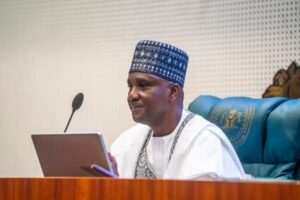
Hon. Abbas Tajudeen
He stressed that leveraging digital innovation could transform how educational outcomes are monitored, enhance teacher training, and expand access to learning resources.
“In the House of Representatives, our Legislative Agenda aligns with these priorities. We remain committed to advancing universal basic education, enhancing secondary and technical education, and integrating innovative reforms to address both current and future challenges,” he assured.
Recognition and Closing Remarks
The Grand Patron of ZEDA, His Royal Highness, the Emir of Zazzau, Malam Ahmed Nuhu Bamalli, CFR, LLD, lauded Speaker Abbas and other prominent figures for their contributions to the development of Zaria.
He reiterated the importance of ZEDA in advancing education in the region and called for continued support from stakeholders.
As Nigeria grapples with the complexities of education funding, Speaker Abbas’s call for alternative sources such as PPPs and endowment funds could pave the way for a more sustainable and effective education system in the country.











Education
IGP Disu, Stakeholders To Establish Police Academy Ogun Campus, Upgrade College Across The County

IGP Disu, Stakeholders To Establish Police Academy Ogun Campus, Upgrade College Across The County
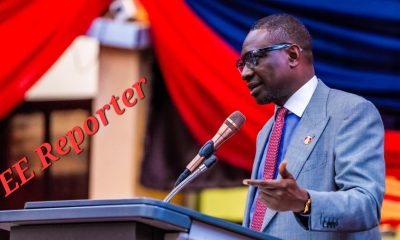
In a major move toward reforming police education, the Inspector-General of Police, IGP Olatunji Rilwan Disu, psc(+), NPM, held a high-level strategic meeting at the Federal Ministry of Education today, Monday, May 4, 2026.
The main goal of the meeting was to officially establish a new Nigeria Police Academy (POLAC) campus in Ogun State, along with a comprehensive plan to upgrade and secure accreditation for the 42 Police Colleges nationwide.
The meeting was hosted by the Honourable Minister of Education, Dr. Maruf Tunji Alausa, and the Honourable Minister of State for Education, Dr. Suwaiba Said Ahmad. The attendance of former IGP Kayode Egbetokun (Rtd) and other key stakeholders highlighted the importance and national significance of these educational reforms.
Eereporter.com
Key topics covered included infrastructure development and collaboration with the Tertiary Education Trust Fund (TETFund) to ensure the construction of modern facilities. Stakeholders also coordinated with the National Universities Commission (NUC) for thorough resource verification to meet accreditation standards, with a clear timeline set for the Ogun State campus to be fully operational in the 2026 academic session.

IGP Disu
IGP Disu reaffirmed the Force’s dedication to professional excellence, emphasizing that transforming these institutions is essential for building a modern, service-oriented police force.
He stated that by combining academic rigor with tactical operational training, the Nigeria Police Force will produce officers ready to address today’s security challenges with the highest level of integrity.
Education
ICPC Formally Established A Student Anti-Corruption Club (SAC) At Andal Science Academy, Kano
ICPC Formally Established A Student Anti-Corruption Club (SAC) At Andal Science Academy, Kano
Cultivating Integrity: ICPC Plants Anti-Corruption Seed at Andal Science Academy
In a resolute effort to curb the pervasive menace of corruption, the Kano State office of the Independent Corrupt Practices and Other Related Offences Commission (ICPC) has formally established a Student Anti-Corruption Club (SAC) at Andal Science Academy, Kano.
The initiative marks a strategic shift towards prevention rather than mere prosecution, targeting the conscience of the nation’s future leaders.
The Resident Anti-Corruption Commissioner, Barrister Ahmad Muhammad Wada, was represented at the ceremony by Chief Superintendent Sani Tukur and articulated the core philosophy behind the club.
He explained that its primary aim is to reshape the mindset of the younger generation, actively involving them in the anti-corruption crusade long before they assume positions of power or responsibility.
Addressing the students directly, Barrister Wada urged them to become courageous informants against malpractice, reporting any incidence of corruption to relevant authorities, including the ICPC, through the college principal.
The principal, he noted, would serve as the club’s patron, creating a safe and structured channel for whistleblowing within the school environment.
The Commissioner further emphasised that the club is designed not only to detect wrongdoing but also to thoroughly reorient students to the ills of corruption. He called on them to imbibe the virtues of integrity, discipline, and honesty, insisting that these qualities are non‑negotiable for the leaders of tomorrow who must steer Nigeria towards a more transparent future.
On his part, the principal of Andal Science Academy, Mr. Sam Ade, warmly commended the ICPC’s efforts to establish SACs in various schools across the federation. He assured the Commission of his management’s unwavering support, pledging to nurture the club to yield fruitful results and to embed its anti‑corruption ethos into the broader life of the academy.
Following the speeches, the executive members of the newly formed club were formally sworn in. They were then sensitised on the club’s rules, objectives, and operational boundaries, ensuring that from the outset, leadership was anchored in clarity and purpose rather than mere enthusiasm.
ICPC
The atmosphere reached a festive pitch when a gathering of about eighty students broke into spirited chanting, dancing, and singing of anti‑corruption slogans. Their visible energy and joy suggested that for these young people, the fight against corruption need not be grim—it could be a collective, vibrant, and even celebratory movement for change.
In sum, the launch of the Student Anti‑Corruption Club at Andal Science Academy is far more than a school event. It is a thematic declaration that integrity must be cultivated from childhood, that schools are vital frontiers in the battle against graft, and that with the right nurturing, today’s students can indeed become tomorrow’s most incorruptible citizens.
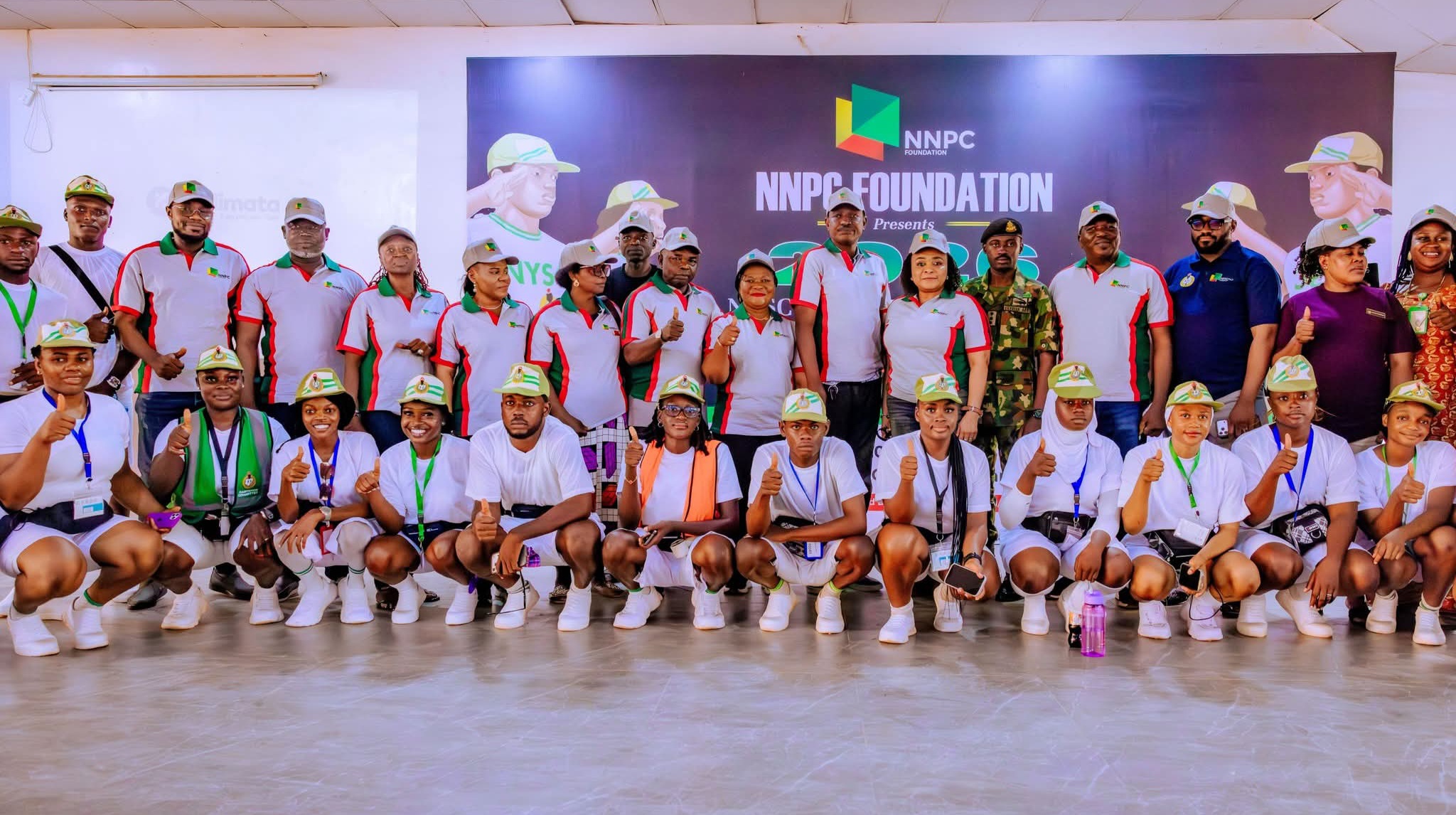
Financial Literacy: NNPC Foundation Trains Batch A Stream 2 Corps Members
In continuation of its Corporate Social Responsibility (CSR) initiatives on financial literacy, the NNPC Foundation Ltd./Gte has conducted its second 2026 National Youth Service Corps (NYSC) skills empowerment training for Batch A, Stream 2 corps members at the FCT NYSC Orientation Camp, Kubwa, Abuja, over the weekend.
Delivered in partnership with the NYSC Skills Acquisition and Entrepreneurship Development (SAED) scheme, the programme covers financial literacy, entrepreneurship, and business development. Its training structure also includes a financial literacy test, a “Kick Start My Business” course, and business proposal pitching.
Eereporter.com
Managing Director of NNPC Foundation, Emmanuella Arukwe, who was represented by the Head, Programme Management, Rose Okonkwo, noted that over one million corps members have been trained nationwide through the programme.
Acting Director of SAED, Usman Yahaya, commended the NNPC Foundation for its consistent support, urging the corps members to acquire multiple skills during their service year in order to position themselves as job creators and not job seekers.

NNPC, NYSC
It would be recalled that last year, 531 youths received Starter Packs and financial support to help them launch their businesses, with most beneficiaries recording measurable progress across their various enterprises.
The NNPC Foundation Ltd./Gte has, through the financial literacy programme, sustained its commitment to preparing young Nigerians towards sustainable careers and self-reliance, contributing to national economic growth and development.
-

 Crime1 year ago
Kogi Assembly Considers Law To Regulate Rent, Establish Control Board: Tenancy Law
-

 News1 year ago
Atiku Reveals Why He Failed To Pick Wike As Running Mate In 2023
-

 Akwa Ibom1 year ago
The Apostolic Church Gets New Territorial Chairman, Exco
-

 Crime1 year ago
Federal High Court Jails 2 For Vandalizing Transformer, Telecom Mast In Kogi
-

 News1 year ago
The Apostolic Church Gets New National President, Executive
-

 Akwa Ibom1 year ago
Umo Eno Commences Payment Of 80,000 Naira Minimum Wage With Arrears
-

 News1 year ago
Senator Natasha Returns To Senate With Husband Amid Seat Dispute
-

 Economy1 year ago
Kiyosaki: Is Tinubu’s Government Afraid Of Ibrahim Traore?