
Health care
Wrong Diagnosis, Prescriptions In Kaduna, Katsina, Kano Decry Rot In Nigeria’s Health Sector: Victims

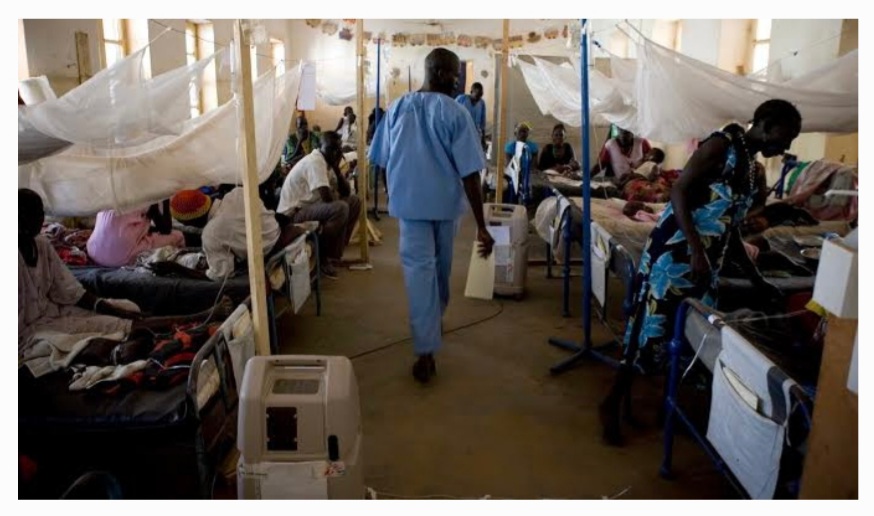
Wrong Diagnosis, Prescriptions In Kaduna, Katsina, Kano Decry Rot In Nigeria’s Health Sector: Victims
Wrong diagnosis, prescriptions in Kaduna, Katsina, Kano decry rot in Nigeria’s health sector: victims. Nigeria’s healthcare system is facing numerous challenges, including inadequate infrastructure, corruption, and a shortage of skilled healthcare professionals.
These issues have resulted in a decline in the quality of care, leading to poor health outcomes and a general distrust of the system.
It is imperative that urgent action is taken to address these challenges and restore the integrity of Nigeria’s healthcare system.
In Kaduna State, a cross-section of the residents decried that Nigeria’s healthcare system has been plagued by a myriad of challenges.
They include expired drugs, obsolete equipment, and negligence by medical personnel, leading to misdiagnosis and deaths.
They also listed other challenges to include inadequate funding, poor regulation, and inefficient supply chain management.
They said, “The healthcare sector is severely underfunded while it is lacking the needed human and material resources.”
A patient, David Kure, who claimed to have been wrongly diagnosed of HIV at a Kaduna hospital due to expired equipment, said he underwent three consecutive tests to confirm his status.
He said, “Health workers’ poor attitude is another major issue. Nurses in government hospitals are often rude and unprofessional, exacerbating the problems facing the healthcare system.
“The stakeholders must work together to improve funding, strengthen regulation, and promote accountability. A multifaceted approach is required to address the challenges facing the healthcare system. Medical personnel, pharmacists, and policymakers must collaborate to ensure access to quality healthcare services.”
According to Mr Kure, effective accountability mechanisms are needed to address negligence and misconduct.
He added, “The healthcare system’s challenges require a collective effort to resolve. Stakeholders must prioritise resource allocation, transparency, and accountability to improve healthcare services in Nigeria. Nigeria’s healthcare system is one of the weakest in Africa, with inadequate infrastructure, equipment, and personnel. This has led to a high mortality rate and low life expectancy.
“The country’s healthcare system is also plagued by corruption, with medical personnel and hospital administrators embezzling funds meant for healthcare services.”
According to MrbKure, patients often have to pay out-of-pocket for medical services, including surgeries and medications.
He said,” This has led to a high number of untreated illnesses and deaths. The lack of healthcare infrastructure in rural areas has also exacerbated the problems facing the healthcare system.
Many rural communities lack access to basic healthcare services. Healthcare workers in Nigeria are also poorly trained and equipped to handle complex medical cases. This has led to a high number of medical errors and misdiagnoses.”
Most of the respondents posited that the country’s healthcare system was also plagued by a shortage of medical personnel, including doctors, nurses, and pharmacists.
They said that this led to a high workload for existing healthcare workers.
“Nigeria’s healthcare system is also heavily reliant on donor funding, which is often unpredictable and unsustainable.
This has led to a lack of continuity in healthcare services. The country’s healthcare system is also plagued by a lack of data and research, which has hindered efforts to improve healthcare services.
“Efforts to reform the healthcare system have been slow and ineffective, with many stakeholders resisting change.
This has led to a lack of progress in improving healthcare services.
“The healthcare system’s challenges have also had a significant impact on the economy,”they added.
According ot them, many businesses and industries are affected by the lack of access to quality healthcare services.
They added, “The country’s healthcare system is also plagued by a lack of accountability, with many healthcare workers and hospital administrators not held accountable for their actions.
“Patients and their families often have to resort to seeking medical help abroad, which is often expensive and inaccessible to many Nigerians.
“The healthcare system’s challenges have also led to a brain drain, with many healthcare workers emigrating to other countries in search of better working conditions and opportunities.
“Efforts to address the healthcare system’s challenges must be sustained and supported by stakeholders, including the government, healthcare workers, and patients. “
In Katsina State, some victims of wrong diagnosis, tests results interpretation and prescription of drugs by some medical personnel in health facilities, urged the government to intensify efforts in addressing the problem.
They made the complaint during an interview in Katsina.
The victims said that the call became imperative in view of recurring rate of the problems in health facilities in the country.
According to them, such problems sometimes lead to the death of the victims, hence the need for both the federal and state governments to hasten measures to address the menace.
A victim, Haruna Umar, said that he was diagnosed as having a fluid between his stomach and chest that affects him seriously in one of the tertiary health hospitals in the state.
He said that he paid for the tests and the theatre.
“I was operated on only to discover that was not the real problem I am suffering from. Instead, they observed another problem in my stomach, they did another operation, same time.
“In fact, I suffered a lot as a result of that, many people never believed that I will survive, because I spent about two months in the hospital receiving treatment. My family also spent a lot of money. It is a bad and terrible experience. It was after a month, when I regained my conscious that the team leader who happens to be a consultant, informed me of what happened during the period. He apologised to me, and I forgave them,” he said.
He therefore urged the government to take urgent measures in tackling the problem.
Mr Umar also urged the government to make such facilities to pay some compensation to victims to serve as a deterrent and reduce the financial burden on the victim’s relatives.
Another victim, Lawal Abdullahi, said that he now he cannot walk with his two legs due to wrong surgery on his knees.
He said that the surgery was performed at a private health facility by a consultant orthopedic.
According to him, he spent huge amount of money, but the problem persisted.
He said that before the operation, he could manage to walk with his legs, but since the operation, he could not.
Instead, he said, he is now confined to a wheelchair.
“I was advised to travel to Egypt for another operation, which I did. They tried their best, but due to the initial problem created during the first operation, up to now things are not normal with the legs.
“As you can see me, I can walk little, my knee still has problem. I didn’t know what to do now because I am tired of the operation,” he lamented.
A patient, David Kure, who claimed to have been wrongly diagnosed of HIV at a Kaduna hospital due to expired equipment, said he underwent three consecutive tests to confirm his status.
Nigeria’s healthcare system is facing numerous challenges, including inadequate infrastructure, corruption, and a shortage of skilled healthcare professionals.
These issues have resulted in a decline in the quality of care, leading to poor health outcomes and a general distrust of the system.
It is imperative that urgent action is taken to address these challenges and restore the integrity of Nigeria’s healthcare system.
In Kaduna State, a cross-section of the residents decried that Nigeria’s healthcare system has been plagued by a myriad of challenges.
They include expired drugs, obsolete equipment, and negligence by medical personnel, leading to misdiagnosis and deaths.
They also listed other challenges to include inadequate funding, poor regulation, and inefficient supply chain management.
They said, “The healthcare sector is severely underfunded while it is lacking the needed human and material resources.”
A patient, David Kure, who claimed to have been wrongly diagnosed of HIV at a Kaduna hospital due to expired equipment, said he underwent three consecutive tests to confirm his status.
He said, “Health workers’ poor attitude is another major issue. Nurses in government hospitals are often rude and unprofessional, exacerbating the problems facing the healthcare system.
“The stakeholders must work together to improve funding, strengthen regulation, and promote accountability. A multifaceted approach is required to address the challenges facing the healthcare system. Medical personnel, pharmacists, and policymakers must collaborate to ensure access to quality healthcare services.”
According to Mr Kure, effective accountability mechanisms are needed to address negligence and misconduct.
He added, “The healthcare system’s challenges require a collective effort to resolve. Stakeholders must prioritise resource allocation, transparency, and accountability to improve healthcare services in Nigeria. Nigeria’s healthcare system is one of the weakest in Africa, with inadequate infrastructure, equipment, and personnel. This has led to a high mortality rate and low life expectancy.
“The country’s healthcare system is also plagued by corruption, with medical personnel and hospital administrators embezzling funds meant for healthcare services.”
According to MrbKure, patients often have to pay out-of-pocket for medical services, including surgeries and medications.
He said,” This has led to a high number of untreated illnesses and deaths. The lack of healthcare infrastructure in rural areas has also exacerbated the problems facing the healthcare system.
Victims, Health Sector
Many rural communities lack access to basic healthcare services. Healthcare workers in Nigeria are also poorly trained and equipped to handle complex medical cases. This has led to a high number of medical errors and misdiagnoses.”
Most of the respondents posited that the country’s healthcare system was also plagued by a shortage of medical personnel, including doctors, nurses, and pharmacists.
They said that this led to a high workload for existing healthcare workers.
“Nigeria’s healthcare system is also heavily reliant on donor funding, which is often unpredictable and unsustainable.
This has led to a lack of continuity in healthcare services. The country’s healthcare system is also plagued by a lack of data and research, which has hindered efforts to improve healthcare services.
“Efforts to reform the healthcare system have been slow and ineffective, with many stakeholders resisting change.
This has led to a lack of progress in improving healthcare services.
“The healthcare system’s challenges have also had a significant impact on the economy,”they added.
According ot them, many businesses and industries are affected by the lack of access to quality healthcare services.
They added, “The country’s healthcare system is also plagued by a lack of accountability, with many healthcare workers and hospital administrators not held accountable for their actions.
“Patients and their families often have to resort to seeking medical help abroad, which is often expensive and inaccessible to many Nigerians.
“The healthcare system’s challenges have also led to a brain drain, with many healthcare workers emigrating to other countries in search of better working conditions and opportunities.
“Efforts to address the healthcare system’s challenges must be sustained and supported by stakeholders, including the government, healthcare workers, and patients. “
In Katsina State, some victims of wrong diagnosis, tests results interpretation and prescription of drugs by some medical personnel in health facilities, urged the government to intensify efforts in addressing the problem.
They made the complaint during an interview in Katsina.
The victims said that the call became imperative in view of recurring rate of the problems in health facilities in the country.
According to them, such problems sometimes lead to the death of the victims, hence the need for both the federal and state governments to hasten measures to address the menace.
A victim, Haruna Umar, said that he was diagnosed as having a fluid between his stomach and chest that affects him seriously in one of the tertiary health hospitals in the state.
He said that he paid for the tests and the theatre.
“I was operated on only to discover that was not the real problem I am suffering from. Instead, they observed another problem in my stomach, they did another operation, same time.
“In fact, I suffered a lot as a result of that, many people never believed that I will survive, because I spent about two months in the hospital receiving treatment. My family also spent a lot of money.
It is a bad and terrible experience. It was after a month, when I regained my conscious that the team leader who happens to be a consultant, informed me of what happened during the period. He apologised to me, and I forgave them,” he said.
He therefore urged the government to take urgent measures in tackling the problem.
Mr Umar also urged the government to make such facilities to pay some compensation to victims to serve as a deterrent and reduce the financial burden on the victim’s relatives.
Another victim, Lawal Abdullahi, said that he now he cannot walk with his two legs due to wrong surgery on his knees.
He said that the surgery was performed at a private health facility by a consultant orthopedic.
According to him, he spent huge amount of money, but the problem persisted.
He said that before the operation, he could manage to walk with his legs, but since the operation, he could not.
Instead, he said, he is now confined to a wheelchair.
“I was advised to travel to Egypt for another operation, which I did. They tried their best, but due to the initial problem created during the first operation, up to now things are not normal with the legs.
“As you can see me, I can walk little, my knee still has problem. I didn’t know what to do now because I am tired of the operation,” he lamented.
Mr Abdullahi called on the government to intensify efforts in equipping healthcare facilities with modern machines for effective service delivery.
In his contribution, a health expert, Ibrahim Musa, advised both federal and state governments to focus attention in the area of training and retraining of health personnel.
He said that would assist greatly in addressing some of the problems reoccurring in the health facilities in the country.
He also advised the governments to sanction any facility guilty of wrongdoings.
In Kano State, some experts in the healthcare sector have called on the government to address the growing concerns of negligence undermining the quality of healthcare delivery in the state.
The experts, in separate interviews, said that various issues plague the system, including widespread use of obsolete medical equipment and the improper interpretation of diagnostic data.
They also lamented that some healthcare professionals were guilty of negligence and carelessness in attending to patients thereby exacerbating the crisis.
The experts argued that these lapses resulted in a decline in patient safety and public trust in the healthcare system.
An expert in community health, Dr Ghali Nura, emphasized the urgent need for reform and total overhaul of the sector.
“The health sector is at a critical juncture. If we do not act now to update our medical equipment, address the issue of expired drugs, and ensure the competency of healthcare personnel, we risk a major public health crisis,” he said.
Also, a public health analyst, Dr. Bashir Shaza, stressed the need for better oversight and stricter regulations.
“It is troubling to see that some medical institutions continue to operate outdated machines that cannot provide accurate test results. This not only affects diagnosis but can lead to wrong treatments, which are detrimental to patient outcomes,” he stated.
In his contribution, a public affairs commentator, Ali Muhammed, called on the governments to allocate more resources to the healthcare sector.
He also urged them to focus on the procurement of modern medical equipment, improved training for healthcare personnel, and stricter enforcement of regulations to prevent circulation of expired drugs.
Mr Muhammad also urged the government to improve transparency and accountability within healthcare institutions to restore public confidence.
A resident of Yankaba in the Nasarawa Local Government Area, Musa Isa, called for a more efficient and accessible healthcare system in the state.
He cited the growing concerns over long waiting times, limited medical facilities, and a lack of essential services particularly in rural areas.
Another resident of Zoo Road in the Tarauni Local Government Area, Aisha Inuwa, said that the state needed better healthcare facilities, more doctors, and more affordable services for everyone.
She said, “We need healthcare that is affordable and that will work for us, not just in theory, but in reality.”
The Kano State Government allocated N90.6billion for the health sector in the 2025 budget.








Economy
Nigeria Customs Commissions Healthcare Rehabilitated Facility to Boost Community Development in Rivers
Nigeria Customs Commissions Healthcare Rehabilitated Facility to Boost Community Development in Rivers
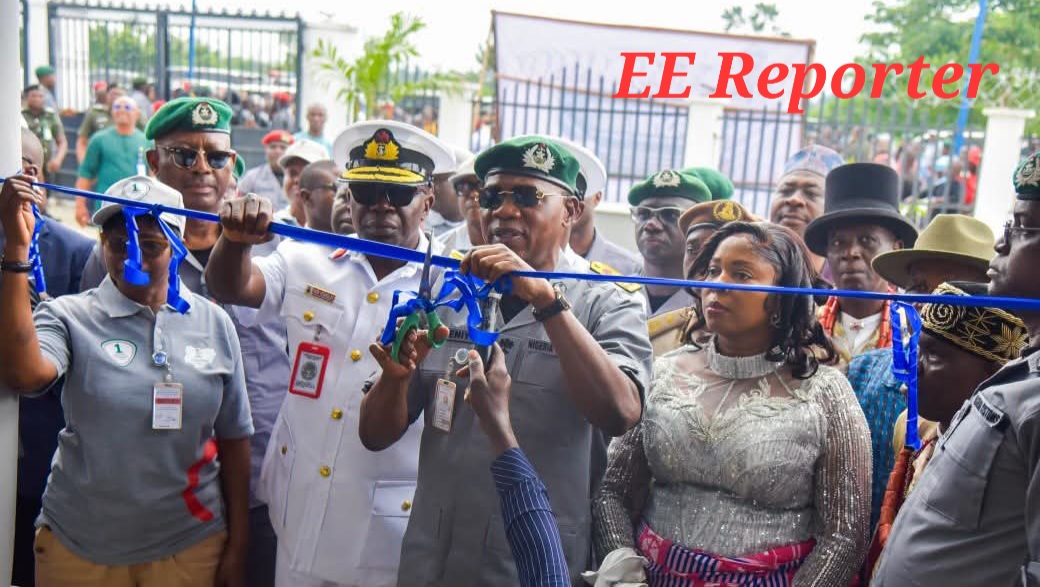
The Nigeria Customs Service (NCS) has commissioned the rehabilitated Ebubu Primary Healthcare Centre in Eleme, Rivers State, as part of its Corporate Social Responsibility initiative, known as ‘Customs Cares’, aimed at supporting communities and contributing to their social development.
Eereporter.com
The Comptroller-General of Customs, Adewale Adeniyi, who spoke on Tuesday, 15 September 2026, during the commissioning of the facility, said the intervention reflected the Service’s responsibility to contribute to the wellbeing of communities beyond its statutory mandates of revenue collection, trade facilitation and border security.
CGC Adeniyi, who recalled how NCS officially launched the CSR Programme in March 2025, said “School renovations, scholarships, medical outreaches, healthcare facility rehabilitation, food distribution, agricultural initiatives, skills acquisition, solar-powered lighting, borehole projects and other community infrastructure as areas where Customs Cares had made interventions.”
He said the Ebubu project was particularly significant because healthcare was fundamental to human dignity, productivity and community development, noting that the condition of the centre before the intervention had affected the delivery of quality primary healthcare services to residents and surrounding communities, adding that, “What we have achieved here is therefore more than physical rehabilitation. We have invested in access, dignity and hope.”
He, however, stressed that the rehabilitation of the facility would only achieve its purpose if the centre were properly managed and maintained, adding that its sustainability would require adequate staffing, regular maintenance and continued support from relevant government institutions and the community.
The CGC also appreciated the traditional rulers, community leaders, Rivers State Government, Rivers State Primary Health Care Board, Eleme Local Government Council, healthcare professionals, and other stakeholders who contributed to the project’s success.
The Customs Area Controller, Port Harcourt II Area Command, Onne, Comptroller Aliyu Alkali, said the Service’s impact should not be measured only by revenue figures or enforcement statistics, but also by the positive difference its presence makes in the communities where it operates.
Nigeria Customs
Also speaking, the Comptroller in charge of the Corporate Social Responsibility Unit, Comptroller Patience Ibrahim, said the initiative reflected the Service’s belief that its responsibility to Nigerians extended beyond revenue collection to making a meaningful difference in the communities it serves.
Meanwhile, dignitaries who attended the function said the rehabilitated centre would bring quality healthcare closer to residents, while urging the community and other stakeholders to take ownership of the facility and ensure its continued usefulness.
Eereporter.com
Akwa Ibom
Eno Inaugurates Model Primary Health Centre in Akwa Ibom Community, Pledges More Rural Healthcare Projects
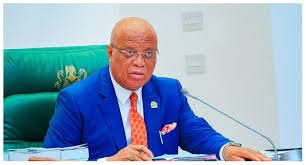
Eno Inaugurates Model Primary Health Centre in Akwa Ibom Community, Pledges More Rural Healthcare Projects
Akwa Ibom State Governor, Pastor Umo Eno, has inaugurated a Model Primary Health Centre at Ikot Ekpe in Mkpat Enin Local Government Area as part of his administration’s efforts to expand access to quality and affordable healthcare in rural communities.
Eereporter.com
The facility, inaugurated on Monday, September 14, 2026, is designed to provide comprehensive primary healthcare services to residents of Ikot Ekpe and neighbouring communities.
Represented at the commissioning by the Commissioner for Works, Prof. Eno Ibanga, Governor Eno said the project was a fulfilment of his promise to the people of Mkpat Enin and a practical demonstration of the healthcare component of his administration’s ARISE Agenda.
The Governor also disclosed that he would soon return to the local government area to commission the 10.8-kilometre Mkpat Enin–Efa Road, which connects Mkpat Enin with Etinan Local Government Area.
Speaking at the event, the Executive Chairman of Mkpat Enin Local Government Area, Engr. Emmanuel Inyang, expressed appreciation to Governor Eno for the health facility, describing it as a significant intervention for the people of the area.
Inyang assured the Governor of the continued support of the people of Mkpat Enin, saying the local government would reciprocate the administration’s development efforts during the next election cycle.
The Commissioner for Health, Dr. Ekem John, who gave an overview of the project, said the Model Primary Health Centre was equipped with modern facilities and adequately staffed to provide essential healthcare services to residents of Ikot Ekpe and its environs.
According to him, the facility would reduce the need for residents, particularly pregnant women and children, to travel long distances in search of basic medical services.
In their separate goodwill messages, the State Chairman of the All Progressives Congress, APC, Obong Stephen Ntukekpo; Member representing Mkpat Enin State Constituency in the State House of Assembly, Hon. Uwem-Imoh Ita; former Transition Chairman of Mkpat Enin Local Government Area, Lady Ekaette Usip; and President of the Eket Senatorial District Women’s Forum, Dr. Idara Ephraim Akpan, commended Governor Eno for his development initiatives in the area.
The stakeholders described the health centre as a modern facility built to World Health Organization standards and expressed optimism that it would contribute to reducing morbidity and mortality in the area.
They also commended the Governor for translating the ARISE Agenda into tangible projects and programmes across sectors, including road infrastructure, Model Schools, Compassionate Homes and healthcare.
Delivering the vote of thanks, the Permanent Secretary, Ministry of Health, Dr. Patrick Eshiet, who hails from Ikot Ekpe, commended Governor Eno for constructing and equipping the health centre and integrating it into the state’s healthcare system.
Umo Eno
Eshiet also praised the administration for sustaining the Akwa Ibom State Health Insurance Scheme and recruiting thousands of healthcare personnel across health facilities in the state.
He described the initiatives as measures aimed at bringing quality healthcare services closer to residents, especially those in rural communities.
The Permanent Secretary further commended the people of Ikot Ekpe for protecting the facility throughout its construction and urged them to continue safeguarding it while ensuring its proper use for the benefit of the community.
Eereporter.com
Health care
Nigerian Air Force Graduates 50 Medical Personnel, Reaffirms Commitment to Excellence Security and Saving Lives
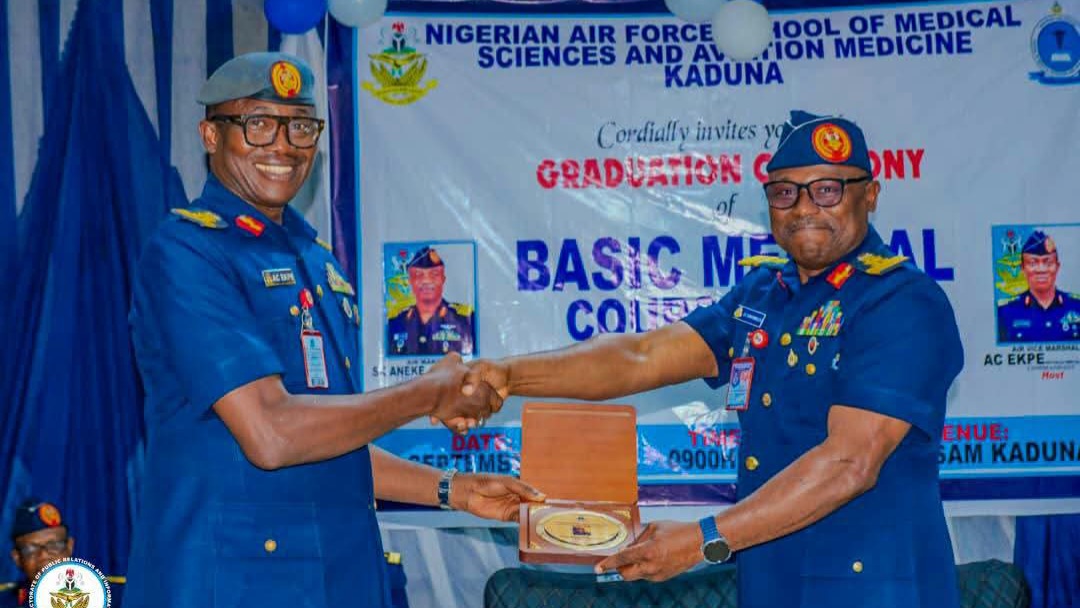
Nigerian Air Force Graduates 50 Medical Personnel, Reaffirms Commitment to Excellence Security and Saving Lives
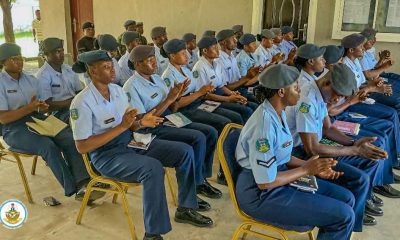
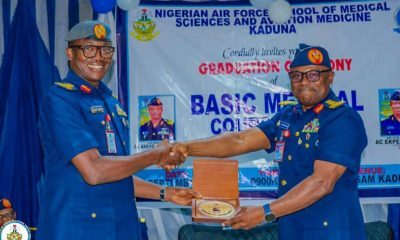
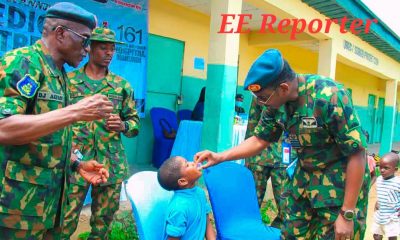
The Nigerian Air Force (NAF) has graduated 50 medical personnel from Basic Medical Course 4/2026 at the Nigerian Air Force School of Medical Sciences and Aviation Medicine (NAFSMSAM), Kaduna. The graduating personnel, comprising 34 airmen and 16 airwomen, were charged to uphold the highest standards of professionalism, compassion and commitment in the delivery of healthcare.
Eereporter.com
Representing the Chief of the Air Staff, Air Marshal Sunday Kelvin Aneke, the Commandant, Air Force Institute of Technology, Air Vice Marshal Adeniran Kolade Ademuwagun, urged the graduands to combine professional competence with empathy and genuine care for patients. He emphasised that human capacity development remains central to the NAF’s command philosophy, stressing that continuous training and medical proficiency are vital to operational effectiveness and quality healthcare delivery.
With specialised Basic Life Support training, the graduates are equipped to respond effectively to emergencies and help preserve lives. The graduation ceremony featured practical demonstrations in combat patient assessment and emergency response, underscoring the NAF’s commitment to ensuring that every life matters and no one is left behind when help is needed.
Nigerian Air Force
Through competence, compassion and timely intervention, the newly trained personnel are poised to make a positive difference in healthcare delivery.
Eereporter.com
-
 Crime1 year ago
Kogi Assembly Considers Law To Regulate Rent, Establish Control Board: Tenancy Law
-

 News1 year ago
Atiku Reveals Why He Failed To Pick Wike As Running Mate In 2023
-

 Akwa Ibom2 years ago
The Apostolic Church Gets New Territorial Chairman, Exco
-

 Crime2 years ago
Federal High Court Jails 2 For Vandalizing Transformer, Telecom Mast In Kogi
-
 News2 years ago
The Apostolic Church Gets New National President, Executive
-
 Akwa Ibom2 years ago
Umo Eno Commences Payment Of 80,000 Naira Minimum Wage With Arrears
-

 News2 years ago
Senator Natasha Returns To Senate With Husband Amid Seat Dispute
-

 Economy1 year ago
Kiyosaki: Is Tinubu’s Government Afraid Of Ibrahim Traore?