
News
Enugu High Court Jails Fake Prophet For N136.4m Fraud


Enugu High Court Jails Fake Prophet For N136.4m Fraud
The Enugu Zonal Directorate of the Economic and Financial Crimes Commission, EFCC, has secured the conviction and sentence of one Godwin Sunday Ajuluchukwucheya (a.k.a Prophet Sunday Koboko) before Justice H. O. Eya of the Enugu State High Court, sitting in Independence Layout.
Eereporter.com
The convict was prosecuted on a two-count charge bordering on obtaining by false pretence and stealing to the tune of N136, 436, 000. 00 (One Hundred and Thirty-six Million, Four Hundred and Thirty-six Thousand Naira).
Count one of the charges read: “Godwin Sunday Ajuluchukwucheya, sometimes between 2023 to February 2025 in Enugu, Enugu State within the jurisdiction of the Enugu State High Court with intent to defraud, obtained the sum of N136, 436, 000. 00 (One Hundred and Thirty-six Million, Four Hundred and Thirty-six Thousand Naira) from unsuspecting members of your church under the false pretence that you have won N30, 000, 000, 000. 00 (Thirty Billion Naira) in Baba Ijebu lotto game and that investors in your investment scheme will receive dividends according to their investments, which pretence you knew to be false and you thereby committed an offence”.
The offence is contrary to Section 1 (1) (a) of the Advance Fee Fraud and Other Fraud Related Offences Act, 2006 and punishable under Section 1 (3) of the same Act.
Ajuluchukwucheya pleaded guilty to the charges when they were read to him. In view of his plea, counsel to the EFCC, Assistant Commander of the EFCC, ACE II Rotimi Ajobiewe prayed the court to convict and sentence him accordingly.
Justice Eya thereafter convicted and sentenced him to one-year imprisonment with an option of N500, 000. 00 fine. The court also ordered that “the convict’s landed property covered by Customary Certificate of Occupancy, dated 25th July 1989, registered as No. 92 at page 92 in Volume 512 of the Land Registry, Enugu, shall be forfeited to the Federal Government of Nigeria, through the Economic and Financial Crimes Commission and shall be sold and the proceeds used as restitution of the victims of the offence”.
The Commission received a petition from one Mrs Ngene Nkiruka Jane who alleged that the convict presented himself as a true man of God and lured her into believing that he had the power to raise her late husband from death. She alleged that she was also lured into paying for a fraudulent scheme where members will benefit according to their investments and the total money for the scheme and the resurrection of her late husband was N6, 700, 000. 00 (Six Million, Seven Hundred Thousand Naira).

Court
Another petitioner, Okey Uwakwe alleged that the convict convinced him that he was capable of controlling his brother who travelled outside the country since 1997 to return back and lured him into paying the sum of N6, 231, 400. 00 for spiritual work.
During investigations, members of the convict’s ministry started flooding the Directorate with claims of how they were defrauded by the convict. It was also discovered that his modus operandi was luring members of his ministry into buying his “products” for prosperity which include; “miracle sticker”, “spiritual dragon” “holyghost thunder” and others.
Eereporter.com










High Court: Five Bag Seven-year Jail Term in Lagos Over N117million Fraud
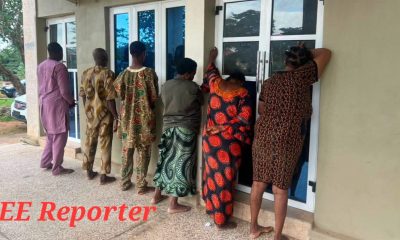
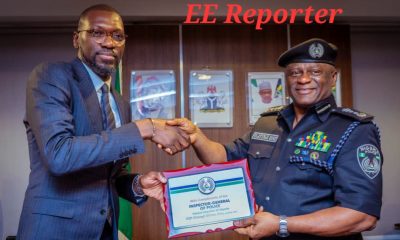
Justice K.A. Jose of the Lagos State High Court sitting in Tapa, Lagos, on Thursday, September 3, 2026, convicted and sentenced five persons to seven years imprisonment for their involvement in a N117.7 million fraud involving Chi Limited.
Eereporter.com
The convicts: Yinka Salawu, Joshua Oluremi Daramola, Raji Ahmed, Afolabi Israel Olusegun, and Muraina Olanrewaju Abdullahi, were prosecuted by the Lagos Zonal Directorate 1 of the Economic and Financial Crimes Commission (EFCC) on a six-count charge bordering on conspiracy to obtain money by false pretence, obtaining money by false pretence, and forgery.
One of the counts reads:“that you, Yinka Salawu (aka Mr. Yinka James Christopher), Tinuke Olayinka Salawu (aka Mrs. Yinka James Christopher), Ogbeide Kingsley Stevenson, Joshua Oluremi Daramola, Raji Ahmed, Sule Tijani Adebayo (at large), Afolabi Israel Olusegun, Muraina Olanrewaju Abdullahi, Fred Esumike (at large), and Ismaila Kareem (trading under the name and style of Ismak Ola Nig. Ltd.) (at large), sometime in 2009 at Lagos, within the jurisdiction of this Honourable Court, with intent to defraud, obtained the sum of N81,359,922.00 (Eighty-One Million, Three Hundred and Fifty-Nine Thousand, Nine Hundred and Twenty-Two Naira) from Chi Limited under the false pretence that the money was payment for goods and services you supplied and rendered to Chi Limited, which representation you knew to be false, thereby committing an offence contrary to Section 1(3) of the Advance Fee Fraud and Other Fraud Related Offences Act, 2006.”
In the course of the trial, the prosecution called 17 witnesses drawn from the EFCC, the Nigeria Police Force, banks, and Chi Limited. It also tendered several documentary exhibits to establish its case against the defendants.
At the conclusion of the trial, Justice Jose found the 1st, 4th, 5th, 6th, and 7th defendants guilty on Counts One, Two, and Three and convicted them accordingly. However, the 2nd, 3rd, and 8th defendants were discharged and acquitted.
Following the convictions, the prosecution counsel, M.S. Owede urged the court to invoke Section 11 of the Advance Fee Fraud and Other Fraud Related Offences Act and order the convicts to restitute Chi Limited, the petitioner the sums stated in counts Two and Three, totalling N117,755,061.
Owede also asked the court to order the sale of properties belonging to the 1st convict, with the proceeds paid to Chi Limited. Alternatively, he urged the court to order that the properties be forfeited outrightly to the petitioner.
In her ruling, Justice Jose sentenced each of the five convicts to seven years’ imprisonment without an option of a fine.
“The convicts will be given credit for the periods they have already spent in custody. All periods spent in prison shall be deducted from the seven-year terms imposed by the court,” the judge ruled.
On the issue of restitution, Justice Jose, relying on Section 297 of the Administration of Criminal Justice Law, ordered the convicts to restitute Chi Limited with the sums contained in the charge.

Court
“All monies already paid shall be deducted from the amounts to be restituted,” Justice Jose added.
The convicts’ journey to the Correctional Centre began when they were arrested for obtaining the sum of N81,359,922.00 (Eighty-One Million, Three Hundred and Fifty-Nine Thousand, Nine Hundred and Twenty-Two Naira) from Chi Limited under the false pretence that the money was payment for goods and services they supplied and rendered to Chi Limited.
They neither delivered the goods and services nor returned the money to the company.
Eereporter.com
Economy
Minister of Defence, NiDCOM Chairman, Others Meets Nigerians in Angola, Reassure Growing Economy and Insecurity Being Tackle

Minister of Defence, NiDCOM Chairman, Others Meets Nigerians in Angola, Reassure Growing Economy and Insecurity Being Tackle
The Minister of Defence, Gen. Christopher Musa (Rtd), has reassured Nigerians in Angola of the Federal Government’s commitment to strengthening national security and addressing the challenges posed by insecurity and instability in the Sahel region.
Eereporter.com
Musa gave the assurance during an engagement with members of the Nigerian community in Luanda, Angola, on the sidelines of the 21st Extra-ordinary Session of the Assembly of Heads of State and Government of the African Union (AU).
The engagement was coordinated by the Chairman/CEO of the Nigerians in Diaspora Commission (NiDCOM), Hon. Abike Dabiri-Erewa, on the sidelines of the AU extraordinary session in Luanda Uganda
The Nigerian delegation to the AU summit was led by Vice President Kashim Shettima, who represented President Bola Ahmed Tinubu.
Speaking to the Nigerian community, Musa acknowledged the security challenges confronting the country, noting that some of them were linked to instability in the Sahel, with its effects spilling across national borders.
He assured Nigerians that the Federal Government was taking comprehensive measures to strengthen Nigeria’s borders and prevent security threats and incursions.
The Minister assured Nigerians in Angola that the administration of President Bola Ahmed Tinubu remained committed to defeating security threats across the country, adding that efforts were ongoing to increase the manpower, equipment and operational capacity of the Armed Forces and other security agencies.
In the same vein, Minister of Interior, Olubunmi Tunji Ojo said “ Nigeria is growing, the economy is growing and Nigeria is on the path of full recovery “
On the request to have a Nigerian passport production centre in Angola, Tunji-Ojo said he will look into their request so as to ease issuance of passport booklets in the country.
Coordinating the meeting, Dabiri-Erewa, appreciated members of the Nigerian community in Angola for their contributions to Nigeria’s development and for continuing to project the positive image of the country abroad.
She reassured the community that the Federal Government values the contributions, concerns and welfare of Nigerians in the Diaspora, stressing that their voices remain important in shaping policies and interventions that affect them.
Dabiri-Erewa also encouraged Nigerians in Angola to continue to remain united, law-abiding and committed to contributing positively to the development of both Nigeria and their host country.
Speaking on behalf of the Nigerian community in Angola, the Secretary of the Nigeria Community Association in Angola, Nnaemeka Francis Obi, commended the engagement and highlighted some of the challenges confronting Nigerians in the country.
Obi specifically called for the establishment of a Nigerian passport office in Angola, noting that access to passport and consular services remains a major concern for members of the community.
He also raised concerns over healthcare challenges faced by Nigerians living in Angola and called for greater attention to the welfare and well-being of Nigerians in the Diaspora.
The engagement provided an opportunity for the Federal Government delegation to hear directly from Nigerians in Angola and reaffirm its commitment to deepening Diaspora engagement, addressing their concerns and ensuring that Nigerians abroad remain an integral part of the nation’s development agenda.

Minister of Defence, NiDCOM
NiDCOM reiterated that the Federal Government, through relevant agencies, will continue to strengthen its engagement with Nigerians across the globe while working towards responsive solutions to issues affecting their welfare and interests.
E-signed
Abdur-Rahman Balogun, mnipr
Director, Media, Public Relations and Protocols
Nigerians in Diaspora Commission (NiDCOM), Abuja.
Eereporter.com
News
IGP Disu Participates in One-year Remembrance and Public Lecture in Honor of Late IGP Solomon Arase
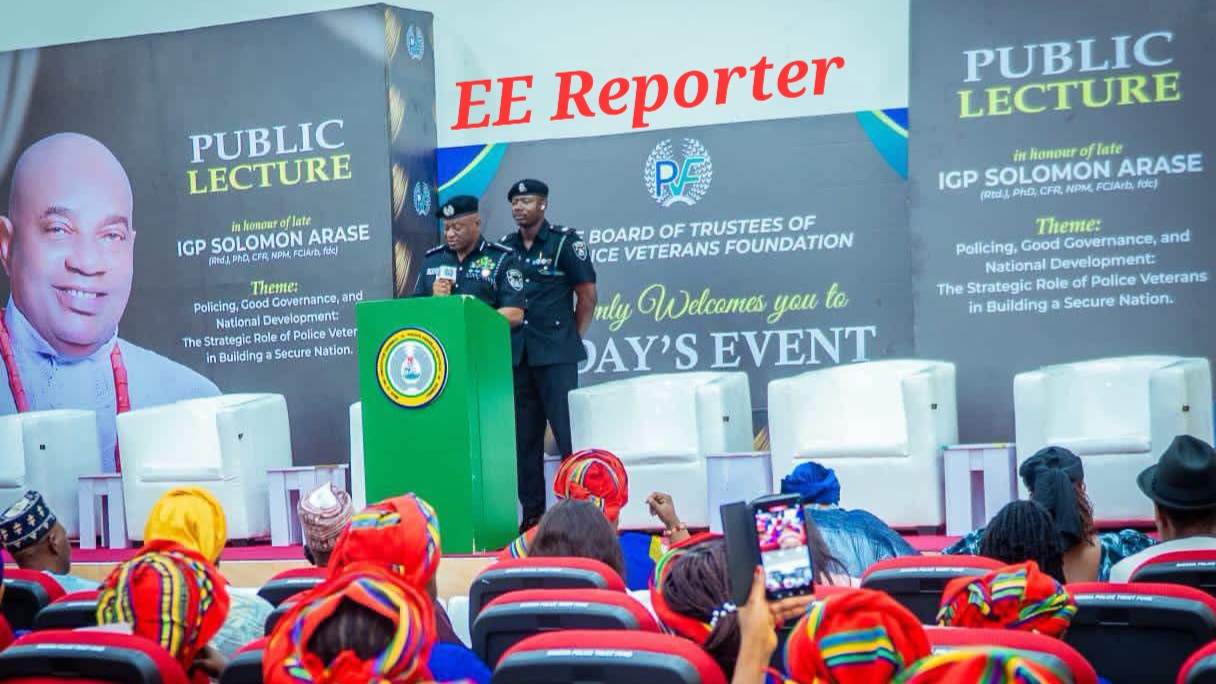
IGP Disu Participates in One-year Remembrance and Public Lecture in Honor of Late IGP Solomon Arase
The Inspector-General of Police, IGP Olatunji Rilwan Disu, psc(+), NPM, today, 31st August 2026, participated in the public lecture organised to mark the one-year remembrance of the late Inspector-General of Police, IGP Solomon E. Arase (Rtd), PhD, CFR, NPM, FCIArb, fdc, who passed away on August 31, 2025.
Eereporter.com
The lecture, themed ‘Policing, Good Governance, and National Development: The Strategic Role of Police Veterans in Building a Secure Nigeria,’ featured guest speakers drawn from retired officers of the Nigeria Police Force and close associates of the late IGP Arase (Rtd), including Professor Etannibi Alemika.
The event was attended by former Inspectors-General of Police, IGP Sunday Ehindero (Rtd) and IGP Mohammed Abubakar (Rtd), alongside other notable dignitaries, including the representative of the Governor of Akwa Ibom State; AIG Yemi Ogunyemilusi (Rtd); the chairman, Board of Trustees, Police Veterans’ Foundation, DIG Mohammed Yesufu (Rtd); the National President, Police Officers’ Wives Association (POWA), Chief Mrs Mutiat Olufunmilola Disu; the widow of the late IGP, Mrs Agharese Arase; past Presidents of POWA; the representative of the Chairman, Police Service Commission; AIG Tunde Mobayo (Rtd), the representative of the Director, Veterans Affairs, Defence Headquarters, C.A. Baushe; and members of the Force Management Team, alongside other senior officers of the Nigeria Police Force, serving and retired.
In his opening remarks, the Chairman, Board of Trustees, Police Veterans’ Foundation, DIG Mohammed Yesufu (Rtd), described the late IGP as an exceptional leader whose founding and chairmanship of the Foundation reflected his enduring commitment to the welfare of retired police officers. He called for the establishment of a Veterans Affairs Department within the Nigeria Police Force to further advance the Foundation’s mandate and ensure that retired officers continue to benefit from relevant Federal Government programmes and support, in keeping with the legacy of the late IGP Arase.
In his tribute, IGP Disu described the late IGP Arase as a man who understood that policing is, at its core, about protecting people’s lives, respecting their dignity, and building public confidence in the police. He noted that the late IGP’s contributions to policing extended well beyond his years in service, describing him as a leader distinguished by service, intellect, integrity, humanity and sacrifice, whose legacy will continue to endure.
In her goodwill message, the National President, POWA, Chief Mrs Mutiat Disu, commended the late Veteran’s selfless service, citing in particular his unwavering scholarship support for children of fallen officers and his efforts to address the socio-economic challenges faced by retired personnel. She described him as an embodiment of peace, sacrifice, and professionalism under the most trying circumstances.
The event drew wide participation from retired police officers and associates of the late IGP, with discussions centered on good governance, leadership, and the continual growth of the Foundation. Participants appealed for the Police Veterans’ Foundation to be developed into a lasting, lifelong institution. The event concluded with the presentation of awards to beneficiaries, including Mrs Agharese Arase.
IGP Disu
The Nigeria Police Force remains resolute in its commitment to honoring its officers, particularly veterans who have served the nation with distinction, and reaffirms its dedication to strengthening ties between active and retired personnel of the Force.
CSP Ani Iniedu, anipr
Force Public Relations Officer
Force Headquarters, Abuja
31st August, 2026
Eereporter.com
-

 Crime1 year ago
Kogi Assembly Considers Law To Regulate Rent, Establish Control Board: Tenancy Law
-

 News1 year ago
Atiku Reveals Why He Failed To Pick Wike As Running Mate In 2023
-

 Akwa Ibom2 years ago
The Apostolic Church Gets New Territorial Chairman, Exco
-

 Crime2 years ago
Federal High Court Jails 2 For Vandalizing Transformer, Telecom Mast In Kogi
-
 News2 years ago
The Apostolic Church Gets New National President, Executive
-
 Akwa Ibom2 years ago
Umo Eno Commences Payment Of 80,000 Naira Minimum Wage With Arrears
-

 News2 years ago
Senator Natasha Returns To Senate With Husband Amid Seat Dispute
-

 Economy1 year ago
Kiyosaki: Is Tinubu’s Government Afraid Of Ibrahim Traore?