
News
A Call To Conscience: ICPC Inspires Future Leaders With Integrity Message At Sokoto Qur’anic Institute

A Call To Conscience: ICPC Inspires Future Leaders With Integrity Message At Sokoto Qur’anic Institute
In a stirring finale to its African Union Anti-Corruption Day commemorations, Sokoto State Office of the Independent Corrupt Practices and Other Related Offences Commission (ICPC) has taken its campaign of ethical renewal to the Halls of the Sultan Maccido Institute for Qur’an and General Studies, challenging the nation’s youth to become vanguards of transparency.
Eereporter.com
The outreach programme, held recently, marked the culmination of a week-long sensitisation drive timed to coincide with the African Union’s annual anti-corruption observance on 11th July.
This year’s continental theme, “Scaling Up the Promotion of Integrity and Anti-Corruption Action Across Africa,” found powerful resonance within the institute’s corridors, where the ICPC delegation planted seeds of moral fortitude in fertile young minds.
Leading the Commission’s delegation, Deputy Superintendent Abdullahi Ibrahim Aliyu, representing the Resident Anti-Corruption Commissioner, Barr Binga Shintima delivered a compelling presentation entitled “Integrity Begins With Me.” His address wove together the rich cultural heritage of Sokoto with the timeless values of Qur’anic teachings, urging students to embrace honesty as both a spiritual duty and a civic necessity.
“Sokoto State and this noble institute have long been beacons of moral rectitude,” Superintendent Aliyu declared. “Integrity is not merely a bureaucratic ideal—it is the very bedrock upon which national prosperity is built. The corruption we fight today is the poverty we prevent tomorrow.”
In an interactive exchange that followed, the ICPC officer illuminated the Commission’s statutory mandate while challenging students to reimagine their role as active stakeholders in governance. He reminded them. “Every choice you make, every document you sign, every transaction you witness in your future careers will either fortify or fracture our national fabric.”
The ICPC team received a warm reception from Mr. Musa Mukhtar, Deputy Director (Academics) of the Qur’anic Institute, who lauded the Commission’s unwavering commitment to ethical renewal across the Federation.
He further encouraged the Institute to internalise the Commission’s anti-corruption ethos, describing integrity as “the currency of trust that no government can print but every citizen can earn.”
The event, which drew 150 participants comprising students and faculty members, concluded with the formal presentation of Information, Education and Communication (IEC) materials to the institute’s library; resources designed to sustain the integrity conversation long after the delegation’s departure.
ICPC
A commemorative group photograph captured the spirit of unity between the Commission and the academic community, symbolising a shared resolve to confront corruption through education, example, and relentless vigilance.
As the African Union Anti-Corruption Day dawns, Sokoto’s youth have been equipped not with slogans, but with a clarion call: integrity is not a destination, it is a daily discipline.
Eereporter.com








ICPC Lagos Instills Ethical Vigilance In Medical College Staff As Anti-Graft War Intensifies
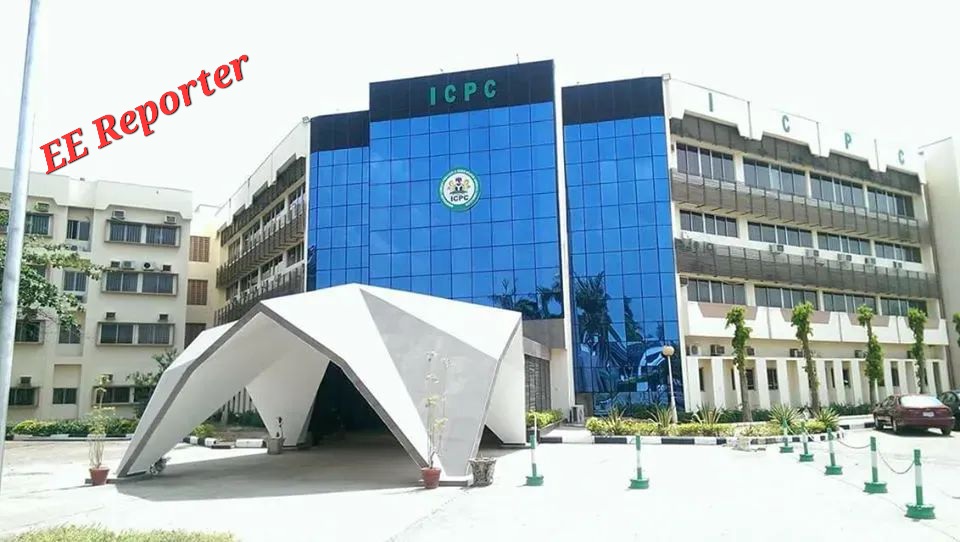
In a determined push to fortify Nigeria’s public institutions against the creeping menace of corruption, the Lagos State office of the Independent Corrupt Practices and Other Related Offences Commission (ICPC) convened a comprehensive sensitisation programme for staff of the National Postgraduate Medical College of Nigeria (NPMCN) in Ijanikin, Lagos.
Eereporter.com
The initiative, which drew participation from college personnel, forms a crucial pillar of the Commission’s preventive strategy; building corruption-resistant institutions through sustained public education and stakeholder engagement, rather than merely responding to infractions after they occur.
Delivering a stirring presentation on the Whistleblowing Policy and an Overview of the Corrupt Practices and Other Related Offences Act, 2000, Mrs. Yvonne William-Mbata underscored whistleblowing as an indispensable weapon in the nation’s anti-corruption arsenal. She implored staff to embrace moral courage by reporting acts of misconduct through established channels, assuring them that the policy enshrines robust mechanisms for safeguarding whistleblowers from reprisals or victimisation.
Mr. Emeka Okaro, in his address on the Regulations and Guidelines on the Acceptance of Gifts, Donations and Hospitality, sounded a stern note of caution. He warned that public officers must exercise heightened vigilance in accepting gestures of goodwill that could compromise—or even appear to compromise; their impartiality and professional integrity.
Mr. Okaro dissected the regulatory framework governing such exchanges within the public service, emphasising that strict adherence to these guidelines is not merely procedural but existential. Compliance, he argued, is essential for preventing conflicts of interest and for preserving public trust in government institutions—a currency that, once debased, proves exceedingly difficult to restore.
The session proved far from a passive lecture; participants seized the opportunity to engage dynamically, posing incisive questions and seeking clarification on practical workplace dilemmas surrounding ethical conduct, whistleblowing procedures and the real-world application of anti-corruption statutes.
ICPC
For the NPMCN, a citadel of medical excellence charged with postgraduate training and specialisation, the sensitisation programme represents a timely intervention. As the College moulds the nation’s future medical leaders, ensuring that its own administrative and operational frameworks remain unsullied by corrupt practices is paramount to safeguarding the broader healthcare ecosystem.
The ICPC, through such engagements, continues to demonstrate that the fight against corruption is as much about prevention as it is about prosecution; a dual-front war that demands the active participation of every Nigerian public servant.
Eereporter.com
Atiku Condemns FG Proposed ₦50,000 Uniform WAEC, NECO Fees
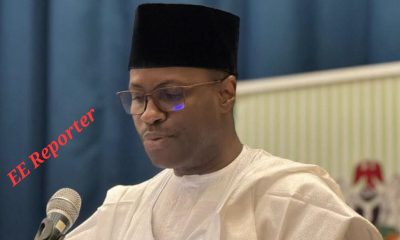
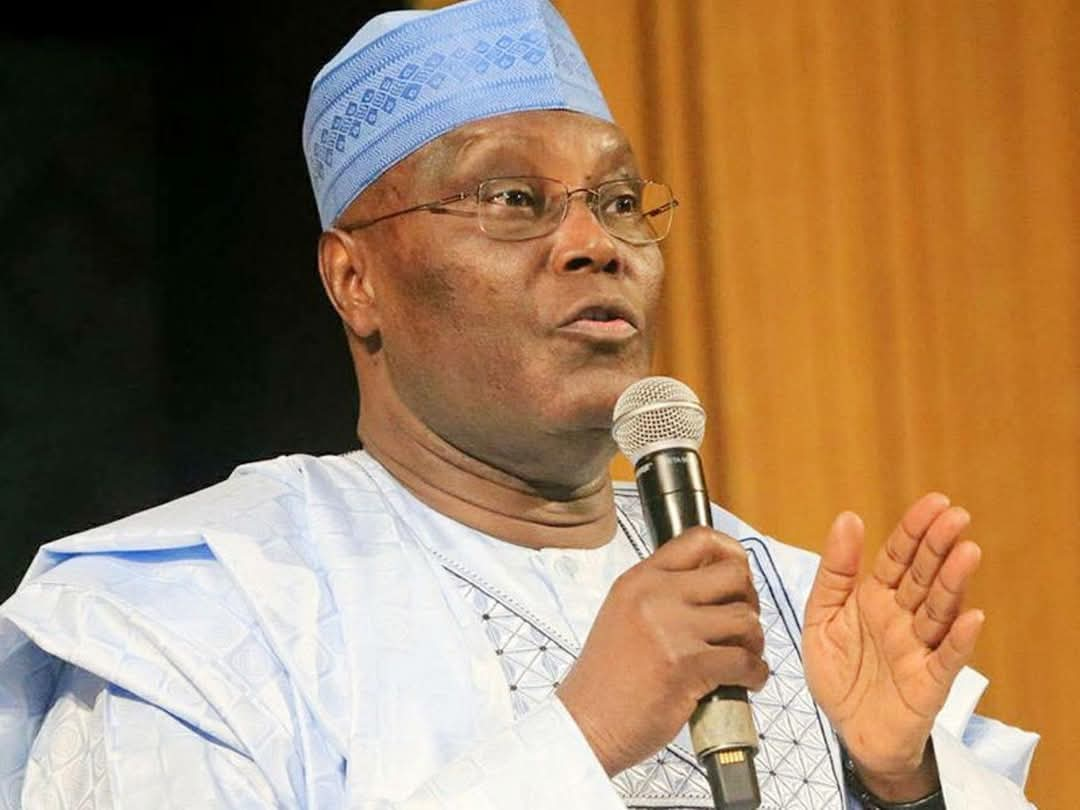
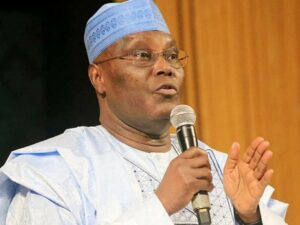
Ex-Vice President and presidential candidate of the African Democratic Congress, Atiku Abubakar, has criticised the Federal Government over the reported approval of a uniform ₦50,000 examination fee for candidates sitting the West African Senior School Certificate Examination and the National Examinations Council examinations from 2027, warning that the policy would deny millions of children access to education.
Eereporter.com
Atiku also condemned the recent increase in fees charged by Federal Unity Colleges, describing the measures as economically insensitive and inconsistent with the government’s constitutional obligation to make education accessible to every Nigerian child.
In a statement issued on Sunday by his Senior Special Assistant on Public Communication, Phrank Shaibu, the former Vice President said the Tinubu-led government is imposing additional financial burdens on families already struggling under the weight of inflation, rising food prices, high transportation costs, electricity tariff increases and widespread unemployment.
“It is unconscionable that at a time when Nigerian families are battling record inflation, soaring food prices, rising transportation costs, crippling electricity tariffs, stagnant incomes and widespread unemployment, the Tinubu administration has chosen to make education even more expensive,” Atiku said.
He argued that education remains the most effective instrument for breaking the cycle of poverty and warned that increasing the cost of schooling would further widen inequality.
“A government that genuinely believes in the future of its people does not erect financial barriers between children and education. It removes them. Education is not a privilege reserved for the wealthy; it is the birthright of every Nigerian child and the foundation upon which prosperous nations are built,” he stated.
The ADC chieftain noted that the proposed examination fee and higher Unity School charges were particularly troubling because they come at a time Nigeria is grappling with one of the world’s largest out-of-school children populations.
According to him, estimates put the number of Nigerian children and young people outside the classroom at between 10.5m and 15m.
“Nigeria already bears the painful distinction of having one of the largest populations of out-of-school children in the world. Any government confronted with such a national emergency should be investing aggressively to bring these children back into school. Instead, this administration is choosing policies that will inevitably swell those numbers,” he said.
Atiku warned that higher examination fees would disproportionately affect children from poor and middle-income households, many of whose parents are already forced to choose between meeting basic needs and paying school-related expenses.
“The consequences of these policies extend far beyond school gates. Every child priced out of education today becomes tomorrow’s victim of unemployment, poverty, child labour, criminal exploitation, drug abuse or insecurity. Nations do not become prosperous by making education more expensive; they prosper by making education more accessible,” he added.
He further argued that the proposed ₦50,000 fee for WAEC and NECO examinations would create another barrier to tertiary education for indigent students.
“It is a systemic filter that will inevitably restrict access to tertiary education for thousands of indigent but academically qualified Nigerian students. For many children from low-income families, the journey to university does not end at the admission gate—it is terminated long before then by the inability to afford the qualifying examinations that determine their future,” he said.
He noted that although more than two million candidates seek admission into tertiary institutions annually, public universities admit only between 500,000 and 700,000 students because of inadequate infrastructure.
“Rather than addressing this structural deficit by expanding infrastructure and increasing admission capacity, the government is effectively constricting access even further through higher Unity School fees and the proposed ₦50,000 WAEC and NECO examination fee. The result is a cruel double punishment,” he said.
The former Vice President also questioned the government’s emphasis on the Nigerian Education Loan Fund, arguing that student loans cannot compensate for policies that make it difficult for children to complete secondary education or sit qualifying examinations.
“A university loan offers little comfort to a child who has already been priced out of secondary education or cannot afford the qualifying examination required to secure admission. A government cannot credibly claim to be expanding access to higher education while simultaneously erecting financial barriers that prevent millions of young Nigerians from ever reaching the university gates,” he noted.
Atiku maintained that meaningful education reform should focus on making education affordable at the basic and secondary levels, expanding university infrastructure and ensuring that poverty does not determine access to learning.
“No nation has ever taxed its way into educational excellence. Countries that aspire to economic greatness invest more—not less—in education during difficult times because they understand that human capital is the engine of sustainable development,” he stressed.
He called on President Bola Tinubu to reverse the increase in Unity School fees and shelve the proposed ₦50,000 WAEC and NECO examination fee, while convening a stakeholders’ dialogue on sustainable financing of public education.
Atiku
He also urged the Federal Government to invest more in public schools, recruit additional teachers, expand the capacity of tertiary institutions and ensure that no Nigerian child is denied education because of financial hardship.
The statement comes amid growing public debate over the affordability of education following recent increases in school-related charges and concerns about the rising cost of living.
Although the Federal Government has introduced NELFUND to improve access to tertiary education, critics argue that affordability challenges begin much earlier in the education value chain, particularly at the secondary school level where students must complete qualifying examinations before seeking university admission.
The plan to introduce a uniform ₦50,000 examination fee for WAEC and NECO candidates from 2027 has also sparked widespread public reactions, with stakeholders calling for clarity from the relevant authorities on the policy.
Eereporter.com
News
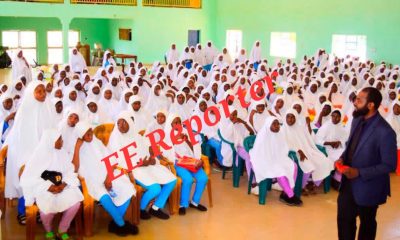
ICPC Moves To Fortify The Moral Fabric Of The Nation’s Future Leaders In Sokoto Schools Ahead Of AU Anti-Graft Day
ICPC Moves To Fortify The Moral Fabric Of The Nation’s Future Leaders In Sokoto Schools Ahead Of AU Anti-Graft Day
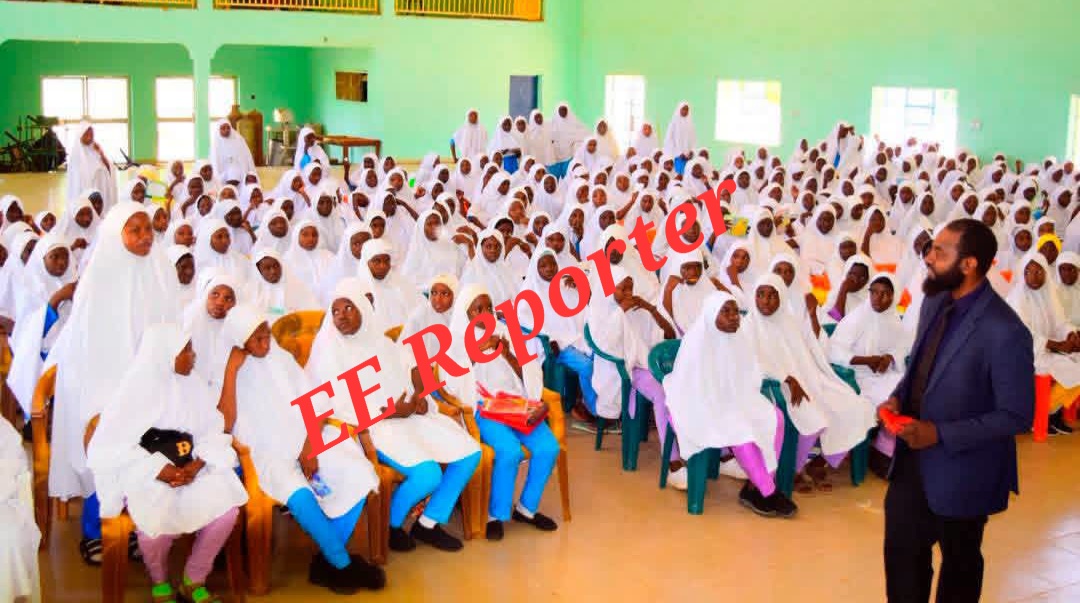
In a proactive move to fortify the moral fabric of the nation’s future leaders, Sokoto State Office of the Independent Corrupt Practices and Other Related Offences Commission (ICPC) convened a landmark cluster sensitisation programme for secondary school students. The initiative, held recently at Government Girls’ College Sokoto, precedes the official commemoration of the 2026 African Union Anti-Corruption Day, underscoring a deliberate shift from punitive measures to preventive education in the war against graft.
Eereporter.com
The outreach, which drew participants from Government Girls’ College Sokoto, Government Girls’ College Raba, and Government Girls’ College Bodinga, was timed to resonate with the continental theme for this year’s observance: “Scaling Up the Promotion of Integrity and Anti-Corruption Action Across Africa.” By targeting young minds, the Commission aims to cultivate a generation for whom ethical conduct is not merely a regulatory requirement, but an intrinsic personal value.
Welcoming the ICPC delegation, the Principal of the host school, Hajiya Fatima Abubakar Gobir, lauded the Commission’s foresight in selecting her institution as a hub for the programme. She expressed profound gratitude for the intervention, asserting that the sensitisation would catalyze the reinforcement of the pillars of honesty, self-discipline, and responsible citizenship among the girls. Her remarks highlighted the critical role of educational institutions as frontline bastions in the fight against societal decay.
Leading the ICPC team, Deputy Superintendent Abdullahi Ibrahim Aliyu, representing the Resident Anti-Corruption Commissioner, delivered a compelling address on the transformative power of personal integrity. He posited that a just and prosperous society is inextricably linked to the moral choices of its individuals, urging the students to anchor their lives in accountability and ethical fortitude. “Strive to be remembered not for your wealth or titles, but for your unwavering integrity and the positive footprint you leave on humanity,” he charged the attentive audience.
Mr. Aliyu further elucidated that the crusade against corruption is fundamentally a grassroots campaign, beginning with the seemingly inconsequential decisions of everyday life. He called upon the younger generation to embrace their agency as vanguards of change, emphasising that a corruption-free Nigeria and a reformed Africa are attainable only when citizens internalise the principle that collective probity starts with individual rectitude. His discourse served as a clarion call for students to eschew the allure of shortcuts and embrace the rigour of principled living.
At the ceremonial close of the event, the Commission distributed a suite of Information, Education, and Communication (IEC) materials to the participating schools. These resources are designed to serve as enduring pedagogical tools, ensuring that the conversations sparked today continue to echo within the classrooms and dormitories long after the delegates have departed. The occasion was further commemorated with a group photograph that captured the shared commitment of educators, students, and anti-corruption officials to a future defined by transparency.
Sokoto Schools
The programme, which registered a robust turnout of 376 participants, stands as a testament to the ICPC’s evolving strategy of embedding anti-corruption awareness within the educational curriculum. By engaging students ahead of the continental observance on 11th July, the Commission has effectively ignited a youth-led movement, reinforcing the notion that the battle for Africa’s soul will be won not in courtrooms, but in the hearts and minds of its young populace.
Eereporter.com
-
 Crime1 year ago
Kogi Assembly Considers Law To Regulate Rent, Establish Control Board: Tenancy Law
-

 News1 year ago
Atiku Reveals Why He Failed To Pick Wike As Running Mate In 2023
-

 Akwa Ibom1 year ago
The Apostolic Church Gets New Territorial Chairman, Exco
-

 Crime1 year ago
Federal High Court Jails 2 For Vandalizing Transformer, Telecom Mast In Kogi
-
 News1 year ago
The Apostolic Church Gets New National President, Executive
-
 Akwa Ibom1 year ago
Umo Eno Commences Payment Of 80,000 Naira Minimum Wage With Arrears
-

 News1 year ago
Senator Natasha Returns To Senate With Husband Amid Seat Dispute
-

 Economy1 year ago
Kiyosaki: Is Tinubu’s Government Afraid Of Ibrahim Traore?