
News
Nigeria’s Security Has Improved Under IGP Disu, Police Declare


Nigeria’s Security Has Improved Under IGP Disu, Police Declare
The Nigeria Police Force (NPF) has said the security situation across the country has improved significantly, attributing the progress to the leadership of the Inspector-General of Police, IGP Olatunji Rilwan Disu, PSC (+), NPM.
Eereporter.com
Speaking with journalists on Wednesday at the Force Headquarters in Abuja, the Force Public Relations Officer, CSP Anietie Iniedu, said the improvement is the result of the Inspector-General’s commitment to motivating personnel, inspiring officers, and providing adequate operational resources for policing across the country.
According to him, one of the major initiatives introduced by the IGP is the establishment of the Violent Crime Response Unit (VCRU), which has strengthened the fight against violent crimes and criminal syndicates nationwide.
Addressing the issue of tinted glass permits, Iniedu clarified that the permits remain valid and legally recognised in Nigeria.
He said motorists with valid tinted glass permits should not experience any difficulties at police checkpoints, commands, stations, or other police formations across the country.
The Police also warned that no officer is authorised to extort motorists or any other road users over tinted glass permits, urging vehicle owners to obtain their permits only through designated police offices in commands nationwide.
Reaffirming the Force’s zero-tolerance policy on corruption and misconduct, the spokesperson stressed that any officer found extorting members of the public over tinted permits or engaging in any form of misconduct would face appropriate disciplinary action.

IGP Disu
He encouraged members of the public to report cases of police misconduct through the Police Complaints Response Unit (CRU) via the following channels: 08057025001, 08057025002, and WhatsApp/SMS: 08057025003.
Iniedu further disclosed that the CRU received 3,922 complaints from members of the public within the last three months, adding that 38 police officers were indicted and are currently undergoing disciplinary procedures.
Eereporter.com


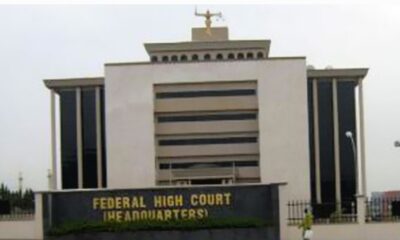










EFCC Arraigns ALSCON, Director for Alleged N582.43m Money Launderin
The Economic and Financial Crimes Commission, EFCC, on Monday, October 12, 2026, arraigned Aluminium Smelter Company of Nigeria, ALSCON, plc, and its Director, Zavyalov Dmitry, before Justice O. A. Egwuatu of the Federal High Court, Abuja, for alleged money laundering offences involving N582,430,250.00 (Five Hundred and Eighty-Two Million, Four Hundred and Thirty Thousand, Two Hundred and Fifty Naira).
Eereporter.com
The company and its director were arraigned on a six-count amended charge, marked FHC/ABJ/CR/644/2025. Dmitry is said to be at large.
According to the charge, the company, a Designated Non-Financial Business and Profession, DNFBP, and Its Director, Dmitry, failed to report in writing to the Special Control Unit against Money Laundering (SCUML) single transfers made from the company’s account between March and July 2024, as required under Section 11(1)(b) of the Money Laundering (Prevention and Prohibition) Act, 2022.
The transfers include N147,515,050.00 in March 2024, N156,026,860.00 in April 2024, N121,425,200.00 in May 2024 and N127,338,190.00 in July 2024, all paid to UDATSON NIGERIA. Others are N15,124,950.00 paid to Urico Global Services in April 2024 and N15,000,000.00 paid to one Christopher Azogu in June 2024.
Count one reads: “That you, Aluminium Smelter Company Of Nigeria Limited, plc, a Designated Non-Financial Business and Profession (DNFBP) and Zavyalov Dmitry (at large) being Director of the said DNFBP sometime in March, 2024 in Abuja within the jurisdiction of this Honourable Court, failed to report in writing to the Special Control Unit against Money Laundering (SCUML), a single transfer of the sum of N147,515,050.00 (One Hundred and Forty Seven Million, Five Hundred and Fifteen Thousand, Fifty Naira) paid into UDATSON NIGERIA from account no. 1013726291 operated by Aluminium Smelter Company Of Nigeria Plc as specified under Section 11(1)(b) of the Money Laundering (Prevention and Prohibition) Act, 2022 and you thereby committed an offence contrary to and punishable under Sections 11 (3), 19(2) (b), and 22 of the same Act.”
Count two: “That you, Aluminium Smelter Company Of Nigeria, plc, a. Designated Non-Financial Business and Profession (DNFBP) and Zavyalov Dmitry (at large) being Director of the said DNFBP sometime in April, 2024 in Abuja within the jurisdiction of this Honourable Court, failed to report in writing to the Special Control Unit against Money Laundering (SCUML), a single transfer of the sum of N156,026,860.00 (One Hundred and Fifty Six Million, Twenty Six Thousand, Eight Hundred and Sixty Naira) paid into UDATSON NIGERIA from account no. 1013726291 operated by Aluminium Smelter Company Of Nigeria Plc as specified under Section 11(1)(b) of the Money Laundering (Prevention and Prohibition) Act, 2022 and you thereby committed an offence contrary to and punishable under Sections 11 (3), 19(2) (b), and 22 of the same Act.”
Count four of the charge sheet reads, “That you, Aluminium Smelter Company Of Nigeria Plc, a Designated Non-Financial Business and Profession and Zavyalov Dmitry (at large) being Director of the said DNFBP sometime in May, 2024 in Abuja within the jurisdiction of this Honourable Court, failed to report in writing to the Special Control Unit against Money Laundering (SCUML), a single transfer of the sum of N121,425,200.00 (One Hundred and Twenty One Million, Four Hundred and Twenty Five Thousand, Two Hundred Naira) paid into Udatson Nigeria from account no. 1013726291 operated by Aluminium Smelter Company Of Nigeria Plc as specified under section 11(1)(b) of the Money Laundering (Prevention and Prohibition) Act, 2022 and you thereby committed an offence contrary to and punishable under sections 11 (3), 19(2) (b), and 22 of the same Act.”

EFCC
Lead counsel to the EFCC, Ekele Iheanacho, SAN, told the court that the offences are punishable under sections 11(3), 19(2)(b) and 22 of the Money Laundering (Prevention and Prohibition) Act.
When the charges were read, the company’s Acting Managing Director, Ime Monday Inyang, pleaded not guilty to all six counts on its behalf.
Counsel to the company had asked the court to quash the charges, claiming that the company was innocent of the charges.
In view of the plea, Justice Egwuatu adjourned the matter to January 27, 2027 for commencement of trial.
Dele Oyewale
Head, Media & Publicity
October 12, 2026
Eereporter.com
News
Taiwo Oyedele, Cardoso Meet World Bank President Banga on Nigeria’s Shift From Stability to Growth
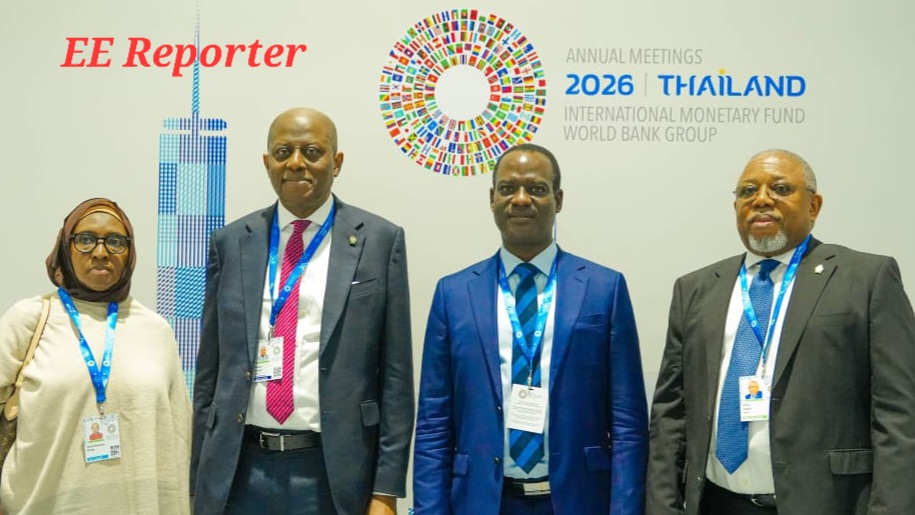
Taiwo Oyedele, Cardoso Meet World Bank President Banga on Nigeria’s Shift From Stability to Growth
Bangkok, 12 October 2026. The Honourable Minister of Finance and Coordinating Minister of the Economy, Taiwo Oyedele, and the Governor of the Central Bank of Nigeria, Olayemi Cardoso, met the President of the World Bank Group, Ajay Banga, on Monday. The meeting took place on the sidelines of the 2026 IMF and World Bank Group Annual Meetings in Bangkok, Thailand, where Oyedele leads Nigeria’s delegation.
Eereporter.com
The meeting reviewed Nigeria’s reform progress and the next phase of its agenda: turning macroeconomic stability into faster growth, more private investment and stronger domestic revenues.
Banga commended the progress of Nigeria’s reforms. He pointed to the rise in private capital inflows from about $300 million in 2023 to nearly $6 billion in 2026, a twentyfold increase.
Oyedele highlighted the rising economic growth and noted that Nigeria’s tax-to-GDP ratio rose from about 7 per cent to 12.5 per cent over the same period. This gives the government more room to fund public investment without resorting to deficit monetisation.
The meeting discussed how Nigeria can make greater use of World Bank guarantee instruments. These guarantees can unlock financing for infrastructure and draw more private capital into the domestic market.
Power infrastructure and human capital were identified as priorities for continued public investment, given their importance to business competitiveness, productivity and job creation. The meeting also stressed the quality of public spending, so that each naira delivers measurable economic and social returns.
Taiwo Oyedele, Cardoso
The meeting is part of the Federal Government’s wider engagement with development partners to lock in reform gains and attract new investment. As Nigeria moves from stability to growth, the priority is to turn stronger fundamentals into productive investment, more jobs and better living standards for Nigerians.
Efe Ovuakporie
Head of Media
Federal Ministry of Finance
12 October 2026
Eereporter.com
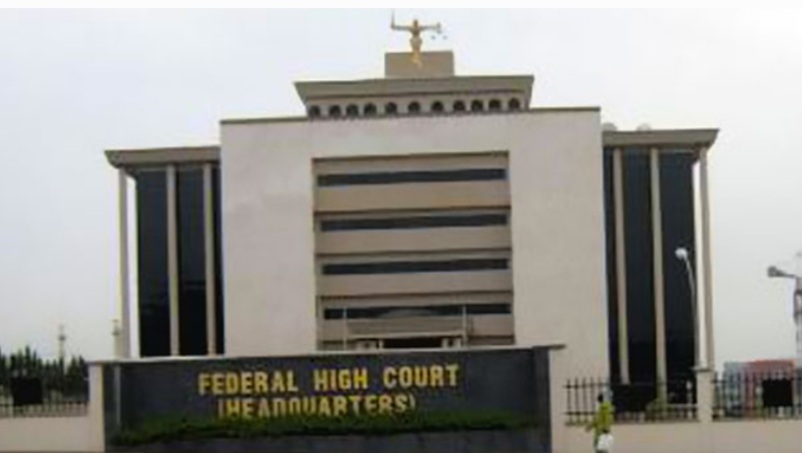
High Court Dismisses Aisha Achimugu’s Fundamental Rights Suit Against EFCC
Justice M.S. Liman of the Federal High Court sitting in Abuja has dismissed a fundamental human rights suit filed by Abuja-based businesswoman, Aisha Achimugu against the Economic and Financial Crimes Commission, EFCC.
Eereporter.com
In the originating suit no : FHC/ABJ/CS/466/2026, Achimugu approached the court for determination of whether the defendant, EFCC’s action of searching her house and seizing her cars and jewelries and other items was within the powers of the Commission.
Achimugu also asked the court to enforce her rights to privacy, including an order of the court restraining the defendant from threatening or harassing and invading her private residence.
Part of her claim was for the court to award a N10,000,000,000 (Ten Billion Naira) damage against the EFCC for what she described as invasion of her privacy.
Delivering judgment in the suit on Monday, October 10, 2026, Justice Liman dismissed the suit and held that the defendant has the power to search the plaintiff’s property after receiving intelligence on the alleged criminal activities of the plaintiff. “EFCC has the right to search the residence,” he said.
The judge said that Achimugu and her legal representatives failed to show reason to warrant the kind of damage she demanded from the EFCC and equally dismissed the request for N10 billion damages.
On the whole, Justice Liman agreed that there was nothing that should have stopped the EFCC from carrying out its statutory duties. The court therefore held that the matter lacked merit and was dismissed because “ it is frivolous and it was brought in bad faith”. The damage she sought was also denied.
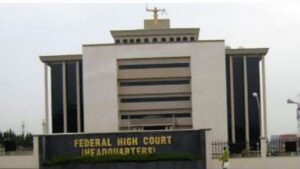
Federal High Court
Reacting to the judgment, counsel to the EFCC, Emenike Mgbemele said the judgment was in the interest of justice, adding that the suit was a ploy to waste the time of the court.
Dele Oyewale
Head, Media & Publicity
October 12, 2026
Eereporter.com
-
 Crime1 year ago
Kogi Assembly Considers Law To Regulate Rent, Establish Control Board: Tenancy Law
-

 News2 years ago
Atiku Reveals Why He Failed To Pick Wike As Running Mate In 2023
-
 Akwa Ibom2 years ago
The Apostolic Church Gets New Territorial Chairman, Exco
-

 Crime2 years ago
Federal High Court Jails 2 For Vandalizing Transformer, Telecom Mast In Kogi
-
 News2 years ago
The Apostolic Church Gets New National President, Executive
-
 Akwa Ibom2 years ago
Umo Eno Commences Payment Of 80,000 Naira Minimum Wage With Arrears
-

 News2 years ago
Senator Natasha Returns To Senate With Husband Amid Seat Dispute
-

 Economy1 year ago
Kiyosaki: Is Tinubu’s Government Afraid Of Ibrahim Traore?