
News
State Police Constitutional Framework Near Completion: Presidency

State Police Constitutional Framework Near Completion: Presidency
Significant progress has been made towards establishing state police, with a constitutional amendment expected soon, following months of consultations among the Executive, the National Assembly and security authorities.
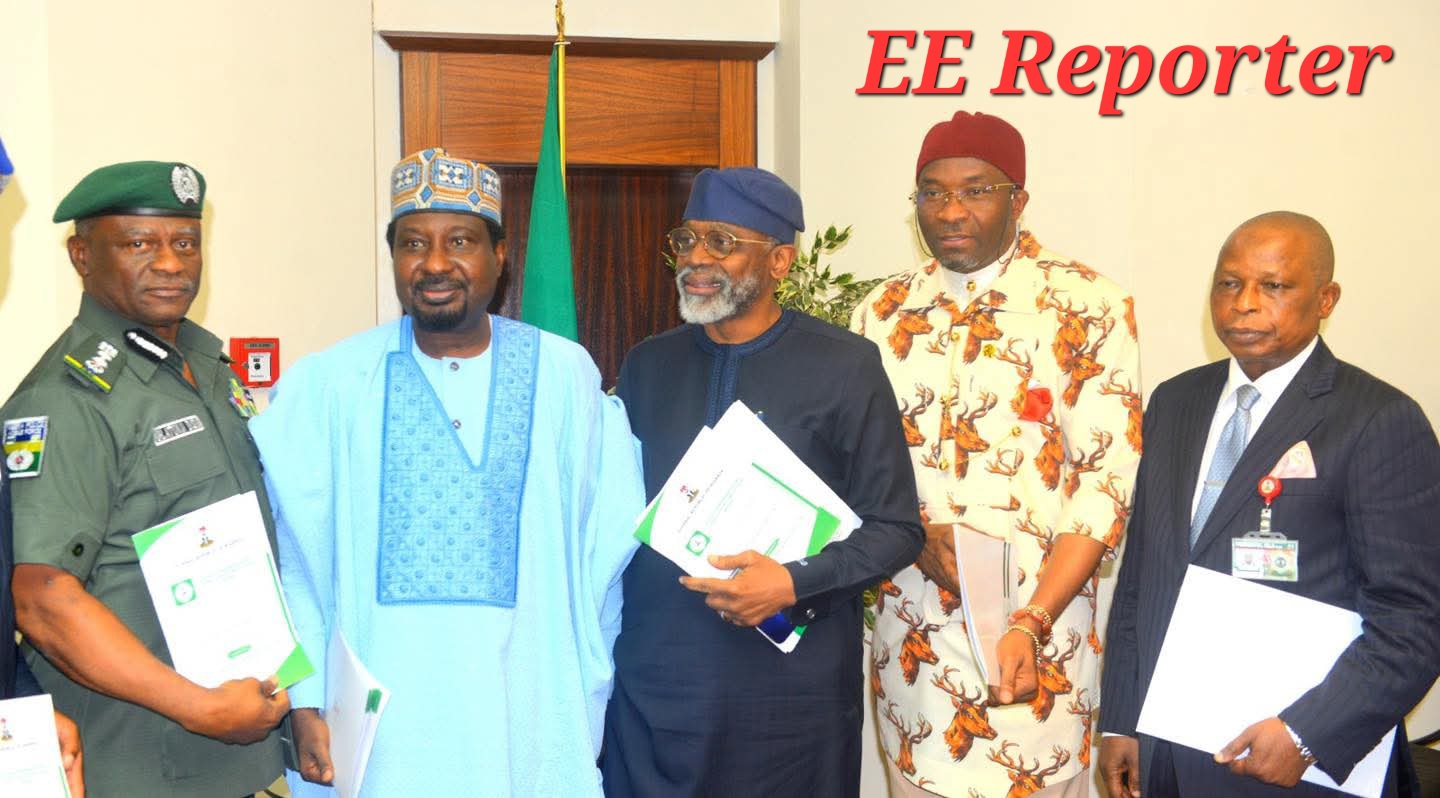
The Chief of Staff to the President, Hon. Femi Gbajabiamila, disclosed this on Thursday while briefing State House Correspondents after a consultative meeting on state police convened by the Presidency, held at the State House, Abuja.
Gbajabiamila said deliberations on the proposed state police framework began several months ago following a directive by President Bola Ahmed Tinubu, noting that the process has gained considerable traction.
He explained that establishing state police requires careful consideration of constitutional and legal issues and cannot be implemented hastily.
“We started deliberations in the last three or four months on how to go about the establishment of state police as directed by Mr President.
“Establishing state police is not something that you do with the snap of the fingers. There is a lot involved in terms of constitution and legalities, and thank God we have now gained a lot of traction.
“Hopefully, the amendment will come shortly, and the details of the amendment will come after that,” Gbajabiamila added.
According to him, discussions have now advanced to the point of considering the necessary constitutional amendments, with the enabling legislation to follow afterwards.
“Right now, what we are looking at is the constitutional amendment itself, and then the enabling law would follow thereafter. That is what we have been deliberating on in the last couple of hours,” he added.
The Chief of Staff highlighted broad national support for the initiative, emphasising that the debate is no longer about whether state police should be establishedbut about creating the appropriate legal and institutional framework for its operation.
State police
He said President Tinubu, who has consistently advocated for state police as part of efforts to strengthen Nigeria’s security architecture, would receive a comprehensive report on the meeting’s outcome.
The meeting is part of a series of consultations convened by the Federal Government to develop a workable framework for the establishment of state police, an initiative aimed at strengthening internal security, improving local intelligence gathering and enhancing the capacity of sub-national governments to address emerging security challenges across the country.
President Tinubu has maintained in the last few months that state police is a necessary response to Nigeria’s evolving security challenges, advocating that a decentralised policing structure would strengthen grassroots security, enhance intelligence gathering and improve the protection of lives and property across the country.
The meeting was attended by the Deputy President of the Senate, Jibrin Barau, the Deputy Speaker of the House of Representatives, Benjamin Kalu and the Inspector-General of Police, Tunji Disu, among other senior government officials.
Bayo Onanuga
Special Adviser to the President
(Information and Strategy)
June 04, 2026
Eereporter.com









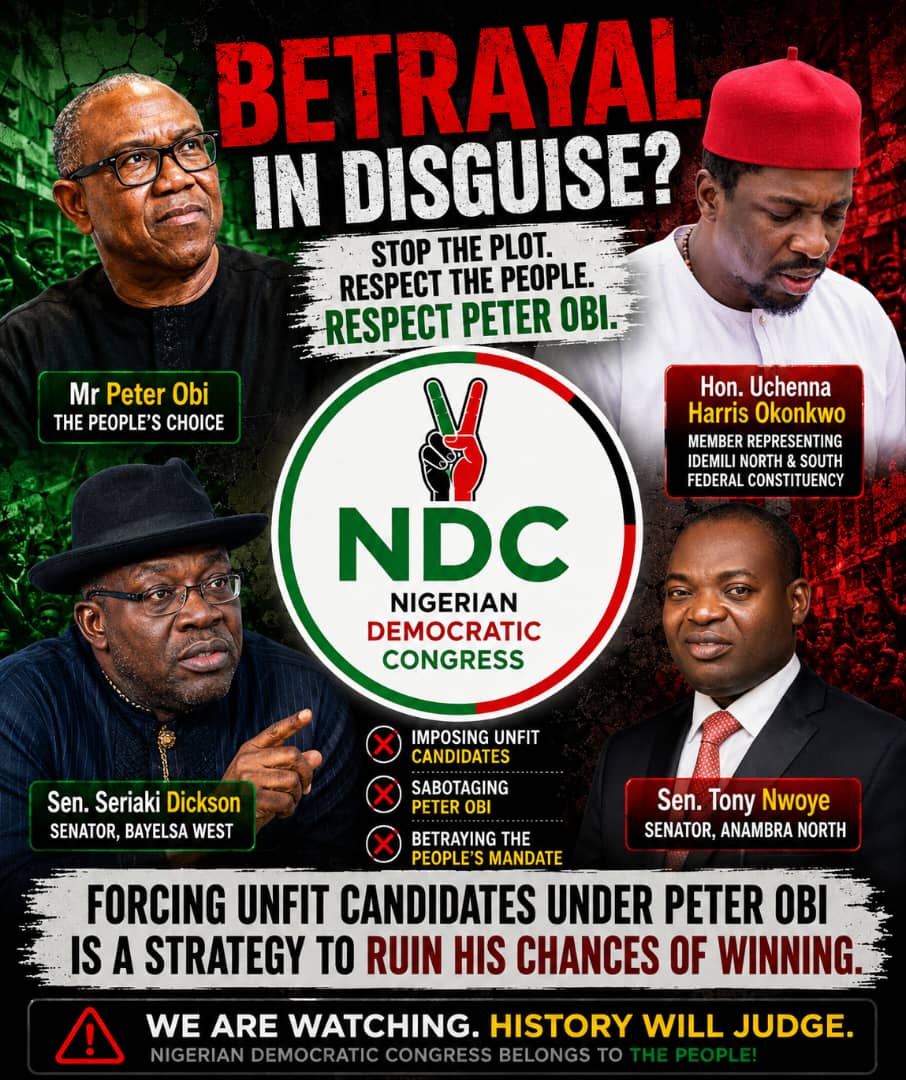
The Betrayal of a Movement: How Political Interests Undermined Peter Obi’s Stronghold
By Tunde Simon
History will judge not only those who openly opposed a cause, but also those who claimed to support it while quietly working against it from within.
Many supporters of Mr. Peter Obi have watched with concern as a number of influential political actors within the South-East appeared more interested in protecting personal interests than strengthening the movement that inspired millions of Nigerians. Rather than consolidating the gains made by Peter Obi and his supporters, actions taken by certain political stakeholders have created the impression of a deliberate effort to weaken the very structures that gave the movement its strength.
One of the most troubling developments was the sidelining of Hon. Uchenna Harris Okonkwo, son of the late Senator Annie Okonkwo, a respected political figure and long-time friend and ally of Peter Obi. To many observers, this was not merely an internal political decision; it was perceived as an attempt to dismantle a strategic pillar of support within both Peter Obi’s political and business networks.
Supporters argue that individuals such as Tony Nwoye and other key South East stakeholders such as Sen. Ben Obi, Prof. Osita Ogbu, Prof. Udenta Udenta, Sam Egwu amongst others, played significant roles in political manoeuvres that ultimately worked against the interests of the Obi movement. Whether motivated by personal ambition or political calculations, the outcome has left many questioning the sincerity of those who publicly profess loyalty while allegedly pursuing a different agenda behind closed doors.
The replacement of Uchenna Okonkwo with an Aide of Bala Mohammed on the NDC platform has generated considerable controversy among party supporters. Critics have described the decision as a departure from the values of integrity, loyalty, competence, and grassroots representation that many believed the movement stood for. To these supporters, the decision represented not progress but a weakening of the principles that attracted millions of Nigerians to the cause of political reform.
What makes the situation particularly painful is that the perceived attack did not come from political opponents. Rather, it appeared to originate from individuals within the broader South-East political establishment who should have been protecting and strengthening the collective aspirations of the region.
Political movements are rarely defeated solely by external opposition. More often, they are weakened by internal divisions, personal ambitions, and the unwillingness of leaders to place collective interests above individual gain. The lesson from this episode is clear: no movement can succeed when loyalty is rewarded with exclusion and sacrifice is met with betrayal.
For many supporters, the events surrounding Uchenna Okonkwo’s exclusion are not simply about one individual or one political ticket. They symbolize a larger struggle over the future of a movement, the preservation of trust, and the question of whether those entrusted with leadership are truly committed to the ideals they publicly proclaim.
Comrade Tunde Simon is a political analyst and can be reached on tundesimon@yahoo.com
ADC Sues Federal High Court Chief Judge Over Disregarding Court Order
Nkemakolam Ukandu, the national welfare secretary of the African Democratic Congress, has sued the chief judge of the Federal High Court, John Tsoho, for alleged disobedience of a court order.
Mr Ukandu sought an order compelling the National Judicial Council to investigate allegations of corruption and abuse of judicial powers levelled against Mr Tsoho.
Eereporter.com
Mr Ukandu, in a suit marked FHC/ABJ/CS/1165/2026 and filed on Thursday, sought an order compelling the National Judicial Council to investigate allegations of corruption and abuse of judicial powers levelled against Mr Tsoho.
The plaintiff, who named the NJC as the first defendant, listed Mr Tsoho and Justice Peter Lifu as second and third defendants, respectively, in the suit.
The fresh suit stemmed from the ADC leadership crisis involving an aggrieved member, Nafiu-Bala Gombe, whose case is currently before Mr Lifu. The judge was recently reassigned to hear Gombe’s suit following the announcement of the name of the former trial judge, Justice Emeka Nwite, among the 12 new justices elevated to the Appeal Court.
Mr Gombe’s suit seeks an order stopping the David Mark-led leadership of ADC from parading themselves as leaders of the party.
ADC
Mr Ukandu, who is seeking to be joined in the suit, accused the chief judge and Mr Lifu of manifest bias and a willingness to do the bidding of persons against the interests of the party.
He faulted the chief judge for reassigning the suit to Mr Lifu, noting that the reassignment disregarded the orders of the Supreme Court Justice Nwite.
Eereporter.com
We Didn’t Impose Candidates, Aspirants Were Advised To Consult Caucus Leaders, Says NDC
The Nigeria Democratic Congress (NDC) has defended the conduct of its recently concluded primaries, insisting that no candidate was imposed by the party’s national leadership.
In a statement on Thursday by Ikenna Enekweizu, NDC national secretary, the party said aspirants were directed to engage with state caucus leaders, stakeholders and grassroots members in line with its leadership and consultation structure.
The NDC described itself as a party built on “leadership, consultation, inclusiveness and consensus-building”, adding that it operates through an established stakeholder framework across the federation.
Eereporter.com
The party said in the south-east, its presidential candidate, Peter Obi, came into the party with an existing leadership structure comprising elder statesmen and political leaders serving as caucus heads in their respective states.
According to the statement, the caucus leaders include Onyema Ugochukwu in Abia, Sam Egwu in Ebonyi, Okwesilieze Nwodo in Enugu, and Achike Udenwa in Imo.
The party said the leaders were mandated to consult stakeholders, build consensus and make recommendations based on political realities in their states.
“This process was conducted without prejudice to the rights of any aspirant. Where aspirants disagreed with recommendations made by stakeholders or caucus leaders, they were free to test their popularity through the democratic process at the grassroots level, and this was duly accommodated,” the statement reads.
The NDC said the national secretariat was never involved in selecting candidates for constituencies or states.
“At no time has the NDC National Secretariat been involved in the business of picking, choosing, or imposing candidates on any constituency or state.”
The party added that every aspirant who approached it was received and referred to the appropriate caucus leaders and stakeholders in their states.
The NDC said it also implemented its affirmative action policy by encouraging female participation in elective offices and supporting serving lawmakers in some cases.
The party acknowledged reports of aspirants declaring themselves candidates before the conclusion of the process, as well as complaints from some contestants.
It, however, said such issues had been referred to the appeal panel and party leadership for resolution.
“We are aware of reports of some aspirants prematurely declaring themselves as candidates, as well as complaints raised by others regarding aspects of the process. These issues have been brought to the attention of the appeal panel and the leadership of the party and have been addressed accordingly,” the statement added.
NDC
The party said it would now begin a reconciliation process following a resolution reached at its NEC meeting.
It called on caucus leaders, state chairmen, stakeholders and party officials to engage aggrieved aspirants and members in the interest of unity and party growth.
“As resolved at yesterday’s NEC meeting, we now look forward to the commencement of a comprehensive reconciliation process,” Enekweizu said.
-

 Crime1 year ago
Kogi Assembly Considers Law To Regulate Rent, Establish Control Board: Tenancy Law
-

 News1 year ago
Atiku Reveals Why He Failed To Pick Wike As Running Mate In 2023
-
 Akwa Ibom1 year ago
The Apostolic Church Gets New Territorial Chairman, Exco
-

 Crime1 year ago
Federal High Court Jails 2 For Vandalizing Transformer, Telecom Mast In Kogi
-
 News1 year ago
The Apostolic Church Gets New National President, Executive
-
 Akwa Ibom1 year ago
Umo Eno Commences Payment Of 80,000 Naira Minimum Wage With Arrears
-

 News1 year ago
Senator Natasha Returns To Senate With Husband Amid Seat Dispute
-
 Economy1 year ago
Kiyosaki: Is Tinubu’s Government Afraid Of Ibrahim Traore?