
News
IGP Receives Civil Society Delegations, Vows Tougher Police Accountability Mechanism


IGP Receives Civil Society Delegations, Vows Tougher Police Accountability Mechanism
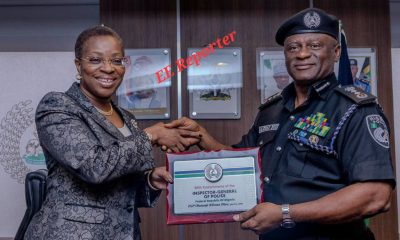
Tougher police accountability mechanism. The Inspector-General of Police, IGP Olatunji Rilwan Disu, psc (+), NPM, today received a distinguished delegation of Civil Society Organizations (CSOs) led by human rights lawyer, Femi Falana SAN, at the Force Headquarters, Abuja.
The delegation comprised prominent figures from the legal, human rights, governance, and security reform sectors. Notable members included Mr. Femi Falana, SAN; Mr. Adesina Oke, Esq. of the National Association of Democratic Lawyers (NADL); Barr. Okeke Chinwike of the African Law Foundation (AFRILAW); Mr. Barbara S. Magaji of Amnesty International; Mr. Anietie Ewang of Human Rights Watch (HRW); Mr. Samson Itodo, Executive Director of Yiaga Africa; Mr. Bathsheba Taglia of CISLAC/Transparency International Nigeria; Mrs. Kemi Okenyodo, Executive Director of Partners West Africa-Nigeria (PWAN); and Dr. Itia Otabor of the African Centre for Leadership, Strategy & Development (Centre LSD).
In his remarks, Femi Falana SAN congratulated IGP Disu on his appointment and commended his vision of policing as a mission rooted in the protection of human rights. He urged strict compliance with the Nigeria Police Act 2020, particularly provisions on family notification upon arrest, suspects’ rights to legal representation, and the prohibition of arrests for civil wrongs. Falana further called for stronger accountability measures to ensure officers respect constitutional guarantees and are held liable in cases of misconduct.
Responding, IGP Olatunji Rilwan Disu expressed deep appreciation for the engagement of civil society and reaffirmed his commitment to people-centered policing. He emphasized that effective policing must address both major crimes and the everyday concerns of citizens.

IGP Receives Civil Society Delegations
The IGP assured the delegation of ongoing reforms, including updated training manuals, improved officer welfare, and strict directives against interference in civil matters. The IGP pledged transparency and accountability and committed to improving the Complaint Response Unit and Monitoring Unit.
The Inspector-General expressed confidence that effective policing is attainable and reaffirmed that the Nigeria Police Force remains steadfast in prioritizing accountability, transparency, and the protection of human rights across all its operations.
DCP Anthony Okon Placid, psc (+), mni
Force Public Relations Officer
Force Headquarters, Abuja
9th April 2026








News
ICPC, NCS Advocate for a Robust Collaborative Framework to Safeguard Public and National Revenue
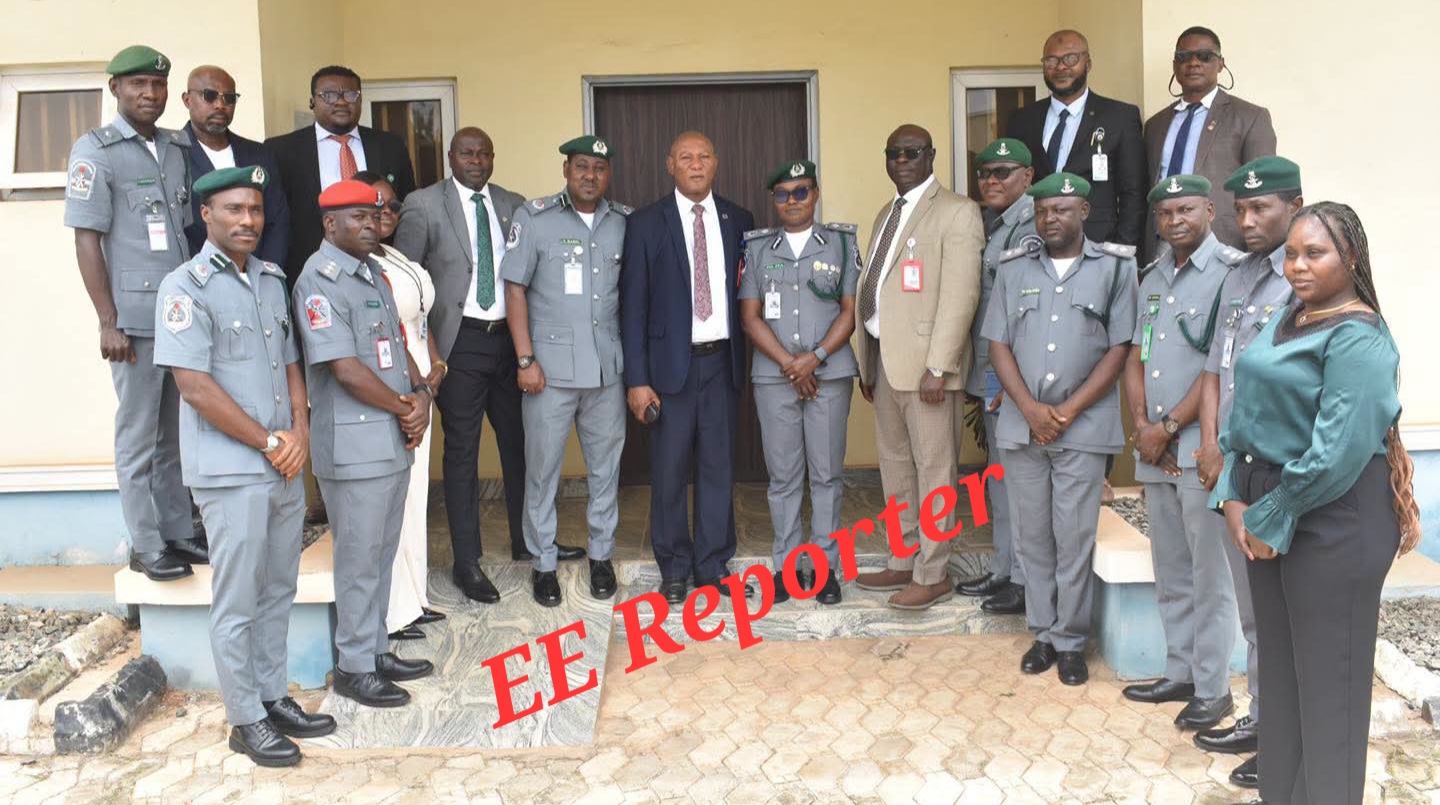
ICPC, NCS Advocate for a Robust Collaborative Framework to Safeguard Public and National Revenue
The Independent Corrupt Practices and Other Related Offences Commission (ICPC) has underscored the critical necessity of integrity within the Nigeria Customs Service (NCS), advocating for a robust collaborative framework to protect public revenue and bolster governmental trust.
Eereporter.com
The Commission articulated this stance during a high-level courtesy visit from the newly appointed Customs Area Controller for the Ondo/Ekiti Command, Deputy Comptroller Patience O. Ita, at the ICPC’s Ondo State headquarters in Akure.
During the meeting, the Resident Anti-Corruption Commissioner (RACC) for Ondo and Ekiti States, Mr. Tiku Andrew Menge, stressed that the NCS’s pivotal role in border management, enforcement, and trade facilitation renders ethical conduct paramount.
He warned that systemic revenue leakages and the abuse of regulatory powers not only erode public confidence but also critically impair the efficacy of state institutions, creating a fertile ground for corrupt practices.
Mr. Menge elaborated on the ICPC’s holistic preventive mandate, clarifying that its remit extends well beyond the investigation and prosecution of graft; further noting that the Commission is actively engaged in identifying systemic vulnerabilities and reinforcing institutional controls, thereby fostering an environment where corrupt activities are intrinsically difficult to initiate or sustain.
Highlighting the transformative potential of modernisation, the RACC advocated for the integration of technology, automation, and data-driven processes within Customs administration.
He explained that such advancements could significantly enhance traceability and accountability by curbing discretionary human intervention, though he cautioned that these measures must be underpinned by ethical leadership, rigorous supervision, and robust internal controls.
In a salient clarification, Mr. Menge asserted that the objectives of corruption prevention and trade facilitation are not mutually exclusive but are, in fact, symbiotic. He argued that transparent and predictable Customs processes effectively diminish the appeal of informal channels, thereby cultivating a more reliable and secure environment for legitimate commercial ventures.
Proposing a strategic roadmap for future collaboration, the Commissioner suggested that both agencies could benefit from practical engagements in corruption-risk identification, integrity sensitisation, and stakeholder dialogue.
He emphasised that such cooperation should be guided by the overarching public interest, rather than fostering a hierarchical dynamic where one institution supervises the other, but rather leveraging their respective mandates for a common good.
In her response, Deputy Comptroller Ita affirmed that her visit was primarily to establish a constructive working relationship following her recent deployment.
ICPC, Customs
She expressed her command’s unequivocal readiness to sustain engagement with the Commission on matters of mutual concern, particularly in the realms of compliance, enforcement, and the effective administration of public services.
However, Mr. Menge concluded with a firm caveat, reminding all parties that collaborative ventures must not compromise the statutory independence of either institution.
His parting words served as a stark reminder of the fundamental principles underpinning their shared mission: “Partnership creates trust; it does not create immunity.”
Eereporter.com

High Court: Five Bag Seven-year Jail Term in Lagos Over N117million Fraud
Justice K.A. Jose of the Lagos State High Court sitting in Tapa, Lagos, on Thursday, September 3, 2026, convicted and sentenced five persons to seven years imprisonment for their involvement in a N117.7 million fraud involving Chi Limited.
Eereporter.com
The convicts: Yinka Salawu, Joshua Oluremi Daramola, Raji Ahmed, Afolabi Israel Olusegun, and Muraina Olanrewaju Abdullahi, were prosecuted by the Lagos Zonal Directorate 1 of the Economic and Financial Crimes Commission (EFCC) on a six-count charge bordering on conspiracy to obtain money by false pretence, obtaining money by false pretence, and forgery.
One of the counts reads:“that you, Yinka Salawu (aka Mr. Yinka James Christopher), Tinuke Olayinka Salawu (aka Mrs. Yinka James Christopher), Ogbeide Kingsley Stevenson, Joshua Oluremi Daramola, Raji Ahmed, Sule Tijani Adebayo (at large), Afolabi Israel Olusegun, Muraina Olanrewaju Abdullahi, Fred Esumike (at large), and Ismaila Kareem (trading under the name and style of Ismak Ola Nig. Ltd.) (at large), sometime in 2009 at Lagos, within the jurisdiction of this Honourable Court, with intent to defraud, obtained the sum of N81,359,922.00 (Eighty-One Million, Three Hundred and Fifty-Nine Thousand, Nine Hundred and Twenty-Two Naira) from Chi Limited under the false pretence that the money was payment for goods and services you supplied and rendered to Chi Limited, which representation you knew to be false, thereby committing an offence contrary to Section 1(3) of the Advance Fee Fraud and Other Fraud Related Offences Act, 2006.”
In the course of the trial, the prosecution called 17 witnesses drawn from the EFCC, the Nigeria Police Force, banks, and Chi Limited. It also tendered several documentary exhibits to establish its case against the defendants.
At the conclusion of the trial, Justice Jose found the 1st, 4th, 5th, 6th, and 7th defendants guilty on Counts One, Two, and Three and convicted them accordingly. However, the 2nd, 3rd, and 8th defendants were discharged and acquitted.
Following the convictions, the prosecution counsel, M.S. Owede urged the court to invoke Section 11 of the Advance Fee Fraud and Other Fraud Related Offences Act and order the convicts to restitute Chi Limited, the petitioner the sums stated in counts Two and Three, totalling N117,755,061.
Owede also asked the court to order the sale of properties belonging to the 1st convict, with the proceeds paid to Chi Limited. Alternatively, he urged the court to order that the properties be forfeited outrightly to the petitioner.
In her ruling, Justice Jose sentenced each of the five convicts to seven years’ imprisonment without an option of a fine.
“The convicts will be given credit for the periods they have already spent in custody. All periods spent in prison shall be deducted from the seven-year terms imposed by the court,” the judge ruled.
On the issue of restitution, Justice Jose, relying on Section 297 of the Administration of Criminal Justice Law, ordered the convicts to restitute Chi Limited with the sums contained in the charge.

Court
“All monies already paid shall be deducted from the amounts to be restituted,” Justice Jose added.
The convicts’ journey to the Correctional Centre began when they were arrested for obtaining the sum of N81,359,922.00 (Eighty-One Million, Three Hundred and Fifty-Nine Thousand, Nine Hundred and Twenty-Two Naira) from Chi Limited under the false pretence that the money was payment for goods and services they supplied and rendered to Chi Limited.
They neither delivered the goods and services nor returned the money to the company.
Eereporter.com
Economy
Minister of Defence, NiDCOM Chairman, Others Meets Nigerians in Angola, Reassure Growing Economy and Insecurity Being Tackle

Minister of Defence, NiDCOM Chairman, Others Meets Nigerians in Angola, Reassure Growing Economy and Insecurity Being Tackle
The Minister of Defence, Gen. Christopher Musa (Rtd), has reassured Nigerians in Angola of the Federal Government’s commitment to strengthening national security and addressing the challenges posed by insecurity and instability in the Sahel region.
Eereporter.com
Musa gave the assurance during an engagement with members of the Nigerian community in Luanda, Angola, on the sidelines of the 21st Extra-ordinary Session of the Assembly of Heads of State and Government of the African Union (AU).
The engagement was coordinated by the Chairman/CEO of the Nigerians in Diaspora Commission (NiDCOM), Hon. Abike Dabiri-Erewa, on the sidelines of the AU extraordinary session in Luanda Uganda
The Nigerian delegation to the AU summit was led by Vice President Kashim Shettima, who represented President Bola Ahmed Tinubu.
Speaking to the Nigerian community, Musa acknowledged the security challenges confronting the country, noting that some of them were linked to instability in the Sahel, with its effects spilling across national borders.
He assured Nigerians that the Federal Government was taking comprehensive measures to strengthen Nigeria’s borders and prevent security threats and incursions.
The Minister assured Nigerians in Angola that the administration of President Bola Ahmed Tinubu remained committed to defeating security threats across the country, adding that efforts were ongoing to increase the manpower, equipment and operational capacity of the Armed Forces and other security agencies.
In the same vein, Minister of Interior, Olubunmi Tunji Ojo said “ Nigeria is growing, the economy is growing and Nigeria is on the path of full recovery “
On the request to have a Nigerian passport production centre in Angola, Tunji-Ojo said he will look into their request so as to ease issuance of passport booklets in the country.
Coordinating the meeting, Dabiri-Erewa, appreciated members of the Nigerian community in Angola for their contributions to Nigeria’s development and for continuing to project the positive image of the country abroad.
She reassured the community that the Federal Government values the contributions, concerns and welfare of Nigerians in the Diaspora, stressing that their voices remain important in shaping policies and interventions that affect them.
Dabiri-Erewa also encouraged Nigerians in Angola to continue to remain united, law-abiding and committed to contributing positively to the development of both Nigeria and their host country.
Speaking on behalf of the Nigerian community in Angola, the Secretary of the Nigeria Community Association in Angola, Nnaemeka Francis Obi, commended the engagement and highlighted some of the challenges confronting Nigerians in the country.
Obi specifically called for the establishment of a Nigerian passport office in Angola, noting that access to passport and consular services remains a major concern for members of the community.
He also raised concerns over healthcare challenges faced by Nigerians living in Angola and called for greater attention to the welfare and well-being of Nigerians in the Diaspora.
The engagement provided an opportunity for the Federal Government delegation to hear directly from Nigerians in Angola and reaffirm its commitment to deepening Diaspora engagement, addressing their concerns and ensuring that Nigerians abroad remain an integral part of the nation’s development agenda.

Minister of Defence, NiDCOM
NiDCOM reiterated that the Federal Government, through relevant agencies, will continue to strengthen its engagement with Nigerians across the globe while working towards responsive solutions to issues affecting their welfare and interests.
E-signed
Abdur-Rahman Balogun, mnipr
Director, Media, Public Relations and Protocols
Nigerians in Diaspora Commission (NiDCOM), Abuja.
Eereporter.com
-

 Crime1 year ago
Kogi Assembly Considers Law To Regulate Rent, Establish Control Board: Tenancy Law
-

 News1 year ago
Atiku Reveals Why He Failed To Pick Wike As Running Mate In 2023
-

 Akwa Ibom2 years ago
The Apostolic Church Gets New Territorial Chairman, Exco
-

 Crime2 years ago
Federal High Court Jails 2 For Vandalizing Transformer, Telecom Mast In Kogi
-

 News2 years ago
The Apostolic Church Gets New National President, Executive
-
 Akwa Ibom2 years ago
Umo Eno Commences Payment Of 80,000 Naira Minimum Wage With Arrears
-

 News2 years ago
Senator Natasha Returns To Senate With Husband Amid Seat Dispute
-

 Economy1 year ago
Kiyosaki: Is Tinubu’s Government Afraid Of Ibrahim Traore?