
Economy
NUPRC-SeaSeis Seismic Data Project, Future Of Nigeria’s Oil And Gas Sector


NUPRC-SeaSeis Seismic Data Project, Future Of Nigeria’s Oil And Gas Sector
Recently, the Nigerian Upstream Petroleum Regulatory Commission (NUPRC) signed a three-year Petroleum Exploration Licence (PEL) agreement with SeaSeis Geophysical Limited (SeaSeis), authorising the company, in partnership with the Commission and TGS, to undertake the acquisition and processing of new 3D seismic and gravity data.
The major seismic data acquisition project, PEL No. 5, covers an area of 11,700 square kilometres offshore in the Outer Fold and Thrust Belt of the eastern Niger Delta, in water depths of 400–2,800 metres. This zone is one of Nigeria’s most prolific yet geologically complex regions.
The agreement, signed on March 24, 2026, also empowers the partnership to issue data-use licences, with revenues to be shared between the company and the Commission.
Upon assumption of office in December 2025, the Commission Chief Executive (CCE), Mrs. Oritsemeyiwa Eyesan, emphasised the importance of data integrity in operations and stated clearly that every aspect of the Commission’s work must be measurable and demonstrably so. “Going forward, NUPRC positions itself on the tape line to be measured by faster, predictable regulatory approvals; secure and sustainable production; credible licensing and disciplined acreage performance; world-class HSE and process safety; and trusted measurement, transparency, governance, and data integrity.”
Emphasising that success will be judged not by policy volume but by tangible outcomes such as higher production, safer operations, reduced losses, credible data, faster approvals, and stronger investor confidence, the CCE fixed her gaze not only on increasing production levels but on doing so at reduced cost. The signing of the recent data acquisition project aligns with this commitment. She reiterated this during the agreement signing, noting that the issuance of the PEL 5 licence reflects the Commission’s continued commitment to data-driven exploration, transparency and long-term value creation for Nigeria’s oil and gas sector.
Advertisement
The licence is expected to unlock stronger prospecting potential, enhance subsurface understanding and support more efficient development of Nigeria’s hydrocarbon resources, in line with Section 71(1–10) of the Petroleum Industry Act (PIA) 2021. The project itself entails the acquisition of new 3D seismic and gravity data and is highly significant for Nigeria’s oil industry. Fundamentally, it is about improving subsurface knowledge, providing a clearer and more accurate picture of what lies beneath the country’s sedimentary basins.
It enables better identification of new oil and gas reserves, as 3D seismic technology offers far greater detail. This allows geoscientists to map underground structures with increased precision, thereby reducing exploration uncertainty. Consequently, it increases the chances of discovering commercially viable hydrocarbon deposits, especially in underexplored frontier basins. It also reduces exploration risk. By generating high-quality data that can be marketed to investors, the NUPRC lowers entry barriers. Oil companies are more likely to invest when guided by reliable data.
In addition, the project creates a new revenue stream, as multiple companies can purchase and utilise the data. This enhances Nigeria’s attractiveness during licensing rounds and helps draw both international oil companies and indigenous firms. Furthermore, it will help revitalise dormant or underexplored basins. Areas that previously lacked detailed data, such as parts of inland basins or deep offshore zones, can now be reassessed using modern technology, potentially unlocking new production zones.
Advertisement
This serves as a boost to Nigeria’s efforts to meet its oil production quota under the Organisation of the Petroleum Exporting Countries (OPEC). It is noteworthy that Nigeria’s production quota depends not only on existing wells but also on sustainable reserves and new discoveries. Therefore, this initiative contributes in several ways, including expanding the reserves base, enabling faster field development, improving production efficiency and boosting investor confidence and activity levels. Indeed, increased exploration activity leads to more drilling and ultimately more production. Without continuous exploration, production naturally declines as older fields mature.
The broader implication is that this agreement signals a data-driven strategy to reverse the long-standing challenge of meeting OPEC quotas, often caused by underinvestment, ageing infrastructure and declining reserves replacement. Simply put, more accurate data leads to more discoveries, more investment and more production. While the impact may not be immediate, in terms of increased output, which is typically incremental, the medium to long-term outlook is promising, especially with improvements in security, infrastructure and regulatory stability.
This move is significant because OPEC quotas depend largely on what a country can sustainably produce, not merely what it aspires to produce. The project supports reserve replacement, unlocks new basins and increases drilling success rates. With this strategic initiative, the NUPRC is not merely regulating; it is building a national data repository. This repository will not only serve as a store of critical data but will also generate revenue, as organisations pay for access. In effect, the country can earn income even before oil is discovered, while also making licensing rounds more competitive.
Thus, the agreement serves as a foundation for Nigeria’s future oil output: it reduces uncertainty, attracts capital, improves discovery rates and supports long-term production growth. This outlook becomes even stronger as government agencies address insecurity in oil-producing areas, sustain policy stability and improve the investment climate.
That Nigeria possesses substantial reserves yet struggles with low output is no longer news. The challenge lies not in resource availability but in production constraints. The NUPRC–SeaSeis–TGS project is poised to address these challenges significantly, complementing other integrated strategies aimed at increasing oil and gas production. It targets structural, long-term issues, including declining discoveries, weak exploration-to-production cycles and underutilised frontier and deepwater potential, while also improving efficiency in existing fields.
A notable strategic shift is evident: Nigeria is transitioning from a passive regulator to an active data provider and investment enabler. This is critical because data drives exploration decisions globally, and countries with high-quality data attract more capital.
Although this project may not immediately resolve Nigeria’s challenges in meeting its OPEC quota, it positions the country to meet, and potentially exceed, future quotas sustainably. Without such initiatives, production would continue to decline, risking reduced relevance in global oil markets. With them, alongside broader reforms, Nigeria stands to achieve new discoveries, increased reserves and higher long-term output.

NUPRC-SeaSeis
Eyesan has emphasised that the PEL 5 initiative underscores the importance of credible partnerships in achieving national production and reserve growth targets: “The PIA recognises that licences can be assigned on non-exclusive acreages to contractors willing to undertake exploration activities. As the chief superintendent of the industry, we must also maintain our production targets, including reserves. The only way to achieve this successfully is through partnerships with committed explorers.”
The project is SeaSeisGeophysical Limited’s largest in Africa, according to its managing director, Goke Adeniyi. Adeniyi noted that the project underscores the scale of opportunity within Nigeria’s upstream sector. “We are pleased to be here, not just as SeaSeis but in partnership with TGS,” he said at the signing ceremony. His organisation will leverage TGS’s GeoStreamer dual-sensor technology, featuring long offsets, wide tow, and triple-source broadband acquisition.
The resulting high-fidelity 3D seismic data is expected to provide operators with the quality needed to evaluate prospects with greater confidence.
James, a fellow of the Nigerian Guild of Editors (NGE) and member of the International Press Institute (IPI), lives in Abuja.










EFCC Arraigns Former SKye Bank Chairman, Tunde Ayeni For N15.6b Fraud
The Economic and Financial Crimes Commission, EFCC, on Monday, May 4, 2026, arraigned a former Chairman, Board of Directors of the defunct Skye Bank Plc, Tunde Ayeni before Justice Jude Onwuzuruike of the Federal Capital Territory, FCT, High Court, Apo, Abuja.
Ayeni was arraigned on a 17-count charge bordering on criminal breach of trust, misappropriation and conversion of investors’ funds to the tune N15,665,085,429 (Fifteen Billion, Six hundred and Sixty five Million, Eighty five thousand, Four Hundred and Twenty-nine Naira (N15,665,085,429).
Prosecution counsel E.E. Iheanacho, SAN, informed the court that the matter was slated for arraignment and prosecution ready for trial.
“We have before the court 17-count charge dated April 28, 2026, we humbly apply that the charge be read to the defendant”, he said.
Eereporter.com
Count three of the charge reads: “That you, Tunde Ayeni, whilst being the Chairman, Board of Directors of the defunct Skye Bank Plc between 21st of October, 2014 and 19th November, 2014 at Abuja within the jurisdiction of this Honourable Court and having dominion over depositors funds domiciled in the defunct Skye bank Plc’s Suspense Account, committed criminal breach of trust when you dishonestly misappropriated the aggregate sum of Three billion, Two hundred and One million, Five Hundred and Thirty Five Thousand, Four Hundred and Twenty Nine Naira, Forty two kobo(N3,201,535,429.42) by transferring same to Misa Limited’s account No: 1011295717 and 1011295718 domiciled with Zenith Bank in Violation of the Prudential Guidelines and other regulations and thereby committed an offence contrary to Section 311 of the Penal Code and punishable under Section 312 of the same Act.
Count five of the charge reads: “That you Tunde Ayeni, whilst being the Chairman, Board of Directors of the Defunct Skye Bank Plc on or about 27th November, 2014, at Abuja within the Jurisdiction of this Honourable Court and having dominion over depositors’ funds domiciled in the defunct Skye bank Plc’s Suspense Account, committed criminal breach of trust when you dishonestly misappropriated the sum of Five Billion, Seventy Eight million, Five hundred and Fifty thousand Naira(N5, 078,550,000) by transferring same to Union Registrar Limited’s Account No: 0003490559 domiciled with Union Bank in violation of the Prudential Guidelines and other Regulations and thereby Committed an offence contrary to Section 311 of the Penal Code and Punishable under Section 312 of same Act.”

Fraud
Ayeni pleaded “not guilty” to the charges when they were read to him.
In view of his “not guilty” plea, Iheanacho prayed the court for a trial date and urged the court to remand the defendant in a Correctional Centre.
Defence counsel, Ahmed Raji Bashir, SAN, informed the court that the charge was given to the defendant on a public holiday adding that he considered it imperative to inform the court. He also prayed the court to release the defendant to him or return him to the custody of the EFCC.
Justice Onwuzuruike adjourned the matter to May 13, 2026, for hearing of the bail application, while the defendant was remanded at the Kuje Correctional Centre pending determination of bail application.
Economy
World Press Freedom Day: FG Calls For Collaboration To Address Disinformation, Misinformation

World Press Freedom Day: FG Calls For Collaboration To Address Disinformation, Misinformation
The Federal Government has called for stronger collaboration among the media, government institutions, and other stakeholders to address the growing threat of disinformation and misinformation, stressing that collective action is essential to protect public trust and national stability. The Honourable Minister of Information and National Orientation, Mohammed Idris, made this known on Monday in Abuja at the 2026 World Press Freedom Day commemoration held at Radio House.
“This administration has prioritised collaboration with media stakeholders and international partners to promote responsible journalism, counter disinformation and misinformation,” said the Minister.
He described press freedom as a fundamental right guaranteed under the Constitution, noting that the Federal Government remains fully committed to its protection. “The Federal Government fully recognises press freedom as a fundamental right and remains committed to fostering an environment where the media can operate freely, safely, and responsibly, in accordance with democratic principles and the rule of law,” he stated.
Idris noted that the Federal Government, under the leadership of President Bola Ahmed Tinubu, has taken deliberate steps to strengthen transparency and access to information through sustained media engagement, implementation of the Freedom of Information Act, and investment in public communication platforms.
Eereporter.com
He further pointed to Nigeria’s partnership with UNESCO in establishing the International Media and Information Literacy Institute (IMILI) in Abuja as a key step towards building a more informed and discerning public. “This pioneering initiative reflects our commitment to strengthening media and information literacy, empowering citizens to engage with information critically, and promoting responsible communication in the digital age.”
The Minister urged journalists to uphold professionalism, fairness, and ethical standards in their work, stressing that press freedom must go hand in hand with responsibility. “The true test of press freedom lies not in our declarations, but in our actions, how safely journalists can do their work, how truthfully information is shared, and how responsibly it is consumed,” he said.
Earlier in her welcome address, the Permanent Secretary of the Federal Ministry of Information and National Orientation, Dr. Binyerem Ukaire, described the event as a critical platform for strengthening collaboration across institutions.
“This gathering reflects our shared commitment to strengthening press freedom and fostering a more informed and inclusive society. It provides an opportunity for constructive engagement on how best to advance a media environment that is both free and responsible,” she said.

World Press Freedom Day
Ukaire emphasised the need for coordinated responses to the challenges posed by the evolving information ecosystem, particularly the spread of misinformation. “The expansion of digital platforms has introduced new complexities that require coordinated institutional responses, especially in addressing misinformation and strengthening public trust,” she noted.
She added that the Ministry remains committed to facilitating dialogue, strengthening partnerships, and promoting professionalism within the media space.
The Federal Government reiterated its commitment to working with the media, civil society, and international partners to build a resilient information system that supports democratic governance, national unity, and sustainable development.
The event was attended by the Inspector General of Police, represented by FPRO, DCP Anthony Okon Placid, mni, mnipr; the Director-General of the Department of State Services, represented by Director of Protocol M. O. Chukwuka, fsi; Executive Secretary, Nigerian Press Council, Dr Dilli Ezughah; Head of UNESCO Abuja Office, represented by the Head of Communication and Information Sector, Ms Yachat Nuhu.
Rabiu Ibrahim
Special Assistant (Media) to the Honourable Minister of Information and National Orientation
Monday, May 4, 2026
NNPC, Chinese Firms Sign MoU Towards Restart, Expansion Of Warri, Port Harcourt Refineries
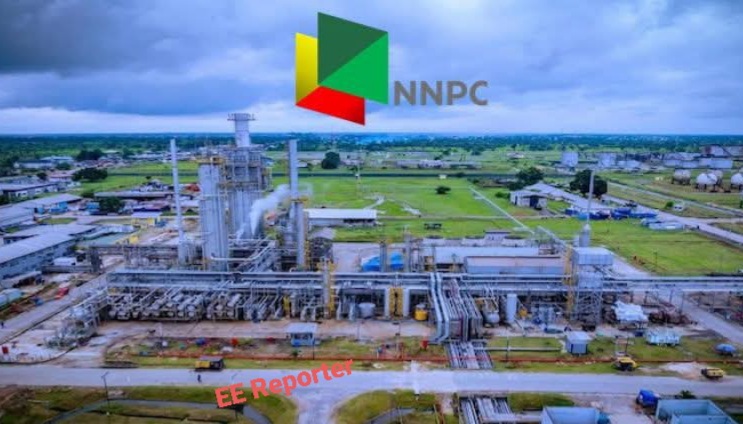
The NNPC Ltd has signed a Memorandum of Understanding (MoU) with two Chinese companies, Sanjiang Chemical Company Limited and Xinganchen (Fuzhou) Industrial Park Operation and Management Co. Ltd, for collaboration through a potential Technical Equity Partnership in support of the completion and operation of the Port Harcourt and Warri Refineries.
The MoU was signed by the Group CEO, NNPC Ltd, Engr. Bashir Bayo Ojulari; Chairman, Sanjiang Chemical Company, Guan Jianzhong and Chairman of Xinganchen (Fuzhou) Industrial Park Operation and Management Co. Ltd, Bill Bi, in Jiaxing City, China, on Thursday, April 30, 2026.
Eereporter.com
The potential framework would cover completion of outstanding work at the two refineries, together with operating and maintaining both facilities to achieve best-in-class, sustainable performance. Planned expansion and upgrades would elevate both facilities to cleaner, more profitable product standards.
The potential collaboration also contemplates expanding the refineries’ petrochemical capacities and harnessing gas and downstream opportunities through the development of co-located, gas-based industrial hubs.
Speaking shortly after signing the dotted lines, the GCEO NNPC Ltd, Engr. Bashir Bayo Ojulari, described the MoU execution as a significant milestone, following more than six months of concerted engagement between the technical and management teams of NNPC and the two Chinese partners.
“All parties recognise mutually beneficial opportunities for the development and long-term sustainable profitability of NNPC’s refining assets in Nigeria, and the collective weight required for success,” Ojulari noted.
NNPC
The GCEO further stated that the MoU is a significant step on the journey towards identifying potential technical equity partner(s) to restart and expand NNPC’s refineries, and to explore opportunities in co-located petrochemicals and gas-based industries.
The MoU reflects the parties’ shared intent to progress discussions in good faith, with any definitive arrangements to follow in due course and subject to customary approvals.
-
 Crime1 year ago
Kogi Assembly Considers Law To Regulate Rent, Establish Control Board: Tenancy Law
-

 News1 year ago
Atiku Reveals Why He Failed To Pick Wike As Running Mate In 2023
-

 Akwa Ibom1 year ago
The Apostolic Church Gets New Territorial Chairman, Exco
-

 Crime1 year ago
Federal High Court Jails 2 For Vandalizing Transformer, Telecom Mast In Kogi
-

 News1 year ago
The Apostolic Church Gets New National President, Executive
-
 Akwa Ibom1 year ago
Umo Eno Commences Payment Of 80,000 Naira Minimum Wage With Arrears
-

 News1 year ago
Senator Natasha Returns To Senate With Husband Amid Seat Dispute
-

 Economy1 year ago
Kiyosaki: Is Tinubu’s Government Afraid Of Ibrahim Traore?