
Health care
Africa CDC Commended Equatorial Guinea’s Malaria Progress

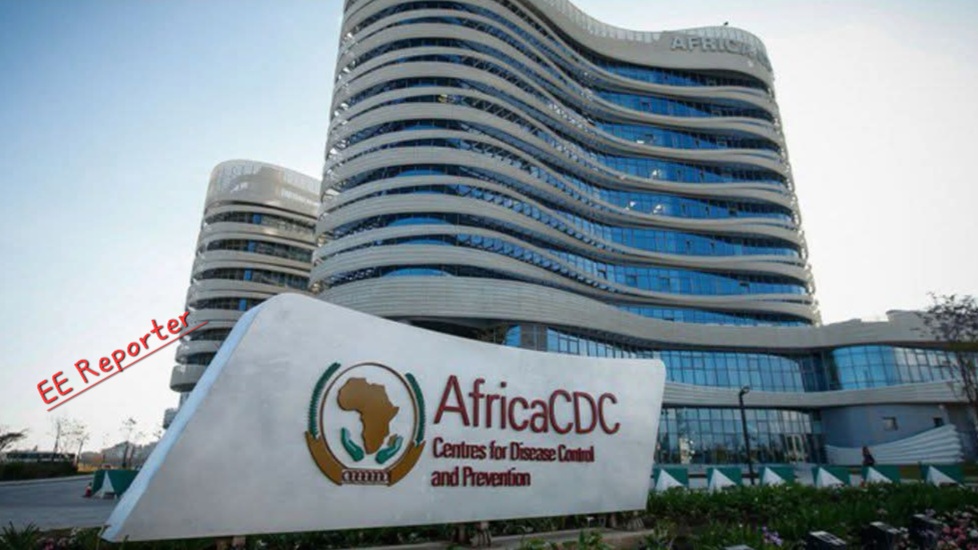
Africa CDC Commended Equatorial Guinea’s Malaria Progress
Africa CDC commended Equatorial Guinea’s malaria progress. “Only nine countries out of 55 in Africa are malaria-free. Equatorial Guinea is on track to become the next,” Africa CDC chief said.
The Africa Centres for Disease Control and Prevention has commended Equatorial Guinea’s milestone in malaria control, highlighting broader continental advances in disease surveillance, outbreak response, and local manufacturing of essential health commodities.
Jean Kaseya, director general of Africa CDC, disclosed this during a weekly high-level regional press briefing on Thursday, outlining progress in malaria elimination, emergency preparedness, and institutional reforms across member states.
Mr Kaseya said children under five and pregnant women remained most affected by malaria, which accounted for 95 per cent of global cases and 96 per cent of related deaths recorded worldwide.
He described Equatorial Guinea’s malaria response as a pilot model for elimination that other African countries could replicate, noting that sustained political commitment and targeted interventions were critical to progress.
“Only nine countries out of 55 in Africa are malaria-free. Equatorial Guinea is on track to become the next,” he said, underscoring the country’s steady advances toward elimination status.
He warned that drug and insecticide resistance, alongside climate change, were expanding malaria transmission zones, threatening recent gains and complicating efforts to reduce infections and deaths continent-wide.
The director-general reported that Africa CDC had significantly strengthened outbreak detection and response capacities through expanded surveillance systems, improved coordination mechanisms, and enhanced technical support to member states.
“Public Health Emergency Operations Centres increased from five in 2022 to 32 in 2025, while laboratory networks and pathogen genomic capacity have improved dramatically. As a result, reported outbreaks dropped from 189 in early 2025 to 72 in 2026,” he added.
He attributed the decline to faster detection and coordinated regional responses.
Mr Kaseya said funding utilisation at Africa CDC rose from 34 per cent in 2022 to 95 per cent, while overall funding increased from $52 million to $463 million.
He said human resources were expanded and repurposed rather than reduced, with deliberate attention to gender balance and equitable geographic representation across the institution’s workforce and leadership structures.
Africa CDC
Mr Kaseya said the African Union recently endorsed the Africa Executive Sovereignty agenda, replacing the “new public health order” framework that has guided the continent’s health security reforms.
Mr Kaseya announced plans for an extraordinary summit on local manufacturing in Nairobi in May 2026 and the Conference on Public Health in Africa in Ethiopia in November 2026.
He said Africa CDC also planned to establish an African medical prize, starting in 2027, to recognise outstanding contributions by African scientists advancing medicine and public health innovation.
He highlighted recent outbreak responses, including Uganda’s anthrax outbreak, where Africa CDC supplied 10,000 vaccine doses, and cholera outbreaks in Mozambique, Somalia, and Zambia, worsened by flooding.
Mr Kaseya stressed the importance of Africa producing its own vaccines and diagnostics to reduce reliance on external suppliers and strengthen the continent’s long-term health security.
Equatorial Guinea’s health minister joined the briefing, outlining how the country analysed malaria trends, implemented pilot interventions, and scaled elimination efforts.











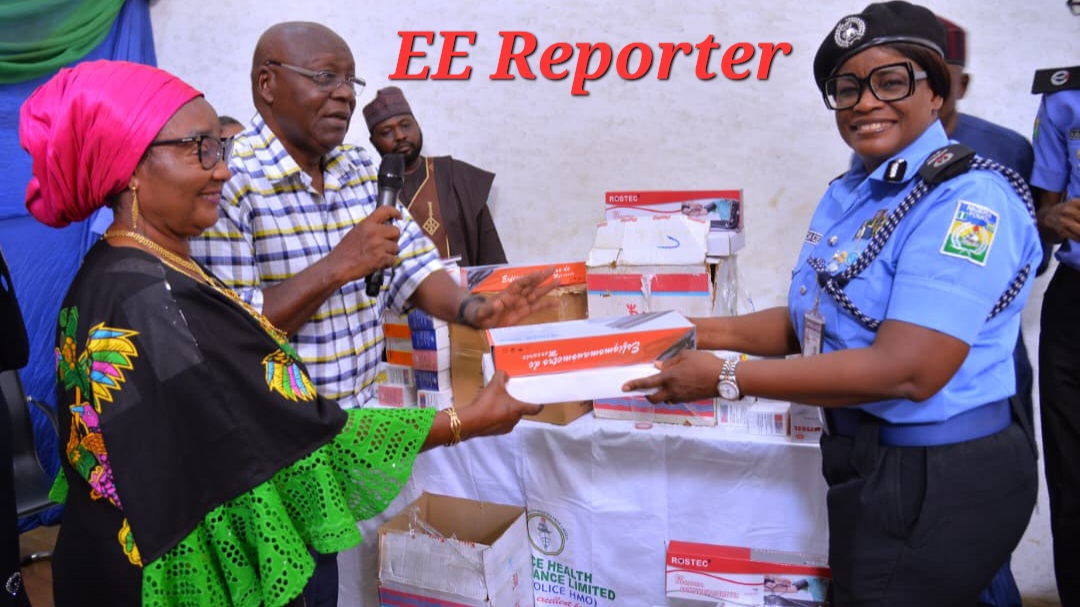
Police: Directorate Of Force Medical Services Receives Donated Medical Consumables
The atmosphere was one of glamour and excitement as DIG Mohammed Aminu Yesufu, (Rtd), mni, NPM, BSC, LLB, BL, LLM, celebrated his 72nd birthday in grand style.
The birthday festivities began with a visit to the School of the Blind, where the celebrant graciously donated essential school materials to support the students’ academic journey.
Eereporter.com
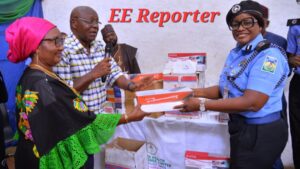
Continuing his charitable endeavors, on 30th April 2026, DIG Yesufu MA, alongside his family and friends, visited the Muhammadu Buhari Police Hospital, Area 11, Garki, to donate medical consumables for the benefit of several hospitals, including:
1. Police Hospital, Dei Dei
2. Police Hospital, Area 1
3. Muhammadu Buhari Police Hospital, Area 11
4. Police National Reference Hospital, Utako.
The donated items comprised sphygmomanometers (mercury-based), stethoscopes, antimalarial drugs for both children and adults, antihypertensives, and other essential medical consumables.
Police
The event was graced by the celebrant’s wife, Mrs. Ame Yesufu, and distinguished personalities including the Pioneer Force Medical Director, AIG Dr. Nkechi Eze, as well as former Force Medical Officers: AIG Dr. Grace Okudo (Rtd), AIG Dr. Adenike Abuah (Rtd), AIG Joseph Eribo, AIG Armament, Chairman, Nigeria Association of Retired Police Officers of Nigeria (NAPRON)., AIG Paul Ochonu (Rtd), Dr. Yusuf Gazali, MD/CEO PHML, and other senior officers, both retired and serving.
The celebration provided an opportunity for friends, colleagues, and acquaintances to honor DIG Yesufu MA, reflecting on his remarkable journey and lasting impact.
_Force Medical Services, Where Relevance Meets Impact_
SP Eze Chidiebere K, _R.DTh, MNIPR_
Force Medical PR Liaison Officer,
Directorate of Force Medical Services,
Abuja.
Health care
NNPC Commissions, Hands Over Rehabilitated Wards To National Orthopaedic Hospital, Igbobi
NNPC Commissions, Hands Over Rehabilitated Wards To National Orthopaedic Hospital, Igbobi
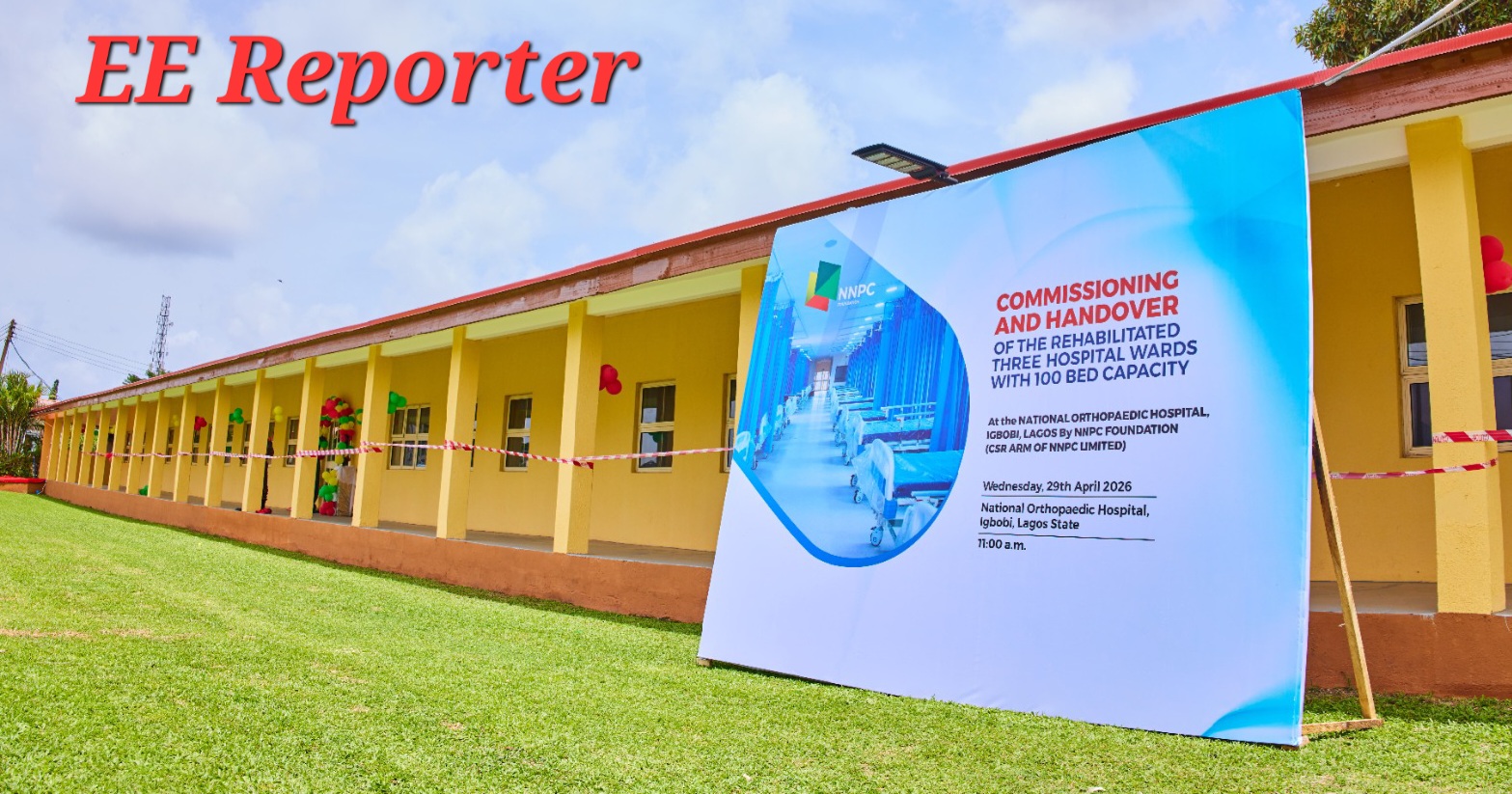
In keeping with its commitment to impact positively on the lives of Nigerians, NNPC Limited has commissioned and handed over three units of 100-bed capacity wards it rehabilitated as part of its Corporate Social Responsibility to the management of the National Orthopaedic Hospital, Igbobi, Lagos.
The intervention carried out by the NNPC Foundation Ltd./Gte., the Corporate Social Responsibility arm of NNPC Limited, involved the rehabilitation and upgrade of Wards G, H, and J, complete with the installation of new beds and the introduction of a central medical gas system designed to enhance the standard of care provided by the hospital.
Eereporter.com
The rehabilitation also included the replacement of roofing and ceiling of the Wards, upgrade of electrical and mechanical systems, and installation of new vinyl floors in all three wards.
Prior to the intervention, the wards were in a state that limited their use, which in turn constrained the hospital’s in-patient care capacity.
Speaking at the commissioning and handover ceremony, the Group Chief Executive Officer, Engr. Bashir Bayo Ojulari, explained that the concept of profitability in NNPC Limited is not restricted to increase in production and revenue alone, as it embraces the level of social impact the company makes.
The GCEO, who was represented by the Chief Financial Officer, Adedapo Segun, said the Company is proud of the rehabilitation and upgrade work done in the hospital’s wards, because of its immense social impact.
On her part, Managing Director of NNPC Foundation, Emmanuella Arukwe, said through the intervention, NNPC Foundation has helped to strengthen a facility that has served Nigerians for many decades.
“Beyond the immediate benefits, this effort reflects the role NNPC Foundation plays as the social impact arm of NNPC Limited. Our focus remains on practical interventions that improve lives and align with national priorities in healthcare”, she stated.
Providing further view into the project, the Medical Director of the National Orthopaedic Hospital, Igbobi, Dr. Wakeel Lawal, said the Management was constrained by the dire situation of the facilities to write to NNPC Foundation for intervention.
He expressed gratitude to the Management of NNPC Limited for granting the request and delivering an outstanding transformation in bringing the wards to international standards, stressing that what NNPC Limited has done goes beyond rehabilitation. It represents a renewal of hope. The commissioning and handover was witnessed by NNPC Ltd.’s Executive Vice President – Business Services, Mrs Sophia Mbakwe.
NNPC
Highlight of the event was the commissioning and unveiling of a commemoration plaque by the representative of the GCEO in company of the Chief Medical Director of the hospital and H.R.H. Alhaji Rodiyallahu Alabi Yunusa, Baale of Bajulaiye Community in Somolu, who represented the Oba of Somolu, HRM Oba Kazeem Bashua as the Royal Father of the day.
Economy
NNPC: Commissioning, Handover Of Rehabilitated Hospital Wards At National Orthopaedic Hospital, Igbobi

NNPC: Commissioning, Handover Of Rehabilitated Hospital Wards At National Orthopaedic Hospital, Igbobi
This intervention forms part of the NNPC Foundation Ltd./Gte’s ongoing commitment to improving healthcare infrastructure across Nigeria, ensuring that more patients receive care in decent, functional facilities.
Tomorrow, Wednesday, 29th April 2026, the NNPC Foundation Ltd./Gte., the Corporate Social Responsibility arm of NNPC Limited, will commission and hand over three fully rehabilitated hospital wards with a 100-bed capacity at the National Orthopaedic Hospital, Igbobi, Lagos State.
Eereporter.com
The event is scheduled to begin at 11:00 am prompt.

NNPC
This intervention forms part of the NNPC Foundation Ltd./Gte’s ongoing commitment to improving healthcare infrastructure across Nigeria, ensuring that more patients receive care in decent, functional facilities.
Watch the commissioning LIVE on the NNPC Limited YouTube Channel: https://www.youtube.com/@nnpclimited/streams
-
 Crime1 year ago
Kogi Assembly Considers Law To Regulate Rent, Establish Control Board: Tenancy Law
-

 News1 year ago
Atiku Reveals Why He Failed To Pick Wike As Running Mate In 2023
-
 Akwa Ibom1 year ago
The Apostolic Church Gets New Territorial Chairman, Exco
-

 Crime1 year ago
Federal High Court Jails 2 For Vandalizing Transformer, Telecom Mast In Kogi
-
 News1 year ago
The Apostolic Church Gets New National President, Executive
-
 Akwa Ibom1 year ago
Umo Eno Commences Payment Of 80,000 Naira Minimum Wage With Arrears
-

 News1 year ago
Senator Natasha Returns To Senate With Husband Amid Seat Dispute
-

 Economy1 year ago
Kiyosaki: Is Tinubu’s Government Afraid Of Ibrahim Traore?