
International
West Africa Must Collaborate Internally To Unlock AfCFTA Gains, Says Natasha Akpoti


West Africa Must Collaborate Internally To Unlock AfCFTA Gains, Says Natasha Akpoti
West Africa must collaborate internally to unlock AfCFTA gains, says Natasha Akpoti. Natasha Akpoti-Uduaghan, senator representing Kogi central, has called for deeper collaboration among member states of the Economic Community of West African States (ECOWAS) to strengthen regional integration and expand intra-community trade.
The senator spoke in Abuja as regional lawmakers and stakeholders gathered for the ECOWAS’ first extraordinary session and the first 2026 parliamentary seminar.
The seminar, themed “Deepening regional integration through the African Continental Free Trade Area (AfCFTA): Opportunities and challenges for expanding intra-community trade within the ECOWAS region”, focused on unlocking economic opportunities under the AfCFTA framework.
Akpoti-Uduaghan said meaningful regional integration must be anchored on shared research, industrial integration, market linkages, and product development.
“In areas of industrial integration, research, market linkages, and product development, it will enhance and expand trade and commerce within the West African region,” she said.
She expressed concern over the region’s growing tendency to pursue partnerships outside the West Africa region while neglecting joint initiatives within member states.
“In my own perspective, I believe that West Africans lack cohesive collaboration amongst ourselves,” she said.
“And it’s very simple. Let’s ask how much research and innovation have been conducted amongst ourselves? How much technology developed in our countries have we willingly shared amongst ourselves?”
The lawmaker warned that without a strong foundation of internal cooperation, trade ambitions under AfCFTA could face trust deficits.
“If we have failed in this foundation, then how can we trust the products that we have produced in our countries to be willingly patronised amongst ourselves?” she asked.
Citing a publication on collaboration between Ghana and Germany on vaccine development, Akpoti-Uduaghan questioned why similar partnerships were not prioritised within West Africa.
“I saw a publication regarding collaboration between Ghana and Germany on vaccine development,” she said.
“It is a good deed, but wouldn’t it be better if Ghana’s ministry of health partnered with Nigeria’s ministry of health on such innovations? I think we need to look deeply into that.”
While acknowledging the importance of global partnerships, the lawmaker said intra-regional cooperation should take precedence.
“It is okay if we promote innovations with America, with the United Kingdom, and with France,” she said.
“But primarily, as a region, we should not neglect ourselves because we share heritage; we share problems.
“Our DNA is not far from one another. Would it not be better to focus on health, agriculture, science, and technology, and all the vast industries among ourselves first?”
Akpoti-Uduaghan advocated open research systems, inter-university partnerships, and improved access to innovation across the region.
“Let us foster relationships between our universities. Let us not hoard the products of our research,” she said.
“Let us have open research platforms, our technology hubs, and innovation hubs responding and relating better.
“As an individual, I should be able to log into a portal in Mali, Gambia, and Liberia and find out what innovations have been promoted.”

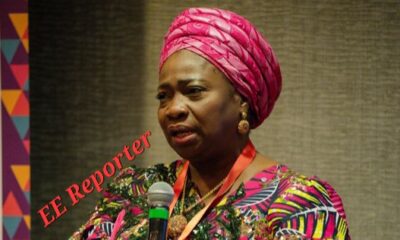
Senator Natasha
She urged parliamentarians to facilitate stronger communication between ministries across ECOWAS states to encourage transparency and trust.
“As parliamentarians, let us task our ministries to reach out to their counterparts across the region and trust that they will openly share the products of their research. That is the foundation we must not neglect,” she said.
The senator also highlighted emerging opportunities in the blue economy, referencing discussions by the World Bank on maritime and water-based economic development.
“In recent times, we have seen the World Bank emphasise the blue economy in relation to our waters,” she added.
“Wouldn’t it be good for West African countries and companies to jointly develop and maximise these opportunities? This would greatly jump-start trade volumes for the benefit of ECOWAS states.”
African Continental Free Trade Area (AFCFTA)
Economic Community of West African States (ECOWAS)
Natasha Akpoti-Uduaghan








Akwa Ibom Airport Commences International Operations With Maiden Flight To Ghana
Today, the people of Akwa Ibom State rolled out the drums, once again, in celebration of a milestone achievement with the completion of the international terminal and the commencement of international operations at the Victor Attah International Airport.
Eereporter.com
The Minister of Aviation and Aerospace Development, Festus Keyamo, SAN, was on ground, and officially declared the airport ready for international operations.

Ibom Air
The State Governor, Pastor Umo Eno, expressed satisfaction with the development, saying, “I am indeed proud to be an Akwa Ibomite.”
Details Loading >>>
Economy
NISER, NiDCOM Validate Diaspora Study To Strengthen Policy Framework For National Development
NISER, NiDCOM Validate Diaspora Study To Strengthen Policy Framework For National Development
The Nigerian Institute of Social and Economic Research (NISER), in collaboration with the Nigerians in Diaspora Commission (NiDCOM), has commenced the validation workshop for a major diaspora study titled, “A Six-Continent Survey of Nigerian Professionals in Diaspora: Policy Measures for Harnessing Contributions to National Development.”
The workshop, held at BON Hotel, Octagon, Jahi, Abuja, brought together key stakeholders, policymakers, members of the National Assembly Committees, diaspora experts, professional bodies, development partners, members of the media, and representatives from relevant Ministries, Departments, and Agencies (MDAs) to deliberate on strategies for strengthening Nigeria’s engagement with its diaspora community and maximizing their contributions to national development.
Delivering her welcome address, the Director-General of NISER, Antonia Taiye Simbine, described the study as a critical step toward evidence-based policymaking and sustainable diaspora engagement.
She stated that the validation workshop reflects the collective commitment of stakeholders to advancing Nigeria’s development through informed engagement with the diaspora community, noting that the large turnout of experts and partners underscores the importance of the exercise and the value attached to evidence-driven policymaking.
Eereporter.com
Simbine explained that NISER, as Nigeria’s foremost policy research institution, is mandated to provide rigorous, evidence-based policy recommendations that address critical socio-economic challenges confronting the country. She said the Institute works closely with relevant MDAs as well as national and international partners in fulfilling this mandate.
According to her, the diaspora study aligns directly with NISER’s core responsibility of providing policy solutions to national development challenges and was undertaken in partnership with NiDCOM as part of a shared commitment to leveraging research for national progress.
She noted that Nigeria’s diaspora community remains one of the country’s most strategic assets, contributing significantly through annual remittances exceeding 20 billion US dollars, making Nigeria one of Africa’s top remittance-receiving countries.
Beyond remittances, she emphasized that Nigerians abroad contribute immensely through knowledge transfer, skills development, innovation, technology transfer, specialist expertise, mentorship, and international networks that continue to support Nigeria’s economic growth and global competitiveness.
However, she pointed out that despite this enormous potential, several challenges continue to hinder effective diaspora engagement, including policy inconsistencies, limited institutional coordination, trust deficits, regulatory bottlenecks, and inadequate frameworks for channeling diaspora expertise into national priorities.
Simbine explained that the study was conceived to provide empirical insights into the dynamics of diaspora engagement and to propose practical and implementable policy measures for better integration of diaspora contributions into Nigeria’s national development agenda.
She further stated that the validation workshop is expected to refine and strengthen the study’s findings through expert input, enhance stakeholder consensus on critical diaspora-related issues, generate actionable strategies, and support the development of an improved framework for integrating diaspora professionals into national planning and implementation.
She urged participants to actively engage in robust discussions, noting that the quality of deliberations and stakeholder contributions would significantly influence the final output of the study and shape future diaspora policies in meaningful ways.
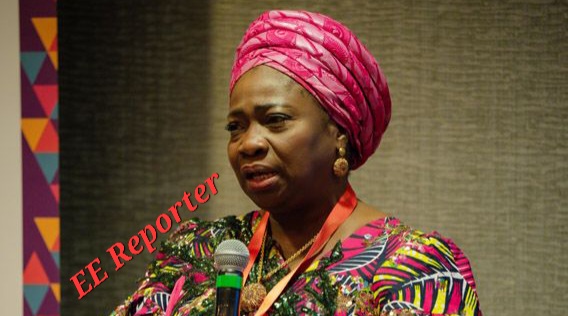
Speaking at the event, the Chairman/CEO of NiDCOM, Abike Dabiri-Erewa, described the Nigerian diaspora as one of the most vibrant, intelligent, resourceful, and globally exposed communities across Africa, Asia, the Americas, Europe, and Oceania.
She stated that Nigerians in the diaspora continue to break barriers across medicine, science and technology, public service, entrepreneurship, as well as the orange and blue economies, making them critical stakeholders in Nigeria’s development journey.
Dabiri-Erewa explained that the workshop provides a strategic opportunity to assess diaspora contributions, identify challenges, and explore stronger opportunities for engagement and investment.
NiDCOM
She stressed that for NiDCOM, the focus remains on moving from remittances beyond consumption to remittances for investment, where diaspora contributions are strategically directed toward sustainable development, wealth creation, and national transformation.
According to her, the thematic focus of the validation workshop is clear: to professionally interrogate the findings of the six-continent survey for authenticity, accuracy, and relevance, while jointly refining the policy recommendations to serve as a practical roadmap and framework for engaging Nigeria’s global diaspora.
She highlighted key areas requiring urgent attention, including structured diaspora engagement, streamlined policy coordination and coherence, creation of investment-friendly ecosystems, technology transfer and innovation, and the development of comprehensive data-driven policies.
The NiDCOM Chairman further urged stakeholders to use the platform to reduce brain drain, actualize brain gain, and foster brain circulation for the benefit of national development.
Also speaking, the Head of the Institute of Chartered Accountants of Nigeria (ICAN), Abuja Office, Mr. Adamu Yusuf, commended the initiative and described the validation workshop as a significant step toward harnessing the immense potential, expertise, and contributions of the diaspora community.
He noted that the validation process reflects a collective commitment to ensuring that the study outcomes are credible, inclusive, and reflective of stakeholder realities and aspirations.
Yusuf emphasised that the diaspora remains a vital partner in knowledge transfer, investment, innovation, institutional growth, and sustainable development.
He encouraged participants to engage openly, contribute constructively, and generate practical recommendations that will strengthen the final report and support effective implementation of its outcomes.
He also commended the organisers, facilitators, researchers, and participants for their dedication and collaborative spirit in advancing the initiative.
Speaking on behalf of the President of the Nigerian Medical Association (NMA), Prof. Bala Mohammed Audu, represented by Dr. Liman Idris Mohammed, Consultant Obstetrician and Gynaecologist at National Hospital Abuja, underscored the importance of diaspora collaboration in strengthening Nigeria’s healthcare system and professional development.
Mohammed stated that the NMA places great importance on Nigerian medical practitioners in the diaspora and deeply appreciates their contributions toward improving healthcare delivery in Nigeria.
He noted that upon receiving the invitation to the workshop, the President of the NMA showed strong interest in the study and directed the Association to actively participate, recognising its relevance to the future of healthcare delivery in the country.
According to him, the findings of the workshop will be presented to the NMA President and carefully reviewed to determine how the recommendations can be applied within the Association and across the broader health sector to improve medical services in Nigeria.
He explained that even before the study was conceptualized, there were already practical examples of successful diaspora contributions to Nigeria’s healthcare sector. He cited the establishment of major medical facilities in Abuja and Lagos by Nigerian professionals who acquired expertise abroad and returned to invest in the country.
He also referenced a medical doctor from the Association who studied In-Vitro Fertilization (IVF) in the 1990s and successfully established the practice locally in Nigeria, noting that today IVF services are widely available across the country.
Mohammed stressed that Nigerian professionals often excel beyond the systems where they acquired their training, demonstrating the immense capacity and excellence of Nigerian medical practitioners globally.
He called for stronger utilisation of the expertise of Nigerian medical professionals abroad, emphasising the need for continuous knowledge exchange, professional collaboration, and what he described as “the circulation of skills” between home and the diaspora.
E-signed
Abdur-Rahman Balogun mnipr
Director of Media, Public Relations and Protocols (NIDCOM) Abuja.
Dabiri-Erewa Hails Anosike’s Historic NBL Sweep
Hon. Abike Dabiri-Erewa, Chairman/CEO, Nigerians in Diaspora Commission (NiDCOM), has congratulated E.J Anosike on his remarkable achievement as the Finals MVP of the 2026 National Basketball League (China) Season.
In a statement issued by Abdur-Rahman Balogun, Dabiri-Erewa described Anosike’s accomplishment as historic, noting that he is the first player in the history of the league to win all major accolades, including the NBL Championship (2026), Finals MVP (2026), Regular Season Scoring Leader (2024), Best International Player (2025), two-time All-Star (2025, 2026), and All-Star Slam Dunk Champion (2026).
Eereporter.com
She commended his consistency, discipline, and outstanding performance, stating that his achievement reflects the resilience and excellence that Nigerians continue to demonstrate on the global stage.

Dabiri-Erewa
According to her, “Anosike’s journey is a powerful testament to hard work, focus, and determination. His record-breaking accomplishments have not only brought pride to Nigeria but have also set a new standard of excellence in international basketball.”
The NiDCOM Boss further noted that his success serves as an inspiration to young Nigerians, particularly aspiring athletes, encouraging them to pursue their dreams with dedication and confidence.
E-signed
Abdur-Rahman Balogun (mnipr),
Head, Media, Public Relations and Protocols Unit.
(NiDCOM)
-

 Crime1 year ago
Kogi Assembly Considers Law To Regulate Rent, Establish Control Board: Tenancy Law
-

 News1 year ago
Atiku Reveals Why He Failed To Pick Wike As Running Mate In 2023
-

 Akwa Ibom2 years ago
The Apostolic Church Gets New Territorial Chairman, Exco
-

 Crime1 year ago
Federal High Court Jails 2 For Vandalizing Transformer, Telecom Mast In Kogi
-

 News1 year ago
The Apostolic Church Gets New National President, Executive
-

 Akwa Ibom2 years ago
Umo Eno Commences Payment Of 80,000 Naira Minimum Wage With Arrears
-

 News1 year ago
Senator Natasha Returns To Senate With Husband Amid Seat Dispute
-

 Economy1 year ago
Kiyosaki: Is Tinubu’s Government Afraid Of Ibrahim Traore?