
News
NAF Honours Air Marshal HB Abubakar (Rtd) In Grand Fly-Out Ceremony


NAF Honours Air Marshal HB Abubakar (Rtd) In Grand Fly-Out Ceremony
NAF Honours Air Marshal HB Abubakar (Rtd) In Grand Fly-Out Ceremony. The Nigerian Air Force (NAF) on Saturday, 14 February 2026, honoured the immediate past Chief of the Air Staff, Air Marshal Hasan Bala Abubakar (Rtd), with a grand Flying-Out Parade at NAF Base, Bill Clinton Drive, Abuja, marking the conclusion of a distinguished tenure defined by reform, professionalism and institutional growth.
Describing the ceremony as one of the highest honours of his career, the retired air chief reaffirmed that the true essence of military service extends beyond platforms and projects, resting firmly on the protection of national peace and security. He urged personnel to remain steadfast in their commitment to duty and to sustain the operational momentum of the Service.
During his nearly two-and-a-half-year leadership, Air Marshal Abubakar advanced a focused transformation agenda aimed at strengthening the NAF into a more agile and resilient force capable of meeting evolving operational demands.
His tenure recorded the induction of 15 new aircraft, the reactivation of legacy platforms, and the execution of 589 infrastructure projects nationwide, alongside critical safety enhancements including the installation of an Instrument Landing System at NAF Base Kaduna. The completion of the HQ NAF Annex at Gudu stands as a visible testament to the scale of institutional progress achieved under his stewardship.

NAF Honours Air Marshal HB Abubakar (Rtd)
Reflecting on his journey, the former CAS paid tribute to fallen heroes and acknowledged the unwavering support of families whose sacrifices underpin operational readiness. He credited the achievements of his tenure to collective effort, recognising his wife, Dr Rakiya Abubakar, his 39 Regular Course mates, and personnel across all ranks.
He also commended the progress recorded under the current Chief of the Air Staff, Air Marshal Sunday Kelvin Aneke, expressing confidence in the Service’s forward trajectory and reaffirming his lifelong loyalty to the unity, security and sovereignty of Nigeria.












2027: NDC Picks Kashima As Bauchi Governorship Candidate
National Democratic Congress (NDC)
The former secretary to the Bauchi State government, Ibrahim Kashim, has emerged as the governorship candidate of the National Democratic Congress (NDC) for the 2027 general elections through a consensus arrangement.
The chairman of the electoral committee for the Bauchi State governorship primary election, Paul Daniel, announced Mr Kashim’s emergence on Friday in Bauchi.
Eereporter.com
He said the decision followed consultations among party stakeholders and other aspirants.
Mr Daniel explained that the consensus process reflected the unity and maturity within the party, adding that members demonstrated understanding and cooperation throughout the exercise.
“With this development, Ibrahim Kashim has officially become the NDC governorship candidate for Bauchi State ahead of the 2027 elections,” he said.
Also speaking, the state chairman of the party, Abdullahi Maigari, said the NDC was steadily gaining acceptance across Bauchi State and the country at large.
He described the party as one of the few political platforms in the state without internal litigation, attributing the stability to responsible leadership at both the national and state levels.
Mr Maigari expressed confidence in Mr Kashim’s capacity to provide solutions to the socio-economic challenges facing the state, describing him as a committed and experienced politician.
He assured supporters that party members would work tirelessly to ensure victory for the NDC during the 2027 general elections.
In his acceptance speech, Mr Kashim thanked party leaders, delegates and supporters for the confidence reposed in him, describing his nomination as a collective mandate for the people of Bauchi State.
He pledged to pursue policies focused on education, healthcare, agriculture, youth empowerment, infrastructure and transparent governance if elected governor.

NDC
According to him, Bauchi State possesses enormous human and natural resources but requires visionary leadership and inclusive governance to unlock its full potential.
Mr Kashim called on party members and residents of the state to unite behind the NDC’s vision of development.
He promised to build a prosperous and inclusive Bauchi where no community would be left behind.
The candidate also urged the electorate to support the party’s message of hope, competence and people-oriented leadership ahead of the 2027 polls. Eereporter.com

Police: Six Nabbed Over Disruption Of Sallah In Katsina
The Katsina State Police Command has arrested six suspects in connection with a violent attack on residents of Keku Village in Musawa Local Government Area of the state.
The arrest followed a swift response by operatives after a group of men allegedly stormed the community on Wednesday at about 2:00pm and attacked villagers with sticks and machetes, leaving several people injured.
This was contained in a statement issued on Friday in Katsina by the Command’s Public Relations Officer, Abubakar Sadiq.
According to the police, the suspects invaded the village in a coordinated attack that disrupted peace in the area during the Sallah celebration period.
Those arrested include Dayyabu Salisu (25), Usama Mansur (23), Yunusa Nura (27), Abdulmumini Alka (23), Buhari Suleiman (27) and Abubakar Safiyanu (27).
The Command said sticks, machetes and motorcycles were recovered as exhibits from the suspects.
Eereporter.com
“Preliminary investigation revealed that the suspects criminally conspired to disrupt the peaceful Sallah celebration and breach the relative peace being enjoyed in the area. The prompt response of VCRU personnel saved the situation from escalating further. The injured victims were rushed to the nearest hospital and are currently responding to treatment. The suspects will be charged to court upon conclusion of investigation,” the statement read.
The Commissioner of Police, Katsina State Command, CP Ali Umar Fage, condemned the attack and assured residents of sustained efforts to maintain law and order across the state.
He urged members of the public to remain calm, cooperate with security agencies and report suspicious movements through the Command’s emergency lines: 0815 697 7777, 0707 272 2539, and 0902 220 9690.

Police
The Command reiterated its zero tolerance for thuggery, mob action and other activities capable of disrupting public peace.
Meanwhile, in a related development, the Delta State Police Command had earlier arrested two suspected armed robbers with a pump-action gun, live cartridges and other incriminating exhibits.
Eereporter.com
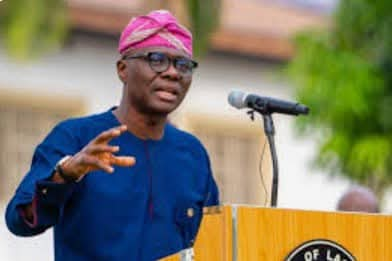
Lagos Governor Sanwo-Olu Demands Stronger Protection For Children, Schools
The governor lamented the recent abduction and killing of teachers in Oyo State.
Sanwo-Olu of Lagos State, on Friday, urged urgent national commitment to protecting Nigerian children and schools against worsening insecurity nationwide.
Mr Sanwo-Olu made the call during the grand finale of the 2026 Children’s Day celebration organised by the Ministry of Basic and Secondary Education in Ikeja.
The governor lamented the recent abduction and killing of teachers in Oyo State, describing the tragedy as painful evidence of growing insecurity threatening education nationwide.
Eereporter.com
“This Children’s Day arrives during painful national grief. We cannot genuinely celebrate while innocent children, teachers, and families continue suffering devastating consequences from violent attacks,” he said.
Mr Sanwo-Olu urged security agencies and the federal government to intensify rescue operations and strengthen measures to safeguard schools and learning environments across the country.
He insisted that every remaining captive must return safely, while governments at all levels establish stronger frameworks to protect schools from criminal attacks and violence.
Speaking on the celebration’s theme, the governor stressed that children’s rights to education, safety, dignity, and life must remain protected through deliberate national policies.
“The right to education, safety, and life are obligations owed children today. Every government must guarantee schools remain secure places where learning flourishes daily without fear,” he added.
Mr Sanwo-Olu was represented at the event by the Secretary to the State Government, Bimbola Salu-Hundeyin, who delivered the governor’s address.
Earlier, the Commissioner for Basic and Secondary Education, Jamiu Alli-Balogun, said the celebration’s theme highlighted the importance of protecting children’s rights and opportunities.
The theme, ‘Listen to the Future, Stand Up for Children’s Rights,’ focused on safeguarding children’s access to education, safety, expression, and equal opportunities nationwide.
Mr Alli-Balogun noted that activities organised throughout the week were designed to inspire students, strengthen confidence, and encourage inclusive learning environments across Lagos State.
According to him, the activities included youth forums, career talks, debates, cultural displays, Jumat prayers, thanksgiving services and a children’s parade rally.
“Listen to the future, stand up for children’s rights by protecting education, safety, expression, and opportunities while ensuring every child’s voice is heard and respected,” he said.
Sanwo-Olu
The commissioner stated that students demonstrated creativity, confidence, and awareness through debates and cultural performances presented during the week-long celebration activities.
He said the presentations reflected the importance of identity, cultural heritage, and active youth participation in national growth and development.
“We remain committed to safe schools, inclusive learning, and policies that empower children to dream boldly, speak freely, and grow into responsible leaders of tomorrow,” he added.
Mr Alli-Balogun reaffirmed the government’s commitment to safe schools, noting that the celebration reflected efforts to consistently invest in children’s future and wellbeing.
Lagos State traditionally uses Children’s Day celebrations to promote enrollment into public primary schools across the state.
The state government also publicises registration drives for primary one admissions during the annual Children’s Day activities as part of its educational development campaign. Eereporter.com
-
 Crime1 year ago
Kogi Assembly Considers Law To Regulate Rent, Establish Control Board: Tenancy Law
-

 News1 year ago
Atiku Reveals Why He Failed To Pick Wike As Running Mate In 2023
-
 Akwa Ibom1 year ago
The Apostolic Church Gets New Territorial Chairman, Exco
-

 Crime1 year ago
Federal High Court Jails 2 For Vandalizing Transformer, Telecom Mast In Kogi
-
 News1 year ago
The Apostolic Church Gets New National President, Executive
-
 Akwa Ibom1 year ago
Umo Eno Commences Payment Of 80,000 Naira Minimum Wage With Arrears
-

 News1 year ago
Senator Natasha Returns To Senate With Husband Amid Seat Dispute
-

 Economy1 year ago
Kiyosaki: Is Tinubu’s Government Afraid Of Ibrahim Traore?