
Akwa Ibom
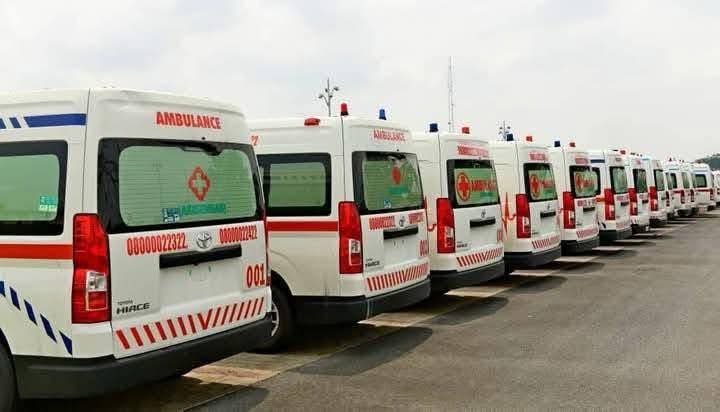
How Governor Eno’s Ambulance Service Saved Life In Akwa Ibom Community

How Governor Eno’s Ambulance Service Saved Life In Akwa Ibom Community
How Governor Eno’s ambulance service saved life in Akwa Ibom community. Just few minutes ago along Udo Udoma Avenue, by the Aka Junction in Uyo, a young lady reportedly slumped while attempting to cross the road. What could have ended in tragedy.
A single call was placed to the state’s emergency ambulance service, and within minutes, the response team was already on ground, providing immediate medical attention.
This swift intervention underscores the impacts of Governor Umo Eno’s visionary leadership. It shows the value placed on human life by the current administration.

Ambulance
Such prompt response is not only commendable but also a demonstration of the current administration’s commitment to implementing impactful programmes through the ARISE Agenda.
May God continue to bless and strengthen our dear Governor, Pastor Umo Eno as he continue to lead with compassion, foresight, and genuine concern for the people.






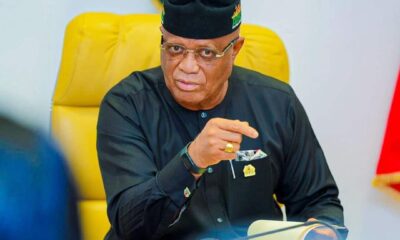





Gov Eno Flags Off Ikot Ekpene International Market, Targets Trade, Jobs, Economic Growth
Akwa Ibom State Governor, Pastor Umo Eno, has officially unveiled the design and performed the groundbreaking ceremony for the construction of the Ikot Ekpene International Market, describing the project as a strategic investment in trade, employment and economic development.
Eereporter.com
The ceremony, held on Wednesday, September 30, as part of activities marking the 39th anniversary of Akwa Ibom State, took place in Ikot Ekpene Local Government Area.
Speaking at the event, Governor Eno said the project demonstrated his administration’s commitment to delivering tangible infrastructure across the state.
He recalled earlier questions from the opposition regarding the number and location of the 39 projects promised as part of the anniversary activities.
“When we first started, the opposition asked, ‘Where are the 39 projects?’
“Today, we can gladly tell them to come and see,” the Governor said.
Governor Eno explained that the project was not merely about constructing a market but about investing in the economic future of Akwa Ibom State.
“Today, we are not just laying a foundation or turning the sod for this market; we are laying a foundation for prosperity, building infrastructure for opportunities, and creating a platform upon which our traders, entrepreneurs, artisans, manufacturers, and young people can build their dreams,” he said.
Also speaking, the Commissioner for Trade and Investment, Captain Iniobong Ekong (Rtd.), said the project reflected the administration’s efforts to position Akwa Ibom as a hub for trade, tourism and industrialisation.
According to him, the first phase of the market comprises 30 blocks of double-deck structures containing 108 shops, alongside two warehouses, restaurants, cold rooms, a police station, asphalt and concrete roads.
Ekong said the strategic location of the market would attract traders and customers from neighbouring states and beyond, particularly Cross River, Abia and Rivers states, as well as Cameroon.
“Upon completion, this market is going to generate income and revenue, create employment, and connect us with the trade hubs of the Gulf of Guinea,” he said.
The Director-General of Campaigns, Ambassador Chief Assam Assam (SAN), commended Governor Eno for initiating the project, noting that its strategic location would make it accessible to communities across the state.
He recalled the Governor’s earlier promise to establish an international market in Ikot Ekpene, describing the project as the fulfilment of that commitment.
“I remember that the Governor was in Ikot Ekpene Stadium when he said he was going to build an international market in Ikot Ekpene. This market is this Governor’s dream child,” Assam said.
Speaking on behalf of stakeholders in the area, Senator Emmanuel Ibokessien said the project was conceived by the people of Ikot Ekpene in 2010 but remained unrealised through successive administrations.
He commended Governor Eno for actualising the project.
“This project started in 2010 when it was conceived by the people of Ikot Ekpene. And through three administrations, this project did not see the light of day, but when you came with the finisher’s anointing, this project is now actualised,” he said.
Earlier, the Chairman of Ikot Ekpene Local Government Area, Hon. Elder Aniefiok Nkom, expressed appreciation to Governor Eno for commencing the long-awaited project.
Nkom recalled previous discussions on the economic importance of the market, noting that its location was expected to redirect commercial traffic and attract traders who ordinarily travel to other commercial centres.
He described the Governor as “a man of his word,” saying the people of Ikot Ekpene were excited by the commencement of the project.

Ikot Ekpene International Market
The Paramount Ruler of Ikot Ekpene Local Government Area, His Royal Majesty, Okuku Okon Udo Ukut, also expressed gratitude to the Governor, describing the project as a significant development for the area.
Upon completion, the Ikot Ekpene International Market is expected to strengthen commercial activities, create employment opportunities and expand Akwa Ibom State’s trade links with neighbouring states and the wider Gulf of Guinea region.
Eereporter.com
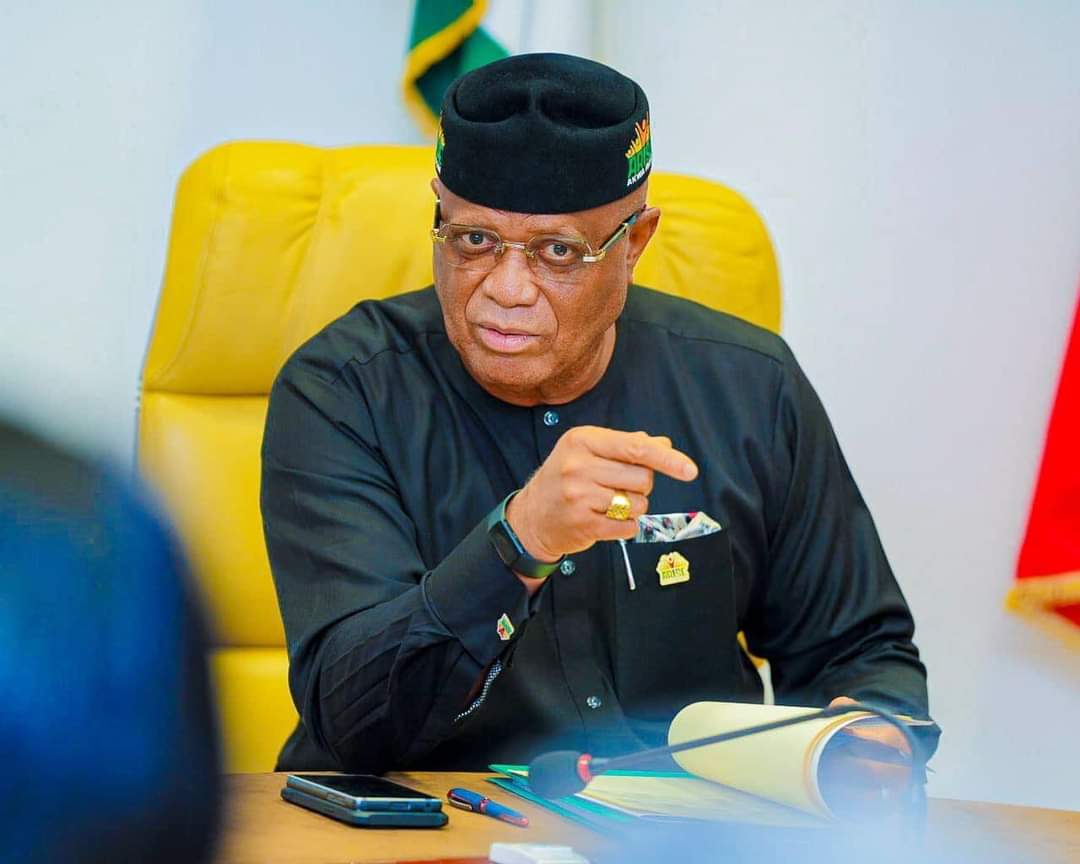
2026 NECO: Akwa Ibom Government Rejects ‘False’ Ranking, Says 83 Centres’ Results Pending
The Akwa Ibom State Government has dismissed as false and misleading a report circulating on social media which purportedly ranked the state among the lowest-performing states in the 2026 National Examinations Council (NECO) results.
Eereporter.com
The State Commissioner for Information, Rt. Hon. Aniekan Umanah, said the report was based on a performance chart that did not represent the official data released by NECO.
Umanah explained that although NECO released the 2026 examination results on September 24, 2026, the performance chart published by Premium Times was not an official NECO document, contrary to the impression created by the publication.
According to the Commissioner, while the published chart placed Abia, Ebonyi and Ekiti States first, second and third respectively, the official NECO data identifies Kano, Lagos and Oyo States as the first, second and third-ranked states.
He further disclosed that NECO was yet to release the results of 83 out of the 214 examination centres operated by public schools in Akwa Ibom State.
He said the examination body was still completing the sorting and verification of the statutory accreditation status of the affected centres.
Umanah therefore described any attempt to rank or assess the overall performance of Akwa Ibom at this stage as premature, noting that the outstanding results could affect the state’s final performance assessment.
The Commissioner urged media organisations to exercise greater diligence when reporting examination statistics, particularly where official results are still being processed.
He reaffirmed the commitment of the administration of Governor Umo Eno to the development of education, noting that the sector remains a major priority under the ARISE Agenda.
Umanah said the 2026 Approved Budget provides more than ₦35 billion for education, while ₦5.9 billion has been released to the State Universal Basic Education Board (SUBEB) for basic education intervention projects for 2025 and 2026.
He added that the state government had continued to construct model primary schools across the state to provide pupils with conducive learning environments.
According to him, the government has also paid bursaries to students and covered examination fees for candidates sitting for Placement Examinations, the Basic Education Certificate Examination (BECE), National Business and Technical Examinations Board (NABTEB) examinations and the West African Senior School Certificate Examination (WASSCE).
Beyond infrastructure and institutional support, Umanah said Governor Umo Eno had continued to provide direct assistance to young people pursuing higher education.
He cited the Governor’s recent approval of full overseas tuition support for a young graduate to pursue a master’s degree abroad, as well as an earlier scholarship awarded to a young law graduate from the Government Children’s Home to enable her pursue a master’s degree overseas.
The Commissioner said the interventions demonstrated the administration’s commitment to expanding access to quality education and creating opportunities for young Akwa Ibom people to pursue their academic and professional aspirations.
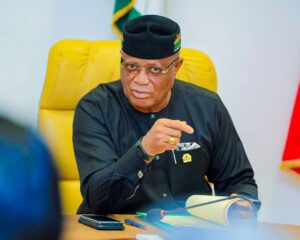
Umo Eno
Umanah consequently urged members of the public to disregard the Premium Times publication and similar claims based on the purported performance chart, stressing that they do not reflect the official NECO data currently available.
He advised the public to rely on verified and authoritative sources, particularly information released by NECO, for accurate updates on the 2026 examination results.
Eereporter.com
Akwa Ibom Launches Specialised Skills Training for Youths, Opens Portal
The Akwa Ibom State Government has announced the commencement of specialised youth skills development and empowerment programmes at seven newly commissioned Youth-Friendly Centres across the state.
Eereporter.com
The initiative, approved by Governor Umo Eno, is part of the administration’s human capital development and youth empowerment efforts under the ARISE Agenda.
According to the statement signed by the Akwa Ibom State Commissioner for Information, Hon. Aniekan Umanah, the programme is designed to equip young men and women with practical and marketable skills that can promote self-reliance, entrepreneurship and economic empowerment.
Training will take place at designated centres in Oron, Ikono, Uruan, Etinan, Nsit Atai, Nsit Ubium and Etim Ekpo, with different skills assigned to each centre.
The programme is being implemented by the Akwa Ibom State Ministry of Youth Development and builds on the Cohort 1 Youth Digital Skills Training Programme in Oron. The graduation ceremony for the first cohort is scheduled for October 9, 2026.
Akwa Ibom
To qualify, applicants must be 45 years old or below, hail from and reside in the Local Government Area where the relevant training centre is located, and apply only for a skill of genuine interest assigned to that centre.
Applicants must also be available and committed to participating fully in the intensive three-month training programme.
The state government has urged eligible youths to take advantage of the opportunity to acquire relevant skills and improve their economic prospects.
Interested applicants are to apply through employment.akwaibomstate.gov.ng.
The application portal opened on September 28, 2026, and will close on October 5, 2026.
Eereporter.com
-
 Crime1 year ago
Kogi Assembly Considers Law To Regulate Rent, Establish Control Board: Tenancy Law
-

 News2 years ago
Atiku Reveals Why He Failed To Pick Wike As Running Mate In 2023
-

 Akwa Ibom2 years ago
The Apostolic Church Gets New Territorial Chairman, Exco
-

 Crime2 years ago
Federal High Court Jails 2 For Vandalizing Transformer, Telecom Mast In Kogi
-
 News2 years ago
The Apostolic Church Gets New National President, Executive
-
 Akwa Ibom2 years ago
Umo Eno Commences Payment Of 80,000 Naira Minimum Wage With Arrears
-

 News2 years ago
Senator Natasha Returns To Senate With Husband Amid Seat Dispute
-

 Economy1 year ago
Kiyosaki: Is Tinubu’s Government Afraid Of Ibrahim Traore?