
News
Electoral Act 2022: Akpabio Cautions Against Hasty Conclusion On Electoral Reforms

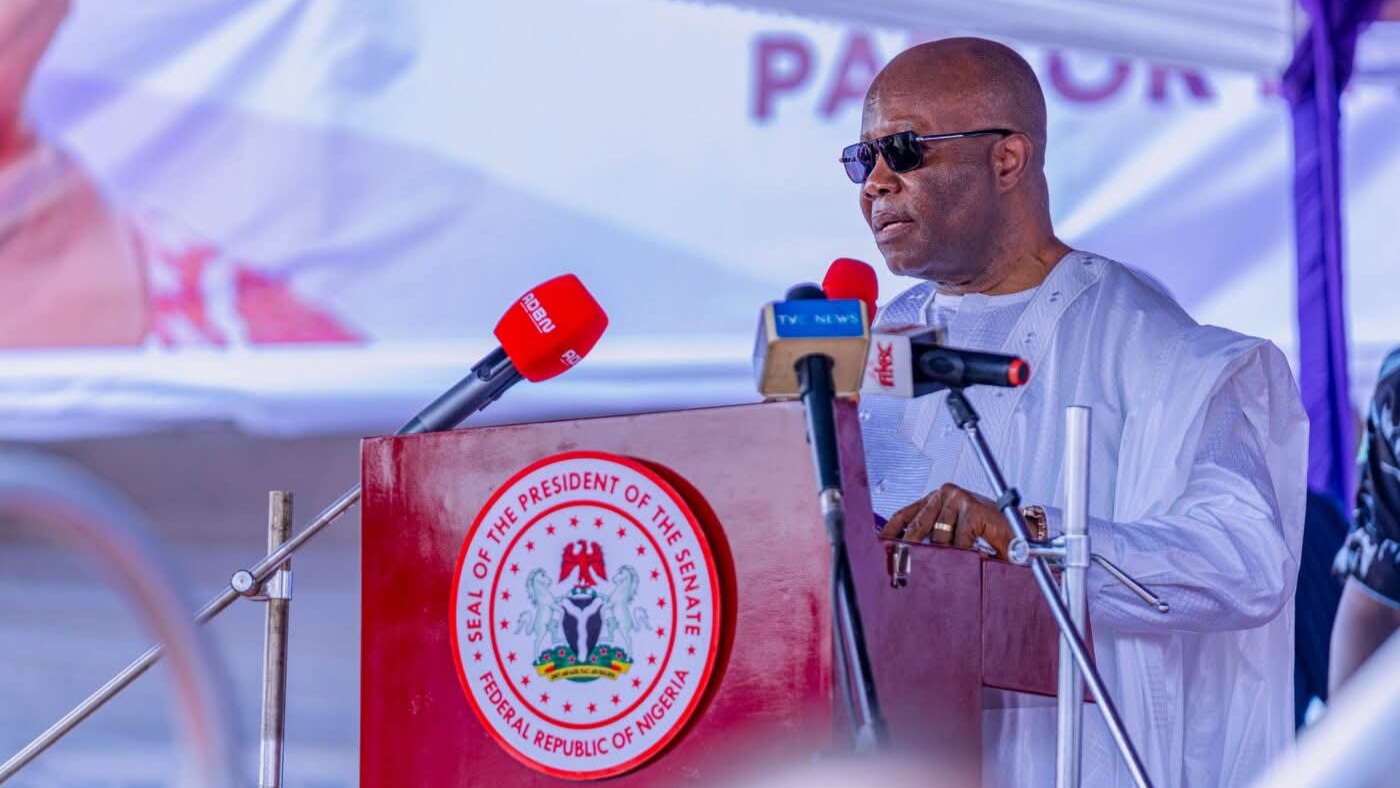
Electoral Act 2022: Akpabio Cautions Against Hasty Conclusion On Electoral Reforms
Electoral Act 2022: Akpabio cautions against hasty conclusion on electoral reforms. Says Electoral Act Amendment Bill Work in Progress.
The President of the Senate, Godswill Akpabio said at the weekend that the amendment being carried out to the Electoral Act 2022 is yet work in progress and appealed to people not draw hasty conclusions as to the electoral reform process.
Akpabio spoke in Abuja at the launching of a book titled: “The Burden of Legislators in Nigeria,” written by Senator Effiong Bob who represented Akwa Ibom North East Senatorial District between 2003 and 2011.
The Senate President observed rather negative commentaries in the media particularly on the Senate on the contents of the Electoral Reform Bill which he said had not been concluded until the Votes and Proceedings were passed by the Senate and the Conference Committee of the Senate and House of Representatives decided on the Bill.
Akpabio said it was inappropriate by the commentators to judge the Senate by something that is “inchoate.”
Akpabio said: “Electoral Act amendment Bill is incomplete. We have not completed it, but they are already on television. You see all sort of panels. Because they don’t understand lawmaking. They don’t even know that even the one in the Senate is not completed until we look at the votes and proceedings.
Akpabio
“So when we bring out the votes and proceedings, any senator has a right to rise up and say, on clause three, this was what we agreed upon. And if those who are recording through the verbatim recorder disagree or agree, we amend it before we approve the votes and proceedings. That is the only time you can now talk about what the Senate has done or what the Senate has not done.
“But already people are on television abusing the Senate, talking about the Senate, even when what we did has not yet been approved by the same Senate. It’s incomplete.
“If this chamber passes this and the other one passes that, then you now join these two together and take one. It’s only whe







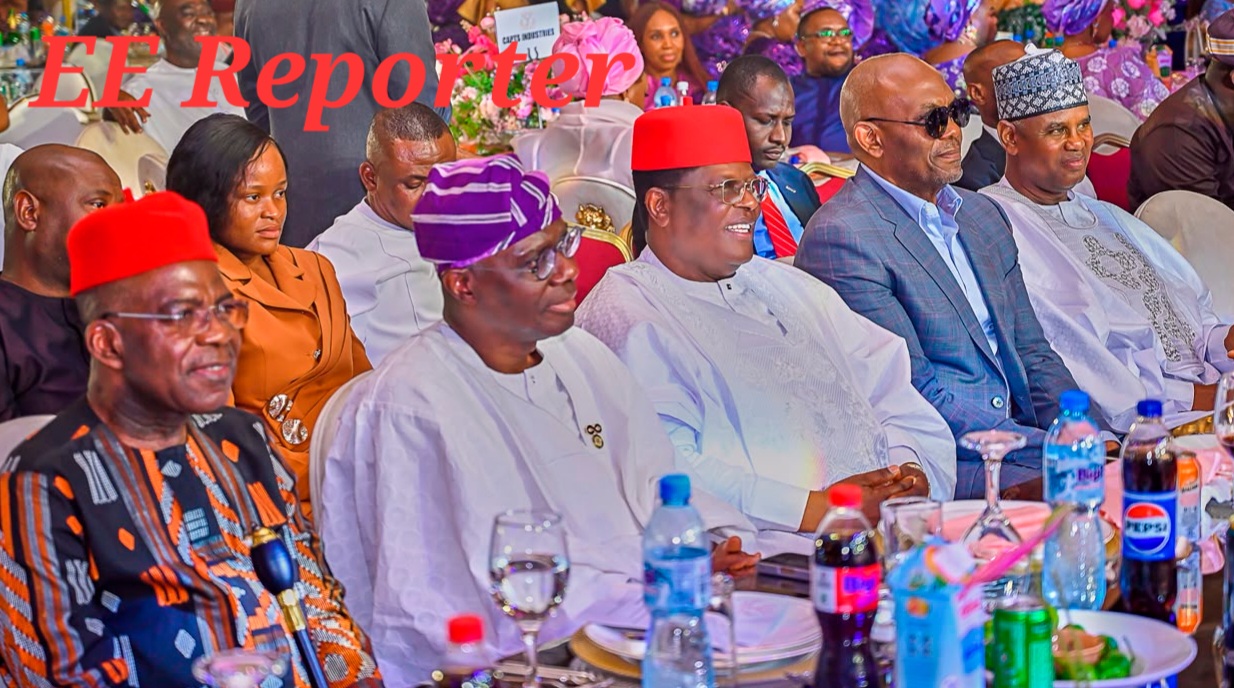
Umahi, Sanwo-Olu, Abiodun, Others Grace Shekina and Shope’s Wedding in Lagos
It was a celebration of love, family, friendship and distinguished personalities in Lagos on Saturday, August 22, 2026, as Shekina Chidinma Umahi and Shope Alexandra Ayinde were joined in holy matrimony at the Redeemed Christian Church of God (RCCG) Powerlink Chapel, Lekki Phase 1, Lagos.
Eereporter.com
Shekina, a niece of the Honourable Minister of Works, Senator Engr. David Umahi, CON, is the daughter of Maj. Gen. (Rtd.) Pastor Obi Abel Umahi, DSc, OFR, while Shope is the son of Commodore NN (Rtd.) Deacon Adebayo Abidemi Ayinde.
The wedding brought together governors, senior government officials, lawmakers, business leaders, traditional rulers, captains of industry, family members and friends from across the country to celebrate the young couple.
The Honourable Minister of Works, who also serves as the Deputy Director-General of Infrastructure, Mobilization and Sensitization of the 2027 APC Presidential Campaign Council, Senator Engr. David Umahi, CON, was present at the ceremony to celebrate with his niece and the families of the newlyweds and was joined by the Governor of Lagos State, His Excellency Babajide Sanwo-Olu; Governor of Ogun State, His Excellency Dapo Abiodun, CON; and Governor of Abia State, His Excellency Dr. Alex Otti, who chaired the occasion.
In his opening remarks as Chairman of the occasion, Governor Alex Otti described marriage as a lifelong commitment and urged the newlyweds to embrace patience, understanding and tolerance as they begin their journey together.
With humour, the Abia State Governor stressed the permanence of marriage, telling the couple that they should approach their union with a strong commitment to making it work.
“I want to tell you in advance that I won’t be present and as such, I declare that this marriage is indissoluble,” he said.
In separate remarks, the parents of the bride and groom expressed gratitude and joy at witnessing the marriage of their children.
They praised Shekina and Shope for distinguishing themselves through their formative years and into adulthood, describing them as outstanding young people who had continued to make their families proud.
They prayed for God’s guidance, peace, happiness and prosperity in their marriage and wished them a fulfilling life together.
The Umahi family also formally welcomed the couple with the presentation of family gifts.
On behalf of the Umahi family, the Chairman of the Uburu Traditional Rulers Council, HRH Eze Laz Umahi, PhD, presented the gifts to the newlyweds.
The ceremony attracted a gathering of political leaders, statesmen and captains of industry.
Other governors present at the event included the Governor of Ebonyi State, Rt. Hon. Francis Nwifuru, represented by his deputy, Her Excellency Patricia Obila; Governor of Enugu State, His Excellency Peter Mbah, represented by his deputy, Barr. Ifeanyi Ossai; Governor of Kogi State, His Excellency Usman Ododo, represented by his deputy, Comrade Joel Oyibo; Governor of Edo State, Senator Monday Okpebholo, represented by the Commissioner for Public Safety and Security, Rt. Hon. Festus Ebea; and Governor of Anambra State, His Excellency Chukwuma Soludo, represented by the Commissioner for Information, Dr. Law Mefor.
Among the captains of industry, statesmen and
other distinguished personalities at the occasion were Mr. Tony Elumelu, Chairman of Heirs Holdings; Dr. Adebowale Adedokun, Director-General/Chief Executive Officer of the Bureau of Public Procurement; Admiral Alison Madueke, GCON, former Chief of Naval Staff; Mr. Oliver Alawuba, Group Managing Director of UBA, represented by Chidi Okpara; Prof. Patrick Utomi; Mr. Adebiyi Olalekan, Managing Director/Chief Executive Officer of Lorelei Construction Limited; Engr. Solomon Dacree; Ifeanyi Chukwuma Odii, Chairman of Orient Global Limited; Chief Ifeanyi Clement Okorie, Chairman of Rock Results Group; and Barr. Chioma Nweze, Senior Special Assistant to the President on Community Engagement (South East), among others.
The Ministry of Works was also represented at the ceremony, with the Minister of State for Works, Rt. Hon. Bello Goronyo; Senator Allwell Onyesoh, Chairman of the Senate Committee on Works; Hon. Akin Alabi, Chairman of the House Committee on Works; and Engr. Musa Saidu, Director of Highways, Bridges and Designs, among others, joining in the celebration.
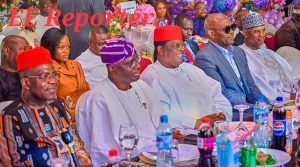
Umahi, Sanwo-Olu
Other members of the Umahi family at the ceremony included HRH Eze Laz Umahi, PhD, Chairman of the Uburu Traditional Rulers Council; Barr. Roy Umahi, SAN, FCArb, of Roy and Associates; and Chief Austine Umahi (Anyanwu Igbo), Chairman of the Amino Kano University Board.
The wedding provided a memorable gathering of the two families, their friends and well-wishers, with guests celebrating the union and offering prayers and goodwill for a happy, peaceful and enduring marriage.
Francis Nwaze, FIPMD
Senior Special Assistant to the Honourable Minister of Works (Media)
Sunday 23, 2026
Eereporter.com
Economy
Nigeria’s Diversity is Our Strengthen, Unity Must Remain Our Greates Asset, Says Minister Mohammed Idris
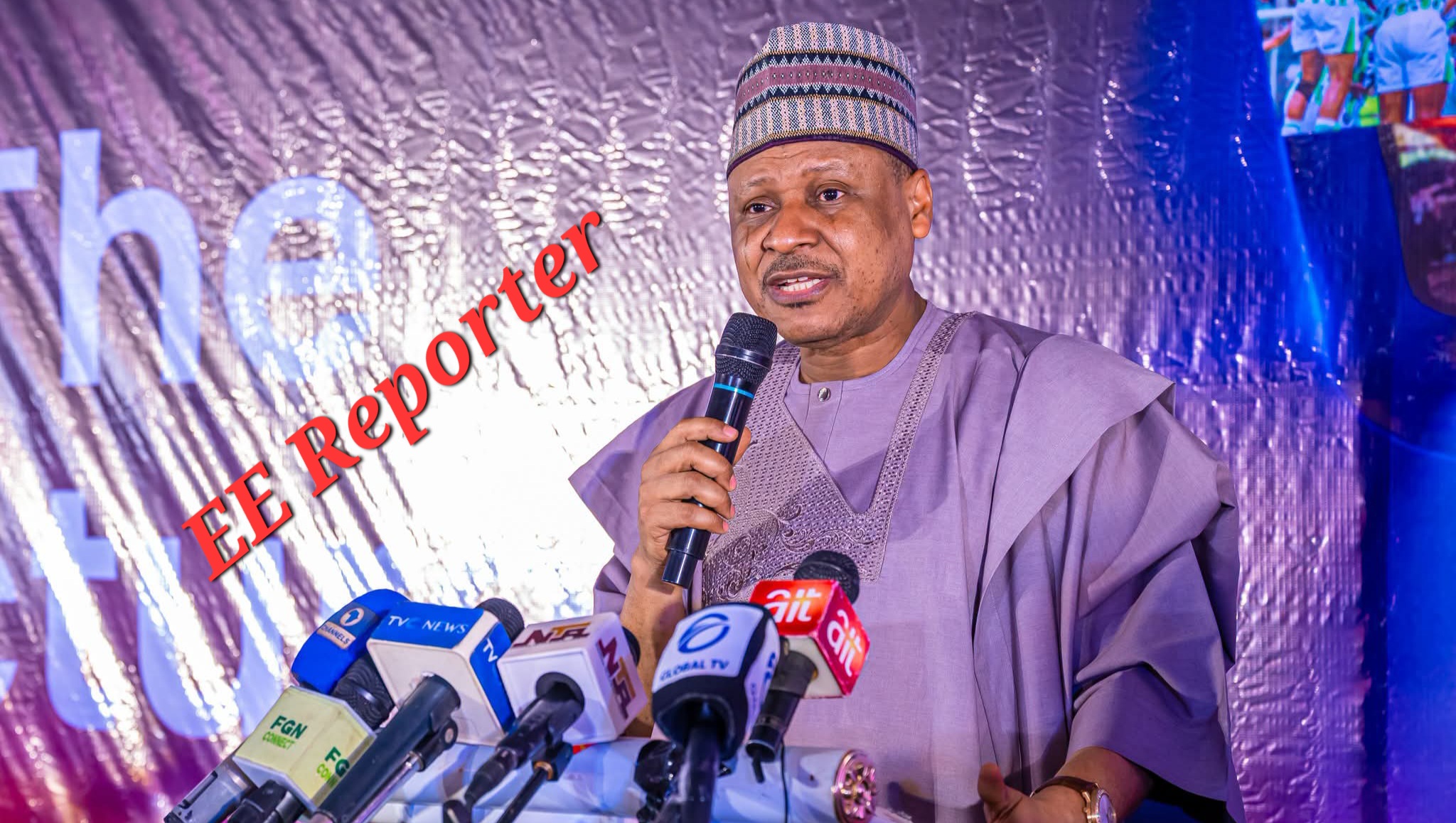
Nigeria’s Diversity is Our Strengthen, Unity Must Remain Our Greates Asset, Says Minister Mohammed Idris
The Honourable Minister of Information and National Orientation, Mohammed Idris, has described Nigeria’s diversity as a source of strength, urging citizens to promote unity and mutual understanding, noting that what binds Nigerians together is far greater than what divides them.
Eereporter.com
Idris stated this on Friday, August 14, 2026, when he attended the wake-keep of the late Ukandi Placidus Ugar Ogar in Obudu, Cross River State, alongside family members, friends, and dignitaries, including the Deputy Governor of Cross River State, Rt. Hon. Peter Odey; former Governor of Cross River State, Senator Prof. Ben Ayade; Chief of Staff to the Governor of Cross River State, Dr. Emmanuel Ironbar; and the Cross River State Commissioner for Lands, Dr. Erasmus Ekpang.
The late Ukandi Placidus Ugar Ogar, who died at the age of 76, was an elder brother to Senator Ayade and Dr. Frank Ayade.
The Minister said the gathering reflected the richness of Nigeria’s diversity and the ability of citizens from different backgrounds to unite in solidarity.
“What I have seen today is the diversity of Nigeria and how it can be further harnessed to promote unity in this country. Nigerians from all walks of life are Nigerians first. Therefore, we must celebrate them wherever they are,” he said.
While expressing condolences to the bereaved family, Idris noted that the occasion also provided an opportunity to honour a life that fostered unity among people.
“It is a moment of sorrow that he has passed on, but also a moment of gratitude that he lived a worthy life, one that helped bring people together,” the Minister said.
He called on Nigerians to continue to promote unity and shared values, while leveraging the country’s diverse cultures and traditions as assets for national development.
“We must strengthen our unity, uphold our shared values, and also see our diversity as a resource that can contribute meaningfully to the growth of our economy,” he said.
Mohammed Idris
Idris reaffirmed that Nigeria’s strength lies in its people and their collective ability to rise above differences in pursuit of the common good.
Rabiu Ibrahim, mnipr
Special Assistant (Media) to the Honourable Minister of Information and National Orientation
Saturday, August 15, 2026
Eereporter.com
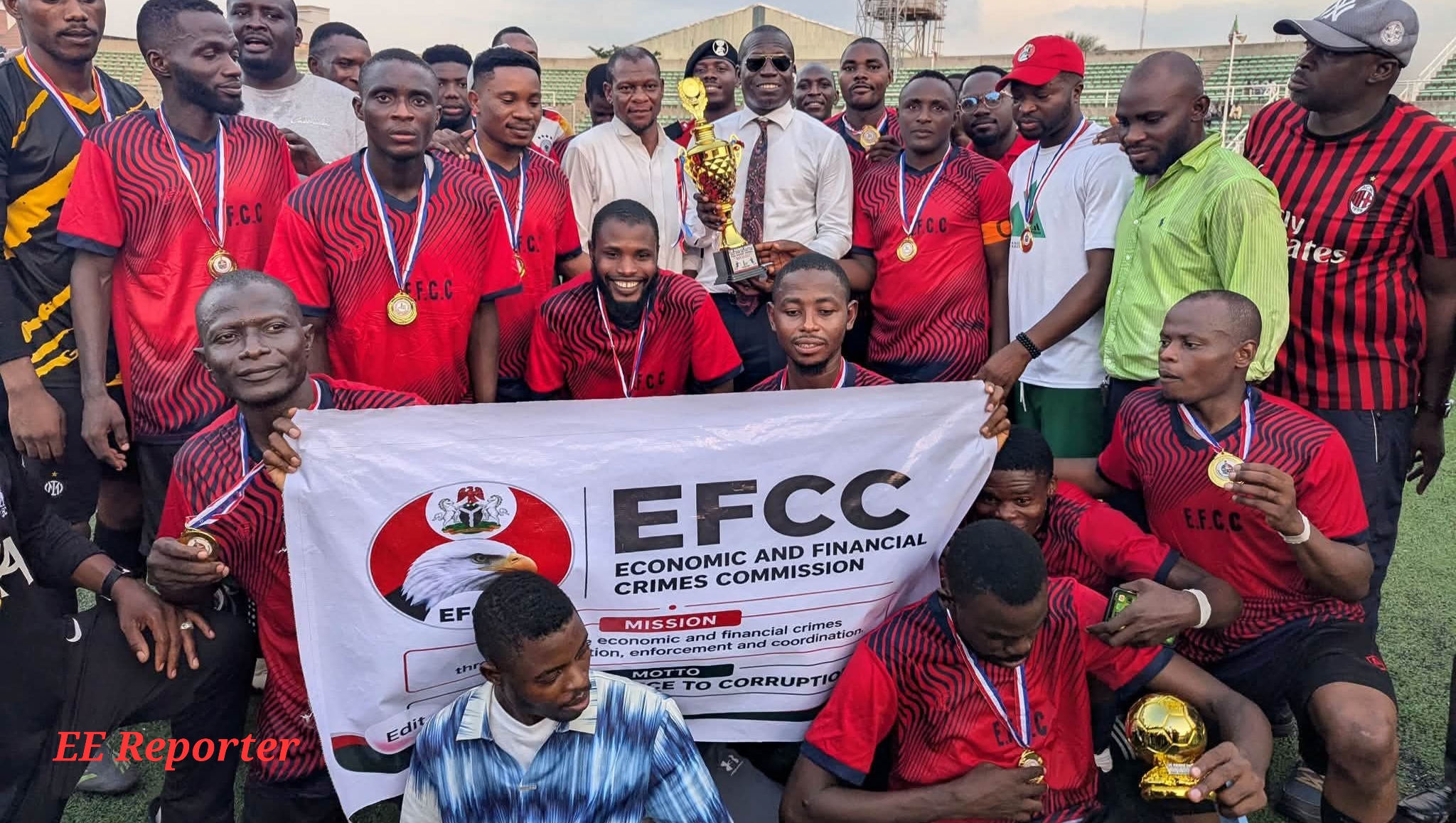
EFCC FC Kano Wins Inter-Service Unity Cup, Defeats NAF FC 5-4
EFCC Football Club, Kano, has emerged champion of the Inter-Service Unity Cup after defeating NAF FC 5-4 on penalties in a thrilling final held at the Sani Abacha Stadium, Kano.
Eereporter.com
The match initially ended 1-1 after regulation time.
The tournament was organised by the Coalition of Military and Paramilitary Agencies in Kano.
Speaking during his opening remarks at the final, the EFCC Kano Zonal Director, who represented the Executive Chairman of the Commission, Mr. Ola Olukoyede, commended the organisers for bringing together various security agencies through sports.
“Unity is one of the fundamentals of law enforcement. Bringing ourselves together to have football and soccer events is one of the ways of building this unity,” he said.
The Zonal Director thanked the participating teams, service commanders and all attendees for finding time to share in the spirit of friendship and brotherhood. He also acknowledged the humility and character displayed by all players who reached the final stage, stressing that such values are integral to the ethos of the nation’s security services.
He reaffirmed the EFCC’s commitment to initiatives that promote unity, performance and cohesion among colleagues, friends, and brothers in service, and conveyed the Chairman’s appreciation for the invitation.
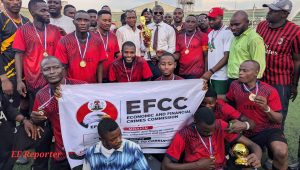
EFCC FC Kano
In addition to their football victory, the EFCC team also emerged champions in the tug of war challenge organised by the same coalition, which featured participation from agencies under the coalition.
The competition was held at the Sani Abacha Stadium on July 24, 2026, where the EFCC team won three battles on the same day, defeating the Nigerian Army, the Nigeria Police Force, and the National Drug Law Enforcement Agency (NDLEA).
Eereporter.com
-
 Crime1 year ago
Kogi Assembly Considers Law To Regulate Rent, Establish Control Board: Tenancy Law
-

 News1 year ago
Atiku Reveals Why He Failed To Pick Wike As Running Mate In 2023
-
 Akwa Ibom2 years ago
The Apostolic Church Gets New Territorial Chairman, Exco
-

 Crime2 years ago
Federal High Court Jails 2 For Vandalizing Transformer, Telecom Mast In Kogi
-
 News2 years ago
The Apostolic Church Gets New National President, Executive
-
 Akwa Ibom2 years ago
Umo Eno Commences Payment Of 80,000 Naira Minimum Wage With Arrears
-

 News1 year ago
Senator Natasha Returns To Senate With Husband Amid Seat Dispute
-
 Economy1 year ago
Kiyosaki: Is Tinubu’s Government Afraid Of Ibrahim Traore?