
International
Europe Holds Crisis Talks As President Trump Sets Rising Tariffs Over Greenland

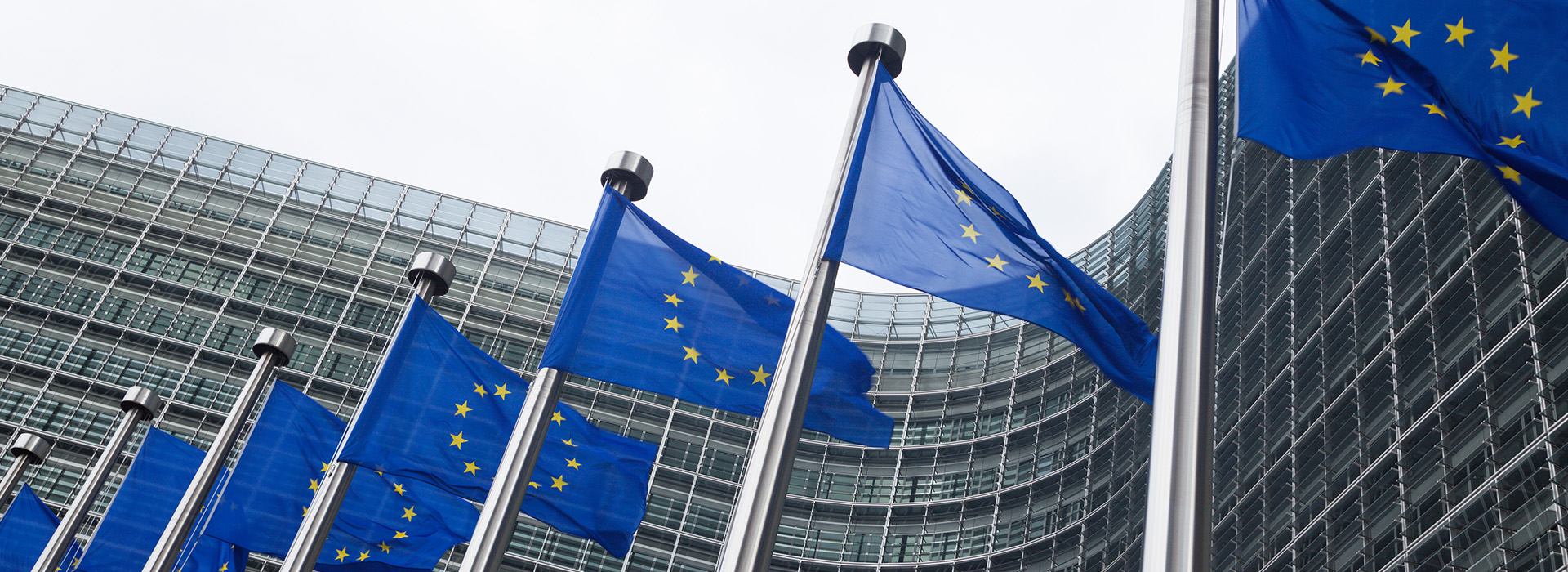
Europe Holds Crisis Talks As President Trump Sets Rising Tariffs Over Greenland
Europe holds crisis talks as president Trump sets rising tariffs over Greenland. Mr Trump has repeatedly said he seeks to own Greenland in order to guarantee security in the Arctic.
European leaders were angered and dismayed on Saturday when U.S. President Donald Trump said Washington would impose a 10 per cent tariff on imports from eight countries from February 1, citing disagreements over Greenland.
Mr Trump said the tariff would apply to all goods sent to the U.S. from Denmark, Norway, Sweden, France, Germany, the United Kingdom, the Netherlands, and Finland.
The levy would rise to 25 per cent from June 1 and will remain in place “until such time as a deal is reached for the complete and total purchase of Greenland,” he said in his post on Truth Social.
EU Council President António Costa criticised Mr Trump’s threat.
“If we want prosperity, we must open markets, not close them.
“We must create zones of economic integration, not raise tariffs,” he said as he signed a free trade agreement between the EU and the South American trade bloc Mercosur in Paraguay.
“The EU has always been very determined in defending international law – and, of course, especially in the territory of a member state,” he said when asked about Me Trump’s planned tariffs.
Mr Trump has repeatedly said he seeks to own Greenland in order to guarantee security in the Arctic, justifying his plans with security concerns about threats from China and Russia in the region. Largely autonomous Greenland is part of the territory of Denmark, a NATO member.
With a population of just under 57,000, Greenland has said it does not wish to become part of the United States. NATO allies also say that Greenland does not need to be taken over by the U.S. to protect the Arctic.
European Commission president, Ursula von der Leyen and Ms Costa warned of the consequences after Mr Trump’s threatened levies. “Tariffs would undermine transatlantic relations and risk a dangerous downward spiral.
“Europe will remain united, coordinated, and committed to upholding its sovereignty,” the two said in posts on social media.
The EU had actually agreed on a deal with the U.S. last year in the customs dispute, which still has to be approved by the European Parliament.
The deal foresaw the U.S. customs duty of 15 per cent set to apply to most European products.
Meanwhile customs duties on U.S. industrial goods would be completely abolished and barriers to the import of certain foods would be removed.
The leader of the European People’s Party (EPP), Manfred Weber, said that his group supports the tariff deal, but that approval is not possible at this time in view of Mr Trump’s threats.
“The 0 per cent tariffs on U.S. products must be suspended,” he said.
Representatives of the EU member states are set to meet on Sunday for a special session after Mr Trump’s threat.
The Cypriot presidency said an extraordinary meeting at ambassadorial level was convened for the afternoon in response to the latest announcements by the U.S.
It remains unclear whether possible countermeasures will be discussed at Sunday’s gathering.
The EU has an instrument to defend itself against trade pressure, a regulation applying in situations where a third country attempts to use trade measures to force the EU or a member state to make a certain decision.
The regulation allows for counter-tariffs and many other measures, though the instrument is only to be used as a last resort.
The threatened tariffs affect countries that recently sent soldiers on an exploratory mission to the Arctic island at the heart of the dispute.
Mr Trump was angered by the European NATO members that have sent soldiers to the Arctic island for a reconnaissance mission ahead of a military exercise.
In Saturday’s post, the U.S. president strongly criticised the deployment.
Europe Holds Crisis Talks
“Denmark, Norway, Sweden, France, Germany, The United Kingdom, The Netherlands, and Finland have journeyed to Greenland, for purposes unknown,” he wrote, describing this as “a very dangerous situation for the safety, security, and survival of our planet.”
But Ms von der Leyen and Ms Costa said the exercise was in line with the need to strengthen security in the Arctic and did not pose a threat to anyone.
“The EU stands in full solidarity with Denmark and the people of Greenland. Dialogue remains essential, and we are committed to building on the process begun already last week between the Kingdom of Denmark and the U.S.,” they said in posts on X.
Earlier, the head of the Arctic Command, Søren Andersen, told dpa that the military exercise in Greenland was set to continue for several more months.
“What we are currently doing is planning a longer-term exercise, which will continue throughout 2026 and perhaps into 2027,” he said.
“The Germans, as well as the Swedes and Norwegians, among others, are up here to explore the possibilities for joint training here,” Mr Andersen said.
The U.S. was also invited to “train up here” as were all NATO members, Andersen told dpa.






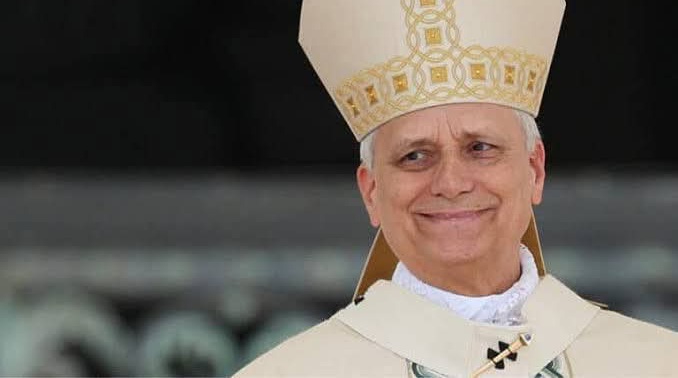
Nigeria Not Safe Country, Catholic Bishops Tell Pope Leo XIV
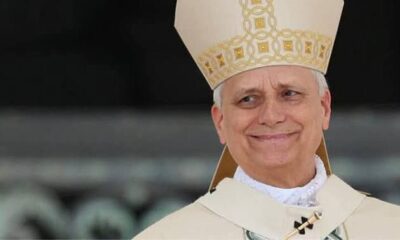
Nigeria not safe country, Catholic bishops tell Pope Leo XIV. The bishops told EWTN News they took the opportunity during their meeting with the pope to inform him of the problems facing the church in Nigeria.
Catholic Bishops’ Conference of Nigeria
Nigerian Catholic bishops, during their recent “ad limina” meeting with Pope Leo XIV in Rome, raised the alarm over the violence and insurgency they face as apostles serving in various parts of Nigeria.
The meeting of Nigerian bishops with the pontiff—held between March 1 and 16—takes place by canon law once every five years.
The bishops told EWTN News they took the opportunity during their meeting with the pope to inform him of the problems facing the church in Nigeria.
Archbishop Matthew Ndagoso of Kaduna, who was recently elected head of the Catholic Bishops’ Conference of Nigeria, said, “Before we came to Rome, we bishops sent reports on our dioceses to the Vatican, and the summary was given to the Holy Father.”
He added, “But beyond what was written, we discussed with him the violence, the insurgencies, and the difficulties we face as apostles on the ground.”
Archbishop Adewale Martins of Lagos said, “The issue of Christian violence came up very strongly with the pope, and he told us that he will use whatever possibilities he has to highlight our situation and see what he can do for us.”
Cardinal John Onaiyekan, one of Nigeria’s four cardinals and Archbishop Emeritus of Abuja, who also met with the pope, told the news agency Aleteia: “No one is safe in Nigeria today, whether Christian or Muslim.”
He added, “We’ve come to speak on behalf of all Nigerians who are suffering and wish to live in peace, whether they are Christians or Muslims.”
Pope Leo XIV Warns Of AI Risks To Young People
This comes amid a campaign on the “Christian genocide” in Nigeria, which the Nigerian government has repeatedly denied.
Last year, amid the campaign on “Christian genocide” in Nigeria, American President Donald Trump declared Nigeria a Country of Particular Concern.
On December 25, Mr Trump ordered the U.S. military to bomb terrorists in their enclave in Sokoto, while warning that more similar military actions will happen should the Nigerian government not stop reckless k1llings perpetrated by terrorists in Africa’s most populous country.
International
ADC Tells Tinubu: Your Port Rehab Agreements Is A ‘Mugu’ Deal, Says Nigeria Taking Loans To Fund British Economy
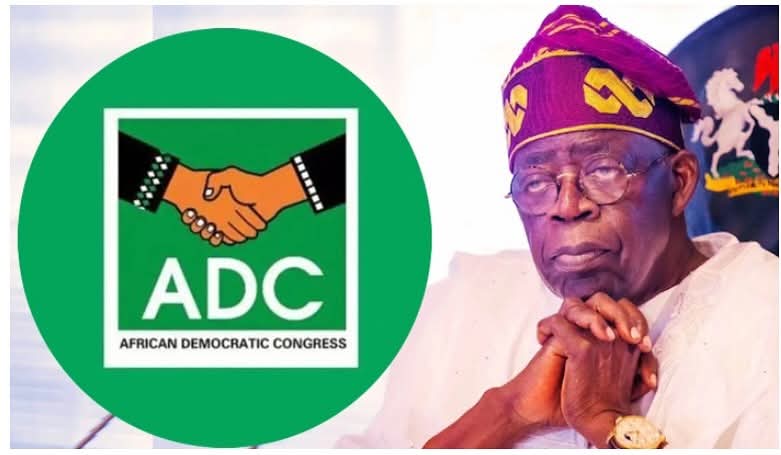
ADC Tells Tinubu: Your Port Rehab Agreements Is A ‘Mugu’ Deal, Says Nigeria Taking Loans To Fund British Economy
ADC Tells Tinubu: The African Democratic Congress (ADC) has described the £746 million agreement signed by President Bola Tinubu during his state visit to the UK as a ‘mugu’ deal, which disproportionately favoured the United Kingdom and its economy, while leaving Nigeria with a massive debt.
In a statement signed by its National Publicity Secretary, Bolaji Abdullahi, the ADC said while the APC government has tried to pass off the deal as President Tinubu’s major achievement, it is in fact an achievement of the UK Government, which, through this deal, has managed to save its steel industry, protect thousands of UK jobs, and get Nigeria to pay for it.
The party calls on the Federal Government to provide full transparency by disclosing comprehensive details of the agreement, including the applicable interest rates, repayment terms, and any local content provisions or obligations associated with the deal.
The full statement read:
The African Democratic Congress (ADC) views the £746 million agreement between the Government of the United Kingdom and the Federal Government of Nigeria, concluded during President Bola Tinubu’s state visit to London, as disproportionately skewed in favour of the UK, which already enjoys a significant balance of trade advantage over Nigeria.
Although the APC Government has tried to hoodwink Nigerians by portraying the agreement to rehabilitate the Tin Can and Apapa Ports in Lagos as a diplomatic success, it is, in reality, a commercial loan arrangement with conditionalities that ensure that a substantial portion of the funds either remains within the United Kingdom or is repatriated back to it.
Based on information available on the UK Government website, which described the deal as a “major vote of confidence in UK manufacturing,” the £746 million agreement will be delivered through UK Export Finance’s (UKEF) Buyer Credit Facility and arranged by Citibank, N.A., London Branch.
UKEF is the UK Government’s export credit agency. Its Buyer Credit Facility enables foreign buyers to access financing from commercial banks to procure UK goods and services, typically for projects that require significant UK content participation.
In simple terms, UKEF guarantees a loan obtained by a foreign buyer from a commercial bank, which is then used to pay for UK goods and services, with the bank paying the UK exporter directly on behalf of the buyer.
Under this agreement, at least £236 million of the £746 million in supplier contracts will be awarded to British companies, while British Steel will supply 120,000 tonnes of steel billets under a £70 million contract, representing its largest UKEF-backed export order, for port rehabilitation projects.
The ADC is particularly concerned that the Nigerian government has entered into an agreement that leaves the country at a clear disadvantage, seemingly in exchange for a few hours of pomp and pageantry, and as part of a broader attempt to secure foreign validation, even as millions of Nigerians continue to face poverty, unemployment, and worsening insecurity.
ADC, Tinubu
There are still several unanswered questions regarding this agreement. These include: what are the repayment terms of the commercial loan, including its duration and applicable interest rate? What percentage of local goods, services, and subcontracting is involved in the port rehabilitation project? How many direct and indirect jobs will be created for Nigerians? What is the project timeline, and when will the ports become fully operational? What provisions exist for training, apprenticeships, and skills transfer? Finally, what are the limits on expatriate staff, and are there defined quotas for SMEs and community benefit obligations?
If the APC government has answers to these questions, it should make them available to Nigerians. Otherwise, Nigerians are justified in concluding that, 66 years after independence, President Bola Tinubu has travelled to London to sign an agreement that resembles a colonial-era treaty, one that risks mortgaging the country’s future for limited value and symbolism.
Signed:
Mallam Bolaji Abdullahi National Publicity Secretary African Democratic Congress (ADC)
International
UK Court Sentences Fred Akinsanya, Daniel Raji To 21 Years In Prison For Drugging, Raping 15-Year-Old Girl

UK Court Sentences Fred Akinsanya, Daniel Raji To 21 Years In Prison For Drugging, Raping 15-Year-Old Girl
UK Court sentences Fred Akinsanya, Daniel Raji to 21 years in prison for drugging, raping 15-year-old girl. The duo bought their victim drinks at the Irish pub Paddy’s Yard in Brixton, south London, on February 8, 2025.
Inner London Crown Court, on Thursday, heard that the duo of Messrs Akinsanya and Raji bought their victim drinks at the Irish pub Paddy’s Yard in Brixton, south London, on February 8, 2025.
Afterwards, they invited their victim and some of her friends back to Mr Raji’s flat to smoke cannabis and dance. While her friends could not persuade her to leave with them, she was raped and filmed.
Sentencing Messrs Akinsanya and Raji, Judge Richards condemned them for drugging and raping their victim, lamenting the effect of their nefarious act on the 15-year-old victim.
“The fact that you two abused her one after the other clearly aggravates the matter. The victim was harmed for a long time,” Mr Richards said. “Alcohol was used to render her vulnerable, the effect of the alcohol was exploited by both of you. Whilst incapable, she was raped by both of you.”

Breaking News
The judge said the victim “lost her self-confidence. She can no longer go out. She will live with this for the rest of her life.”
While Mr Akinsanya, 34, was sentenced to 10 years for rape, Mr Raji, 29, was sentenced to 11 years upon being convicted of two counts of rape and taking an indecent image of a child.
-
 Crime11 months ago
Kogi Assembly Considers Law To Regulate Rent, Establish Control Board: Tenancy Law
-
 News12 months ago
Atiku Reveals Why He Failed To Pick Wike As Running Mate In 2023
-
 Akwa Ibom1 year ago
The Apostolic Church Gets New Territorial Chairman, Exco
-
 Crime1 year ago
Federal High Court Jails 2 For Vandalizing Transformer, Telecom Mast In Kogi
-
 News1 year ago
The Apostolic Church Gets New National President, Executive
-
 Akwa Ibom1 year ago
Umo Eno Commences Payment Of 80,000 Naira Minimum Wage With Arrears
-
 News1 year ago
Senator Natasha Returns To Senate With Husband Amid Seat Dispute
-
 Economy10 months ago
Kiyosaki: Is Tinubu’s Government Afraid Of Ibrahim Traore?