
News
Christian Genocide: When K1llers Chant ‘God Is Great’ You Can’t Say Religion Is Not A Factor: Ogebe

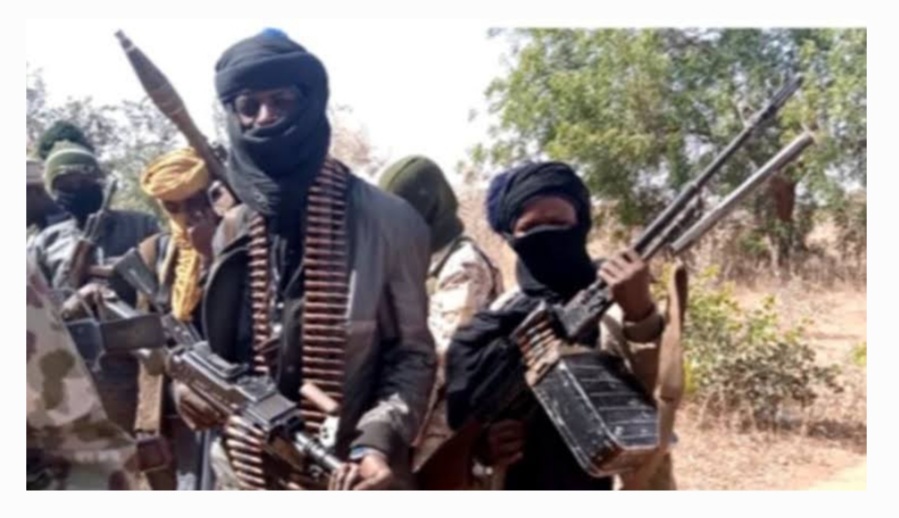
Christian Genocide: When K1llers Chant ‘God Is Great’ You Can’t Say Religion Is Not A Factor: Ogebe
Christian Genocide: When k1llers chant ‘God is great’ you can’t say religion is not a factor: Ogebe. International human rights lawyer Emmanuel Ogebe has stated that the wave of mass killings in Nigeria has a precise religious dimension, arguing that attacks accompanied by chants of “God is great” in Arabic were beyond ordinary communal violence.
Speaking on ARISE News Prime Time on Monday, Ogebe warned that the patterns of violence in the Middle Belt and parts of northern Nigeria reflect systematic and targeted assaults on communities identified by faith.
“There’s no doubt that there is collateral damage. But the fact of the matter is, in the US a couple of weeks ago, a National Guardswoman was shot in the head by a guy screaming ‘God is great’ in Arabic. The people who killed Alice’s family were screaming, ‘God is great’. You cannot look at both situations and say religion was not a factor,” he said.
According to him, the attacks followed identifiable patterns. “These folks are very systematic because they look at the communities that they are certain fall within a certain identity and they target them,” Ogebe added.
Reacting to United States President Donald Trump’s renewed designation of Nigeria as a ‘Country of Particular Concern’ over alleged Christian persecution, the lawyer said the decision was justified and overdue.
“The designation is justified and has been justified for many years. The commission that made the recommendation began making recommendations, I think, in 2009. For about 15 years, they’ve been recommending, and it’s only happened twice,” he stated.
Ogebe recalled that similar action should have been taken after the 2000 Shariah riots. “By the year 2000, we had the Shariah riots in northern Nigeria that killed 3,000 Christians across four states. At that time, they should have recommended Nigeria for designation,” he said.
Describing his experience documenting atrocities over the years, Ogebe said the scale of killings has been devastating. “It’s very depressing work. None of us would have anticipated that Nigerians would be dying in droves like they are now,” he noted.
He cited recent incidents to underscore his point. “On 13 June, there was a massacre in Yelwata. The number of people killed that night — 278 — was more than the people killed in the war between Iran and Israel, in which missiles and aeroplanes were used,” he said.
He also referenced attacks in Plateau State. “That same night, 54 people were slaughtered in ZK, Plateau State… That is what genocide looks like.”
Dismissing arguments that the violence is primarily driven by competition over land, Ogebe said religious ideology remains central. “The message is, let’s go and take out the infidels. So from the very beginning, there’s a religious connotation,” he stated.
He narrated an encounter involving a Fulani herdsman employed by the spouse of a judge, “One day, he came back and said, ‘I nearly killed an idiot infidel today.’ We are saying that judicial officers are frustrated because of the impunity of these people.”
Ogebe also pointed to statements by Boko Haram’s founder. “Mohammed Yusuf preached, and he said, ‘Listen, you are wiping out the infidels.’ He said Yar’Adua flew me on a presidential jet and begged me to stop killing the infidels, and I’m not going to do it,” he said.
On allegations against Fulani ethnic militias, he described the acts he said were intended to instil terror. “One of their hallmarks is, if they meet a pregnant woman on the farm, they will slaughter her, pull out the foetus and butcher it. It doesn’t get more graphic than that,” Ogebe said.
Bandits
He added that displacement has been widespread. “There are over 300 communities in the Middle Belt now that have been sacked and are occupied by Fulani ethnic militias. And I can’t point to one Fulani village that has been occupied,” he said.
Rejecting descriptions of the violence as farmer–herder clashes, Ogebe said, “When you come into a community, and you kill a three-year-old and a four-year-old, a three-year-old cannot clash with you. These are invaders who are coming in and wiping out people on their ancestral lands. It’s not a clash.”
He disclosed that his work with the International Criminal Court had progressed beyond preliminary stages. “After they investigated, they finally indicted not only Boko Haram but the Nigerian Army for atrocities. They have indictments as we speak. It is a lack of political will to proceed — that’s why it hasn’t happened,” he said.
Ogebe also reflected on U.S.–Nigeria relations. “The US and Nigeria have had amazing historic relationships. But right now we’re at a point where there’s a real drift,” he said, warning of a more rigid posture from Washington. “They’re at a point where they’re saying, if you will not protect your own people from being killed, we’ll go ahead and do it ourselves.”






NNPC Ltd Offers N66 Fuel Discount Throughout the Nation
The Nigerian National Petroleum Company Limited (NNPC Ltd.) has unveiled a nationwide ₦66 fuel discount promotion for customers using the NNPC Fuel App.
Eereporter.com
In a post obtained from its X handle on Friday, the promotion, which runs from October 1 to 7, is being held across NNPC stations nationwide as part of activities marking the period.
“The ₦66 Discount Promo is ongoing & the excitement is already happening across our stations nationwide!
“All over Nigeria, our customers are getting in on the action & there’s still time for you to benefit!
The promo runs from 1–7 October on the NNPC Fuel App,” the post read.
NNPC said customers across the country have already begun participating in the promotion, with highlights from the first day showing activities at several stations.
“Keep fueling, keep transacting and keep your eyes on our pages,” the post read.
NNPC
NNPC also shared moments from the first day of the promotion and said more pictures and activities from stations across the country would be released.
The company urged customers not to miss the opportunity to participate before the promotion ends on October 7.
The ₦66 discount offer is available through the NNPC Fuel App during the stated promotional period.
Eereporter.com
Economy
NAF, Innoson Vehicle Manufacturing (IVM) Sets for Partnership to Advance Indigenous Defence Capacity
NAF, Innoson Vehicle Manufacturing (IVM) Sets for Partnership to Advance Indigenous Defence Capacity
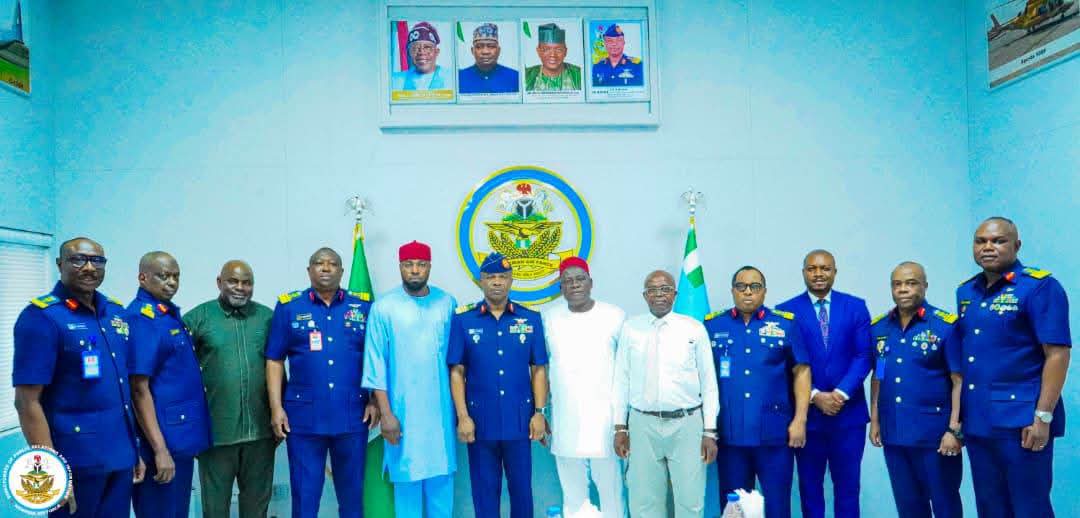
The Chief of the Air Staff (CAS), Air Marshal Sunday Kelvin Aneke, has expressed the readiness of the Nigerian Air Force (NAF) to explore a strategic partnership with Innoson Vehicle Manufacturing (IVM) to strengthen indigenous capacity in aircraft spares production, technology transfer and specialised technical training.
Eereporter.com
The CAS stated this on 29 September 2026 when the Chairman of IVM, Chief Dr Innocent Ifediaso Chukwuma, CON, paid a courtesy visit to him at Headquarters NAF, Abuja.
Discussions focused on leveraging IVM’s indigenous manufacturing capabilities to support NAF operational requirements and advance local content in the defence sector. Chief Chukwuma highlighted IVM’s interest and capability in the production of selected aircraft parts and spares, while also showcasing its CNG and electric vehicle manufacturing capabilities.
The CAS welcomed the initiative and reaffirmed NAF’s commitment to partnerships that promote local production, technology transfer and human-capacity development. He also expressed interest in exploring affordable vehicle acquisition options for NAF personnel through convenient payment arrangements, subject to further engagement and applicable procedures.

Innoson Vehicle Manufacturing (IVM)
The engagement underscores the CAS’s drive to harness indigenous innovation and local expertise to strengthen NAF capability and personnel welfare, while supporting Nigeria’s broader pursuit of technological self-reliance and industrial development.
Eereporter.com
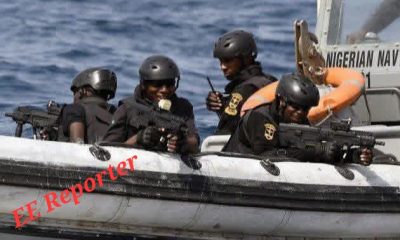
Nigerian Navy Disclaims Recurrent Fake Recruitment on Social Media
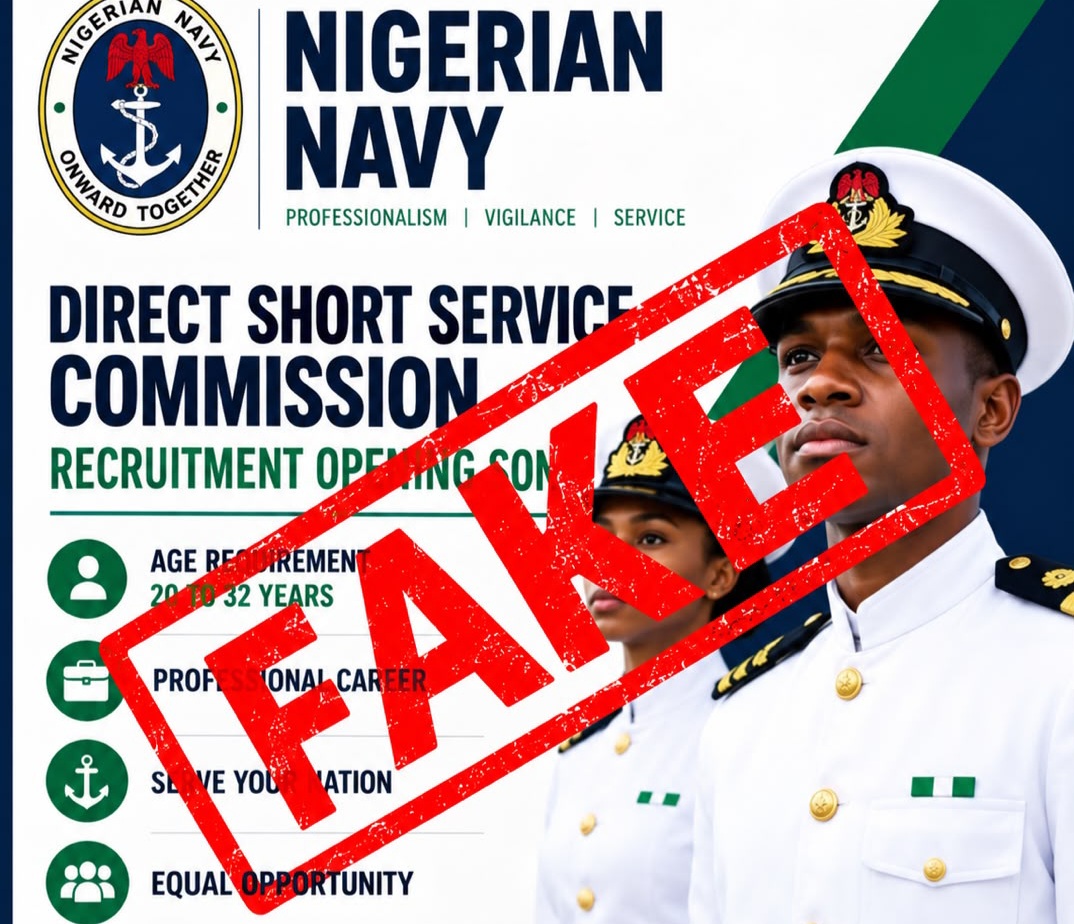
The Nigerian Navy has observed the recurrent circulation of fake recruitment notices on social media platforms and other unofficial channels, purportedly announcing Nigerian Navy recruitment exercises. The Nigerian Navy wishes to state categorically that such notices are not authorised and should not be regarded as official recruitment announcements.
Eereporter.com
The Nigerian Navy therefore advises prospective applicants and members of the public to exercise caution and disregard recruitment information obtained from unofficial social media accounts, websites or other unauthorised sources. All official information concerning Nigerian Navy recruitment, including eligibility requirements, application procedures, timelines and categories, will be communicated exclusively through authorised Nigerian Navy channels. The official recruitment website is http://www.joinnigeriannavy.navy.mil.ng, while the Nigerian Navy’s official website is https://navy.mil.ng.
Members of the public are particularly warned against making payments to individuals, agents or unauthorised platforms in connection with Nigerian Navy recruitment. Recruitment into the Nigerian Navy is free of charge, and the Service does not authorise third parties to recruit applicants or collect recruitment fees on its behalf.

Nigerian Navy
The Nigerian Navy will continue to monitor and address the circulation of fraudulent recruitment information and urges the public to rely solely on its official communication channels for accurate and verified information on recruitment exercises.
Signed
AA FOLORUNSHO Director Naval Information
Captain (Nigerian Navy)
Eereporter.com
-
 Crime1 year ago
Kogi Assembly Considers Law To Regulate Rent, Establish Control Board: Tenancy Law
-

 News2 years ago
Atiku Reveals Why He Failed To Pick Wike As Running Mate In 2023
-
 Akwa Ibom2 years ago
The Apostolic Church Gets New Territorial Chairman, Exco
-

 Crime2 years ago
Federal High Court Jails 2 For Vandalizing Transformer, Telecom Mast In Kogi
-
 News2 years ago
The Apostolic Church Gets New National President, Executive
-
 Akwa Ibom2 years ago
Umo Eno Commences Payment Of 80,000 Naira Minimum Wage With Arrears
-

 News2 years ago
Senator Natasha Returns To Senate With Husband Amid Seat Dispute
-
 Economy1 year ago
Kiyosaki: Is Tinubu’s Government Afraid Of Ibrahim Traore?